
Child-Safe Medicine: What Parents Need to Know About Safe Drug Use for Kids
When it comes to child-safe medicine, medications specifically designed or adjusted for use in children to minimize harm and maximize effectiveness. Also known as pediatric medication, it’s not just about giving a smaller pill—it’s about matching the drug’s form, dose, and delivery to a child’s developing body. Kids aren’t tiny adults. Their organs process drugs differently, their weight changes fast, and even small dosing errors can lead to serious side effects. That’s why a medicine labeled "safe for adults" doesn’t automatically mean it’s safe for a 2-year-old.
Drug dosing for children, the precise calculation of medication amounts based on weight, age, and kidney/liver function in young patients is one of the most critical parts of pediatric care. Many over-the-counter syrups, chewables, and drops have different concentrations—some are 160 mg per 5 mL, others are 80 mg per 5 mL. Mixing them up can lead to accidental overdose. Even something as simple as ibuprofen or acetaminophen needs careful measuring. A teaspoon isn’t a tablespoon. A dropper isn’t a cup. And never guess based on how old your child looks. medication safety for kids, the practices and precautions taken to prevent harm from drugs in children, including proper storage, labeling, and avoiding adult medications also means keeping all pills and liquids out of reach, using child-resistant caps, and never calling medicine "candy" to get a child to take it.
Some common drugs that are fine for adults can be dangerous for kids. Aspirin, for example, is linked to Reye’s syndrome in children with viral infections. Cough syrups with dextromethorphan can cause hallucinations or seizures in young kids. Even some antibiotics, like certain fluoroquinolones, are avoided in children because they affect growing bones and joints. And don’t assume that because a drug is sold over the counter, it’s harmless for kids. Many parents don’t realize that mixing multiple cold medicines can lead to double-dosing on the same active ingredient—like acetaminophen—which can cause liver damage.
What makes a medicine truly child-safe isn’t just the label. It’s the design: flavor that doesn’t make kids gag, dosing tools that are accurate and easy to use, and clear instructions that don’t require a medical degree to follow. It’s also about knowing when not to give medicine at all. Many childhood illnesses—like colds, ear infections, or mild stomach bugs—get better on their own. The best child-safe choice isn’t always a pill—it’s patience, hydration, and watching for red flags.
Below, you’ll find real, practical advice from doctors and pharmacists on what to look for in kids’ meds, how to avoid common mistakes, which drugs to avoid, and what to do when things go wrong. These aren’t theory pieces—they’re guides written by people who’ve seen the consequences of wrong dosing, wrong timing, and wrong assumptions. Whether you’re dealing with a fever, a cough, or a chronic condition, the posts here will help you make smarter, safer choices—without the guesswork.
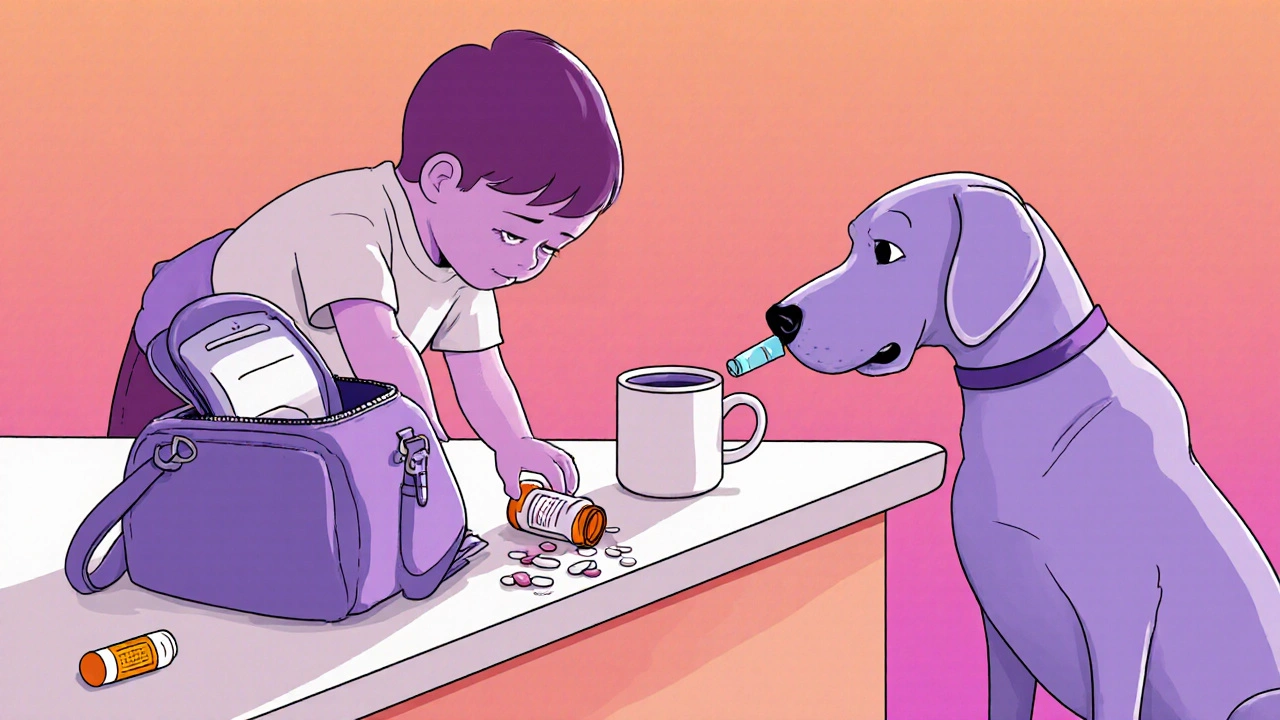
Safe Storage of Medications: How to Keep Children and Pets Safe from Accidental Poisoning
Learn how to lock up medications safely to protect children and pets from accidental poisoning. Discover the best storage practices, what to avoid, and what to do in an emergency.