
Pet Medication Safety: What You Need to Know Before Giving Your Animal Any Drug
When it comes to pet medication safety, the practice of correctly administering drugs to animals while avoiding harmful reactions or overdoses. Also known as veterinary drug safety, it's not just about following a label—it's about understanding how your pet’s body handles medicine differently than yours. Dogs and cats don’t process drugs the same way humans do. A pill that’s safe for you could be deadly for them. Even common over-the-counter painkillers like ibuprofen or acetaminophen can cause kidney failure, liver damage, or death in pets. That’s why animal drug interactions, how medications react with each other or with food in an animal’s system are just as critical as they are in people—but often overlooked.
Many pet owners don’t realize that what’s labeled "natural" or "herbal" for humans can be toxic to animals. Garlic, for example, is sometimes used as a flea repellent, but it can destroy red blood cells in dogs and cats. Even certain supplements like vitamin D or zinc can cause poisoning if given in the wrong amount. veterinary medications, drugs specifically approved or prescribed for use in animals are designed with species-specific metabolism in mind. Giving your dog a human version of a drug—even if it’s the same active ingredient—is risky. The dose, filler, or coating might be completely unsafe. And while your vet might prescribe something like gabapentin for pain or anxiety, giving too much can lead to dizziness, falling, or even breathing trouble in older pets.
It’s not just about pills. Topical treatments, flea collars, and even some shampoos can be dangerous if your pet licks them off. Pets are curious. They’ll chew on a dropped pill, lick a treated area, or sniff something they shouldn’t. That’s why pet poison prevention, steps taken to stop accidental ingestion of harmful substances by animals starts with keeping all medications out of reach—not just in cabinets, but in purses, on nightstands, or on the floor. Even a single pill can be fatal to a small dog or cat. And if you think your pet has swallowed something wrong, don’t wait for symptoms. Call your vet or a pet poison helpline immediately. Time matters.
What you’ll find below are real, practical guides that cut through the noise. You’ll learn which human drugs are most often accidentally ingested by pets, how to spot early signs of toxicity, why some medications work differently in cats than dogs, and how to talk to your vet about side effects. You’ll see how drug interactions can sneak up on older pets with kidney issues, why some antibiotics cause vomiting in cats, and how to avoid deadly mistakes with common prescriptions. This isn’t theory. These are the stories and science behind what keeps pets alive.
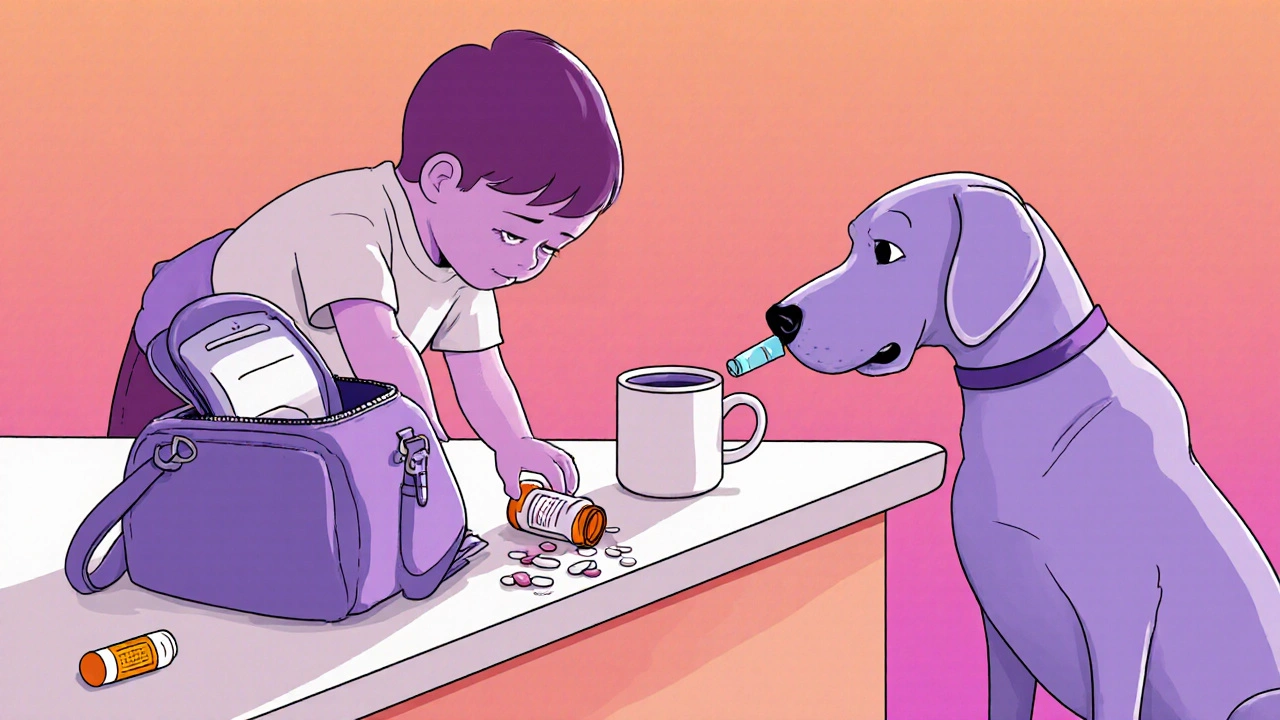
Safe Storage of Medications: How to Keep Children and Pets Safe from Accidental Poisoning
Learn how to lock up medications safely to protect children and pets from accidental poisoning. Discover the best storage practices, what to avoid, and what to do in an emergency.