

30 Dec 2025
- 10 Comments
When you fill a prescription for a Medicare Part D drug, you might expect to get exactly what your doctor wrote on the paper. But that’s not always what happens. Pharmacists can swap your medication for another - and you might not even know it until you see the price or the pill looks different. This is called Medicare Part D substitution, and it’s not random. It’s governed by strict rules tied to your plan’s formulary, your out-of-pocket costs, and federal law.
How Substitution Works in Medicare Part D
Substitution in Medicare Part D isn’t about doctors changing prescriptions on a whim. It’s mostly about pharmacies swapping one drug for another that’s considered medically similar - usually because it’s cheaper and covered under the same tier. This is called therapeutic interchange. For example, if your doctor prescribed a brand-name blood pressure drug, your pharmacist might give you a generic version that works the same way, as long as it’s on your plan’s formulary and your doctor didn’t say "do not substitute."
Most Part D plans use a five-tier system to organize drugs by cost. Tier 1 is usually preferred generics - the cheapest. Tier 2 is other generics. Tier 3 is preferred brand-name drugs. Tier 4 is non-preferred brands and generics - more expensive. Tier 5 is specialty drugs, like those for cancer or MS, which can cost hundreds or thousands per month. Your plan pays more for drugs on lower tiers, so substitution pushes you toward cheaper options.
But here’s the catch: not all substitutions are automatic. If your drug is on a higher tier, your pharmacist might not be allowed to switch it unless your doctor approves. Some plans require step therapy, meaning you have to try a cheaper drug first before they’ll cover the one your doctor ordered. Others require prior authorization - your doctor has to call the plan and prove you need that specific drug.
Formularies Are the Real Rulebook
Your Part D plan’s formulary is the list of drugs it covers - and it changes every year. What was covered last year might be moved to a higher tier or dropped entirely. In 2025, the average Medicare beneficiary has access to 48 Part D plans, but each one has its own formulary. That means two people on different plans could be prescribed the same drug, and one gets it covered while the other gets stuck with a $500 bill.
Pharmacy Benefit Managers (PBMs) - companies hired by insurance plans - create these formularies. Their job is to keep costs down for the plan, not necessarily to match your doctor’s preference. A PBM might decide to stop covering a brand-name drug because a generic is now available, or because a new competitor drug is cheaper. You won’t get a letter every time this happens. You’ll find out when you go to pick up your prescription and the pharmacist says, "We’re giving you a different one."
That’s why checking your formulary before enrolling - or during Open Enrollment each fall - is critical. If you take three or more medications, even a small change in tier can add up to hundreds of dollars extra per year. Wellcare, Humana, and other major insurers all warn: "Review your plan’s formulary before you sign up."
2025 Changes Made Substitution More Predictable
Before 2025, Medicare Part D had a notorious gap in coverage called the "donut hole." Once you and your plan spent a certain amount on drugs, you paid 100% out of pocket until you hit a high threshold. That made substitution a survival tactic. If your drug was expensive, you might be forced to switch to a cheaper one just to keep taking it.
That changed with the Inflation Reduction Act. As of January 1, 2025, the donut hole is gone. Now, there’s a hard cap on out-of-pocket drug spending: $2,000 per year. Once you hit that, you pay nothing for covered drugs for the rest of the year. That’s a game-changer for substitution.
Why? Because before, people avoided expensive drugs until they were forced into the donut hole. Now, if you’re nearing the $2,000 limit, your plan has less incentive to push you toward cheaper alternatives. You’re already paying the maximum. You can take the drug your doctor prescribed without fear of a huge bill.
But substitution doesn’t stop. It just shifts. For people who haven’t hit the cap yet, plans still encourage switching to generics or preferred brands to keep costs low. And for those on specialty drugs, the cap doesn’t erase the high cost of getting there. If you’re on a $1,200-a-month medication, you’ll hit the cap in less than two months - but you’ll still face copays or coinsurance until then.

What You Can Do to Control Substitution
You can’t stop substitution entirely - but you can reduce surprises.
- Check your formulary every year - during Open Enrollment (October 15 to December 7). Look up every drug you take. Don’t assume it’s still covered.
- Ask your pharmacist - "Is this a substitution?" If they say yes, ask why. Was it because of cost? Tier change? Formulary update?
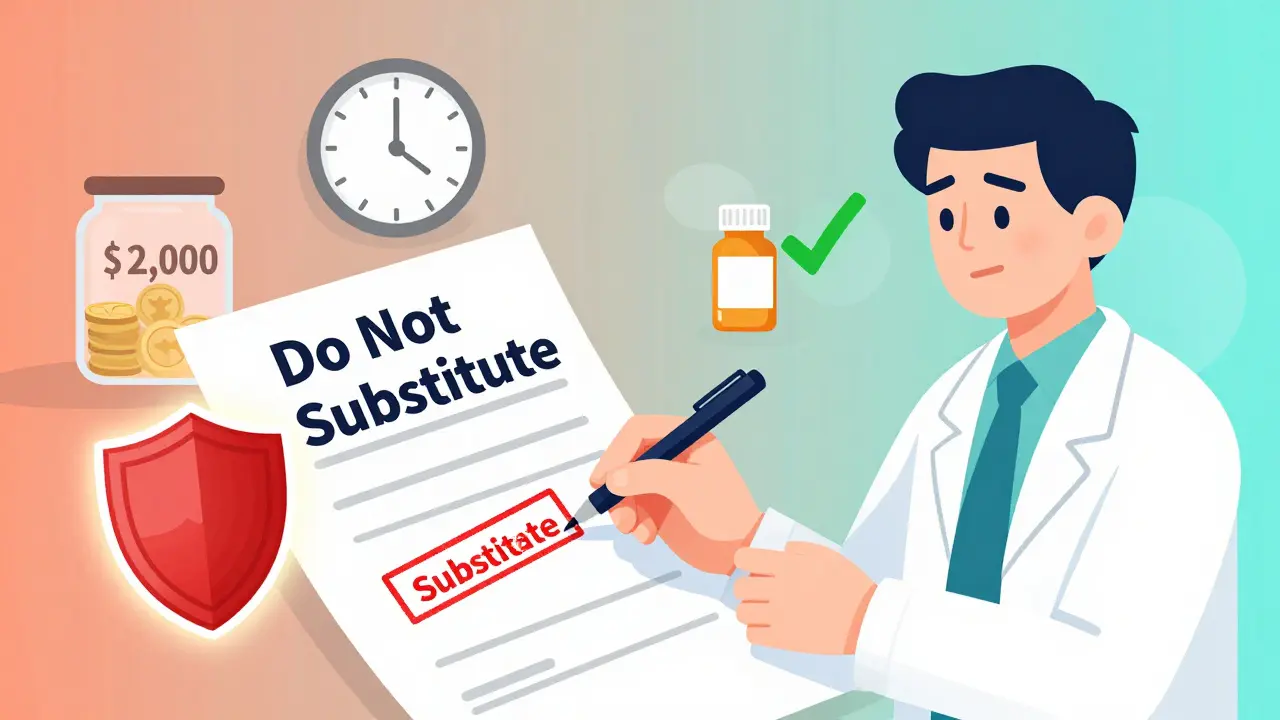
- Request "Do Not Substitute" - If your doctor writes "Dispense as Written" or "Do Not Substitute" on the prescription, the pharmacy must honor it. This is especially important for drugs where even small differences matter, like seizure meds or thyroid drugs.
- Use the Medicare Plan Finder - The official tool lets you enter your drugs and see which plans cover them at the lowest cost. You can compare formularies side by side.
- Know your plan’s rules - Some plans allow substitution only if the generic is bioequivalent. Others require prior authorization even for generics. Read your plan’s documents.
Humana, for example, caps insulin costs at $35 for a 30-day supply - no matter your tier. That’s a form of substitution policy too: they’re forcing manufacturers to lower prices, so you don’t need to switch drugs at all.
When Substitution Can Hurt
Substitution isn’t always safe. Some drugs have narrow therapeutic windows - small changes in dosage or formulation can cause side effects or make the drug ineffective. This is especially true for:
- Antiseizure medications
- Thyroid medications (like levothyroxine)
- Blood thinners (like warfarin)
- Immunosuppressants
If you’re on one of these, substitution can be dangerous. Even if the generic is "FDA-approved," your body might react differently to a different manufacturer’s version. That’s why many doctors insist on "Do Not Substitute" for these drugs.
And if your plan suddenly removes a drug from its formulary - say, your favorite blood pressure med - you might be forced to switch to one you’ve never tried. That can lead to confusion, side effects, or even hospitalization. One study found that 1 in 5 Medicare beneficiaries who switched drugs after a formulary change reported new symptoms within 30 days.
What Happens If You’re Forced to Switch?
If your drug is removed from your plan’s formulary, you have options:
- Request an exception - You or your doctor can ask your plan to cover your drug anyway. You’ll need a letter explaining why the substitute won’t work for you.
- Appeal the decision - If your exception is denied, you can appeal. This takes time, but you can keep taking your drug while the appeal is pending.
- Switch plans - During Open Enrollment, you can move to a plan that covers your drug. Outside of Open Enrollment, you can switch if you qualify for a Special Enrollment Period - like if you move or lose other coverage.
Don’t wait until you’re out of pills to act. If your plan sends a notice that your drug is changing, contact them immediately. Most plans have a 30-day grace period to let you fill your current prescription before switching you.
Why Medicare Advantage Plans Change the Game
More people are enrolling in Medicare Advantage plans (MA-PDs) that bundle medical and drug coverage. In 2025, 34 MA-PDs are available - up 143% over the past decade. These plans often have tighter control over substitution because they manage both your doctor visits and your prescriptions.
With an MA-PD, your doctor might already know what drugs are covered under your plan. They might even write prescriptions based on the formulary. That can reduce surprises - but it can also mean less choice. If your doctor is used to prescribing a brand-name drug, but your plan only covers the generic, you might not even get the option to try the brand.
That’s why it’s important to know whether your doctor works with your plan’s network. If they don’t, they might not know your formulary rules - and you could end up with a prescription your pharmacy can’t fill.
Final Thoughts: Know Your Rights
Medicare Part D substitution isn’t a loophole - it’s a tool. Used right, it saves money and keeps drugs affordable. Used poorly, it can disrupt your health. The system is designed to push you toward lower-cost options, but you’re not powerless.
Your doctor’s prescription is a request, not a command. Your pharmacist’s substitution is a suggestion, not a decision. You have the right to ask questions, to request exceptions, and to switch plans if your needs change. The $2,000 out-of-pocket cap in 2025 gives you breathing room - but it doesn’t remove the need to stay informed.
Don’t assume your drug will stay covered. Don’t trust that your plan’s website is up to date. Call your plan. Check your formulary. Ask your pharmacist. And if you’re ever unsure - ask for a written explanation. You’re paying for this coverage. You deserve to understand how it works.
Can a pharmacist substitute my Medicare Part D drug without telling me?
No. Pharmacists must inform you if they’re substituting a drug, unless your doctor wrote "Do Not Substitute" on the prescription. You should be told the name of the substitute drug and why the change was made. If you’re not told, ask. You have the right to know.
What if my plan drops my drug from the formulary?
Your plan must give you at least a 30-day notice before removing a drug. During that time, you can fill your current prescription. After that, you can request an exception, appeal the decision, or switch to a new plan during Open Enrollment or a Special Enrollment Period.
Are generic drugs always safe to substitute?
For most drugs, yes. Generics must meet FDA standards for safety and effectiveness. But for drugs with narrow therapeutic windows - like seizure meds, thyroid drugs, or blood thinners - even small differences in formulation can affect how your body responds. Always talk to your doctor before accepting a substitution for these.
Does the $2,000 out-of-pocket cap mean I won’t face substitution anymore?
No. The cap only applies after you’ve spent $2,000 in a year. Before that, plans still push substitution to keep costs down. Even after you hit the cap, your plan may still switch you to a cheaper drug - but you won’t pay more. The cap removes financial pressure, not substitution rules.
Can I switch Medicare Part D plans anytime if substitution is a problem?
Generally, no. You can only switch during Open Enrollment (October 15 to December 7) or if you qualify for a Special Enrollment Period - like moving, losing other coverage, or if your plan stops serving your area. If substitution is causing health issues, you can request an exception or appeal - but switching plans outside these windows is rare.
Jenny Salmingo
December 31, 2025Just learned I’ve been getting substituted meds for years and never knew. I thought my blood pressure pill just changed shape. Glad I read this - gonna check my formulary this week. Thanks for the clarity 😊
Lawver Stanton
December 31, 2025Oh wow so now I’m supposed to be a pharmacist AND a biochemist just to figure out why my thyroid med looks like a different color? My doctor writes ‘do not substitute’ but my pharmacy still tries to swap it anyway. They don’t even call me - just leave a note on the counter like I’m some kind of idiot. And don’t get me started on the $2,000 cap - yeah great, but what about the 11 months before you hit it? I’m paying $400 a month for my meds and I’m not rich, I’m just middle class and tired of being treated like a cost center. This system is broken and nobody in Washington cares unless it’s election season.
Kayla Kliphardt
January 1, 2026I’m curious - do any of the major insurers publish their formulary change history? Like, can I see what drugs were removed or moved last year? I’m trying to predict which plan might be safest for next year, but it feels like they hide this stuff on purpose.
Urvi Patel
January 2, 2026Why are Americans so obsessed with generics? In India we know brand names matter - your body remembers the exact chemical mix. Generic levothyroxine? Please. I’ve seen people go into cardiac arrest because some PBM saved $0.20 per pill. This isn’t healthcare - it’s corporate roulette
anggit marga
January 4, 2026Y’all in the US think you have it bad? In Nigeria we pay for meds out of pocket and sometimes walk 10km to the nearest clinic. You complain about substitution but you still have insurance. Meanwhile my aunt is taking half a pill because she can’t afford the other half. Stop being so entitled
Joy Nickles
January 6, 2026Okay so I just found out my plan dropped my antiseizure med last month?? I didn’t get a letter?? I called them and they said ‘oh we sent it in the portal’ - but I never checked the portal because I’m not a tech wizard?? And now my pharmacist gave me a different generic and I’ve had 3 seizures this week?? This is not okay. I’m filing a complaint. Also - why does the word ‘bioequivalent’ keep appearing? Like I’m supposed to know what that means??
Emma Hooper
January 6, 2026Let me tell you something - substitution isn’t just a policy, it’s a personality disorder in the healthcare system. It’s like your doctor says ‘I want vanilla ice cream’ and the pharmacy hands you ‘vanilla-flavored soy gelato with a side of disappointment.’ And then they charge you extra for the disappointment. But hey - at least you’re not paying $500 for the real thing, right? 😏
Martin Viau
January 7, 2026From a Canadian perspective: our pharmacists don’t substitute without consent - it’s legally prohibited. We have a national formulary and it’s transparent. The US system is a market-driven nightmare where PBMs are the real villains. They’re not healthcare entities - they’re hedge fund subsidiaries with Excel sheets. You’re not getting care, you’re getting algorithm-driven cost optimization. The $2,000 cap is a Band-Aid on a hemorrhage.
Retha Dungga
January 7, 2026It’s all about control, isn’t it? 🤔 We think we’re choosing our meds… but really, we’re just choosing which corporate script to follow. The body isn’t a spreadsheet. The soul doesn’t care about tier levels. Maybe the real question isn’t ‘can they substitute?’ but ‘why do we let them?’ 🌿
Aaron Bales
January 9, 2026Check your formulary every year. Write 'Do Not Substitute' on every script for thyroid, seizure, or blood thinner meds. Call your plan if you get a different pill. You’re not being difficult - you’re being smart. And if you’re near the $2K cap, you can finally breathe. But don’t wait until then to act.