
22 Jan 2026
- 29 Comments
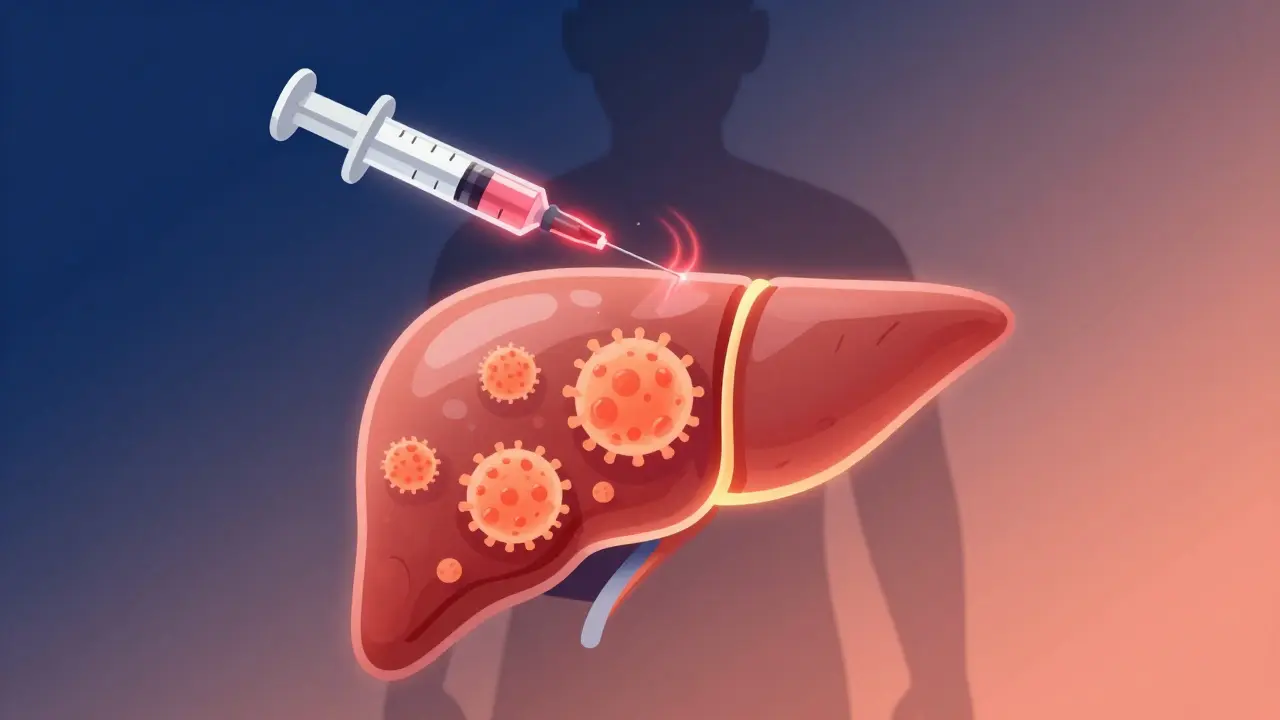
When someone starts treatment for cancer or an autoimmune disease, they expect relief - not a sudden, dangerous flare-up of a virus they didn’t even know they carried. But for people with hidden hepatitis B virus (HBV), powerful drugs like biologics and chemotherapy can accidentally wake up the virus, leading to liver failure or death. This isn’t rare. It happens more often than most doctors and patients realize - and it’s almost always preventable.
What Exactly Is HBV Reactivation?
HBV reactivation means a dormant hepatitis B virus suddenly starts multiplying again in the body. It doesn’t mean you got a new infection. It means your immune system, which had kept the virus under control for years, got knocked out by drugs meant to treat something else. Once that happens, the virus can flood your liver, trigger inflammation, and destroy liver cells. In severe cases, it leads to acute liver failure - and about 5 to 10% of these cases are fatal.
This isn’t theoretical. In the 1970s, doctors first noticed it in cancer patients getting chemotherapy. Back then, many died without knowing why. Today, we know the trigger: immunosuppression. The stronger the drug, the higher the risk. Drugs like rituximab (used for lymphoma), anthracyclines (common in breast cancer), and even checkpoint inhibitors like pembrolizumab can cause reactivation. Even radiation therapy carries a 14% risk in people with past HBV infection.
Who’s at Risk? It’s Not Just Carriers
Many people think only those who test positive for HBsAg - the surface antigen - are at risk. That’s a dangerous myth. About 1 in 10 people globally have been exposed to HBV. Some cleared it naturally. Their bodies still carry traces: the core antibody (anti-HBc) stays positive for life. These people are called “resolved” or “occult” carriers. They feel fine. They don’t need treatment. But if you give them strong immunosuppressants? Their risk of reactivation jumps to 10-18%, especially with high-dose chemo or stem cell transplants.
Here’s how the risk breaks down by group:
- HBsAg-positive: 20-81% risk, depending on the drug. Rituximab? Up to 73%. Stem cell transplant? Over 80%.
- HBsAg-negative, anti-HBc-positive: 1-18% risk. Highest with B-cell depleting drugs and high-dose chemo.
- Both negative: Less than 0.1% risk. No prophylaxis needed.
That’s why screening isn’t optional - it’s the first line of defense. You can’t protect someone if you don’t know they’re at risk.
The Three Stages of Reactivation
HBV reactivation doesn’t happen overnight. It follows a clear pattern:
- Stage 1: Silent Replication - Immunosuppression weakens the body’s control over the virus. HBV DNA levels rise, but liver enzymes (ALT, AST) stay normal. No symptoms.
- Stage 2: Immune Rebound - As the immune system starts recovering (or the drug wears off), T-cells attack infected liver cells. ALT spikes. Jaundice, fatigue, nausea appear. This is when liver damage accelerates.
- Stage 3: Resolution or Failure - If antivirals are given early, the virus is suppressed and the liver heals. If not? Liver failure, transplant, or death.
The biggest danger? Stage 1. No symptoms. No warning. By the time jaundice shows up, it’s often too late.
Which Drugs Are the Biggest Threat?
Not all immunosuppressants are equal. Here’s what the data says:
| Drug Class | Examples | Risk in HBsAg-Positive | Risk in Anti-HBc-Positive |
|---|---|---|---|
| B-cell depleting agents | Rituximab, Ofatumumab | 38-73% | 10-18% |
| Anthracycline chemo | Doxorubicin, Epirubicin | 25-40% | 5-10% |
| Stem cell transplant | Autologous/Allogeneic | 66-81% | 15-20% |
| TNF-alpha inhibitors | Adalimumab, Infliximab | 5-15% | 3-8% |
| Checkpoint inhibitors | Pembrolizumab, Nivolumab | 21% (if no prophylaxis) | 5-7% |
| Low-risk therapies | Non-TNF biologics, non-cytotoxic drugs | <1% | <0.5% |
Notice something? Even drugs labeled as “low-risk” can be dangerous if you’re unaware of past HBV exposure. That’s why universal screening is non-negotiable.
Screening: The Simple Test That Saves Lives
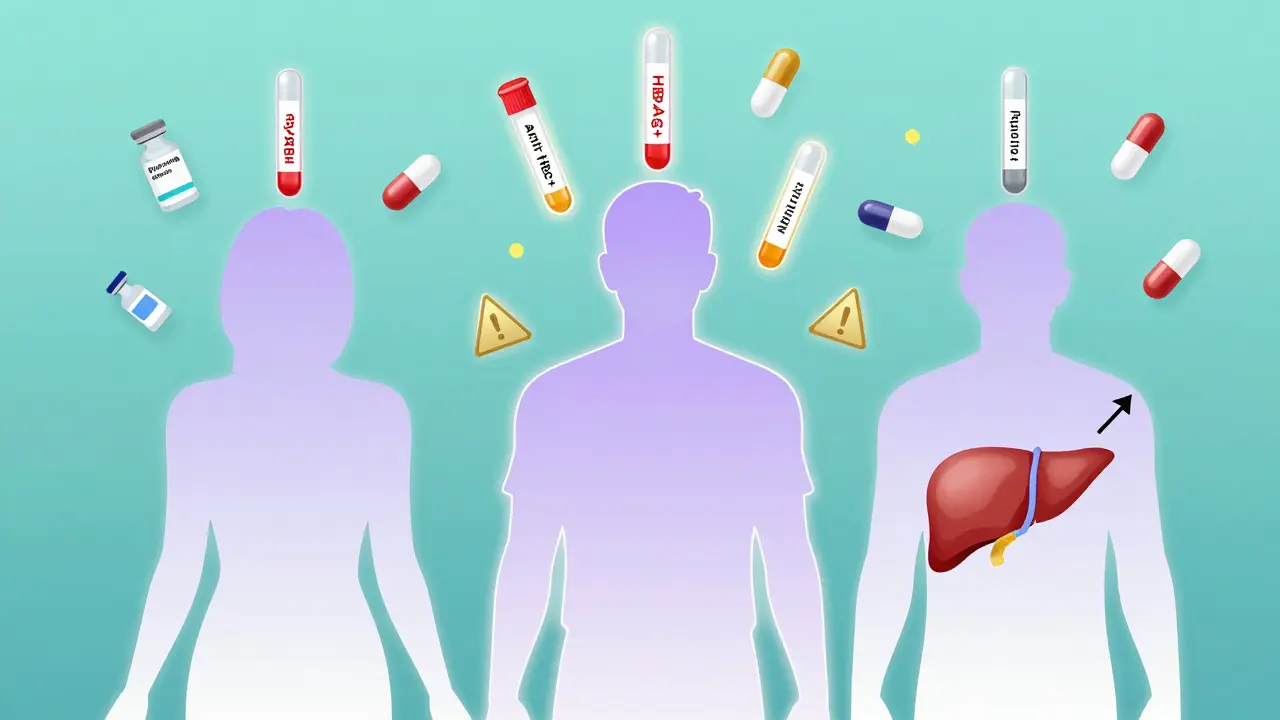
Before any immunosuppressive therapy - whether it’s for rheumatoid arthritis, lymphoma, or breast cancer - every patient needs two blood tests:
- HBsAg - tells you if the virus is currently active.
- Anti-HBc - tells you if you’ve ever been exposed.
If HBsAg is positive? You’re at high risk. Start antivirals before the first dose of chemo or biologic. If anti-HBc is positive but HBsAg is negative? You’re still at moderate-to-high risk. Prophylaxis is still recommended for most high-intensity therapies.
Don’t wait for symptoms. Don’t assume the patient “never had hepatitis.” Many people never knew they were infected. In Asia and Africa, up to 10% of the population has past HBV. Even in the UK and US, 0.5-1% of adults are anti-HBc positive. That’s tens of thousands of people at risk every year.
Prophylaxis: The Right Drug, the Right Time
Once screening identifies risk, prophylaxis is simple and effective. The two go-to antivirals are:
- Tenofovir (TDF or TAF)
- Entecavir
Both are powerful, have minimal side effects, and rarely lead to resistance. Studies show they cut reactivation risk from over 40% down to under 5%.
Timing matters:
- Start antivirals at least one week before starting immunosuppression.
- Continue for 6-12 months after therapy ends. For B-cell depleting agents like rituximab, go for 12 months - the immune system takes longer to recover.
- For checkpoint inhibitors, continue for at least 6 months after the last dose.
A 2022 study in the New England Journal of Medicine showed 6 months is enough for most patients - a big shift from older guidelines that pushed for a full year. But for rituximab? Stick with 12. Don’t guess. Follow the data.
Why Do So Many Patients Still Get Hit?
Screening works. Prophylaxis works. So why do cases still happen?
Because implementation is broken.
A 2020 survey found only 58% of community oncologists screen patients before starting treatment. In academic hospitals? 89%. That’s a 31-point gap. Why? Busy clinics. Lack of protocols. Assumptions. “They’re young. They’re healthy. They wouldn’t have hepatitis.”
One case report tells the whole story: a 52-year-old man with lymphoma got rituximab without screening. Three weeks later, he was in liver failure. He died. He’d been born in Bangladesh. His family never told him he had hepatitis as a child. No one asked.
At UCSF, they fixed this by adding automated alerts in their electronic health record. If a patient is scheduled for chemo and hasn’t had HBV screening, the system blocks the order until it’s done. Result? Reactivation rates dropped from 12.3% to 1.7% in just five years.
What About the Cost? Is It Worth It?
Some argue screening and prophylaxis are too expensive. But the math doesn’t add up.
Screening costs $20-$50 per patient. A full course of tenofovir for 6 months? About $300. Treating acute liver failure? $100,000+. A transplant? Over $800,000.
Dr. Anna S. Lok at the University of Michigan says the number needed to treat to prevent one reactivation is just 3. That’s better than most cancer screenings.
And the cost of not doing it? Legal liability. In 12% of oncology malpractice claims involving infections, HBV reactivation was the cause. Hospitals are now being sued for failing to screen. The FDA now requires HBV warnings on every biologic’s label. Ignorance is no longer an excuse.
What’s Next? The Future of Prevention
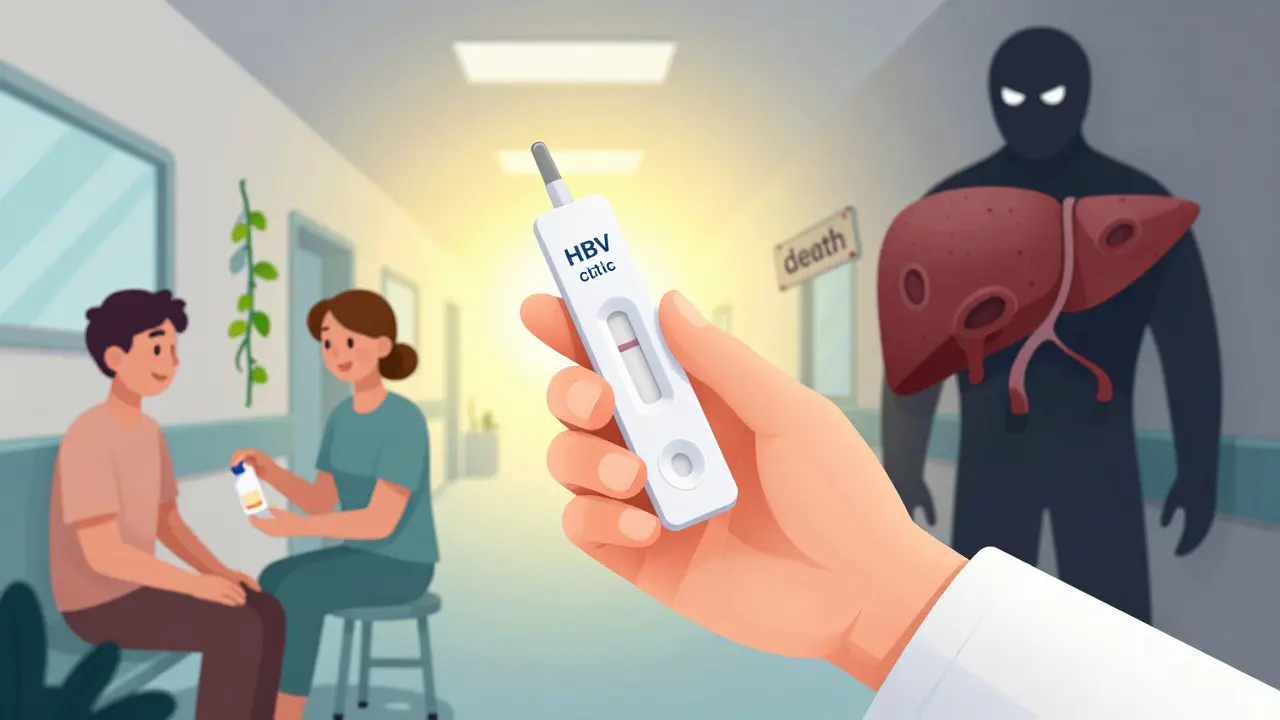
The tools are getting better. Point-of-care rapid tests - like the OraQuick HBV test - are coming. In 2023, they’re expected to get FDA approval. Imagine a doctor’s office doing a finger-prick test before giving the first dose of rituximab. No lab wait. No missed steps.
Companies like Tempus Labs are now embedding HBV status into genomic cancer reports. Your tumor profile will also tell you: “HBV status: positive - prophylaxis required.”
But the biggest barrier isn’t technology. It’s culture. Too many doctors still think, “This isn’t my problem.” Hepatitis B is liver disease. Liver disease is gastroenterology. But reactivation happens because of oncology, rheumatology, transplant medicine. It’s a team sport.
Every specialist who prescribes immunosuppressants needs to know: Screen first. Treat early. Don’t wait for symptoms.
Bottom Line: Don’t Let a Hidden Virus Kill
HBV reactivation is one of the most preventable disasters in modern medicine. We have the tests. We have the drugs. We have the guidelines. What we’re missing is consistency.
If you’re a patient about to start chemo, a biologic, or a transplant - ask: “Have you checked for hepatitis B?” If you’re a doctor - make screening mandatory. Don’t assume. Don’t delay. One blood test, one conversation, could save a life.
Because sometimes, the biggest threat isn’t the cancer. It’s the virus you never knew was there.
Dolores Rider
January 23, 2026so like... are you telling me Big Pharma is hiding this on purpose?? 🤔 like why would they NOT tell everyone about this?? i swear i saw a documentary where they said liver failure cases spiked after new drugs came out... and then suddenly everyone was 'surprised'... 🤨 #CoverUp
venkatesh karumanchi
January 25, 2026This is so important. In India, many people don't even know what hepatitis B is. I've seen patients come in with advanced liver damage after chemo, and the family says, 'He was always healthy.' We need to push for free screening in rural clinics. One test can save a life.
Jenna Allison
January 26, 2026Just to clarify: HBsAg-negative/anti-HBc-positive is called 'occult HBV' - it's not 'resolved' because the virus is still there, just hidden. The core antibody means you had exposure, and the virus integrated into your hepatocytes. That’s why immunosuppression wakes it up. Prophylaxis with tenofovir is 95% effective if started early. Don’t skip the test.
Vatsal Patel
January 26, 2026Ah yes. The great medical-industrial complex. First they give you drugs that break your immune system. Then they sell you more drugs to fix what they broke. And you pay for it twice. Meanwhile, the real cure - sunlight, clean water, and not being poisoned by corporate greed - is never mentioned. 🙃
Sharon Biggins
January 28, 2026This is such a good reminder. If you're about to start any new treatment, just ask your doctor: 'Have you checked for hepatitis B?' It takes 5 minutes. I'm so glad this info is out there. You're not being paranoid - you're being smart. 💪❤️
John McGuirk
January 30, 2026Let’s be real. The FDA only added warnings because they got sued. And guess what? The same companies that make the chemo drugs also make the antivirals. Coincidence? Or just good business? 🤔 You think they want you to live? Or just to keep buying meds?
Michael Camilleri
February 1, 2026People don't get it. You think your doctor cares? They're paid per procedure. Screening? That's time they could be seeing 3 more patients. Prophylaxis? That's another bill they don't get paid for. So they skip it. And then you die quietly while they move on to the next one. Wake up.
Kat Peterson
February 2, 2026I just got diagnosed with RA and my rheumatologist didn't even mention this... I'm crying rn 😭 like... what if I had started infliximab? I feel so violated. Why didn't anyone tell me? I'm googling 'HBV screening' right now. #MedicalTrauma
Husain Atther
February 3, 2026In India, HBV is endemic. Many of us carry it without knowing. The challenge is not awareness alone, but access. In rural areas, blood tests are expensive and labs are far. We need mobile screening units and government subsidies. This is not just a medical issue - it’s a social justice issue.
Helen Leite
February 5, 2026OMG I just realized my cousin died of liver failure after chemo... they never tested her 🥲 she was born in Vietnam. I’m screaming at my mom right now to get tested. THIS IS REAL. I’m telling everyone. 🚨
Phil Maxwell
February 7, 2026I work in a clinic. We started doing HBV screens before every chemo referral. We didn’t even realize how many people were positive until we started. Now we have a checklist. It’s not hard. Just... do it.
Sushrita Chakraborty
February 7, 2026The data presented is unequivocal. Universal screening prior to immunosuppressive therapy is not merely advisable - it is ethically and clinically imperative. The cost-benefit analysis is overwhelmingly in favor of prophylaxis. Failure to implement standardized protocols constitutes a breach of the duty of care.
Josh McEvoy
February 7, 2026bro i just got my bloodwork back and i’m anti-hbc positive 😳 i thought i was fine. i’m about to start methotrexate for psoriasis. i’m gonna call my doc right now. thanks for this post 🙏
Sawyer Vitela
February 7, 2026Screening saves lives. Prophylaxis works. Stop ignoring guidelines.
Jenna Allison
February 8, 2026I just saw a comment saying 'Big Pharma is hiding this' - no. This is a systemic failure in training and workflow. Medical schools barely teach HBV reactivation. Nurses don’t get reminders. EHRs don’t auto-flag. It’s not malice. It’s negligence by design. Fix the system, not the villains.
Sawyer Vitela
February 8, 2026Exactly. And UCSF’s EHR fix proves it’s solvable. Stop blaming corporations. Start fixing workflows.
Jamie Hooper
February 9, 2026i used to work in a hospital and we had this guy who got rituximab without screening... he died in 3 weeks. no one told his family why. the docs just said 'complications'. i still think about it. 😔
Michael Camilleri
February 10, 2026They don’t tell families because then they’d have to answer for it. And lawsuits are expensive. So they bury it under 'unforeseen complications'. Classic.
Josh McEvoy
February 10, 2026just got my test results. HBsAg negative, anti-HBc positive. called my rheum doc. he said 'oh yeah we do that now' and sent me a script for tenofovir. i feel like i just dodged a bullet. thank you internet strangers 🙏
Sharon Biggins
February 11, 2026you’re so brave for speaking up!! that’s exactly what we need more of - people asking questions. you saved yourself. and now you’re saving others by sharing. i’m proud of you 💕
Husain Atther
February 11, 2026This is why we need community health workers - not just doctors. Someone who speaks the language, knows the culture, and can walk a patient through testing. In my village, people trust the local nurse more than the hospital. We must empower them.
Sushrita Chakraborty
February 12, 2026Agreed. Structural interventions - not individual vigilance - are the only sustainable solution. Policy change, not patient advocacy, must be the goal.
Dolores Rider
February 12, 2026so like... if they’re testing everyone now... why did it take a death for them to start? who died first? was it a rich person? 🤔
John McGuirk
February 13, 2026It was always the poor. The undocumented. The ones without insurance. The ones who didn’t have a voice. Now it’s in the news. Now it’s 'urgent'. When it’s a billionaire’s kid? Then they move fast.
Helen Leite
February 13, 2026i just told my mom to get tested. she’s 68. she came from the Philippines in the 70s. i’m scared for her. i’m gonna send her this post. 🥺
venkatesh karumanchi
February 15, 2026My mother was diagnosed with HBV in 1990. She was told to rest. No treatment. No screening. Now, with this knowledge, I wish I had known sooner. Let’s make sure no one else loses a parent to a silent virus.
Sawyer Vitela
February 17, 2026Screen. Treat. Document. Repeat.
Jenna Allison
February 17, 2026The real win? When a patient says 'I didn’t know I had it' - and then survives because someone asked the right question. That’s medicine done right.
Sawyer Vitela
February 18, 2026Done.