
Drug Fillers: What They Are, Why They Matter, and What You Should Know
When you swallow a pill, you're not just taking the active drug—you're also swallowing drug fillers, non-active ingredients added to pills to help with manufacturing, stability, and absorption. Also known as excipients, these substances hold the medicine together, control how fast it dissolves, and make it easier to swallow. Without them, most pills would crumble, dissolve too quickly, or not work at all. But here’s the thing: even though they don’t treat your condition, drug fillers can still affect your health.
Some people react to common fillers like lactose, gluten, or dyes—even if they’re not allergic to the drug itself. If you have celiac disease, a lactose intolerance, or a sensitivity to artificial colors, your medication might be causing symptoms you didn’t realize were drug-related. Generic drugs often use different fillers than brand-name versions, and that’s why some patients swear one version works better than another. It’s not placebo—it’s the filler. Even small changes in fillers can alter how quickly a drug enters your bloodstream, which matters for medications like blood thinners, seizure drugs, or thyroid hormones.
Drug fillers also play a role in how affordable your medicine is. Manufacturers choose fillers based on cost, availability, and ease of production. That’s why price wars in the generic market don’t just affect the active ingredient—they change the whole formula behind the scenes. And while regulators require fillers to be safe, they don’t always require full disclosure on the label. You might not know what’s in your pill unless you dig into the package insert or call your pharmacist.
That’s why knowing about drug fillers isn’t just for scientists or pharmacists. It’s for anyone who takes medicine regularly. If your symptoms change after switching brands, if you’ve had unexplained bloating or rashes after starting a new pill, or if you’re trying to avoid certain allergens, your filler might be the culprit. The posts below break down real cases where fillers caused problems, explain how to read labels you’ve probably ignored, and show you how to ask your pharmacist the right questions to avoid hidden risks. You’ll find out which fillers are most likely to cause reactions, how to spot them on labels, and what to do if your medication suddenly stops working the same way.
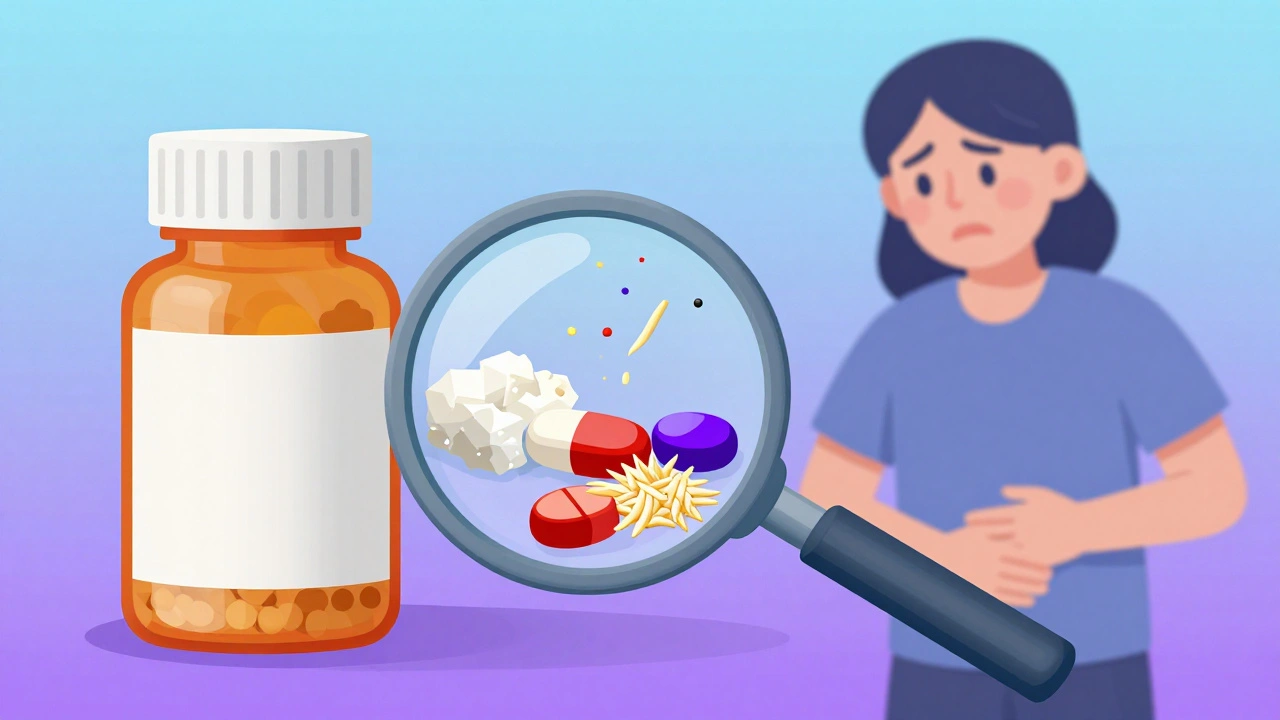
Inactive Ingredients in Generic Medications: What You Need to Know
Generic medications save money but may contain different inactive ingredients that can trigger allergies or side effects. Learn what's really in your pills and how to protect yourself.