
Medication Dosing: How to Get the Right Amount for Your Body
When you take a pill, the medication dosing, the specific amount of a drug given at a certain time to achieve the desired effect without causing harm. Also known as drug dosage, it’s not one-size-fits-all—it’s shaped by your weight, age, liver function, other meds you’re on, and even what you ate that day. Too little and it won’t work. Too much and you risk side effects, organ damage, or even death. This isn’t guesswork. It’s science, adjusted for you.
That’s why drug interactions, when one medication changes how another behaves in your body matter so much. A common painkiller like diclofenac can make your blood pressure drug less effective. Soy can cut your thyroid medication’s power by 30%. Even grapefruit juice can turn a normal dose into an overdose. And then there’s safe medication use, the practice of taking drugs exactly as prescribed, tracking side effects, and knowing when to ask for help. It’s not just about swallowing pills. It’s about understanding timing, food effects, kidney clearance, and how your body changes over time.
Some drugs need careful titration—like gabapentin for nerve pain, where going too high too fast causes dizziness and falls. Others, like amlodipine for blood pressure, require slow adjustments based on your readings. And for chronic conditions like osteoporosis or hypothyroidism, dosing isn’t a one-time decision—it’s a long-term dance between lab tests, symptoms, and your doctor’s judgment. Even generics, which are just as effective as brand names, can have slight variations that affect how your body responds, especially if you’re on multiple meds.
What you’ll find below isn’t just a list of articles. It’s a practical guide to real-world dosing problems: why your doctor might change your dose after a dental procedure, how to avoid anaphylaxis from a new med, why your blood thinners need special care during surgery, and how to spot when your thyroid meds aren’t working because of soy. These aren’t theory pieces—they’re lessons from real patients and clinicians who’ve seen what happens when dosing goes wrong.
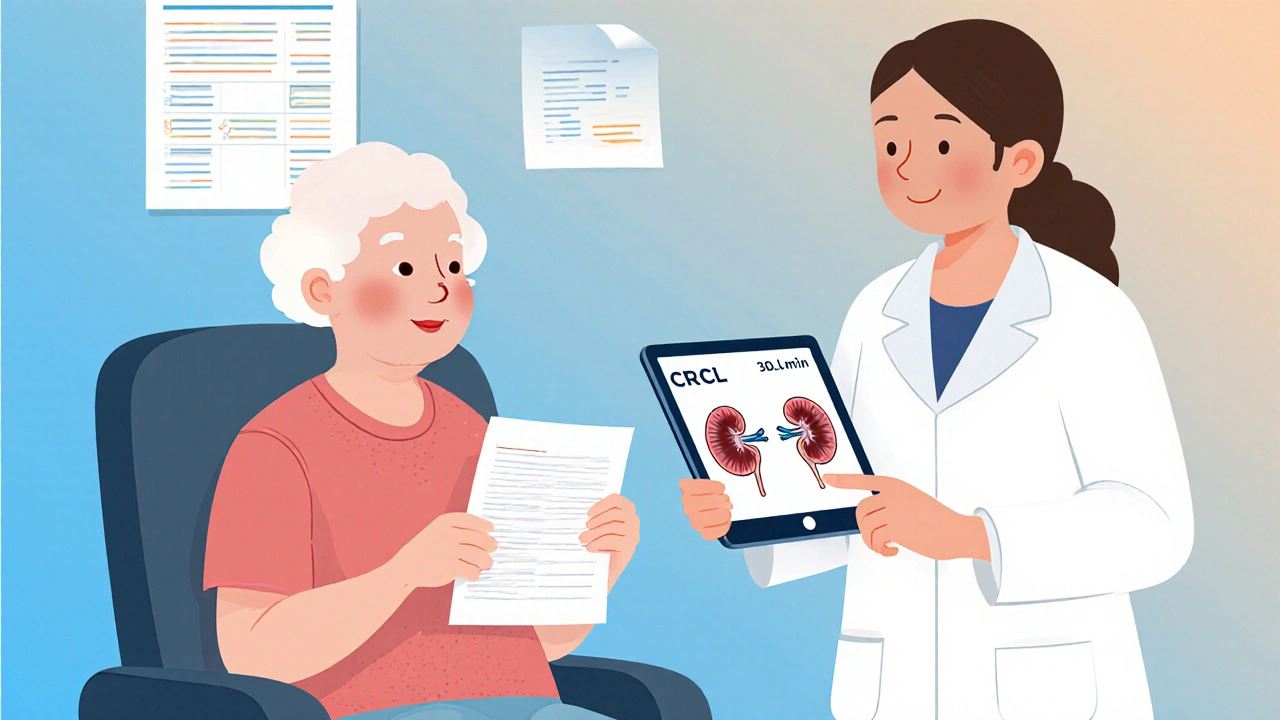
Elderly Renal Impairment: How to Adjust Medication Dosing to Prevent Toxicity
Elderly patients with kidney impairment are at high risk for medication toxicity. Learn how to adjust doses using CrCl, which drugs are most dangerous, and how to prevent life-threatening side effects.