
Package Inserts: What They Really Say About Your Medications
When you pick up a prescription or buy an over-the-counter drug, the package insert, a detailed document included with every medication that outlines its uses, risks, and proper usage. Also known as prescribing information or a patient leaflet, it’s not just paperwork—it’s your personal safety guide. Most people glance at it, toss it in the drawer, or ignore it entirely. But skipping it could mean missing critical warnings about side effects, dangerous interactions, or how to store your medicine properly.
These inserts aren’t written for doctors—they’re meant for you. They explain drug interactions, how one medication can change how another works in your body, like how soy can cut levothyroxine absorption by 30%, or how antihistamines might trigger dangerous eye pressure if you have narrow-angle glaucoma. They list adverse events, rare but serious side effects that can be life-threatening, such as drug-induced hemolytic anemia or opioid-induced adrenal insufficiency. And they tell you exactly when to call your doctor—like if you’re on blood thinners and need dental work, or if you’re elderly with kidney issues and your dose needs adjusting.
They also cover medication storage, how to keep pills safe from kids, pets, or heat damage, which is why locking up your medicine cabinet isn’t optional—it’s essential. You’ll find dosing instructions that aren’t just "take one daily," but details like "take on an empty stomach, at least 30 minutes before breakfast," or "avoid grapefruit juice." These aren’t suggestions. They’re science-backed rules that can make the difference between healing and hospitalization.
And here’s the truth: even generics have the same inserts as brand-name drugs. The FDA requires it. That means the generic drug safety, the same level of risk and benefit information required for all approved medications is right there in the same format. Yet many people still think generics are somehow less documented. They’re not. The insert is identical.
What you’ll find in the posts below isn’t just a list of articles—it’s a deep dive into what those inserts are trying to tell you. From how to read the fine print on gabapentin dosing to why your pharmacist might miss deadly drug combinations, every post pulls back the curtain. You’ll learn how to spot red flags in your own meds, understand why timing matters with thyroid pills, and what to do if you’re taking multiple drugs and feel off. This isn’t theory. It’s what happens when you stop ignoring the paper that came with your pills.
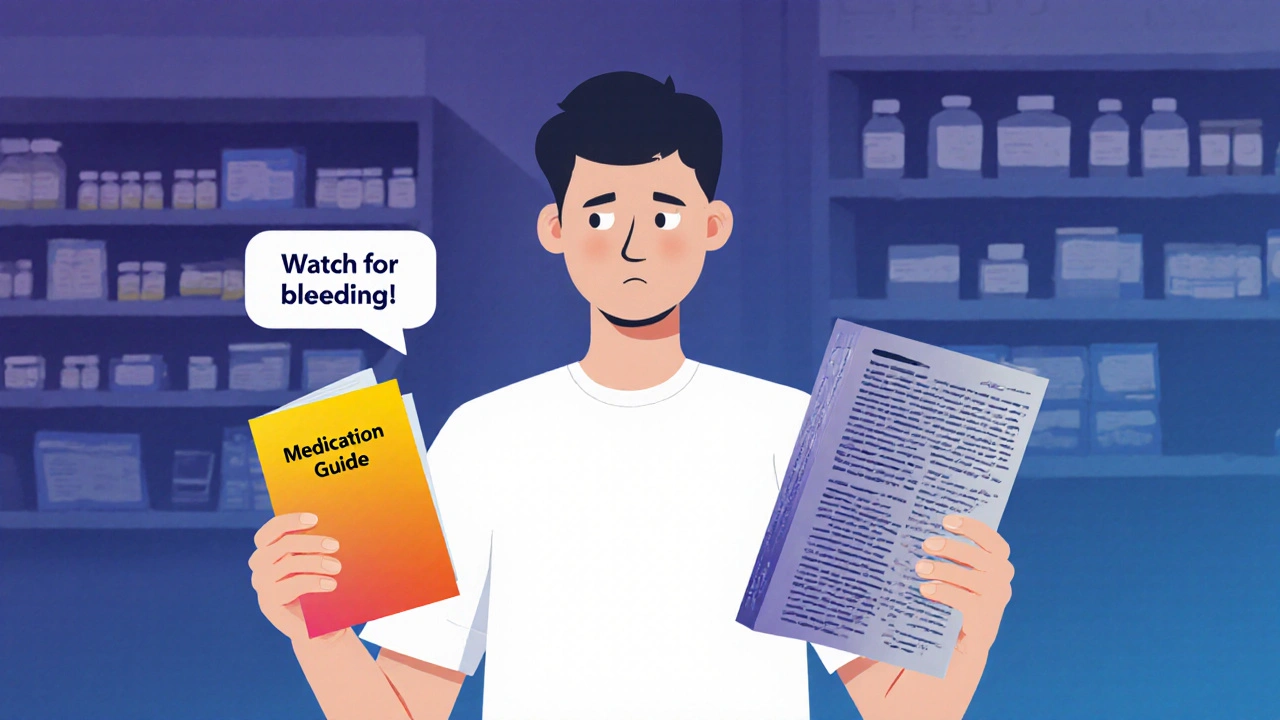
Medication Guides vs Package Inserts: Where to Find Side Effect Details
Learn where to find accurate side effect information for your prescription drugs. Understand the difference between FDA-required Medication Guides and technical Package Inserts - and how to use both to stay safe.