
Quetiapine: What It Is, How It Works, and What You Need to Know
When you hear quetiapine, a second-generation antipsychotic drug used to treat schizophrenia, bipolar disorder, and sometimes severe insomnia or anxiety. Also known as Seroquel, it works by balancing chemicals in the brain like dopamine and serotonin to reduce hallucinations, mood swings, and agitation. Unlike older antipsychotics, quetiapine doesn’t always cause stiff muscles or tremors—but it does come with its own set of risks, especially if taken long-term or mixed with other meds.
It’s not just for psychosis. Many doctors prescribe quetiapine off-label for depression that hasn’t responded to other treatments, or for sleep problems tied to anxiety or PTSD. But here’s the catch: it’s a strong sedative. People often feel drowsy, dizzy, or gain weight quickly. That’s why it’s not a first-line sleep aid—it’s a last-resort one. If you’re taking it for sleep, your doctor should be monitoring your blood sugar, cholesterol, and liver function. The FDA has warned about increased risk of death in elderly patients with dementia-related psychosis, so it’s never used casually in older adults.
Quetiapine doesn’t work the same for everyone. Some feel better in days. Others need weeks. And stopping it suddenly can cause nausea, vomiting, or even rebound insomnia. That’s why tapering off under medical supervision is critical. It also interacts with many common drugs—like certain antibiotics, antifungals, and even grapefruit juice—which can raise levels in your blood and increase side effects. If you’re on blood pressure meds, antidepressants, or opioids, talk to your pharmacist before starting quetiapine.
There are alternatives. For bipolar disorder, lithium or valproate might be safer long-term. For schizophrenia, risperidone or aripiprazole may cause less weight gain. And for sleep, non-drug approaches like CBT-I often work better than sedatives. But if quetiapine is the right fit for you, knowing how to take it safely makes all the difference.
Below, you’ll find real-world insights from people who’ve used quetiapine—what worked, what didn’t, and what side effects they didn’t see coming. You’ll also see how it compares to other antipsychotics, what to watch for with long-term use, and how to talk to your doctor about switching if things aren’t working.
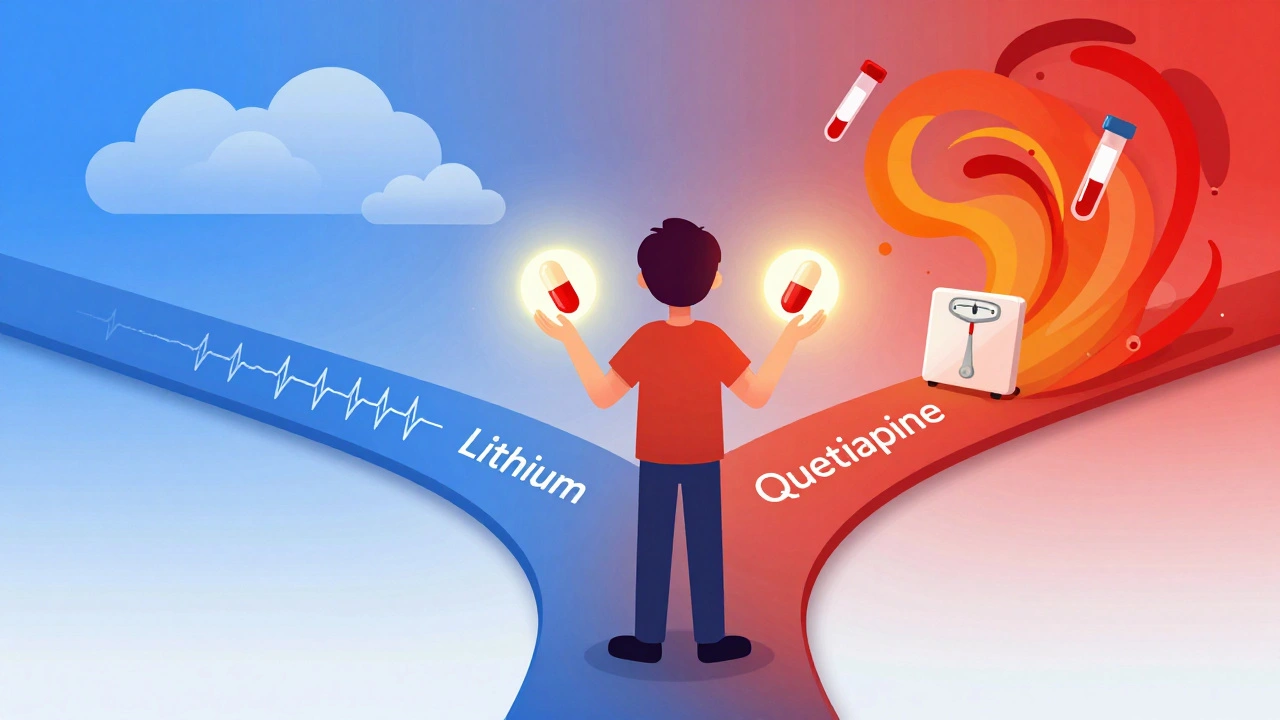
Bipolar Disorder: How Mood Stabilizers and Antipsychotics Really Work in Practice
Learn how mood stabilizers and antipsychotics work in real-world bipolar disorder treatment, including side effects, monitoring, and what works best based on current evidence and patient experiences.