
24 Mar 2026
- 12 Comments
Opioid-Benzodiazepine Risk Calculator
This tool estimates the risk of breathing suppression when combining opioids and benzodiazepines based on CDC data. It shows the multiplicative risk of this dangerous combination.
Risk Results
Opioid Alone
30%
Benzodiazepine Alone
45%
Combined Effect
75%
Based on CDC data: 1 in 6 opioid overdose deaths involved benzodiazepines. People taking both drugs are 10 times more likely to die from overdose than those taking opioids alone.
When you take opioids for pain and benzodiazepines for anxiety, you might think you’re managing two separate problems. But your body doesn’t see them that way. Together, they don’t just add up-they multiply. And the most dangerous result? Your breathing slows down until it stops. This isn’t a rare accident. It’s a predictable, preventable, and tragically common cause of death.
How These Drugs Kill
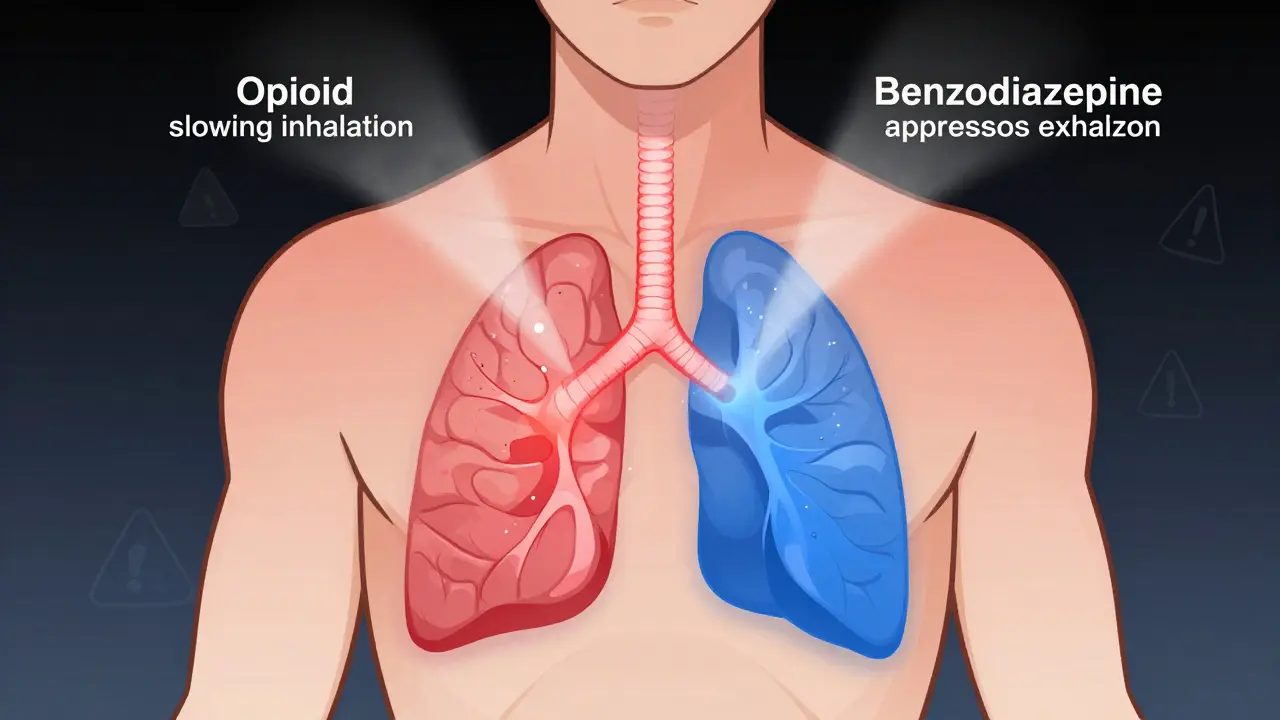
Opioids like oxycodone, fentanyl, or hydrocodone work by attaching to receptors in your brainstem-the part that automatically controls breathing. They make you exhale longer and slower, until your breaths become shallow and spaced too far apart. At high doses, this can lead to long pauses between breaths, called apnea. You don’t feel it coming. You don’t wake up. Your brain just stops signaling your lungs to work. Benzodiazepines-drugs like diazepam, alprazolam, or clonazepam-do something different but just as dangerous. They boost GABA, a natural chemical in your brain that calms nerve activity. This helps with anxiety, seizures, or muscle spasms. But it also quiets the brainstem’s breathing centers. Alone, a therapeutic dose might only slightly slow your breathing. But when paired with an opioid? The effect isn’t just added. It’s amplified. Studies show that together, they can reduce breathing by more than 75%, while either drug alone might cut it by 30% or 45%. This synergy happens because the two drugs attack breathing from two different angles. Opioids target the preBötzinger Complex, the brain’s main rhythm generator for inspiration. Benzodiazepines hit the Kölliker-Fuse/Parabrachial complex, which controls how long you exhale. When both are active, your lungs get stuck-no deep inhale, no full exhale. The result? Carbon dioxide builds up. Oxygen drops. You pass out. And if no one intervenes, your heart stops.The Numbers Don’t Lie
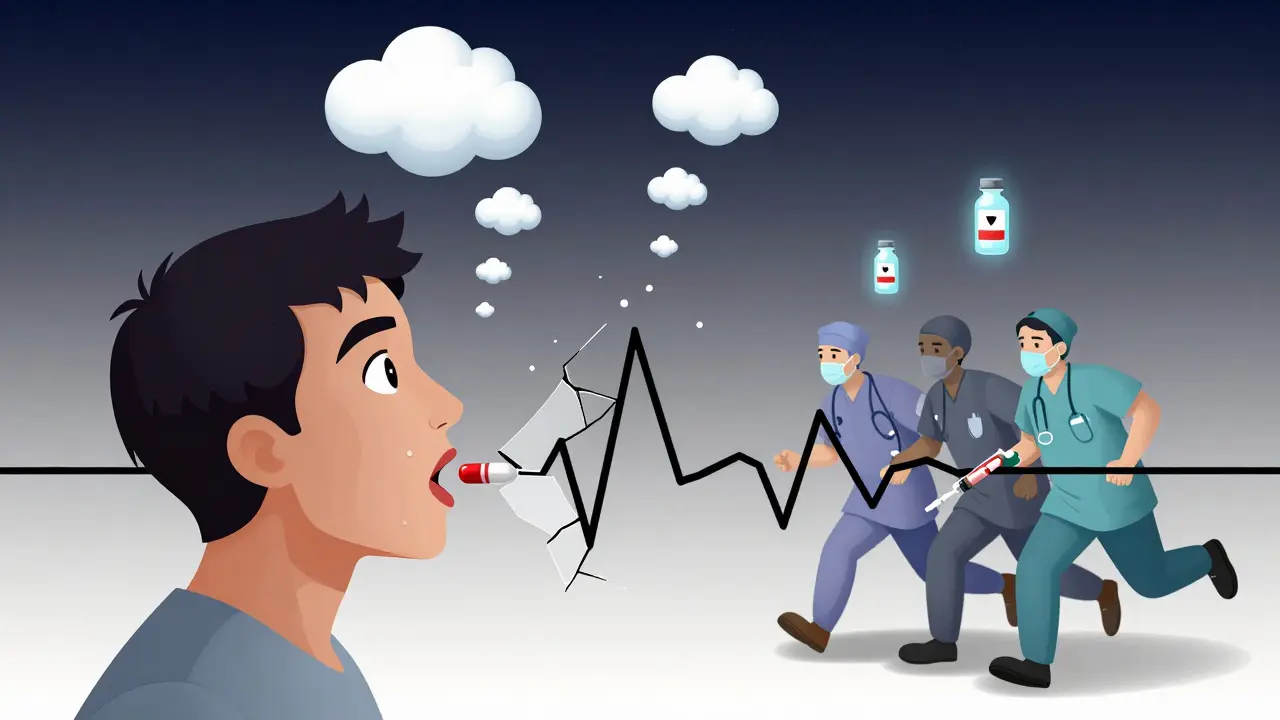
In 2019, nearly 1 in 6 opioid overdose deaths in the U.S. involved benzodiazepines. That’s not a coincidence. It’s a pattern. The CDC found that people taking both drugs together are 10 times more likely to die from an overdose than those taking opioids alone. The risk is highest among middle-aged adults-people aged 45 to 64-where the death rate reached 22.3 per 100,000 in 2020. Between 2004 and 2011, emergency room visits from people mixing these drugs jumped 131%. By 2019, the death rate from this combination had risen over 1,800% since 1999. Even after the FDA issued a black box warning in 2016-the strongest possible alert-prescribing didn’t stop. In 2022, nearly 9% of long-term opioid users were still getting both drugs at the same time. And here’s the cruel twist: naloxone, the overdose reversal drug, only works on opioids. It does nothing to reverse the breathing suppression caused by benzodiazepines. So even if someone gets naloxone quickly, they might still die because their breathing hasn’t returned.Why Do Doctors Still Prescribe Both?
Some doctors still prescribe these drugs together because they think it’s the easiest way to manage pain and anxiety. But the guidelines are clear. The American Society of Anesthesiologists says this combination should be avoided whenever possible. The CDC’s 2016 opioid prescribing guidelines say the same thing. The FDA’s own Risk Evaluation and Mitigation Strategy (REMS) requires prescribers to evaluate whether benzodiazepines are truly needed when opioids are already on the table. But habits are hard to break. Many patients come in with a long history of both medications. Others are prescribed benzodiazepines for insomnia or muscle spasms without realizing how dangerous the combo is. And some prescribers don’t check prescription drug monitoring programs (PDMPs)-the databases that show what else a patient is taking. The good news? Since the 2016 FDA warning, the rate of co-prescribing dropped by 14.5%. That’s progress. But it’s not enough.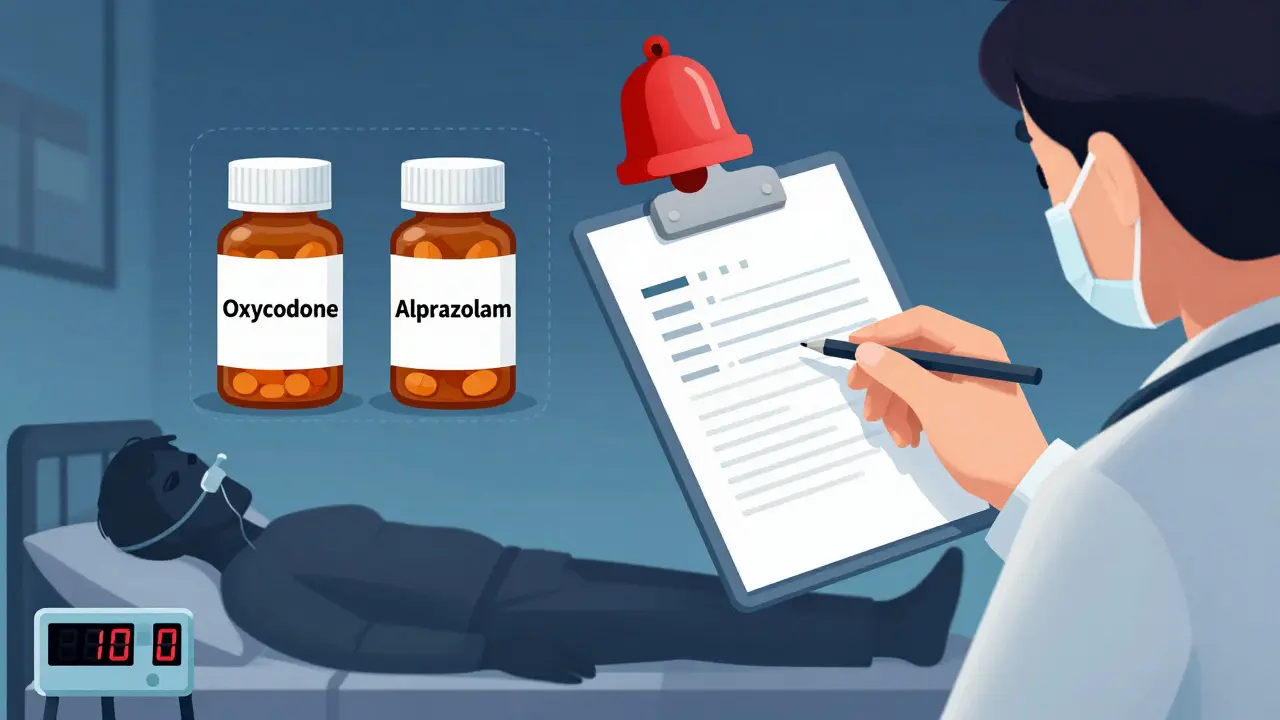
What Can Be Done Instead?
You don’t need benzodiazepines to manage anxiety if you’re on opioids. There are safer options:- SSRIs or SNRIs like sertraline or venlafaxine for long-term anxiety or depression
- Buspirone, a non-addictive anti-anxiety drug with no respiratory risk
- Cognitive behavioral therapy (CBT)-proven to reduce anxiety without any drugs
- Non-opioid pain treatments like physical therapy, nerve blocks, or gabapentin for nerve pain
What If You’re Already Taking Both?
If you’re on opioids and benzodiazepines right now, don’t stop suddenly. Withdrawal from either can be dangerous. Talk to your doctor. Ask:- Is this combination absolutely necessary?
- Can one of these drugs be replaced with something safer?
- Can my dose be lowered?
- Have you checked my prescription history?
What’s Being Done to Stop This?
Public health efforts are stepping up. The SUPPORT Act of 2018 forced Medicare to track patients at risk. 16 states now have PDMP alerts that pop up when a doctor tries to prescribe both drugs. The NIH has invested millions into research-like testing new drugs that can reverse both opioid and benzodiazepine effects at once. One experimental compound, CX1739, has restored breathing in animal studies when given after a fentanyl-alprazolam overdose. It’s not ready for humans yet, but it’s a sign that science is catching up. Still, the CDC predicts 12,000 to 15,000 people will die each year from this combination through 2025. That’s not inevitable. It’s a failure of awareness, education, and action.Final Warning
This isn’t about being careful. It’s about avoiding the mix entirely. There’s no safe dose of combining opioids and benzodiazepines. No level of use where the risk disappears. The science is clear. The warnings are loud. And the deaths? They keep happening. If you or someone you know is taking both, talk to a healthcare provider today. Don’t wait for a crisis. Your breathing is more fragile than you think.Can naloxone reverse an overdose from both opioids and benzodiazepines?
Naloxone can reverse the effects of opioids, but it has no effect on benzodiazepines. If someone overdoses on both drugs, naloxone may restore some breathing if opioids were the main cause, but it won’t fix the breathing suppression caused by the benzodiazepine. Emergency medical help is still required.
Is it ever safe to take benzodiazepines and opioids together?
Medical guidelines say no. Even in hospital settings, this combination is avoided unless there’s no alternative and constant monitoring is possible. For outpatient care, the risk far outweighs any benefit. Safer alternatives exist for both pain and anxiety.
Which benzodiazepines are most dangerous when mixed with opioids?
All benzodiazepines carry the same risk when combined with opioids. However, short-acting ones like alprazolam (Xanax) and clonazepam (Klonopin) are more commonly involved in overdoses because they’re often misused for quick relief. Long-acting ones like diazepam (Valium) can build up in the body and increase risk over time.
How common is this dangerous combination in the UK?
While exact UK figures aren’t as widely tracked as in the U.S., studies show similar trends. The UK’s National Health Service (NHS) has issued guidance warning against co-prescribing, and data from the Office for National Statistics shows rising opioid-related deaths with benzodiazepine involvement since 2015. Prescribing rates have declined, but the risk remains high among older adults and those with chronic conditions.
What should I do if I suspect someone is overdosing from this combo?
Call emergency services immediately. Give naloxone if available and you’re trained. Even if it doesn’t fully reverse the overdose, it may help. Stay with the person. Try to keep them awake and breathing. Do not leave them alone. Time is critical.
Rama Rish
March 26, 2026this is wild. i just found out my cousin was on both and no one told him. he died last year. why do we still let this happen?
rebecca klady
March 27, 2026i had no idea naloxone doesn't work on benzos. that's terrifying. my mom's on both and i'm gonna talk to her doctor tomorrow.
Kevin Siewe
March 28, 2026this is one of those things that sounds obvious in hindsight. opioids slow breathing. benzos calm the brain. together? it's like turning off two safety switches at once. scary how common this is.
Caroline Dennis
March 29, 2026the preBötzinger-Kölliker-Fuse synergy is the real killer here. it's not additive-it's multiplicative. the brainstem's respiratory rhythm generator gets hijacked from two independent pathways. that's why even low doses are lethal in combination. we need better neuropharmacological education in med school.
Mihir Patel
March 30, 2026OMG this is so real. my ex was on Xanax and oxy for back pain. one night he just... stopped breathing. we thought he was sleeping. he wasn't. they found him at 3am. this needs to be on every prescription bottle. like a warning label that screams.
Kevin Y.
March 31, 2026thank you for laying this out so clearly. i work in primary care and we still get requests for benzos alongside opioids. it's hard to say no when patients are desperate. but now i have the data to back up the refusal. this is gold.
Aaron Sims
March 31, 2026So... let me get this straight. The FDA says 'don't do this'... but doctors still do? And the CDC says 'this kills'... but they don't shut it down? Hmmm... I smell a pharmaceutical lobby. Who profits when people die quietly? Who owns the drug monitoring systems? Who funded the 'research' that says it's 'safe'? I'm not paranoid. I'm just reading the receipts.
Agbogla Bischof
April 1, 2026In Nigeria, we don't have this problem as much because access to both drugs is limited. But when they are prescribed together, it's usually because the patient is self-medicating. The real issue is lack of access to alternatives-not lack of awareness. We need affordable CBT and non-opioid pain clinics, not just warnings.
Pat Fur
April 1, 2026i grew up in a family where pain = pills and anxiety = sedatives. we didn't know it was a death sentence. now i'm in therapy and off both. it took years. but i'm breathing deeper than ever. this isn't just medical-it's cultural.
Anil Arekar
April 1, 2026The ethical imperative here is unambiguous. Prescribing these agents in tandem violates the foundational principle of non-maleficence. While individual patient autonomy must be respected, the evidence base for harm is overwhelming. We must prioritize systemic intervention over procedural convenience.
Elaine Parra
April 2, 2026This is why America is falling apart. You let people get addicted to painkillers, then you give them more drugs to fix the side effects? And now you're surprised people die? This isn't an accident. It's policy. The system is designed to keep people dependent. Wake up.
Linda Foster
April 4, 2026I appreciate the thoroughness of this post. As a clinician, I’ve seen this too often. The most heartbreaking cases are the ones where the patient was on these medications for over a decade, prescribed by multiple providers who never communicated. We need integrated care records-not just warnings.