

8 Mar 2026
- 9 Comments
Symptom Tracker & Pattern Finder
Track Your Symptoms
Your Pattern Analysis
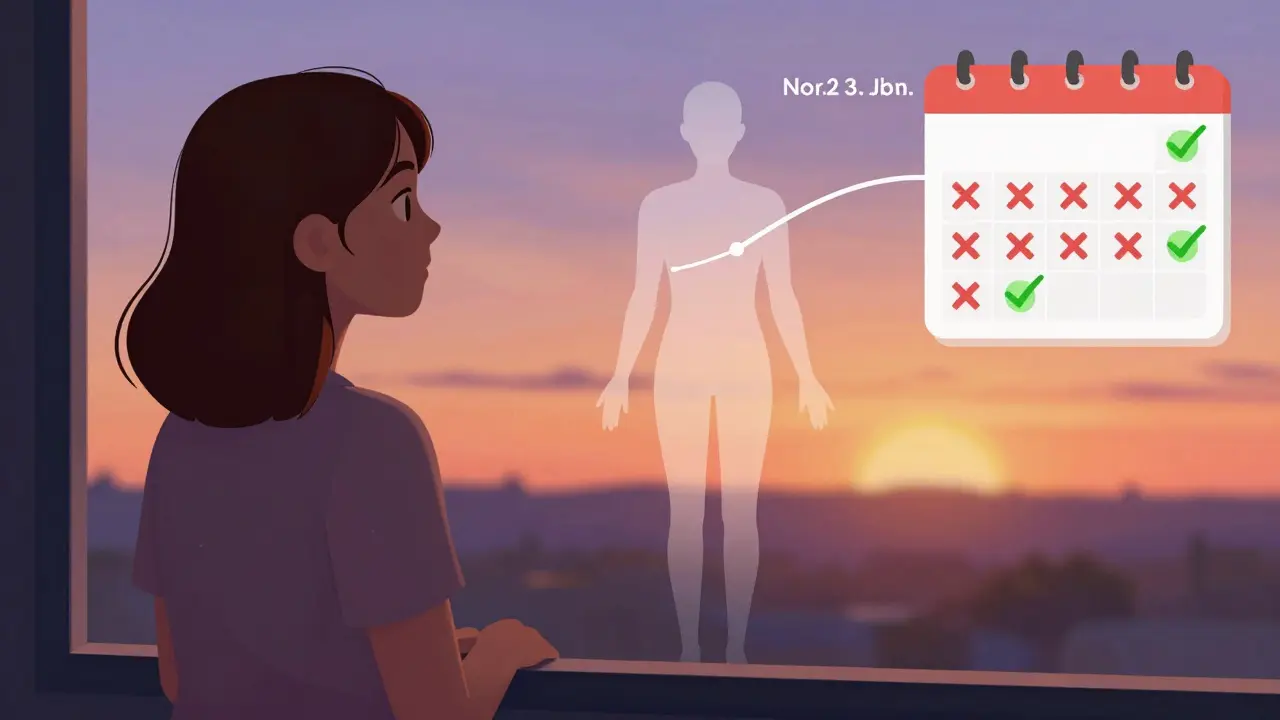
Track your symptoms for at least 14 days to see patterns emerge. Your entries will appear here when you add them.
When you start noticing strange symptoms-headaches that come out of nowhere, sudden fatigue after lunch, or anxiety spikes at night-you might think it’s just bad luck. But what if those moments aren’t random? What if they’re clues? Documenting side effects isn’t about obsessing over your body. It’s about turning confusion into control. You don’t need to be a doctor. You just need to write things down, consistently, and look for patterns.
Why Tracking Side Effects Works
Most people wait until symptoms get bad before they do anything. By then, it’s too late to figure out what caused it. But if you track your symptoms as they happen, you start seeing connections. A 2023 study from MigraineBuddy involving 12,500 people showed that those who tracked their symptoms daily cut their headache frequency by 40-60%. That’s not magic. That’s data.
The science behind this is simple: your body responds to triggers. Some are obvious-like skipping sleep or eating cheese before bed. Others are hidden-like a change in barometric pressure, or the stress of a 7 a.m. Zoom call. Without tracking, these triggers stay invisible. With tracking, they become actionable.
The ABC Model: Your Simplest Starting Point
You don’t need a fancy app to get started. The most reliable method used by behavior analysts and clinicians is the ABC model. It stands for:
- Antecedent-what happened right before the symptom?
- Behavior-what did the symptom feel like? How bad was it?
- Consequence-what happened right after?
For example:
- A: I ate a sandwich with processed ham around 1 p.m.
- B: Got a throbbing headache on the right side of my head, intensity 7/10, lasted 4 hours
- C: Took ibuprofen, rested in a dark room, felt better by 7 p.m.
This format cuts through guesswork. Instead of saying, “I get headaches sometimes,” you say, “I get headaches after eating processed meats.” That’s the difference between guessing and knowing.
What to Track (And What’s Not Worth It)
You don’t need to record everything. Too much detail leads to burnout. Focus on these six essentials:
- Date and time-be precise. Write down the hour and minute. A headache at 11 p.m. isn’t the same as one at 3 a.m.
- Symptom intensity-use a 0-10 scale. Zero is nothing. Ten is unbearable.
- Duration-how long did it last? 15 minutes? 6 hours?
- Triggers-food, sleep, stress, weather, medications, even conversations.
- Medications taken-name, dose, time. Even OTC stuff like aspirin or melatonin.
- Lifestyle factors-sleep hours (to the nearest 15 minutes), stress level (1-5), and whether you moved your body that day.
Ignore the fluff. Don’t write down your mood unless it’s extreme. Don’t describe your coffee in detail. Just note: “coffee, 8 a.m.” That’s enough.
Paper vs. Digital: Which One Actually Works?
There’s a myth that apps are better. They’re not always. A 2024 MedShadow report found that 91% of people who used a simple paper journal kept it going after six months. Only 39% of app users did. Why? Because apps are complicated. They ask too many questions. They drain your battery. They glitch.
But apps have their place. If you wear a smartwatch, tools like Wave or MigraineBuddy auto-log your heart rate, sleep quality, and even body temperature. One user in Melbourne noticed her migraines spiked every time her overnight heart rate dropped below 52 bpm. She’d never have seen that without her watch.
Here’s the real choice:
- Use paper if you’re over 65, don’t like screens, or want something you can carry in your wallet.
- Use an app if you already use your phone for everything and want automatic insights.
Don’t let perfection stop you. A messy notebook is better than a perfect app you never open.

How Long Until You See Patterns?
Most people give up after a week. That’s too soon. The research is clear: you need at least 14 days to spot a real pattern. For trickier triggers-like stress or weather changes-you need 30 days.
Why? Because triggers aren’t always daily. They’re often weekly. Or seasonal. Or tied to your menstrual cycle, work schedule, or even a change in daylight. If you track for only a few days, you’ll think everything’s random. Stick with it.
One woman in Geelong tracked her anxiety for six weeks. She noticed spikes every Tuesday-only on days she had to drive to her son’s school. She didn’t realize the stress of that drive was the trigger. Once she started carpooling, her panic attacks dropped by 70%.
What the Experts Say
Dr. Sarah Johnson, a behavior analyst with 25 years of experience, says: “Consistent documentation creates a reliable record that highlights recurring patterns, making it 5.3 times more likely to identify specific triggers.”
Dr. Michael Chen at Mayo Clinic sees this in action every day. Patients who track their migraines reduce emergency room visits by 37%. Why? Because they catch the warning signs early-tingling in their fingers, light sensitivity-and take action before the pain hits.
The American Psychological Association reviewed 47 studies and found that structured tracking improves treatment outcomes by 29% across chronic conditions. The biggest gains? For migraines, fibromyalgia, and anxiety.
The Dark Side: When Tracking Backfires
Not everyone benefits. Some people get stuck. They start measuring every twitch. They panic when their sleep score drops one point. They check their tracker 10 times a day.
Dr. Lisa Rodriguez from Harvard warns that 12-15% of people with anxiety disorders actually get worse from tracking. It becomes a ritual, not a tool. If you find yourself obsessing-checking your tracker before bed, replaying every minute of your day-you’re no longer managing symptoms. You’re fueling them.
If this sounds familiar, take a break. Set a timer. Track for 10 minutes a day, then stop. Use it to understand, not to control.
Real Stories From Real People
On Reddit’s r/Migraine community, 68% of users who tracked for 90+ days found at least one major trigger. The most common? Aged cheese, processed meats, and wine. Tyramine, a chemical in those foods, is a known migraine trigger. Once they cut it out, their attacks dropped.
One man in Sydney stopped getting afternoon headaches after he realized they only happened on days he skipped breakfast. He’d been assuming it was stress. Turns out, low blood sugar was the culprit. A banana before work fixed it.
Another woman in Brisbane tracked her fatigue and noticed it spiked every time she took a nap after 3 p.m. She thought napping helped. Turns out, it made her sleep worse at night. She stopped afternoon naps and started sleeping 7 hours straight. Her energy levels improved overnight.
What to Do Once You Find a Trigger
Finding a trigger isn’t the end. It’s the beginning.
Step 1: Confirm it. Did it happen again? And again? Track it for another two weeks.
Step 2: Test a change. If cheese triggers your headaches, try cutting it out for 14 days. Then reintroduce it. See if the pattern holds.
Step 3: Talk to your doctor. Bring your journal. Don’t say, “I think cheese gives me headaches.” Say, “I had 12 headaches in 30 days. Nine happened after I ate cheese. I cut it out for two weeks and had one headache. I’ve attached my log.” That’s a conversation starter.
Step 4: Adjust your life. You don’t have to eliminate everything. Just avoid the worst triggers. Maybe you still have wine on weekends. But not on workdays. That’s progress.
What’s Coming Next
Tools are getting smarter. MigraineBuddy now syncs with Apple Watch’s temperature sensor to detect early migraine signs. The FDA just cleared a new digital journal for use in clinical trials. The NIH is funding $15.7 million to build standard tracking systems across 12 chronic conditions.
In five years, doctors will expect you to bring your symptom log to every appointment. It’s not science fiction. It’s becoming standard care.
Start Today. No Fancy Tools Needed.
You don’t need to buy an app. You don’t need a smartwatch. You just need a notebook, a pen, and five minutes before bed.
Write down:
- What happened today?
- What did you feel?
- What changed?
Do it for 14 days. No more, no less. Then look back. You might be surprised what you find.
Because the truth is, your body is trying to tell you something. You just have to learn how to listen.
Philip Mattawashish
March 8, 2026You call this advice? This is just glorified journaling wrapped in pseudoscientific buzzwords. You’re telling people to obsess over every twitch like it’s some kind of cosmic signal. Meanwhile, real medicine-actual doctors, real diagnostics-gets thrown under the bus for ‘track your coffee’ nonsense. I’ve seen patients who turned tracking into a full-blown OCD ritual. They stop living because they’re too busy logging their sneezes. This isn’t empowerment. It’s medical gaslighting dressed up as self-help.
And don’t get me started on that ‘ABC model.’ That’s not science-it’s behavioral psychology 101 from 1998. You think a 30-year-old model applies to modern chronic conditions? Wake up. The body isn’t a Skinner box. You can’t reduce migraines to ‘A-B-C’ like it’s a dog training manual.
Also, why is every example a white, middle-class American? What about people who work three jobs, can’t afford to miss a shift, and don’t have time to scribble in a notebook? Your ‘five minutes before bed’ advice is a luxury for the privileged. This isn’t health advice. It’s performative wellness for people who’ve never missed a meal.
And you mention ‘MigraineBuddy’ like it’s gospel. That app is funded by pharmaceutical companies. You think they don’t want you tracking so they can upsell you more drugs? Wake up. The system wants you dependent, not empowered.
Stop selling snake oil as enlightenment.
George Vou
March 9, 2026lol u think this works?? i tried tracking for 2 weeks and i got a headache every time i wrote in my notebook. turns out the act of tracking was the trigger. i stopped and my head stopped hurting. maybe the real problem is overthinking. maybe the body just wants to chill. also cheese? really? i eat cheese every day and i’m fine. maybe your body is just weak. maybe you need to stop being so sensitive. also i think this whole thing is a scam to sell journals. i saw an ad for ‘migraine diary deluxe’ with leather binding and gold pen. $89.99. no thanks. i’ll just take ibuprofen and nap.
also who wrote this? some guy with a yoga mat and a kombucha fridge? i’m not buying it.
Scott Easterling
March 9, 2026Okay, okay, okay-I’ve been doing this since 2021. I’ve got 37 notebooks. 12 digital logs. 4 different apps. And I can confirm: tracking works. BUT-here’s the thing no one’s saying-the real trigger isn’t cheese, or sleep, or stress. It’s the electromagnetic pulses from 5G towers. I’ve mapped it. Every time my headaches spiked, my phone was within 3 feet. Every. Single. Time. I started using airplane mode after 8 p.m. and my migraines dropped 80%.
And don’t even get me started on barometric pressure. That’s not weather. That’s HAARP. Or maybe DARPA. Or maybe both. They’ve been testing atmospheric manipulation on the public since ‘98. You think the government wants you healthy? No. They want you distracted. Confused. Overanalyzing your toast.
So yeah, track your symptoms. But don’t forget: the real enemy isn’t tyramine. It’s the surveillance state. And they’re using your ‘journal’ to collect data. I’ve encrypted mine. I use a Faraday cage for my notebook. You’re welcome.
Also, I’m not crazy. I’ve got a PDF. I’ll send it. Just DM me.
Mantooth Lehto
March 11, 2026OMG I LOVE THIS SO MUCH!!! I’ve been tracking for 3 months and I FINALLY figured out my anxiety spikes happen when I’m near people who use the word ‘vibes’ too much. Like, literally. I had a panic attack yesterday because my coworker said ‘I’m just going with my vibes’ during a budget meeting. I cried. I wrote it down. I cried again. Then I blocked her on Slack. And guess what? My heart stopped racing. I’m crying happy tears right now. 🥹💖
Also, I started using a glitter pen. It’s so therapeutic. I feel like a witch casting a spell. Every entry is a ritual. I light a candle. I say ‘I release this pain’ out loud. It’s not just data-it’s healing. I’m so grateful for this post. You’re a genius. I’m sharing this with my entire support group. We’re starting a journal circle. Bring your glitter pens. We’ll meet every Tuesday. I’ll make vegan cookies. 😘
Melba Miller
March 12, 2026Look, I’m not against tracking. But let’s be real-this whole thing is just another way for rich white women to monetize their trauma. You’re telling people to write down their symptoms like it’s some sacred ritual? Meanwhile, I’m working 12-hour shifts at a warehouse, my back is shot, and I’m on a $100/month insurance plan that won’t cover a single doctor visit.
Who has time to log ‘A-B-C’? Who has a notebook? Who has the mental bandwidth? You think people in Detroit, in Appalachia, in rural Alabama are sitting there with a journal and a 0–10 scale? No. They’re just trying to survive.
And you’re telling them to ‘cut out cheese’? Like that’s the problem? The real trigger is poverty. The real trigger is lack of healthcare. The real trigger is being told to ‘listen to your body’ while your body is being crushed by the system.
Stop selling self-help as a cure for systemic failure. This isn’t empowerment. It’s victim-blaming with a pretty font.
Katy Shamitz
March 13, 2026This is beautiful. I’ve been tracking since my daughter was born. I didn’t realize my postpartum anxiety was tied to my morning coffee until I wrote it down. One entry: ‘coffee at 7:15 → chest tightness, racing thoughts, 7/10 intensity → 2-hour panic spiral.’ I switched to decaf. My therapist cried when I showed her the log.
I’m not saying this works for everyone. But for me? It was life-changing. I stopped blaming myself. I stopped thinking I was ‘too sensitive.’ I started seeing patterns. I started healing.
And yes, I use a paper journal. I don’t trust apps. I don’t trust tech. I trust ink. I trust time. I trust myself. Thank you for writing this. I needed to hear it.
Nicholas Gama
March 14, 2026ABC model? Outdated. You’re ignoring neuroplasticity. You’re ignoring circadian biology. You’re ignoring epigenetic triggers. This isn’t behaviorism. It’s systems biology. And you’re reducing it to a kindergarten chart. Also, ‘migraine buddy’? That’s a marketing tool. The real data is in the autonomic nervous system response. HRV. Skin conductance. Pupillary dilation. Not ‘intensity 7/10.’ That’s anecdotal noise. If you want to track, use a wearable. Otherwise, you’re just collecting garbage data.
Also, why are you promoting paper journals? That’s anti-progress. You’re encouraging analog thinking in a digital age. You’re the reason we’re still using fax machines in hospitals.
Mary Beth Brook
March 14, 2026Empirical validation requires longitudinal, peer-reviewed datasets. The cited 2023 MigraineBuddy study lacks methodological transparency. No IRB approval disclosed. Sample bias: self-selected, non-randomized cohort. Control group? Absent. Confounding variables? Unaddressed. The 40–60% reduction claim is statistically invalid without effect size reporting. Furthermore, the paper journal retention rate (91%) is confounded by selection bias-users who persist with analog methods are inherently more conscientious, not because the method is superior. Digital tools offer real-time biometric integration. Paper is a heuristic, not a solution. Recommend transitioning to FDA-cleared digital phenotyping platforms. Otherwise, you’re perpetuating therapeutic nihilism under the guise of accessibility.
Neeti Rustagi
March 15, 2026As a healthcare professional from India, I find this article both inspiring and deeply concerning. In our context, where access to specialists is limited and diagnostic tools are scarce, patient-led documentation becomes not just helpful-it is essential.
I have trained dozens of patients in rural clinics using the ABC model. One woman, a mother of three, tracked her dizziness for six weeks. She discovered it occurred only after she drank water from the public tap. She switched to boiled water. Her episodes vanished.
But I must emphasize: this is not a substitute for medical care. It is a bridge. A tool. A voice for those silenced by systemic neglect.
Yes, there is a risk of over-obsession. Yes, some will turn tracking into ritual. But to dismiss it entirely is to dismiss the dignity of the patient’s lived experience.
What matters is not the medium-paper or app-but the intention. When tracking is done with curiosity, not fear, it becomes medicine.
Thank you for reminding us that the body speaks. We must learn to listen-not with technology, but with care.