
3 Mar 2026
- 11 Comments
When someone with celiac disease eats bread, pasta, or even a spoonful of soy sauce, their body doesn’t just react to food-it launches an internal attack. This isn’t a food allergy. It’s an autoimmune response, where the immune system mistakes gluten for a threat and turns on the small intestine. The result? Damage to the lining of the gut, nutrient malabsorption, and a long list of symptoms that can mimic everything from irritable bowel syndrome to chronic fatigue. And while a gluten-free diet is the only proven treatment, it’s far from simple to follow.
What Actually Happens When You Eat Gluten With Celiac Disease
Celiac disease doesn’t start with digestion-it starts with genetics. About 95% of people with celiac carry either the HLA-DQ2 or HLA-DQ8 gene variant. But having the gene doesn’t mean you’ll get the disease. Only about 3% of those with the genes actually develop it. Something else has to trigger it-usually gluten, combined with environmental factors like infection, stress, or gut microbiome changes.
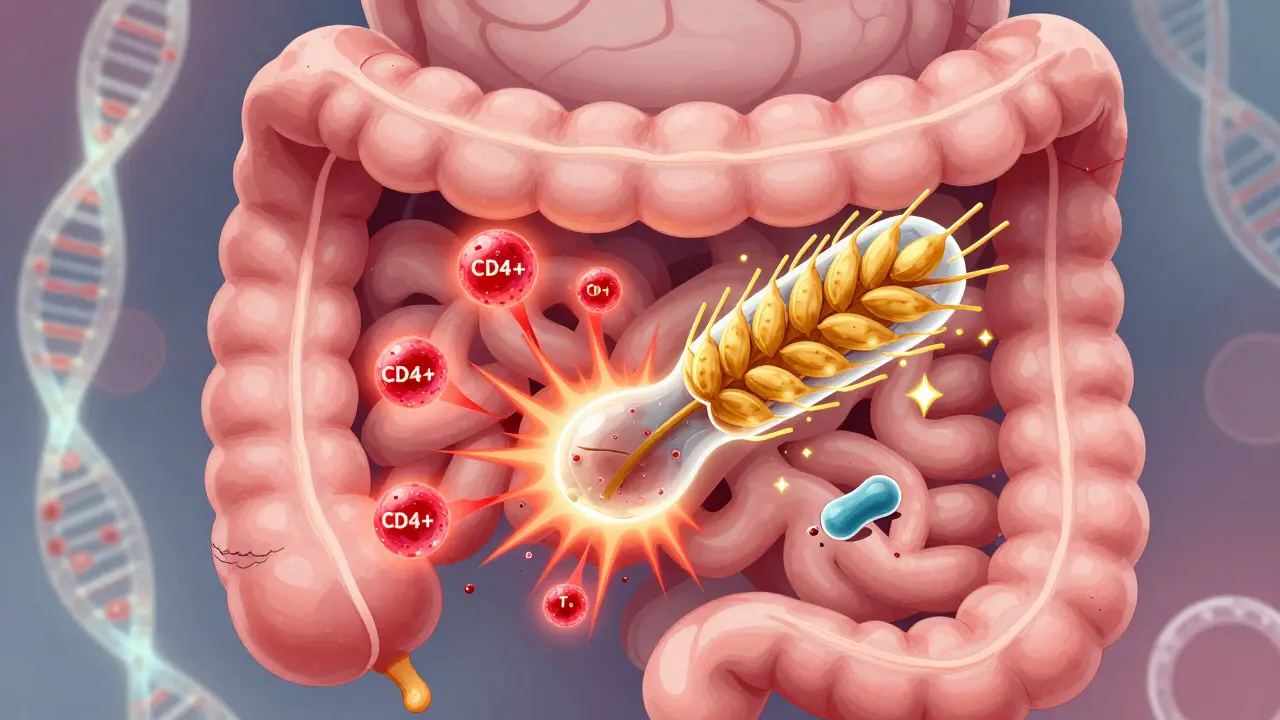
When gluten enters the gut, enzymes in the digestive tract break it down, but not completely. A stubborn fragment called the 33-mer gliadin peptide survives. Normally, this would pass through harmlessly. But in celiac, the gut lining becomes leaky. A protein called zonulin opens the tight junctions between cells, letting the gluten fragment slip through into the tissue beneath the lining-the lamina propria.
There, an enzyme called tissue transglutaminase 2 (TG2) modifies the gluten peptide. It changes a few amino acids, making them stickier. These modified peptides then bind tightly to HLA-DQ2 or HLA-DQ8 molecules on immune cells. This is the moment the immune system says, “This is foreign.”
Once activated, CD4+ T cells go into overdrive. They release interferon-gamma (IFN-γ), a powerful inflammatory signal that’s 5 to 8 times higher in celiac patients than in healthy people. This inflammation causes the villi-the finger-like projections in the small intestine that absorb nutrients-to flatten out. That’s called villous atrophy. Without them, your body can’t absorb iron, calcium, vitamin D, or B vitamins properly. That’s why many people with undiagnosed celiac end up with anemia, osteoporosis, or neurological symptoms.
It’s Not Just the Immune System-Your Gut Lining Is Involved Too
For decades, doctors thought the gut lining was just a passive barrier. But groundbreaking research from McMaster University in August 2024 changed that. Scientists found that the epithelial cells lining the gut can actually express the same HLA-DQ2 molecules that immune cells use. In other words, the gut lining itself can help trigger the immune response. This means the damage doesn’t just happen after gluten crosses the barrier-it can start right at the surface.
This discovery helps explain why some people react to tiny amounts of gluten, even when they’re careful. It also suggests future treatments might target the gut lining directly, not just the immune system.
Celiac Disease vs. Non-Celiac Gluten Sensitivity
Not everyone who feels bad after eating gluten has celiac. Up to 13% of people say they feel better on a gluten-free diet, but they don’t have the same immune markers or intestinal damage. That’s called non-celiac gluten sensitivity (NCGS).
The differences are clear:
- Celiac: Autoimmune, causes villous atrophy, confirmed by blood tests (tTG-IgA) and biopsy, lifelong requirement to avoid gluten below 20 ppm.
- NCGS: No autoimmune damage, no specific antibodies, no villous atrophy, symptoms improve with gluten removal but may not require strict avoidance.
People with NCGS often report bloating, brain fog, or headaches after gluten-but they won’t develop long-term complications like osteoporosis or intestinal lymphoma, which can occur in untreated celiac.
Here’s the catch: many people self-diagnose NCGS and cut out gluten without testing. But if you have undiagnosed celiac, skipping the test means you’re at risk for serious health problems down the line.
How Diagnosis Works-And Why It’s Often Delayed
The average time from first symptoms to diagnosis is 6.7 years. Why? Because symptoms vary wildly. Some people have diarrhea and weight loss. Others have joint pain, skin rashes (dermatitis herpetiformis), infertility, or depression. Many doctors don’t test for it unless the classic signs are present.
Diagnosis requires two things:
- Positive blood test for anti-tissue transglutaminase (tTG-IgA) antibodies-these are 98% sensitive and 95% specific if you’re still eating gluten.
- Confirmation with an endoscopy and biopsy of the small intestine, showing Marsh classification stage 2 or higher (villous atrophy).
And here’s the critical rule: you must be eating gluten when you get tested. Going gluten-free before testing can make the results look normal, even if you have celiac. That’s why so many people get misdiagnosed.
Genetic testing for HLA-DQ2/DQ8 is also useful-not to diagnose, but to rule out. If you don’t have either gene, you almost certainly don’t have celiac. That’s 99% accurate.
The Gluten-Free Diet: More Than Just Avoiding Bread
The only treatment for celiac disease is a strict, lifelong gluten-free diet. That means no wheat, barley, rye, or their derivatives. But gluten hides everywhere.
Hidden sources include:
- Modified food starch (if not labeled gluten-free)
- Hydrolyzed vegetable protein
- Malt flavoring or malt vinegar
- Some soy sauces and condiments
- Medications and supplements (34% of patients report gluten in prescriptions)
- Cosmetics and lip balms (if licked or ingested)
Regulations help. In the U.S., the FDA requires products labeled “gluten-free” to contain less than 20 parts per million (ppm) of gluten. The same standard exists in the EU. But not all products are labeled. And cross-contamination is a huge problem.
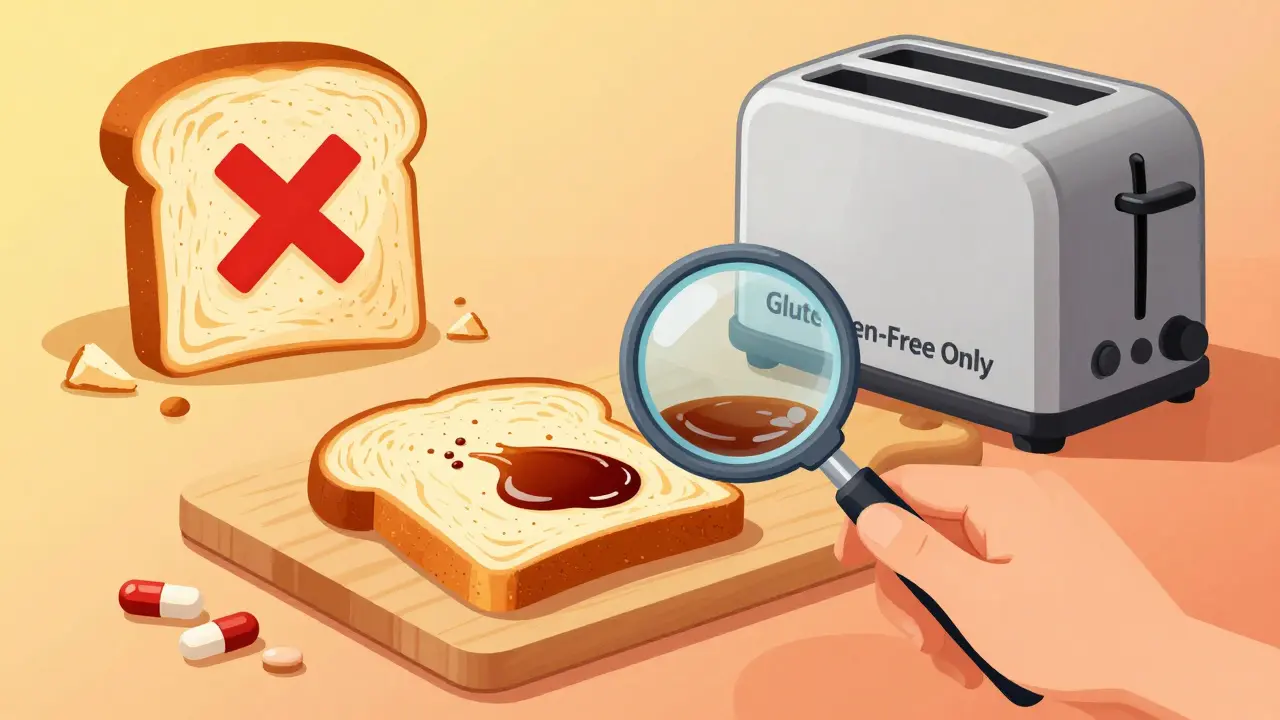
Think about a toaster. One slice of regular bread can leave gluten crumbs behind. Studies show that using a shared toaster increases gluten exposure by 85%. The same goes for cutting boards, colanders, or even butter knives. That’s why many people with celiac use dedicated kitchen tools.
Cost is another barrier. Gluten-free products cost an average of 242% more than their regular counterparts, according to Consumer Reports in 2023. A box of gluten-free pasta might cost $5.50 versus $1.75 for regular. That adds up fast, especially when you’re replacing your entire pantry.
What Works: Real Strategies for Daily Life
People who manage celiac well don’t just avoid gluten-they build systems.
- Read every label. Even if you’ve bought the same product before, ingredients change.
- Use apps. Find Me Gluten Free has 185,000 reviews and a 4.7-star rating. It lists restaurants with dedicated gluten-free kitchens.
- Carry snacks. 92% of experienced patients say they always have gluten-free bars or nuts on hand.
- Call ahead. 67% of people report cross-contamination at restaurants. Asking for a clean grill or separate prep area makes a difference.
- Test your supplements. The 2022 FDA report found only 37% of prescription drugs disclose gluten content. Talk to your pharmacist.
Most people feel dramatically better within 6 months. The Celiac Disease Foundation’s 2023 survey of over 15,000 people found 89% had major symptom improvement after going gluten-free. But 42% still had occasional issues-usually from hidden gluten.
The Future: What’s Coming Next
While the gluten-free diet works, it’s not perfect. And it’s not a cure. Researchers are working on alternatives.
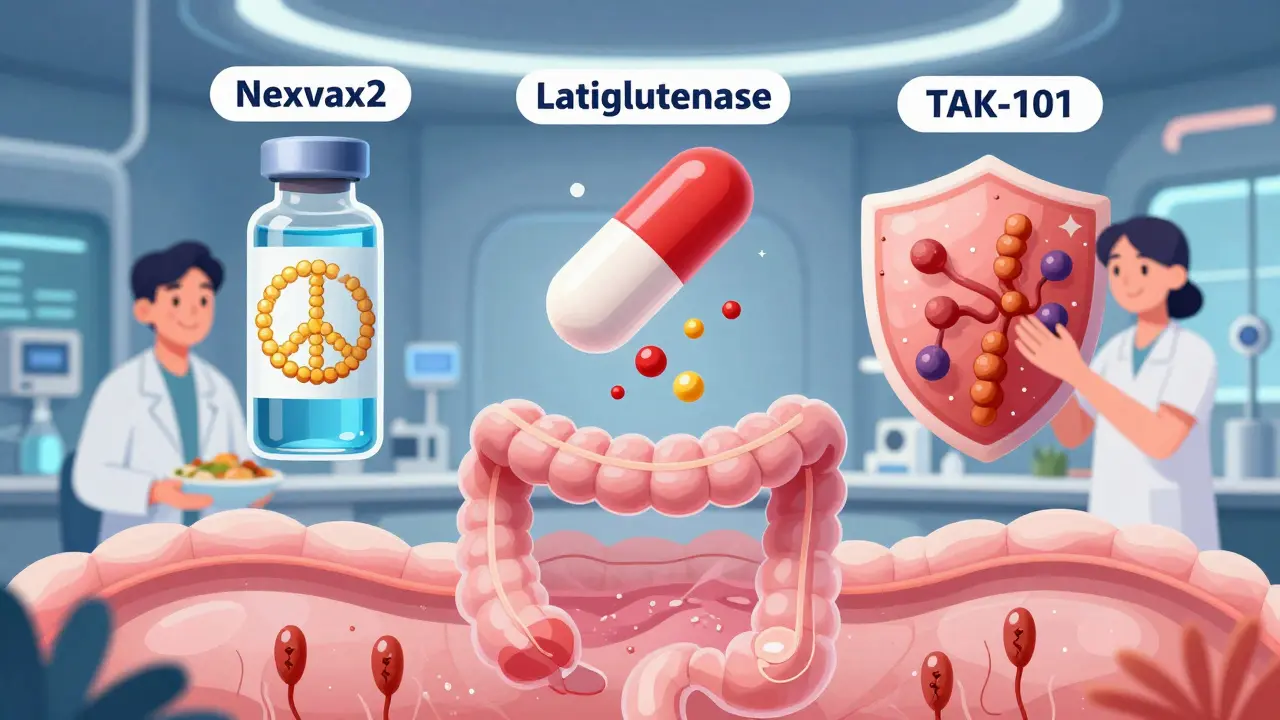
- Nexvax2: A vaccine-like therapy using gluten peptides to train the immune system not to react. Phase 2 trials in 2023 showed a 42% reduction in symptoms.
- Latiglutenase: An enzyme pill that breaks down gluten before it can trigger a reaction. The 2022 CeliAction trial showed 37% fewer symptoms.
- TAK-101: A nanoparticle therapy that teaches the immune system to tolerate gluten. A 2023 Phase 2 study cut intestinal damage by 63%.
These aren’t cures yet. But they could one day allow people to eat gluten occasionally without damage. For now, they’re still in trials.
Another promising area is the gut microbiome. Studies show 78% of celiac patients have a different mix of gut bacteria than healthy people. Scientists are exploring whether probiotics or fecal transplants could help reduce inflammation or improve healing.
Long-Term Risks If Left Untreated
Ignoring celiac isn’t just about feeling bad after meals. Long-term, untreated celiac increases the risk of:
- Intestinal lymphoma (a rare cancer of the gut)
- Severe osteoporosis
- Infertility and miscarriage
- Neurological disorders like peripheral neuropathy
- Other autoimmune diseases (thyroid disease, type 1 diabetes)
Dr. Joseph Murray from Mayo Clinic points out that up to 30% of diagnosed patients still have symptoms despite a gluten-free diet. That suggests there’s more to the disease than we understand-maybe other triggers, or incomplete healing.
That’s why follow-up care matters. Annual tTG-IgA tests and periodic endoscopies help track healing. And if you’re still symptomatic, you need to dig deeper-could it be cross-contamination? Another food intolerance? Or something else entirely?
Can you outgrow celiac disease?
No. Celiac disease is a lifelong autoimmune condition. Even if symptoms disappear after going gluten-free, the immune system still reacts to gluten. Stopping the diet-even for a short time-can restart intestinal damage and increase long-term health risks.
Is a gluten-free diet healthy if you don’t have celiac?
Not necessarily. Many gluten-free products are lower in fiber, iron, and B vitamins because they’re made with refined rice or potato starch instead of whole wheat. Unless you’re replacing those nutrients, you could end up with deficiencies. If you don’t have celiac or a diagnosed gluten sensitivity, there’s no proven health benefit to avoiding gluten.
How do you know if you’re accidentally eating gluten?
Symptoms usually appear within 2 to 72 hours after exposure. Common signs include bloating, diarrhea, abdominal pain, fatigue, brain fog, or skin rash. But some people have no symptoms at all-even while their gut is still being damaged. That’s why regular blood tests (tTG-IgA) are recommended annually, even if you feel fine.
Can you eat oats if you have celiac disease?
Pure, uncontaminated oats are safe for most people with celiac-but not all. About 1 in 5 people react to avenin, a protein in oats that’s similar to gluten. Only buy oats labeled “gluten-free,” and start with small amounts. If you feel worse, stop eating them.
Do you need to avoid gluten if you have a family member with celiac?
No. You don’t need to avoid gluten unless you’ve been tested and diagnosed. But because celiac is genetic, first-degree relatives (parents, siblings, children) have a 1 in 10 chance of having it. It’s recommended they get screened with a tTG-IgA blood test, even if they have no symptoms.
What’s Next?
If you’ve been diagnosed, focus on consistency. Build a gluten-free kitchen, learn to read labels like a pro, and don’t hesitate to ask questions at restaurants. Join a support group-whether online or local. You’re not alone.
If you suspect you have celiac, get tested before cutting out gluten. Don’t self-diagnose. The damage can be reversed-but only if you catch it early.
The science is moving fast. In the next few years, we may see therapies that reduce the burden of the gluten-free diet. But for now, vigilance is still the best tool you have.
Jeff Card
March 3, 2026Man, this post broke it down like a textbook but with real talk. I’ve had celiac for 12 years and still forget about soy sauce. One time I had a stir-fry at a place that said 'gluten-free' on the menu-turns out the sauce had wheat. Felt like I got hit by a truck for three days. Never again.
Gretchen Rivas
March 3, 2026Always carry snacks. Always. I keep gluten-free jerky and almond butter packets in my purse. Life saver.
Milad Jawabra
March 5, 2026Stop pretending this is just about bread. This is a full-body betrayal. Your gut isn't just 'sensitive'-it's being torn apart by your own immune system like it's a war zone. And don't even get me started on how restaurants treat us like we're asking for a damn miracle. I once had a server say 'oh we just use a different toaster' like that's a fix. NO. IT'S NOT. 🤬
Helen Brown
March 5, 2026They're lying. Gluten isn't the real problem. It's the glyphosate in the wheat. Big Pharma and the USDA are covering it up. They don't want you to know that organic rice is the real cure. I saw a video where a guy reversed his celiac with bentonite clay and moonlight. You're being manipulated.
John Cyrus
March 7, 2026Anyone who says they feel better on gluten free without testing is just lazy. You think you're special but you probably just have IBS. I've seen 300 celiac cases. You need to get tested before you go all vegan and start buying $12 gluten-free muffins. You're wasting money and time
Aisling Maguire
March 8, 2026Oh sweet jesus I’m 32 and just got diagnosed last year. I thought I had anxiety. Turns out my brain fog and joint pain were from a damn bagel I ate in 2021. I cried for an hour. This post is the first thing that made sense. Thank you.
Zacharia Reda
March 9, 2026So let me get this straight-there’s a vaccine in trials that’s supposed to teach your body to ignore gluten? Like a shot for your gut? That’s wild. I’m half convinced this is a sci-fi novel. But also… I want it. Now.
Mike Dubes
March 10, 2026Y’all need to stop being so hard on oats. I eat them every day and I’m fine. Just make sure they’re labeled gluten-free. My doc said 80% of people with celiac are totally fine with pure oats. Don’t let fear stop you from eating something healthy. Also, try quinoa. It’s life changing.
John Smith
March 11, 2026Gluten is the new demon. The government wants you weak. The wheat industry owns your doctor. Your toaster is a weapon. Your lip balm? Probably loaded. You think you’re safe? Wake up. I’ve been gluten-free for 15 years and I still check the back of my shampoo. I’ve got a binder. I’ve got spreadsheets. I’ve got receipts. You’re not ready.
marjorie arsenault
March 12, 2026I just want to say-you’re not alone. I’ve been there. The grocery store feels like a minefield. But you learn. You adapt. And the better you feel? It’s worth every extra dollar and every awkward restaurant question. Keep going. You’re doing great.
Deborah Dennis
March 13, 2026Wow. This is… a lot. I mean, I get it. But honestly? Why do you even eat anything? If you have to be this careful about EVERYTHING, why not just… live on water and vitamins? It’s so extreme. And expensive. And frankly, exhausting.