
2 Mar 2026
- 15 Comments
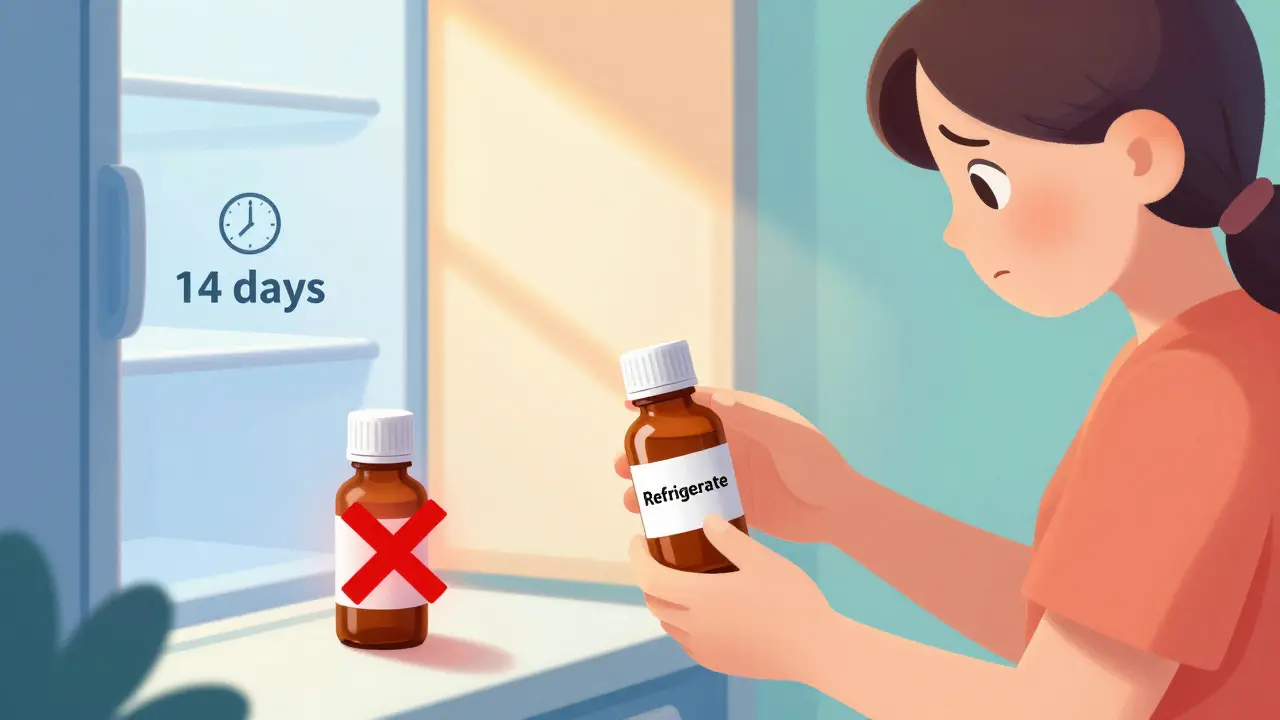
When your child is prescribed an antibiotic suspension, it’s not just about giving the right dose-it’s about storing it the right way. A simple mistake, like leaving it on the counter instead of in the fridge, can make the medicine less effective. And that means your child might not get better, or worse, their infection could come back stronger. This isn’t just a guess-it’s backed by data. A 2022 CDC study found that improper storage directly contributed to 15% of treatment failures in kids on antibiotics. That’s 1 in every 7 children who didn’t respond to treatment because the medicine wasn’t stored correctly.
Why Storage Matters More Than You Think
Liquid antibiotics for kids aren’t like pills. They’re specially made to be easy to swallow, but that also makes them fragile. Once you mix the powder with water, the clock starts ticking. The active ingredients begin to break down. Some lose strength quickly if they get too warm. Others thicken up and turn into a gloopy mess if they get too cold. If the medicine isn’t potent enough, bacteria can survive and learn to resist antibiotics. That’s how drug-resistant infections start.
Parents often don’t realize how strict these rules are. A 2023 GoodRx survey of over 2,500 caregivers showed that 52% store antibiotics in places like bathroom cabinets or near the stove-places that get hot. Another 37% keep using the medicine past its discard date. And 29% never check for signs it’s gone bad. These aren’t just mistakes-they’re risks.
What to Store Where: A Quick Guide
Not all liquid antibiotics are the same. The storage rules depend on the exact drug. Here’s what you need to know for the most common ones:
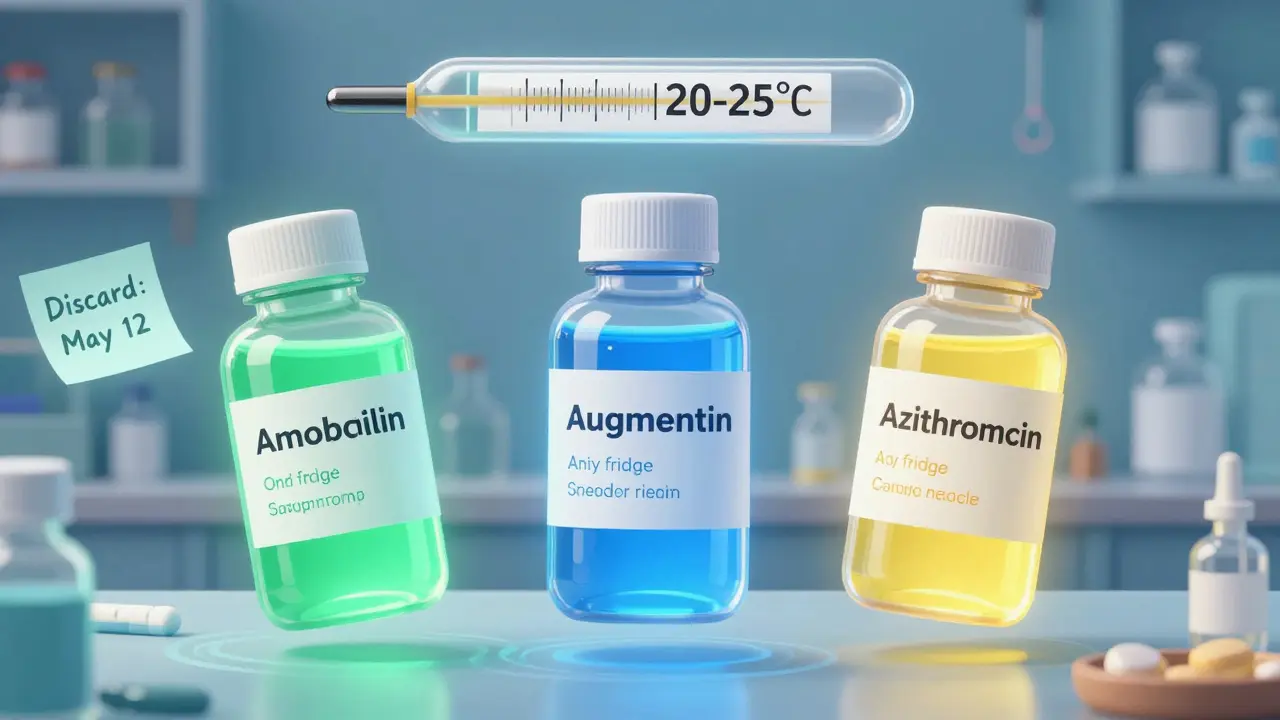
- Amoxicillin - This is the most prescribed antibiotic for kids, making up over a third of all pediatric antibiotic use. You can store it either in the fridge (2-8°C / 36-46°F) or at room temperature (20-25°C / 68-77°F). It stays strong for exactly 14 days after mixing, no matter which way you store it. Some parents prefer refrigeration because it tastes better, but it’s not required.
- Amoxicillin/Clavulanate (Augmentin) - This one is trickier. It must be kept refrigerated at all times. If left at room temperature, it loses effectiveness fast. After just 5 days at warm temperatures, the clavulanate part (which fights resistant bacteria) drops by nearly 10%. Even in the fridge, it only lasts 10 days. After that, it’s no longer safe to use.
- Azithromycin (Zithromax) - Never refrigerate this one. Cold temperatures make it thick and hard to swallow. Kids often refuse it. Store it at room temperature, and use it within 10 days. Studies show it retains 98.7% of its strength at room temp, but drops to 92.4% if chilled.
- Other antibiotics to avoid chilling - Clarithromycin, clindamycin, sulfamethoxazole/trimethoprim, and cefdinir should all be kept at room temperature. Refrigerating them changes their texture and makes them harder for kids to take.
Remember: the pharmacy label should tell you exactly what to do. If it says "Refrigerate," do it. If it says "Store at room temperature," leave it out. Don’t guess.
When to Throw It Away
Discard dates aren’t suggestions-they’re medical facts. The Infectious Diseases Society of America says all reconstituted antibiotics should be thrown out after 14 days, unless the label says otherwise. But here’s the catch: some last less.
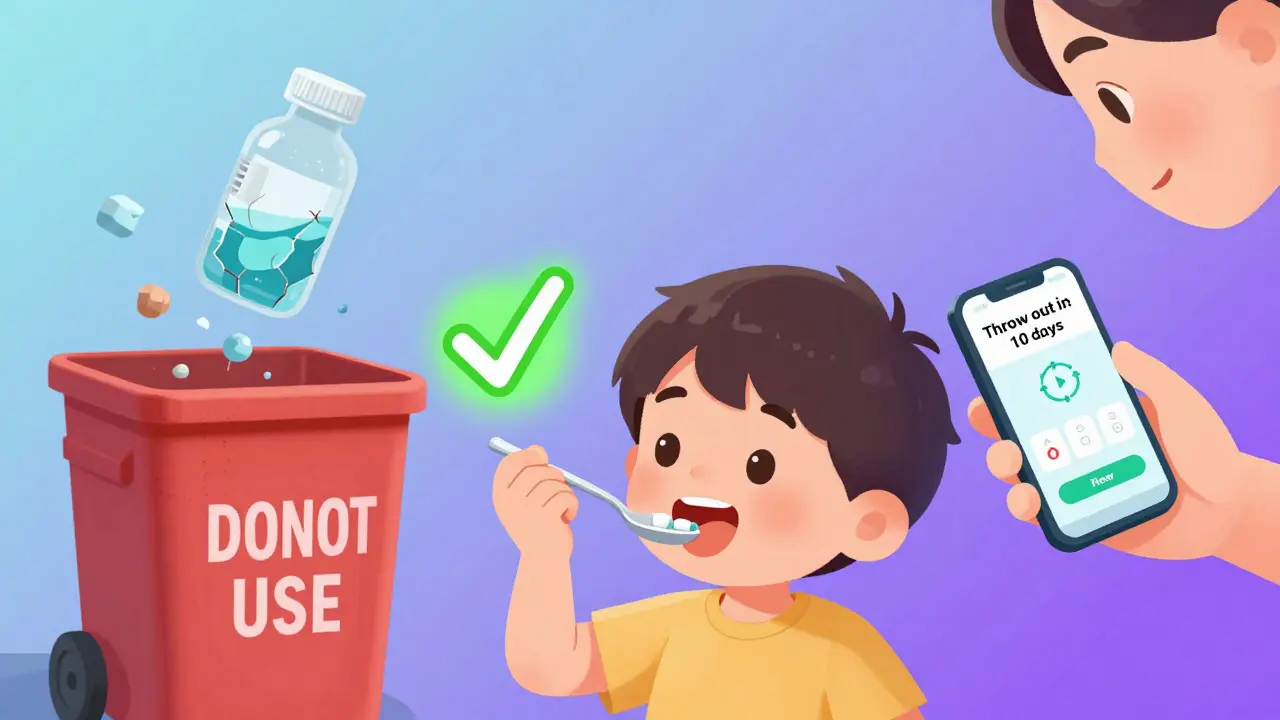
Amoxicillin can go 14 days. Amoxicillin/clavulanate? Only 10. Azithromycin? Just 10. If you’re unsure, the safest rule is: when in doubt, toss it. A 2023 study from Children’s Hospital of Philadelphia found that 27% of treatment failures were because parents kept using medicine past its date. That’s the #1 mistake doctors see.
Use a sticky note. Write the discard date on the bottle. Set a phone reminder. Even a simple trick like that cuts improper usage by 42%, according to the CDC. Don’t rely on memory. Kids’ health isn’t something you wing.
Signs Your Medicine Has Gone Bad
Even if you followed the rules, the medicine might still be off. Look for these signs:
- Discoloration - If the liquid turns darker, cloudy, or has weird particles, throw it out.
- Change in smell or taste - If it smells sour, metallic, or tastes bitter when it used to be sweet, it’s likely degraded.
- Sediment or clumping - Some settling is normal, but if you shake it and it doesn’t mix back in, or if you see chunks, it’s not safe.
One parent on Reddit said her child started gagging after taking the medicine-she didn’t realize it had been left out too long. A 2023 survey found 41% of caregivers noticed discoloration, 37% noticed a bad taste, and 22% saw sediment. If any of these happen, stop using it. Call the pharmacy. Get a new bottle.
Common Mistakes and How to Avoid Them
Here are the top errors parents make-and how to fix them:
- Mistake: Storing medicine in the bathroom. Fix: Keep it in a cool, dry place like a kitchen cabinet away from the sink or stove. Humidity and heat ruin medicines.
- Mistake: Assuming "room temperature" means "anywhere in the house." Fix: Room temperature is 20-25°C (68-77°F). Many homes hit 27°C (80°F) or higher, especially near windows or radiators. Use a thermometer if you’re unsure.
- Mistake: Not checking the label every time. Fix: Labels change. A new bottle might have different instructions. Always read it before giving the medicine.
- Mistake: Keeping medicine where kids can reach it. Fix: Store all medications up and away. Over 60,000 U.S. children under 5 are treated each year for accidental poisoning. A locked cabinet or high shelf saves lives.
What to Do If You’re Still Confused
Conflicting advice is everywhere. One source says refrigerate amoxicillin. Another says it’s fine at room temp. That’s because both are technically correct-but the details matter. The American Academy of Pediatrics says: "When in doubt, check the pharmacy label. Most of the time, an extra sticker will be on the bottle that says something like 'Keep in Refrigerator' or 'Refrigerate' if your liquid antibiotic needs to be kept cold. You can also ask the pharmacist to be sure."
Don’t rely on memory, Google, or a friend’s advice. Call your pharmacist. They’re trained to answer this exact question. Most pharmacies now offer free medication counseling. Use it.
There’s also a new tool: the CDC’s "MedSafe" app. Launched in August 2023, it sends automatic reminders when your antibiotic expires. It even lets you scan the bottle barcode to auto-fill the discard date. It’s free. It works. And it’s one less thing to worry about.
Looking Ahead: What’s Changing
Medicine storage isn’t stuck in the past. New tech is coming. Merck is testing temperature-sensitive labels that change color if the medicine got too hot or cold. Single-dose packaging is being tested too-tiny pre-measured pouches you open and pour, with no refrigeration needed. These could eliminate storage errors entirely.
But until then, the rules are clear: follow the label. Know the drug. Respect the timeline. And when in doubt-ask.
Can I store all liquid antibiotics in the fridge?
No. While some antibiotics like amoxicillin and amoxicillin/clavulanate can be refrigerated, others like azithromycin, clarithromycin, and clindamycin should never be chilled. Refrigerating them can make the liquid too thick, hard to swallow, and even less effective. Always check the label or ask your pharmacist before refrigerating.
What happens if I give my child expired antibiotic suspension?
Giving expired antibiotic suspension won’t usually make your child sick, but it won’t work as well. The medicine loses strength over time, especially after its discard date. This means the infection might not clear up, and the bacteria could become resistant. That makes future infections harder to treat. It’s not dangerous-it’s just ineffective.
How long does amoxicillin suspension last after mixing?
Amoxicillin suspension lasts exactly 14 days after you mix it with water, whether stored in the fridge or at room temperature. After that, it loses potency and should be thrown out. Some labels may say 10 days, but current guidelines from the Infectious Diseases Society of America (2023) confirm 14 days is safe for amoxicillin.
Why does azithromycin taste worse when refrigerated?
When azithromycin is chilled, it thickens and becomes more viscous, making it harder to pour and swallow. Studies show this reduces palatability by 37%. Kids are more likely to gag, spit it out, or refuse it altogether. Keeping it at room temperature keeps the texture smooth and the taste more tolerable.
Can I reuse antibiotic suspension if my child didn’t finish it?
No. Even if your child didn’t finish the full course, you should not save the leftover suspension for later. Once mixed, the medicine has a strict shelf life-usually 10 to 14 days. After that, it loses effectiveness and can harbor bacteria. Never reuse old medicine, even if it looks fine. Always get a new prescription if your child needs antibiotics again.
Mike Dubes
March 4, 2026Just wanted to say this post saved my sanity. My kid had a recurring ear infection last year, and we almost gave them the leftover amoxicillin from the previous round. Thank you for clarifying the 14-day rule - I didn’t know it was that strict. Now I use the CDC’s MedSafe app, and it’s a game-changer. No more guessing.
Siri Elena
March 4, 2026Oh wow, another ‘trust the label’ lecture. How quaint. I mean, really - you think a pharmacy sticker knows more than 30 years of clinical experience? The FDA doesn’t even require stability testing for pediatric suspensions beyond 10 days. This whole thing feels like corporate fear-mongering dressed up as public health.
Helen Brown
March 5, 2026They’re lying about the fridge. I read a study - not this one, a real one - that says refrigeration actually creates mold spores in antibiotic suspensions. I’m not saying you shouldn’t store it cold, but you should be afraid. The government doesn’t want you to know this.
Shivam Pawa
March 6, 2026Amoxicillin at room temp works fine. I’ve done it for 5 years. Kids don’t care about taste if they’re sick. The real issue is not finishing the course. That’s what breeds resistance.
Chris Beckman
March 7, 2026wait so azithromycin cant be cold?? i always put mine in the fridge bc it tastes like ass at room temp. are u saying i’ve been ruining my kid’s meds this whole time??
Raman Kapri
March 8, 2026While the data presented is statistically significant, it fails to account for socioeconomic variables. In India, where refrigeration is inconsistent, the notion of rigid storage protocols is not merely impractical - it is colonial in its imposition. The CDC’s 15% failure rate does not reflect the reality of households without reliable cold chains. A blanket recommendation ignores systemic inequity.
marjorie arsenault
March 8, 2026You’re not alone, Chris. I used to refrigerate azithromycin too - until my daughter started crying every time I gave it to her. Switched to room temp, and suddenly she drank it like juice. Sometimes the simplest fix is the right one. Trust your kid’s reaction - they’re the real experts here.
Darren Torpey
March 9, 2026My kid’s pharmacist printed me a little sticker that says ‘DO NOT CHILL’ on the azithromycin bottle. Best. Thing. Ever. I taped it to the fridge so I wouldn’t forget. Now I feel like a superhero. We’re all just trying to keep our babies alive, one liquid spoonful at a time.
tatiana verdesoto
March 9, 2026I’m so glad someone finally said this. My daughter’s doctor didn’t even tell me about the 10-day limit for Augmentin. I kept it for 3 weeks. She got worse. We went back, got a new prescription, and now I write the discard date on the bottle with a Sharpie. It’s not glamorous, but it works.
Diane Croft
March 10, 2026Storage rules are one thing. But the real win is teaching parents to ask questions. I work at a community clinic. The parents who ask, ‘Should this be cold?’ - their kids heal faster. Knowledge is the best medicine.
Ethan Zeeb
March 11, 2026Stop treating parents like children. The CDC data is cherry-picked. You don’t need a smartphone app to know not to leave medicine in the sun. If you’re this confused, maybe you shouldn’t be giving antibiotics at all. Get a nurse. Hire help. This isn’t DIY territory.
Deborah Dennis
March 11, 2026Why are we even discussing this? It’s 2024. We have smart pill dispensers, QR-coded labels, and AI-driven reminders. Yet we’re still relying on sticky notes and ‘pharmacist advice’? This is a systemic failure. The healthcare system is broken. And we’re blaming moms for not reading labels.
Megan Nayak
March 11, 2026What if the real problem isn’t storage… but the overprescription of antibiotics in the first place? We’ve turned every sniffle into a medical emergency. We’re creating resistant superbugs not because of fridge neglect - but because we hand out antibiotics like candy. The system is the disease. The label is just a Band-Aid.
Callum Duffy
March 12, 2026Thank you for the thorough, evidence-based overview. The distinctions between drug formulations are often overlooked in primary care settings. I am a physician in London, and I routinely counsel families on these nuances. The key is consistency: clear, written instructions, paired with pharmacist follow-up. This post exemplifies best practice.
Divya Mallick
March 12, 2026Western medicine is a scam. In India, we’ve used herbal suspensions for centuries - no refrigeration needed, no corporate labels, no apps. You think a pill made in a lab in New Jersey knows more than our grandmothers’ turmeric-and-honey mix? This is cultural erasure dressed up as science. Wake up.