
8 Feb 2026
- 15 Comments
When someone is struggling with obsessive-compulsive disorder (OCD), finding the right medication can feel like searching for a key in a dark room. It’s not just about taking a pill-it’s about finding the right dose, the right timing, and the right balance between effectiveness and side effects. Two medications stand out as the most studied and trusted: SSRIs and clomipramine. But they’re not the same, and knowing how they differ-especially in how they’re dosed-can make all the difference in treatment success.
Why SSRIs Are the First Choice for Most People
SSRIs-selective serotonin reuptake inhibitors-are the go-to starting point for OCD treatment. Why? Because they work, and they’re easier to tolerate. Medications like fluoxetine (Prozac), sertraline (Zoloft), paroxetine (Paxil), and fluvoxamine (Luvox) were originally developed for depression, but research showed they’re even more effective for OCD when given at higher doses.
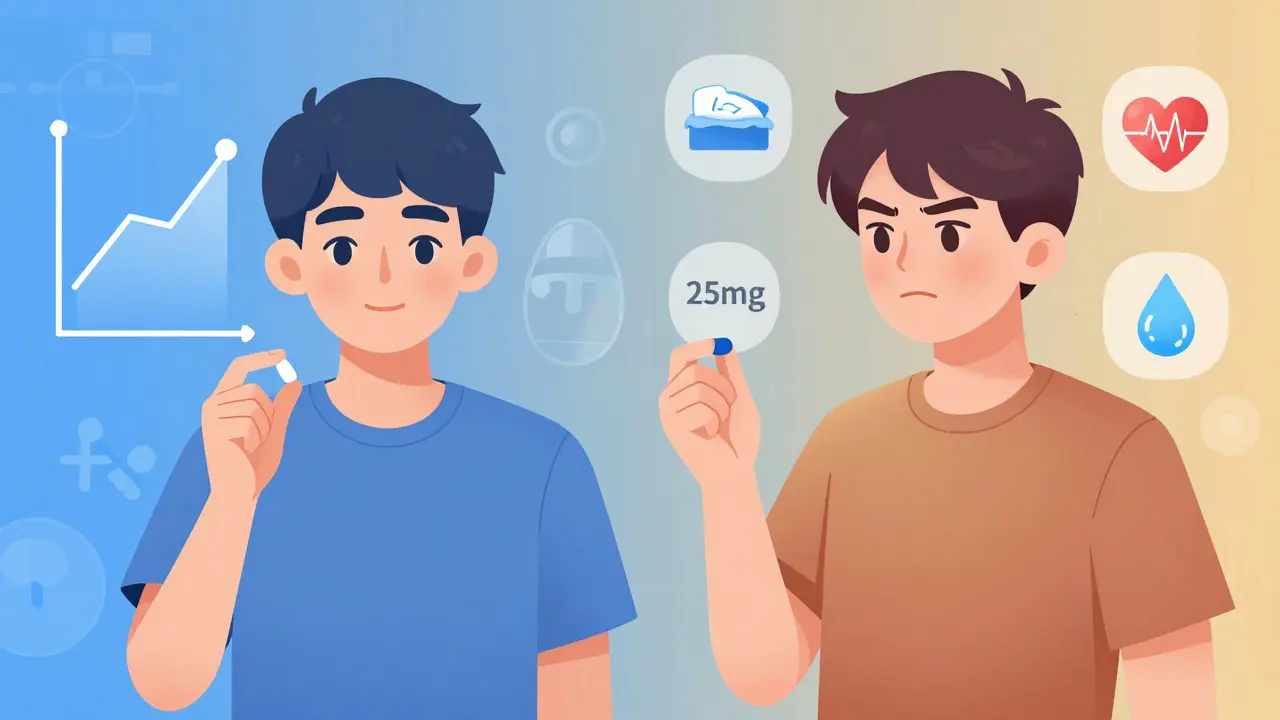
For OCD, the dose needed is often much higher than what’s used for depression. For example, sertraline might start at 25 mg a day for depression, but for OCD, most people need to build up to 200-300 mg daily. Fluvoxamine can go as high as 300 mg. Paroxetine often reaches 40-60 mg. These aren’t random numbers-they’re based on clinical trials showing real improvement in symptoms.
It takes time. An adequate trial means sticking with the medication for at least eight to twelve weeks, with six of those weeks at a high enough dose. Many people give up too soon because they don’t feel better in the first two weeks. That’s normal. In fact, about 37% of people experience a temporary spike in anxiety when starting these meds. But if they keep going, 89% of those cases improve on their own. Patience matters.
Side effects? Common ones include nausea, insomnia, and sexual side effects. But compared to clomipramine, they’re mild. A study of over 2,800 patient reviews on Drugs.com found SSRIs had a satisfaction rating of 6.2 out of 10. Not perfect, but far better than clomipramine’s 5.1.
Clomipramine: The Original OCD Drug
Clomipramine (Anafranil) was the first medication ever approved by the FDA specifically for OCD-in 1989. It’s a tricyclic antidepressant, which means it affects more than just serotonin. It also blocks other brain chemicals, which is why it’s powerful-but also why it comes with more side effects.
It’s not used as a first-line drug anymore. But it’s not outdated. In fact, for people who don’t respond to SSRIs, clomipramine can be a game-changer. One study showed it improved OCD symptoms by 37% in kids and teens, outperforming sertraline and fluoxetine in that group. For adults, it’s just as effective as SSRIs, but with more risk.
The dosing is precise. Adults usually start at 25 mg a day, then increase by 25 mg every 4 to 7 days. Most people need at least 100 mg to see results. The target range is 100-250 mg daily, with 250 mg being the absolute max. For kids aged 10 and older, the dose is 1-3 mg per kg of body weight, capped at 200 mg per day (some sources say 250 mg, but safety guidelines lean toward 200 mg). Elderly patients start even lower-at 10 mg-and rarely go above 50 mg.
It’s usually taken at night because it causes heavy drowsiness. Many doctors split the dose: a smaller amount in the morning, the larger part at bedtime. Blood levels matter too. Research shows people who respond to clomipramine have plasma levels of 220-350 ng/mL for clomipramine itself, and around 379 ng/mL for its active metabolite, desmethylclomipramine. That’s why some psychiatrists monitor blood levels-especially when doses go over 75 mg.
Side Effects: Why Many People Switch
Clomipramine’s side effects aren’t minor. They’re noticeable, sometimes debilitating. Dry mouth is so common that people on Reddit report drinking 5-6 glasses of water an hour just to stay comfortable. Weight gain of 15-25 pounds in six months isn’t rare. Heart rhythm changes-measured by QTc prolongation-are a real concern, especially above 150 mg daily. That’s why doctors order ECGs before and during treatment.
On the OCD-UK forum, 62% of 1,247 users said they tolerated SSRIs better. On Reddit’s r/OCD community, 43% of those who tried clomipramine quit because of side effects. One user wrote: “Clomipramine at 175 mg stopped my checking rituals after five failed SSRIs. But I was too tired to work. I switched back to sertraline.”
Still, clomipramine isn’t useless. For people with contamination or cleaning obsessions, it often works better than SSRIs. And for those who’ve tried two or more SSRIs without success, it’s often the next step. The American Psychiatric Association recommends trying two full SSRI trials before even considering clomipramine. That’s not arbitrary-it’s based on data showing that 85% of OCD patients respond to SSRIs first.
Dosing Protocols: What Doctors Actually Do
There’s a big difference between what’s on paper and what happens in real life. Here’s how it usually plays out:
- SSRIs: Start low-25 mg of sertraline or 25-50 mg of fluvoxamine. Increase by 25 mg weekly. Reach target dose in 4-6 weeks. Don’t rush. If you feel worse in week one, that’s normal. Talk to your doctor before quitting.
- Clomipramine: Start at 25 mg daily. Increase by 25 mg every 4-7 days. Most take 10-14 weeks to reach the full dose. Monitor ECGs if you hit 150 mg or more. Blood tests for drug levels are optional but helpful if there’s no response.
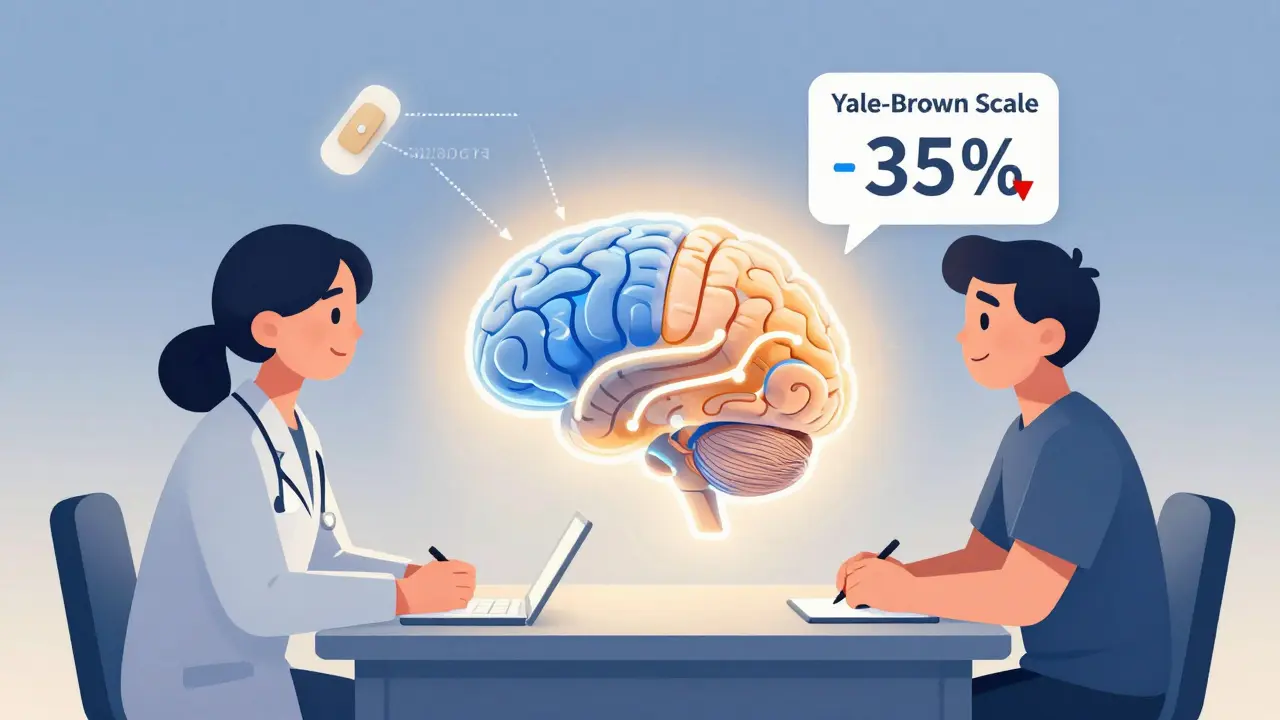
Both medications require regular check-ins. The Yale-Brown Obsessive Compulsive Scale (CY-BOCS) is used to track progress. A 25-35% drop in score is considered a good response. If you’re not seeing improvement after 12 weeks, it’s time to reassess.
What Happens When SSRIs Don’t Work?
One in three people with OCD don’t fully respond to SSRIs alone. That’s where things get interesting. Some doctors add a low dose of clomipramine-25 to 75 mg-to the SSRI. This “augmentation” strategy has helped 35-40% of people who didn’t improve with SSRIs alone. It’s not a cure-all, but it’s a real option.
Clomipramine makes up only 8% of initial OCD prescriptions. But in treatment-resistant cases, that number jumps to 22%. That tells you something: it’s not a first choice, but it’s a powerful second one.
What’s Next? The Future of OCD Medication
The field is evolving. In March 2023, the FDA gave Breakthrough Therapy status to a new drug called SEP-363856, which showed 45% improvement in treatment-resistant OCD at just 50 mg a day. That’s promising.
Researchers are also testing psilocybin-the active ingredient in magic mushrooms-combined with SSRIs. Early results show 60% of patients went into remission after six months, compared to 35% with SSRIs alone. These aren’t magic pills yet, but they’re real possibilities on the horizon.
For clomipramine, a new transdermal patch is in development. Early trials show it delivers the same effectiveness as oral pills but with 40% fewer side effects. That could change everything-if it gets approved.
Key Takeaways
- SSRIs are the first-line treatment for OCD due to better safety and tolerability.
- Clomipramine is more effective for some, especially in treatment-resistant cases and contamination fears, but comes with heavier side effects.
- SSRI doses for OCD are much higher than for depression-often 200-300 mg daily.
- Clomipramine dosing starts at 25 mg and builds slowly to 100-250 mg, with careful monitoring.
- It takes 8-12 weeks to see results. Don’t quit early.
- Augmentation with low-dose clomipramine (25-75 mg) is a proven strategy when SSRIs alone fail.
Can I take clomipramine and an SSRI together?
Yes, but only under close medical supervision. Combining clomipramine with an SSRI can increase the risk of serotonin syndrome, a rare but serious condition. This combination is usually reserved for treatment-resistant OCD and only when lower doses of clomipramine (25-75 mg/day) are added to an ongoing SSRI. Blood monitoring and regular check-ins with a psychiatrist are essential.
Why do SSRIs take so long to work for OCD?
Unlike depression, OCD involves deep, ingrained thought patterns that require prolonged serotonin modulation to shift. SSRIs need time to upregulate serotonin receptors and change neural pathways. Most people don’t see improvement until week 6-8, even at full dose. Patience and consistency are critical-stopping too early is the most common reason treatment fails.
Is clomipramine safe for teens?
Yes, clomipramine is FDA-approved for OCD in patients aged 10 and older. However, dosing is weight-based (1-3 mg/kg/day), with a maximum of 200 mg per day. Due to risks like weight gain, sedation, and heart rhythm changes, it’s rarely used as a first option in teens. SSRIs are preferred unless there’s no response to at least two trials.
What if I can’t tolerate any OCD meds?
Medication isn’t the only option. Exposure and Response Prevention (ERP) therapy is the gold-standard psychological treatment for OCD and often works as well as or better than drugs. Many people combine ERP with medication, but if meds aren’t an option, ERP alone can significantly reduce symptoms. Seek a therapist trained specifically in ERP-general CBT won’t cut it.
Do I have to take OCD meds forever?
Not necessarily. Many people stabilize on medication for 1-2 years, then slowly taper under supervision while continuing therapy. If symptoms stay gone for at least six months after stopping, you may not need to restart. But relapse is common if therapy isn’t maintained. Think of medication as a tool to help you get into therapy, not a lifelong fix.
Final Thoughts
OCD treatment isn’t one-size-fits-all. What works for one person might not work for another. SSRIs are safer and easier to start with. Clomipramine is more powerful but comes with trade-offs. The goal isn’t just to reduce symptoms-it’s to find a treatment you can live with. That means balancing effectiveness with daily life. Talk to your doctor. Track your symptoms. Give it time. And don’t be afraid to ask: What’s next if this doesn’t work?
Tasha Lake
February 9, 2026SSRIs for OCD need to be pushed to therapeutic doses, and honestly? Most docs don’t get this. I was on 50mg sertraline for 3 months thinking it wasn’t working-turns out my psychiatrist was dosing for depression, not OCD. Once they bumped me to 200mg, my contamination fears dropped 70% in 6 weeks. No magic, just pharmacology. Also, the 37% anxiety spike? Real. But it’s not a reason to quit-it’s a sign the drug’s doing something.
PAUL MCQUEEN
February 10, 2026Clomipramine? Please. It’s the 90s in pill form. Dry mouth so bad you need a water bottle taped to your desk. Weight gain that turns your jeans into leggings. And don’t even get me started on the QTc prolongation. SSRIs are fine. If clomipramine worked better, we’d be using it first. We don’t because it’s a sledgehammer when we need a scalpel.
glenn mendoza
February 11, 2026Thank you for this thorough and clinically accurate breakdown. It is deeply appreciated that you have highlighted the importance of duration of treatment and the necessity of adequate dosing. Many patients discontinue treatment prematurely due to misinformation or impatience, and your emphasis on the 8–12 week window is both evidence-based and compassionate. Continued education on this topic may significantly improve long-term outcomes.
Sam Dickison
February 12, 2026Clomipramine’s metabolite levels matter more than the dose. I had a psychiatrist who refused to check plasma levels until I brought up the 220–350 ng/mL range. Then she ordered the test. My desmethylclomipramine was at 290. We upped my dose from 75 to 125 and boom-symptoms dropped. It’s not guesswork. It’s science. Stop treating it like a black box.
Brett Pouser
February 13, 2026I’m from rural Texas. We don’t have psychopharmacologists here. Just GPs with a copy of the APA guidelines. I got prescribed 50mg fluoxetine for OCD and told to ‘wait and see.’ Two months later, I drove 3 hours to a clinic in Austin because I was tired of crying in the shower. The first thing they did? Increase me to 200mg. Took 6 weeks. Changed my life. If your doc won’t dose high enough, find someone who will.
Karianne Jackson
February 15, 2026CLOMIPRAMINE IS A NIGHTMARE. I gained 30 POUNDS. I couldn’t get out of bed. My heart felt like it was trying to escape my chest. I cried every night. But… I stopped checking the stove 100 times a day. So I stayed on it. For 11 months. Then switched back to sertraline. Worth it? Kinda. Would I do it again? Not unless I was dying.
Chelsea Cook
February 15, 2026Let’s be real: SSRIs are the ‘I’m just gonna try this for a bit’ meds. Clomipramine? That’s the ‘I’ve tried everything and now I’m ready to die’ med. And honestly? The fact that we still use it says a lot about how broken this system is. We’re forcing people to suffer through 3 failed SSRIs before letting them try the one that might actually work. That’s not protocol. That’s cruelty dressed up as science.
John Sonnenberg
February 17, 2026There’s no such thing as ‘augmentation’ with clomipramine and SSRIs. That’s not a strategy-it’s a death wish waiting to happen. Serotonin syndrome isn’t rare. It’s just underreported. I’ve seen three people in ERs because their ‘low-dose’ combo turned their brain into a live wire. Don’t be a lab rat. If SSRIs fail, try ERP. Or wait for the patch. Or psilocybin. But don’t play Russian roulette with your neurochemistry.
Jessica Klaar
February 18, 2026I’m a therapist who specializes in ERP, and I see so many clients who’ve been on 5 different SSRIs and still aren’t better. But when they do 20 sessions of exposure therapy? 80% of them see real change. Medication helps you get to the point where you can do the work. But the work? That’s the real fix. I wish more people knew that. Not everyone needs a pill. Some of us just need someone to sit with us while we touch the doorknob and don’t wash our hands.
Randy Harkins
February 18, 2026Just wanted to say thank you for the detailed breakdown. The stats on response rates and dosing timelines are spot-on. I’ve been on sertraline at 250mg for 14 weeks now. My CY-BOCS dropped from 28 to 14. I still have bad days, but I can function. The key? Consistency. And not giving up after week 3. Also, sexual side effects? Yeah. But I’d rather be dry than terrified of germs. Worth it.
MANI V
February 20, 2026Why are we even talking about medication? OCD is a spiritual failure. You’re not ‘ill’-you’re just weak. If you prayed more, meditated, stopped being so self-absorbed, you wouldn’t need all this chemical nonsense. People in my village in India don’t take pills for anxiety. They chant. They breathe. They accept. Maybe you should too.
Susan Kwan
February 20, 2026Oh, so now clomipramine’s ‘powerful’? Funny how it’s never ‘powerful’ when it’s your 16-year-old daughter gaining 20 pounds and sleeping 14 hours a day. You talk like it’s a tool. It’s a sledgehammer with a side of ECGs. And yes, I’ve seen the studies. But real life? It’s not a clinical trial. It’s a kid who can’t go to prom because she’s too tired to get dressed. You’re romanticizing toxicity.
Simon Critchley
February 22, 2026Clomipramine’s metabolite profile is *fascinating*. The desmethylclomipramine half-life is 120 hours, which means steady-state takes 20+ days. That’s why titration is so slow. And the 379 ng/mL target? That’s not arbitrary-it’s the sweet spot where 5-HT2A blockade kicks in without excessive anticholinergic load. Also, the patch? Genius. Transdermal bypasses first-pass metabolism. Fewer GI side effects. Could be a game-changer. I’m betting on it.
Tom Forwood
February 22, 2026Man, I tried everything. SSRIs? Nada. Clomipramine? Felt like a zombie. ERP? Scared me shitless. Then I found a therapist who did exposure with me in real time-like touching subway handrails and not washing for 2 hours. I cried. I shook. I almost quit. But after 3 weeks? I could ride the train without panic. No meds. Just sweat, fear, and someone who didn’t judge me. That’s the real treatment.
John McDonald
February 23, 2026SSRIs take time? Yeah, but so does healing. I used to think ‘just get over it’ was the answer. Then I got diagnosed. Now I know: OCD isn’t about willpower. It’s biology. And the fact that we have SSRIs and clomipramine at all? That’s progress. I’m not saying it’s perfect. But I’m not giving up. Not today. Not tomorrow. One dose at a time.