
15 Feb 2026
- 10 Comments
When you pick up a generic drug at the pharmacy, you expect it to work just like the brand-name version. But how does the FDA make sure it continues to be safe and effective once it’s on the shelf? Unlike brand-name drugs, which go through years of clinical trials before approval, generics only need to prove they’re bioequivalent-meaning they deliver the same amount of active ingredient into the bloodstream at the same rate. That’s it. No large-scale patient studies. No long-term safety tracking before approval. So what happens after the pill hits the market? That’s where post-market surveillance comes in.
How the FDA Tracks Generic Drugs After Approval
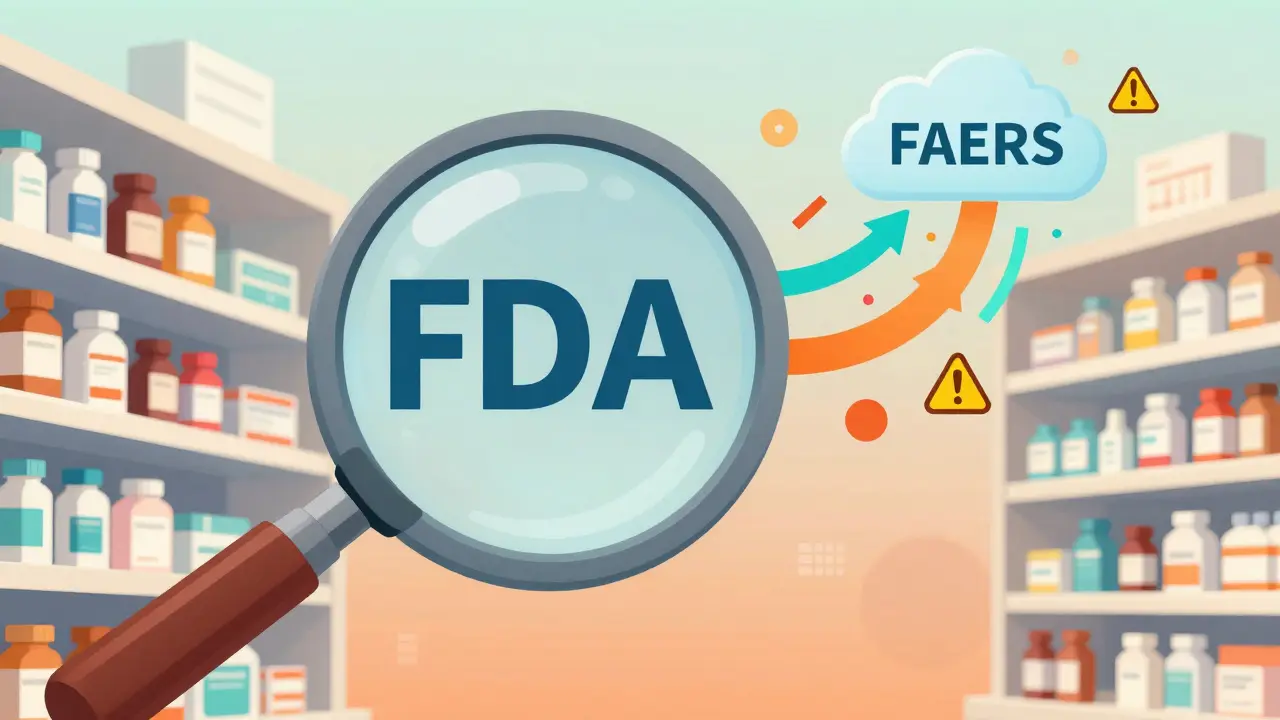
The FDA doesn’t just approve generics and walk away. It has a whole system built to catch problems that only show up when hundreds of thousands-or millions-of people are taking the drug. The main tool is the FDA Adverse Event Reporting System (FAERS) a national database that collects reports of side effects, medication errors, and product quality issues from patients, doctors, and pharmacists. Every year, FAERS gets over 1 million reports. About 40% of those involve generic drugs. That’s not because generics are unsafe-it’s because they make up 90% of all prescriptions filled in the U.S. More use means more reports, and more chances to spot something unusual.
But reports alone don’t tell the whole story. A patient might say, "My blood pressure spiked after switching to the generic." Was it the drug? Or stress? Or a change in diet? The FDA uses advanced data tools to separate real signals from noise. For example, if 100 people report the same rare side effect after taking one specific generic version of a drug, but not others with the same active ingredient, that’s a red flag. The Office of Generic Drugs (OGD) runs regular data mines on these reports to find patterns early.
The Sentinel Initiative: Real-Time Monitoring at Scale
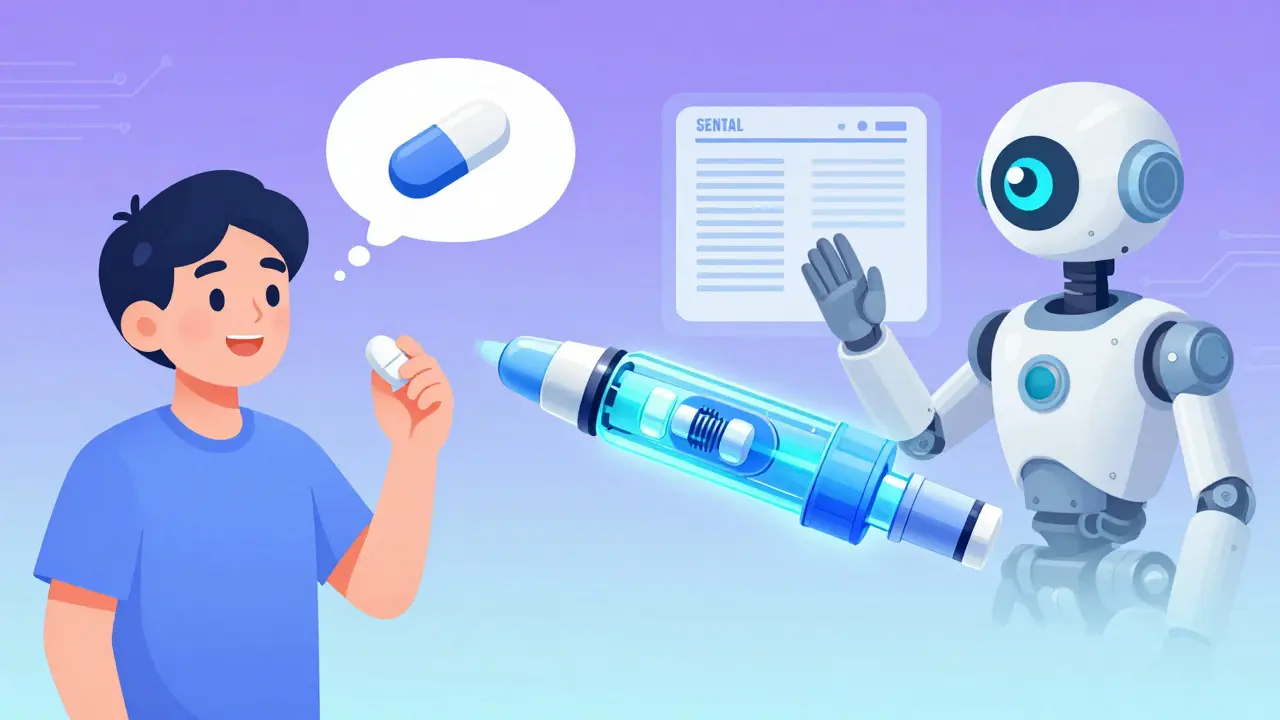
FAERS is reactive-it waits for someone to report a problem. But the Sentinel Initiative a real-time surveillance system that analyzes electronic health records and insurance claims from over 200 million Americans is proactive. It looks at patterns across entire populations. If a certain generic drug suddenly shows a spike in kidney-related hospital visits among older adults, Sentinel can flag it within weeks. This system doesn’t rely on people remembering to report. It just watches.
Sentinel pulls data from hospitals, clinics, and insurers. It tracks things like lab results, prescriptions filled, ER visits, and diagnoses. It’s like having a national health monitor running 24/7. In 2023, the FDA added five new data partners, expanding coverage to include rural clinics and Medicaid populations. This means even low-income patients taking generics are being watched.
Inspections and Manufacturing Checks
Not every problem comes from the patient’s body. Sometimes it comes from the factory. The FDA sends inspectors-unannounced-to generic drug plants across the U.S. and around the world. They check everything: how the powder is mixed, whether the machines are clean, if the tablets are breaking down properly. A single batch of a generic drug can be used in millions of pills. If one plant has a contamination issue, it could affect thousands of people.
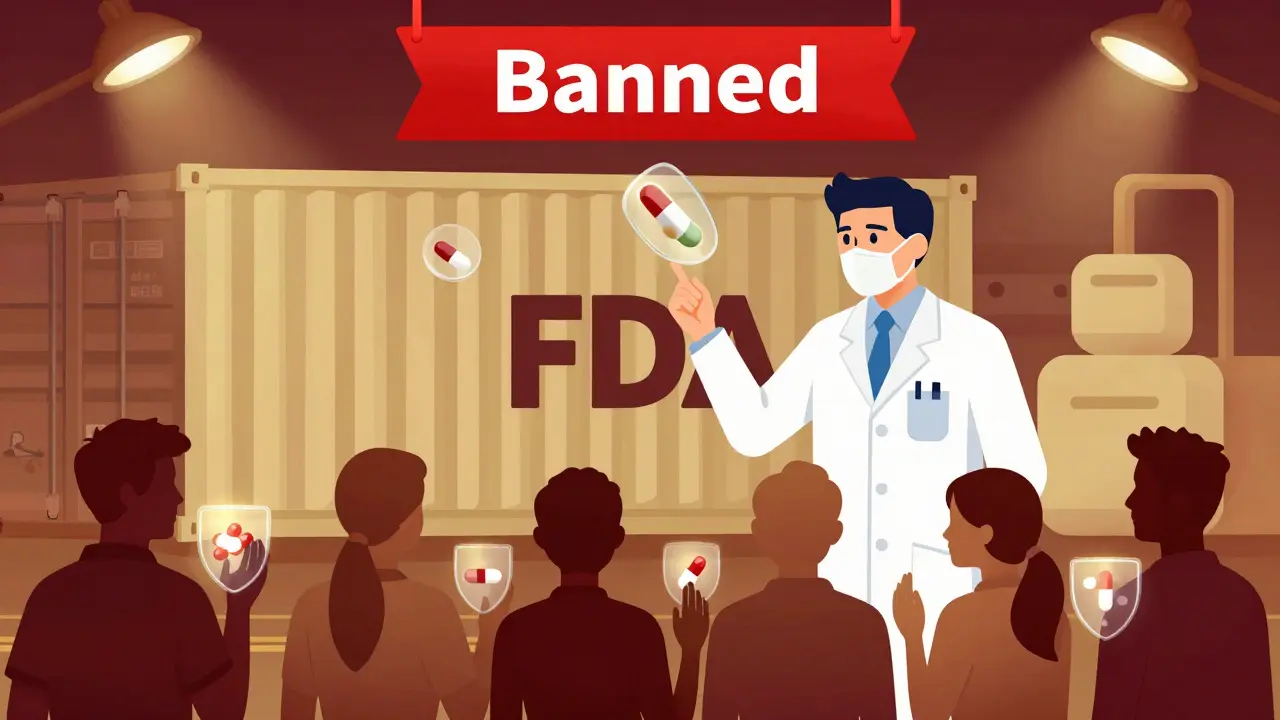
Between 2020 and 2025, the FDA conducted over 1,200 inspections of generic drug manufacturing sites. About 15% of those inspections found serious violations. Some led to import bans. Others led to recalls. One 2022 inspection in India found a plant using unapproved solvents to clean equipment. The FDA blocked all shipments from that site. That’s surveillance in action.
Complex Generics: The Harder Cases
Not all generics are created equal. A simple pill like metformin is easy to copy. But what about an inhaler? Or a topical cream? Or a slow-release tablet? These are called complex generics drugs with delivery systems that are hard to replicate exactly, such as inhalers, injectables, and transdermal patches. Bioequivalence tests can’t always predict whether these will behave the same in the body. A 2021 National Academies report found that patients switching from brand to generic inhalers sometimes had worse asthma control-even though lab tests showed identical drug levels.
That’s why the FDA is investing in AI. In 2023, the agency allocated $5.2 million to build machine learning models that compare real-world outcomes between brand-name drugs and their generic versions. The goal? To predict which complex generics might cause problems before they hit the market in large numbers. Early tests show AI can spot safety signals 60% faster than traditional methods.
What Happens When a Problem Is Found?
If the FDA finds a pattern of harm-say, a specific generic version linked to more liver injuries-it doesn’t just sit on the data. It acts. Actions can include:
- Updating the drug’s label with new warnings
- Issuing a "Dear Healthcare Provider" letter to alert doctors
- Requesting a voluntary recall
- Blocking imports from the manufacturing site
In 2021, the FDA issued a safety alert after 12 reports of low blood pressure linked to one brand of generic losartan. The drug was pulled from the market within six weeks. No deaths. No hospitalizations. But the alert prevented more cases.
Why Patient Perception Matters
Here’s something surprising: sometimes, the problem isn’t the drug-it’s the belief that the drug changed. This is called the nocebo effect when a patient expects a negative outcome, and that expectation causes real symptoms. A 2019 study in JAMA Internal Medicine looked at 47,000 reports from patients who switched to generics. About 15% complained of reduced effectiveness or new side effects. But when researchers compared those reports to clinical data, they found no measurable difference in how the drugs worked.
Still, those perceptions matter. If patients stop taking their meds because they think the generic doesn’t work, their condition can worsen. That’s why the FDA works with patient advocacy groups and pharmacies to educate people: switching to a generic doesn’t mean switching to a worse drug.
The Bigger Picture
Since 1984, the FDA has approved over 15,000 generic drugs. They save patients and the healthcare system an estimated $1.1 trillion a year. But with that scale comes responsibility. The system isn’t perfect. Critics say it’s underfunded. Experts point out that surveillance still relies too much on voluntary reporting. But the tools are getting smarter. AI, real-time data, and global inspections are making the system more responsive than ever.
The goal isn’t to catch every single problem. It’s to catch enough of them-early enough-to protect public health. And right now, the FDA is doing exactly that: watching, analyzing, acting-before more people get hurt.
Are generic drugs less safe than brand-name drugs?
No. Generic drugs must meet the same strict quality, strength, purity, and stability standards as brand-name drugs. The FDA requires them to be bioequivalent, meaning they work the same way in the body. Most safety issues with generics come from manufacturing problems or rare patient reactions-not because the drug itself is inferior. In fact, the vast majority of generic drugs have excellent safety records.
Can I report a side effect from a generic drug?
Yes. The FDA encourages anyone-patients, caregivers, pharmacists, or doctors-to report side effects through MedWatch, its online reporting system. You don’t need to know if it’s the drug or something else. Just report what happened. Even if it seems minor, your report could help spot a pattern. The FDA receives over 1 million reports annually, and about 40% involve generics. Every report counts.
Why do some people say generics don’t work as well?
Sometimes, it’s not the drug-it’s the mind. The nocebo effect can cause people to feel worse after switching to a generic, even if the drug is identical. Other times, different manufacturers use slightly different inactive ingredients (like fillers or coatings), which can affect how fast the drug dissolves. For simple pills, this rarely matters. But for complex generics like inhalers or patches, those small differences can make a real difference. That’s why the FDA is focusing more attention on these harder-to-copy drugs.
Does the FDA monitor all generic drugs the same way?
No. Simple generics-like antibiotics or blood pressure pills-are monitored using standard systems like FAERS and Sentinel. But complex generics-such as inhalers, injectables, and extended-release tablets-are treated differently. They require special scrutiny because bioequivalence tests can’t always predict how they’ll behave in real patients. The FDA has dedicated teams and AI research projects focused specifically on these products.
What’s being done to improve generic drug safety?
The FDA is investing in artificial intelligence and machine learning to analyze real-world data faster. Projects funded in 2023 aim to reduce the time it takes to detect safety signals for complex generics from months to weeks. The agency is also expanding its use of electronic health records and working with universities to study how formulation changes affect outcomes. These aren’t future plans-they’re active, funded research projects already underway.
Generic drugs keep healthcare affordable. But affordability shouldn’t mean compromise. The FDA’s surveillance system-flawed, evolving, but relentless-is designed to make sure that doesn’t happen. It’s not perfect. But it’s watching. And it’s getting better.
Prateek Nalwaya
February 16, 2026Man, I never realized how much goes into generic drugs after they hit the shelves. I just assumed if it’s cheaper, it’s cut corners. But the FDA’s whole Sentinel system? That’s wild. 200 million data points just quietly watching for weird spikes in kidney hospitalizations? I’m impressed. And the unannounced factory inspections? That’s not bureaucracy-that’s vigilance. We take these pills for granted, but someone’s got their eyes on every tablet coming out of a plant in India or Tennessee. Respect.
Agnes Miller
February 17, 2026i work in a pharmacy and people always freak out when they get a different generic. like "why does this pill look different?" i just smile and say "it’s the same medicine, just made by someone else." but honestly? the nocebo effect is real. i’ve had patients swear their blood pressure went nuts after switching-only to find out they started drinking coffee at 3am. lol.
Oliver Calvert
February 17, 2026The FDA’s system isn’t perfect but it’s miles ahead of most countries. I’ve seen how other nations handle generics-barely any post-market checks. The fact they’re using AI to catch signals faster? That’s the future. Also the 15% of inspections finding serious violations? That’s not a flaw-that’s proof the system works. If you’re not catching problems, you’re not looking hard enough.
Kancharla Pavan
February 19, 2026Let’s be honest here. The FDA is playing catch-up. They approve generics based on bioequivalence and then act like magic will happen. But complex generics? Inhalers? Patches? Those aren’t just pills. They’re delivery systems with physics and chemistry that can’t be replicated with a spreadsheet. And yet we let them fly under the radar because they’re cheaper? No. We’re gambling with people’s lives. And when a child has an asthma attack because the generic inhaler didn’t deliver properly? Who’s accountable? Not the pharmacist. Not the manufacturer. Definitely not the FDA. They’re just watching. Watching while people suffer.
PRITAM BIJAPUR
February 21, 2026The real miracle isn’t that generics work-it’s that they work at scale. 💯 Millions of people, every day, taking a pill that costs $2 instead of $200-and living healthy lives. The FDA’s surveillance is the invisible hand keeping that system alive. AI. Real-time data. Global inspections. It’s not glamorous. But it’s sacred. We talk about innovation like it’s about rockets and AI chatbots. But the quiet, relentless, data-driven vigilance behind your daily medicine? That’s the true tech revolution. 🌍💊
Dennis Santarinala
February 21, 2026I love how the FDA just... watches. Like a calm, nerdy guardian angel sitting in a server room, sipping coffee, scanning millions of records. "Hmm, 12 reports of low BP with this losartan batch? Okay, let’s pull it." No drama. No press conference. Just... action. And the fact they’re including rural clinics and Medicaid data? That’s the stuff that actually saves lives. Not headlines. Just good, quiet, persistent work.
Haley DeWitt
February 23, 2026I switched to a generic for my thyroid med last year and honestly? I felt weird for a week. Like, sluggish. But I didn’t stop taking it. I just tracked my symptoms. Turned out it was stress from my new job. The generic was fine. I wish more people knew that. The nocebo effect is real. And we’re so quick to blame the pill instead of our own lives. 🤷♀️
John Haberstroh
February 25, 2026I work in biotech and I’ve seen how drug development works. Brand-name drugs get $10B in R&D. Generics? A few million and a bioequivalence test. But the FDA’s post-market system? That’s where the real science kicks in. It’s not about proving equivalence before- it’s about proving safety after. And that’s genius. It’s like letting the real world be the clinical trial. And honestly? The fact they’re using AI to predict problems? That’s next-level. We’re not just monitoring-we’re anticipating.
Brenda K. Wolfgram Moore
February 25, 2026I’m glad someone finally wrote this. People think generics are dangerous because they’re cheap. But the truth? They’re safer than ever. The FDA’s system is the most advanced in the world. The fact that we can catch a contamination in India before it hits U.S. shelves? That’s not luck. That’s engineering. And yes, some people feel weird switching-but that’s psychology, not pharmacology. We need to stop scaring people with myths.
Linda Franchock
February 26, 2026So let me get this straight. You’re telling me the FDA has AI watching 200 million people’s health records, unannounced inspections on factories halfway across the globe, and a database that gets a million reports a year… and somehow people still think generics are sketchy? Honey. The real scam is believing that your weird side effect is the drug’s fault when you changed your sleep schedule and started eating tacos every night. 🤭