
Asthma vs COPD: Key Differences and What You Need to Know
When you struggle to breathe, it’s easy to assume it’s just asthma, a chronic lung condition where airways swell and tighten in response to triggers like pollen or exercise. Also known as reactive airway disease, it often starts in childhood and can be managed with inhalers and avoiding triggers. But if you’re a long-term smoker or ex-smoker over 40, and your breathing problems are getting worse over time—not flaring up and then settling—you might actually be dealing with chronic obstructive pulmonary disease, a group of lung conditions including emphysema and chronic bronchitis that cause irreversible airflow blockage. Also known as COPD, it doesn’t go away with treatment, only slows down. These two conditions look similar on the surface: coughing, wheezing, shortness of breath. But their roots, progression, and treatment paths are completely different.
People with asthma usually have normal lung function between flare-ups. Their airways are hyperreactive, meaning they tighten up easily but can bounce back. COPD is different—it’s about damage. The air sacs in your lungs (alveoli) break down in emphysema, and mucus clogs the airways in chronic bronchitis. This damage builds up over years, mostly from smoking, and doesn’t reverse. You won’t get your lung function back, no matter how well you treat it. That’s why stopping smoking is the single most important step if you have COPD. With asthma, avoiding triggers like dust or cold air helps. With COPD, quitting smoking is non-negotiable.
Medications overlap, which is why misdiagnosis happens. Both get bronchodilators and steroids. But asthma responds quickly to rescue inhalers like albuterol. COPD patients need long-acting inhalers just to keep airways open daily. Steroids help both, but long-term steroid use in COPD increases infection risk without much benefit. Pulmonary rehab helps both, but it’s life-changing for COPD patients who’ve lost so much lung function. And while asthma can be controlled well enough for someone to run a marathon, COPD usually limits activity to walking slowly or sitting.
There’s no single test to confirm either. Spirometry is the starting point—measuring how much air you can blow out and how fast. But doctors also look at your history: Did symptoms start as a kid? Do you have allergies? Are you a smoker? Is your cough constant or only during flares? Blood tests, chest X-rays, and oxygen levels help too. Many people live for years thinking they have asthma when they actually have COPD—or vice versa. That’s dangerous. Taking the wrong medication won’t just waste time—it can make things worse.
What you’ll find in the posts below isn’t just theory. It’s real-world advice on how to tell them apart, what treatments actually work, how to avoid complications, and what to ask your doctor when you’re not sure. You’ll see how drug interactions, inhaler misuse, and even generic medication fillers can affect your breathing. You’ll learn why some people get worse on certain meds, how to spot early signs of decline, and what steps actually improve daily life. This isn’t about memorizing medical terms. It’s about knowing what’s happening in your body so you can take control.
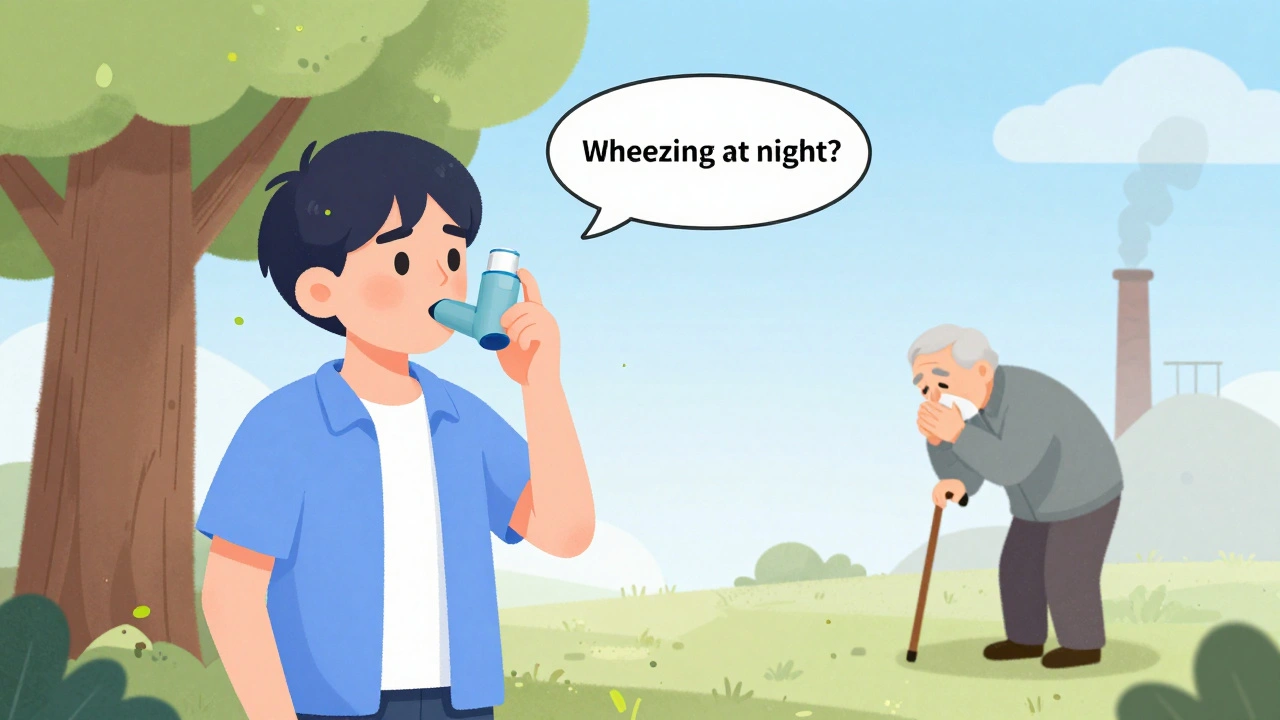
Asthma vs. COPD: Key Differences in Symptoms and Treatment
Asthma and COPD both cause breathing trouble, but they're different diseases with different causes, symptoms, and treatments. Learn how to tell them apart and what each needs for proper care.