
Clinical Trial Eligibility: Who Qualifies and Why It Matters
When you hear about a new treatment in the news, you might wonder: clinical trial eligibility, the set of rules that decide who can join a medical study. Also known as trial enrollment criteria, it’s not about who’s most eager—it’s about who’s safest and most likely to give researchers useful data. These rules exist for a reason: to protect participants and make sure the results actually mean something. A trial for a new heart drug won’t let someone with severe kidney disease join, even if they’re desperate. Why? Because their body might react unpredictably, and that could mess up the whole study—or worse, put them in danger.
There are three big things that shape clinical trial eligibility: your health condition, your medical history, and your current meds. For example, if you’re trying to join a trial for a new diabetes drug, they’ll check your HbA1c levels, whether you’ve had kidney issues, and if you’re already on insulin or other glucose-lowering pills. Some trials exclude people taking blood thinners, others require you to have tried at least two other treatments first. Even age and weight matter—many trials for older adults set upper limits, while others focus only on patients under 50. It’s not random. It’s science.
And then there’s the participant criteria. These aren’t just checkboxes. They’re designed to reduce noise. If you’ve had a heart attack in the last six months, you’re often excluded from cancer trials—not because you’re not a good person, but because your body is still recovering, and any side effect could be blamed on the new drug when it’s really your heart. That’s why trials have strict windows: "No major surgery in the past 90 days," "No steroids in the last 30 days," "No history of autoimmune disease." These aren’t barriers—they’re filters. They make the results clean, reliable, and useful for everyone else who’ll need that treatment later.
Many people think if they’re sick enough, they’ll automatically qualify. But that’s not how it works. A trial for a rare liver disease won’t take someone with common fatty liver. A trial testing a new painkiller won’t accept someone already on high-dose opioids—because their tolerance could mask the drug’s real effect. That’s why knowing your exact diagnosis matters more than how bad you feel. And if you’re on multiple medications, like a blood thinner for atrial fibrillation and a thyroid pill, those interactions could disqualify you—even if everything else looks perfect.
There’s also the practical side: can you travel to the site? Can you stick to a strict schedule? Some trials need weekly visits, blood draws every other day, or overnight stays. If you live far away or work full-time, that alone might block you—even if your health fits perfectly. It’s not about fairness. It’s about data quality. A trial with 20% dropout rates because people couldn’t make it won’t give trustworthy results.
So what can you do? Know your diagnosis inside out. Write down every medication you take, even vitamins. Bring your medical records. Don’t assume you’re too old, too sick, or too healthy—some trials specifically want people with advanced disease, others want those who’ve never been treated. And if you’re turned down, ask why. The reason might help you find another trial that fits better. The system isn’t perfect, but it’s built to protect you while finding real answers. Below, you’ll find real stories and facts about how trials work, what gets people in or out, and how to spot the ones worth your time.
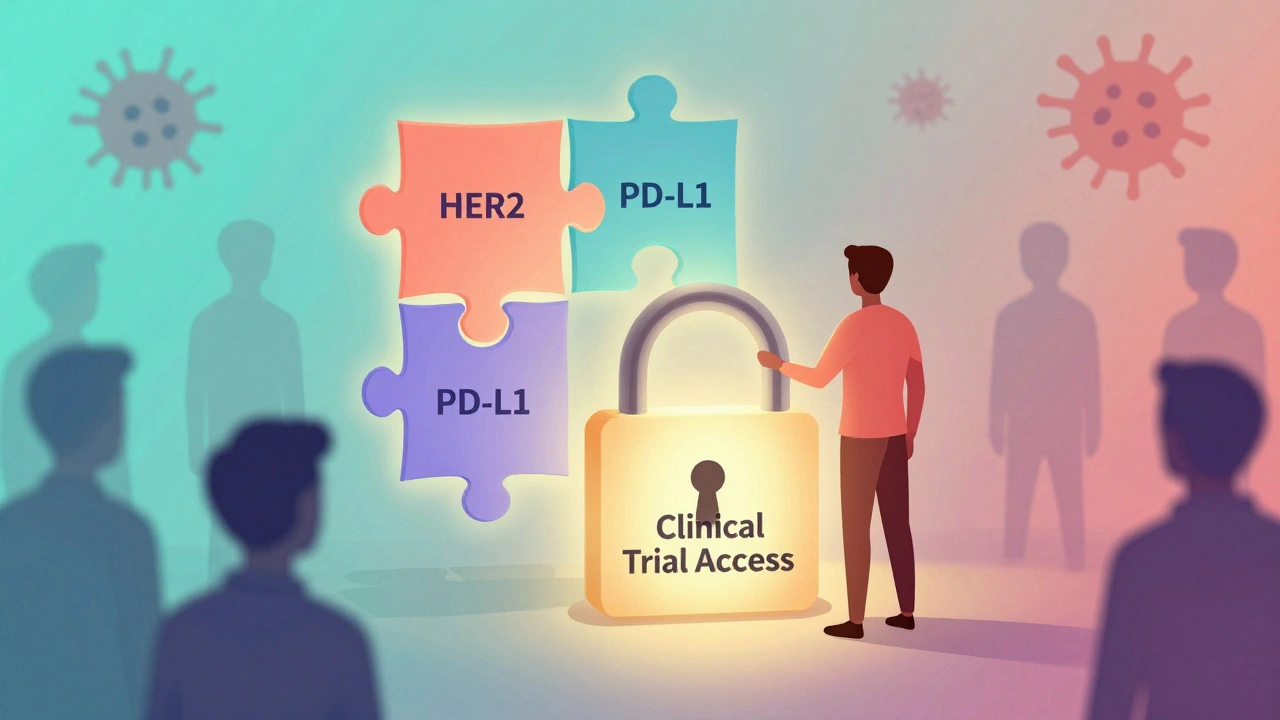
Clinical Trial Eligibility: How Biomarkers Shape Cancer Treatment Criteria
Biomarkers are now central to cancer clinical trial eligibility, matching patients to targeted therapies based on their tumor's biology. Learn how inclusion criteria work, what tests are needed, and why access remains unequal.