
23 Dec 2025
- 11 Comments
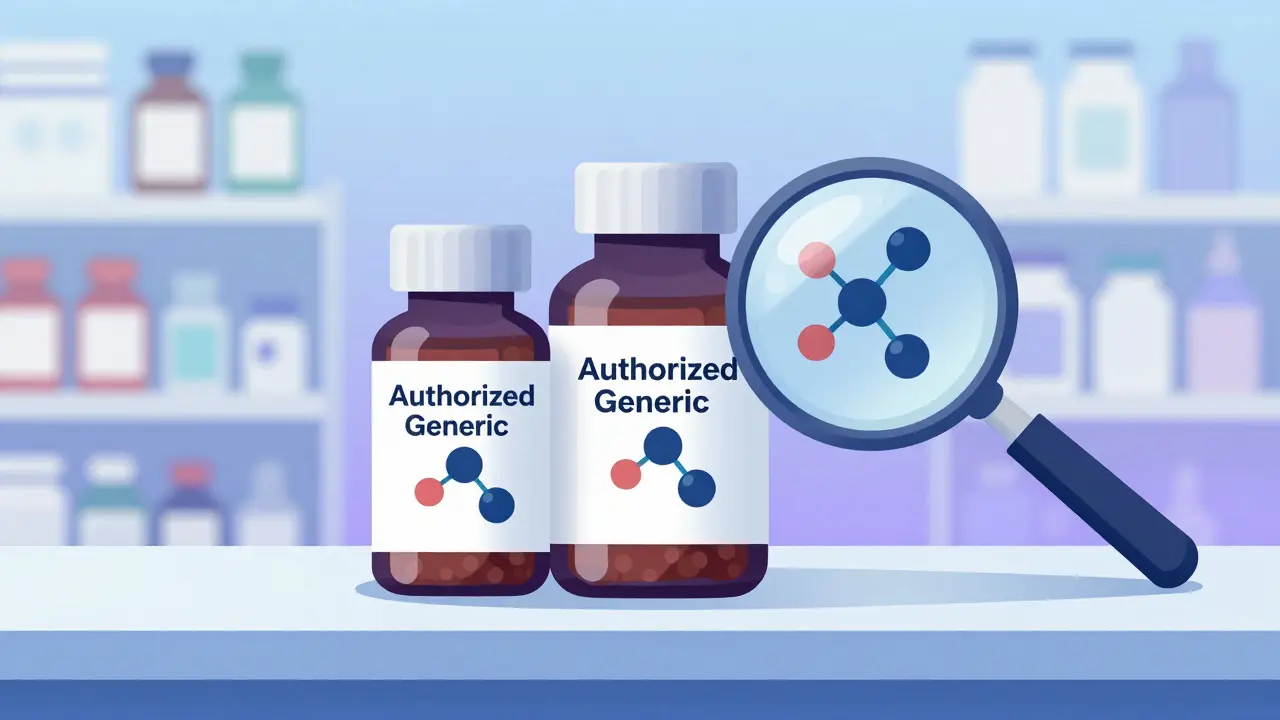
When you're looking for a cheaper version of a brand-name drug, you might think all generics are the same. But there's a type of generic you probably haven't heard of-authorized generics. These aren't just copies made by another company. They're the exact same drug as the brand-name version, made by the original manufacturer, just sold without the brand name on the label. They look different-maybe a different color or shape-but inside, they're identical. And if you're trying to save money on prescriptions, knowing where to find the official list of these drugs can make a real difference.
What exactly is an authorized generic?
An authorized generic is a brand-name drug that the original company sells under a different label, usually at a lower price. It's not a separate product approved through the generic pathway. Instead, it's made under the same New Drug Application (NDA) as the brand version. That means it uses the same ingredients, same factory, same quality controls. The only difference? No brand name on the bottle.
For example, if you take CLEOCIN T topical gel for acne, the brand version is made by Pfizer. But Pfizer also makes an authorized generic version of that same gel-same formula, same strength, same packaging except without the CLEOCIN name. It's sold to pharmacies at a discount, so you pay less. This isn't a loophole. It's a legal product tracked by the FDA under Section 505(t) of the Federal Food, Drug, and Cosmetic Act, passed in 2003.
Why does this matter? Because not all generics are created equal. Traditional generics go through a different approval process (ANDA), and sometimes they're made by third-party companies that might use slightly different fillers or coatings. Authorized generics skip that whole step-they're the original drug, just rebranded. If you need consistency-say, you're switching from brand to generic and don't want any change in how the drug works-authorized generics are the safest bet.
Where to find the official FDA list
The only place to get the complete, legally required list of authorized generics is on the FDA's website. Go to fda.gov/drugs/abbreviated-new-drug-application-anda/fda-list-authorized-generic-drugs. That’s the only official source.
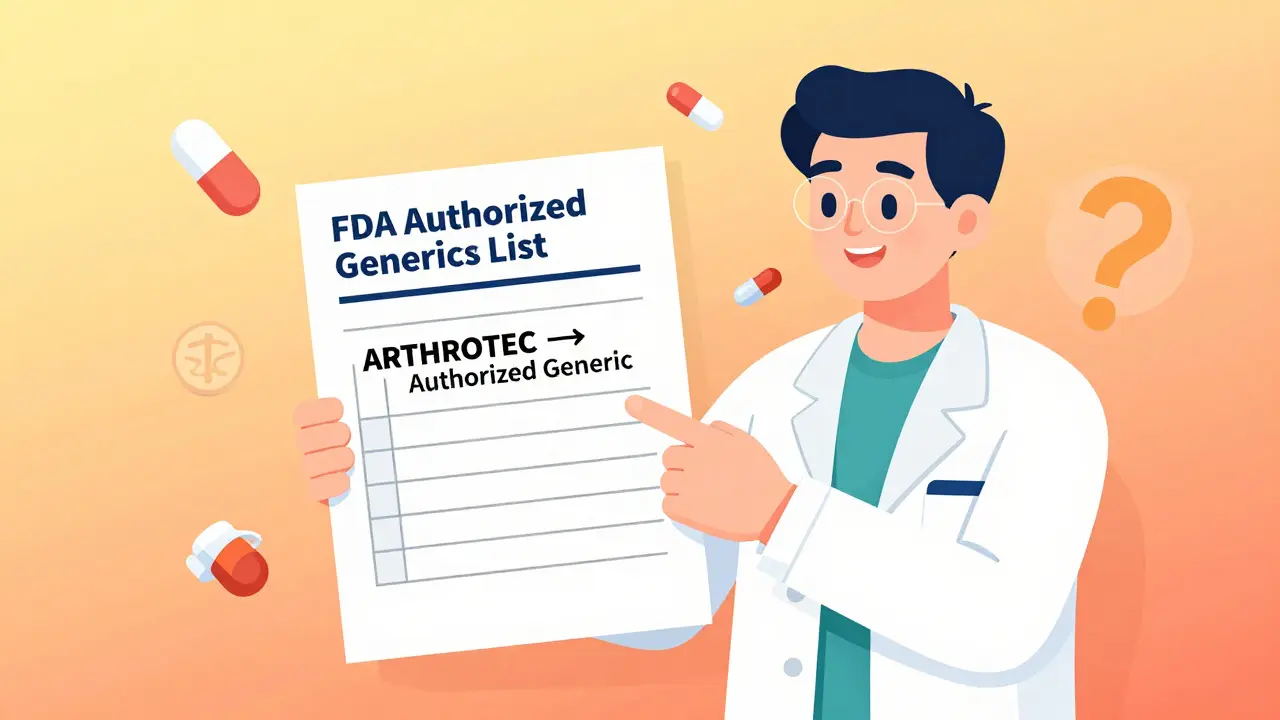
The list is published as a downloadable PDF, updated every three months. The most recent version as of October 10, 2025, contains over 800 entries. Each row includes:
- The brand name (like ACTIQ or ARTHROTEC)
- The dosage form (tablet, gel, capsule)
- The strength (e.g., 1200 mcg, 1% lotion)
- The name of the brand manufacturer (like Pfizer Inc. or Cephalon, LLC)
- The date the authorized generic first entered the market
Don’t expect a search bar or filters. It’s a static PDF. That means you have to scroll through pages to find what you need. If you’re looking for a specific drug, use Ctrl+F (or Command+F on Mac) to search the PDF for the brand name.
Why isn’t it a live database? Because the FDA only gets this data once a year from manufacturers, in their annual reports. The date listed isn’t necessarily when the drug hit shelves-it’s when the company reported it to the FDA. So if a drug was pulled from the market last month, it might still show up on the list.
How this list is different from the Orange Book
You might have heard of the FDA’s Orange Book. It’s where you find approved generic drugs and their therapeutic equivalence ratings. But here’s the key difference: authorized generics are not in the Orange Book.
The Orange Book tracks drugs approved through ANDAs-generic versions made by other companies. Authorized generics are made by the brand company itself and are listed under the original NDA. That means if you search the Orange Book for a brand-name drug and see no generics listed, it doesn’t mean there aren’t cheaper options. There might be an authorized generic, but you won’t find it there.
For example, the brand drug ARTHROTEC (diclofenac/misoprostol) has no ANDA-approved generics in the Orange Book. But the FDA’s authorized generics list shows Pfizer started selling an authorized version in November 2012. If you only checked the Orange Book, you’d miss this option entirely.
Why the list can be misleading
The FDA list is accurate-but incomplete in practice. It tells you what was reported, not what’s available.
Pharmacists and patients have reported frustration with this gap. One independent pharmacy owner in Ohio found that 5 out of 8 authorized generics listed were no longer stocked by his wholesaler. Another pharmacist in Texas said she used the list to switch a patient to an authorized generic, only to find the pharmacy couldn’t order it because the manufacturer had stopped shipping it months earlier.
The FDA admits this. Their disclaimer says: “The list may include only information that is included in an annual report. FDA does not have information on whether the AG is still marketed.”
That means the list is great for research, competitive analysis, or academic use-but not for daily prescribing or purchasing decisions. If you’re a patient or pharmacist trying to save money, you need to cross-check with your pharmacy’s formulary or your wholesaler’s catalog. Look up the National Drug Code (NDC) for the authorized generic and verify it’s active in the NDC Directory.
Who’s using authorized generics-and why
Brand-name drug companies use authorized generics as a strategic tool. When a patent expires, a generic competitor can get 180 days of exclusive market access. During that time, they can charge high prices. To undercut them, the brand company releases its own authorized generic at a lower price-right away. This keeps market share and prevents the first generic from dominating the market.
According to a 2023 study in Health Affairs, over 850 authorized generics launched between 2010 and 2019. Pfizer, Teva, and Viatris (formerly Mylan) are the top three manufacturers. Pfizer alone has 47 authorized generics on the list.
But here’s the catch: the savings aren’t always huge. A 2020 JAMA Internal Medicine editorial pointed out that authorized generics often cost only 10-20% less than the brand name-not the 50-80% discounts you see with traditional generics. That’s because the brand company still controls pricing. Still, for patients on high-deductible plans or without insurance, even a small discount adds up.
On the flip side, some experts argue authorized generics help keep prices in check. If a first generic tries to charge too much during its exclusivity period, the brand can drop its authorized version at a lower price and force the competitor to follow suit. It’s a market balancing act.
What’s coming next
The FDA has said it plans to replace the PDF list with a searchable, online database by mid-2026. That’s a big step forward. Stakeholders-from pharmacists to insurers-have been asking for this for years. The current PDF is hard to use, outdated, and doesn’t show real-time availability.
There are also talks of linking the authorized generics list to the FDA’s Drug Shortage Portal and price transparency rules under the Inflation Reduction Act. That could mean future versions will show not just what’s been reported, but what’s actually on shelves and at what price.
Until then, the PDF remains the only official source. And while it’s not perfect, it’s the only place that tells you which brand-name drugs have authorized versions-and who makes them.
How to use this list effectively
If you’re a patient:
- Check the FDA list for your brand-name drug to see if an authorized generic exists.
- Ask your pharmacist: “Is there an authorized generic version of this drug?”
- Don’t assume it’s available-call your pharmacy or wholesaler to confirm stock.
If you’re a pharmacist or prescriber:
- Use the list to identify cost-saving alternatives for patients.
- Verify NDC codes in the FDA’s NDC Directory to confirm active status.
- Pair FDA data with weekly NDC deactivation reports from your distributor to avoid ordering discontinued products.
If you’re a researcher or analyst:
- The list is invaluable for tracking manufacturer strategies and market entry timing.
- Combine it with commercial data from IQVIA or other sales databases to get a full picture of availability.
Bottom line: The FDA’s authorized generics list isn’t a shopping guide. It’s a transparency tool. It doesn’t tell you what’s in stock. But it does tell you what’s legally allowed-and who’s making it. That’s powerful information if you know how to use it.
Are authorized generics the same as brand-name drugs?
Yes. Authorized generics are identical to their brand-name counterparts in active ingredients, strength, dosage form, and safety. The only differences are the label, packaging, and price. They’re made by the same company, in the same facility, using the same process.
Where can I find the FDA’s authorized generics list?
The only official source is the FDA’s website: fda.gov/drugs/abbreviated-new-drug-application-anda/fda-list-authorized-generic-drugs. It’s updated quarterly as a downloadable PDF. No other website or database is official.
Why isn’t the authorized generics list in the Orange Book?
The Orange Book only includes drugs approved through the Abbreviated New Drug Application (ANDA) process. Authorized generics are marketed under the original brand’s New Drug Application (NDA), so they’re not eligible for inclusion. That’s why you need to check the separate authorized generics list to find them.
Can I trust the market entry date on the FDA list?
Not exactly. The date listed is when the manufacturer reported the authorized generic in its annual report-not the actual date it hit the market. The FDA admits this data is often delayed or incomplete. Don’t assume a drug launched on that date; treat it as a rough estimate.
Why don’t pharmacies always carry authorized generics even if they’re on the list?
Because the FDA list doesn’t track current availability. Manufacturers may stop producing or shipping an authorized generic at any time, but the list won’t be updated until the next annual report. Pharmacies rely on their distributors’ inventories, which may not reflect the FDA’s records. Always verify availability with your pharmacy or wholesaler.
Are authorized generics cheaper than traditional generics?
Usually not by much. Authorized generics often cost only 10-20% less than the brand name, while traditional generics can be 50-80% cheaper. That’s because the brand company controls the price. But for some patients, even a small discount helps-especially if the traditional generic isn’t available or causes unexpected side effects.
Zabihullah Saleh
December 24, 2025Man, I never realized authorized generics were just the exact same pill with a different label. It's wild how the system works-same factory, same chemists, same quality control, but suddenly it's 'cheaper' because they took off the fancy logo. Feels like buying a Nike shoe without the swoosh and calling it a 'generic.' The brand didn't change, the product didn't change, but the price did. That’s capitalism for you.
Sophie Stallkind
December 25, 2025Thank you for this meticulously researched and clearly articulated exposition. The distinction between NDA and ANDA pathways is critically underappreciated by both patients and prescribers. The FDA’s current methodology, while imperfect, remains the only legally recognized source of authoritative data on this matter. I urge all healthcare professionals to reference this list in conjunction with NDC verification protocols to ensure patient safety and cost-efficiency.
Bailey Adkison
December 27, 2025So the FDA publishes a list that’s outdated and useless for actual use but you still treat it like gospel? That’s not transparency that’s theater. Manufacturers report once a year. Drugs get pulled. Pharmacies don’t stock them. Yet the list stays up like a ghost town sign. The whole thing’s a bureaucratic farce. You want real info? Call your wholesaler. Or better yet-ask your pharmacist what they actually have on the shelf. Not what some spreadsheet says three months ago.
Carlos Narvaez
December 28, 2025Authorized generics. How quaint. The pharma giants playing both sides of the table. Patent expiring? No problem. Just release your own 'generic' at 15% off and crush the real competitors. It’s not competition-it’s collusion with a side of regulatory arbitrage. The FDA’s list? Just a PR brochure for Big Pharma’s market manipulation playbook.
Justin James
December 29, 2025Think about this: what if the FDA list isn’t just outdated-it’s being manipulated? Who controls the annual reports? Big Pharma. What if they delay reporting to make it look like they’re not flooding the market with generics? What if they report drugs that were discontinued years ago to confuse competitors? And what about the NDC Directory? It’s not real-time either. You think this is about transparency? Nah. This is about control. They want you to think you’re getting a deal while they’re still the only ones holding the keys to the pharmacy vault. They’re not giving you savings-they’re giving you the illusion of choice.
Rick Kimberly
December 30, 2025This is incredibly helpful. I’ve always relied on the Orange Book and never realized authorized generics were excluded. It’s fascinating how regulatory frameworks create blind spots. I wonder if there’s a way to automate cross-referencing the FDA list with NDC updates-maybe a script or browser extension? I’d love to see something that flags authorized generics in real time during e-prescribing. Could be a game-changer for patient access.
Terry Free
December 30, 2025Wow. So the same company makes the brand and the 'cheap' version? Shocking. I bet they also sell the same toothpaste under two names-one with 'pro' in the title and one that’s 'value.' Classic. You’d think after 20 years of this, someone would’ve fixed the system. But nope. Keep paying more for the same damn pill. It’s like buying the same bread but paying extra for the fancy wrapper.
Lindsay Hensel
January 1, 2026As someone who’s had to switch medications multiple times due to insurance changes, this is the kind of information that could’ve saved me months of trial and error. Knowing that an authorized generic exists-and that it’s the *exact* same drug-gives me peace of mind. I’ve been afraid to switch because I didn’t trust generics. Now I know I can ask for the 'real' generic. Thank you for making this so clear.
Michael Dillon
January 2, 2026So the FDA’s list is useless unless you cross-check with your wholesaler? Then why does it even exist? It’s like having a map of the city that doesn’t show which streets are under construction. You’re not helping people-you’re giving them false hope. And the fact that Pfizer has 47 of these? That’s not innovation. That’s monopoly maintenance. The system’s rigged.
Gary Hartung
January 3, 2026Let me just say-I’ve been waiting for this kind of deep-dive for YEARS. The FDA’s PDF? A relic. The Orange Book? A joke. And yet, here we are, in 2025, still scrolling through 800-line PDFs like we’re in 2008. This isn’t innovation-it’s institutional laziness. And don’t get me started on how the manufacturers report data once a year like it’s a tax return. This isn’t medicine. It’s bureaucratic performance art. Someone needs to burn it all down and start over.
Ben Harris
January 4, 2026My pharmacist told me the authorized generic for my med was discontinued last month but the FDA list still shows it. I called the manufacturer. They said they stopped shipping it in January. So why’s it still on the list? Because nobody cares. The FDA doesn’t update it. The pharmacy doesn’t notify anyone. The patient just gets stuck with the expensive version. This isn’t a system. It’s a glitch. And we’re all just living in it.