
5 Dec 2025
- 13 Comments
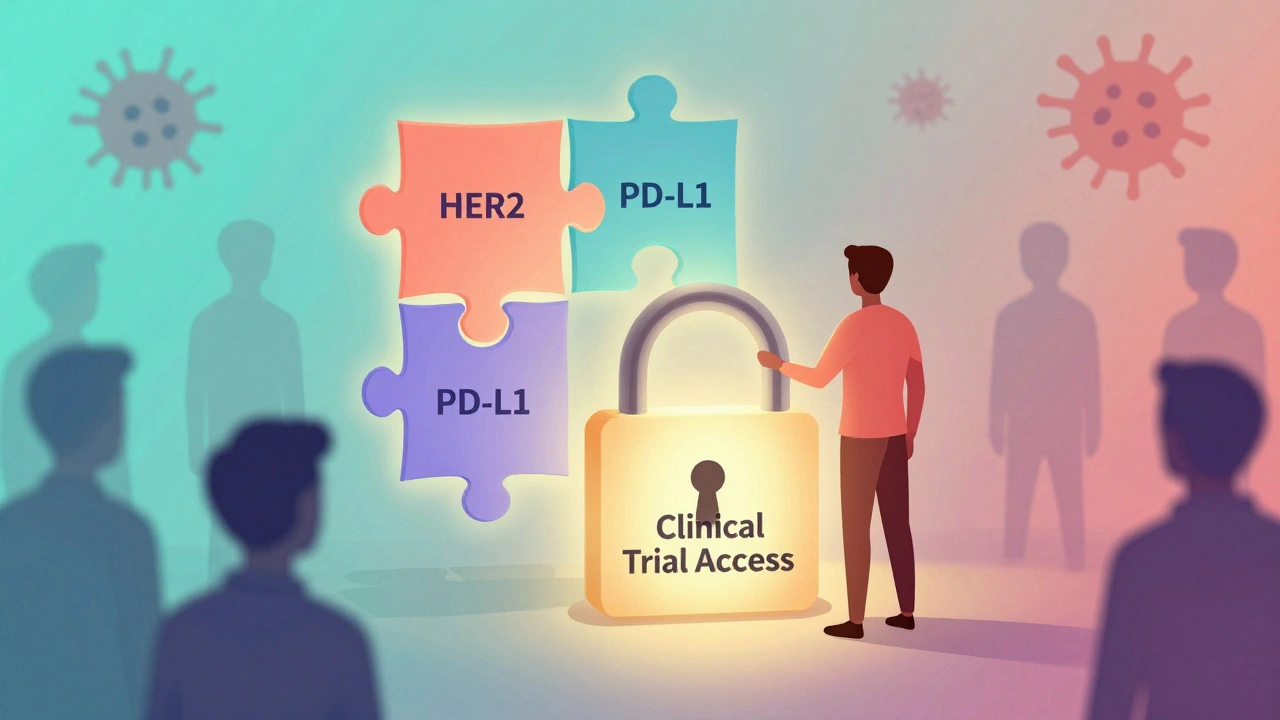
When you hear about a new cancer drug in the news, it’s easy to assume it’s available to anyone with that type of cancer. But the reality is far more precise. Today, biomarkers are the gatekeepers of clinical trial access - and increasingly, of real-world treatment options. If you or someone you know is considering a clinical trial for cancer, understanding how biomarkers and inclusion criteria work isn’t just helpful - it’s essential.
What Are Biomarkers, Really?
Biomarkers aren’t science fiction. They’re measurable signs in your body that tell doctors something important about your disease. These can be genes, proteins, hormones, or even fragments of DNA floating in your blood. In cancer, they help answer critical questions: Is this tumor driven by a specific mutation? Will this drug work for you? How aggressive is it likely to be? The FDA defines them as objective measurements that reflect normal biology, disease processes, or how your body responds to treatment. There are seven types, but in cancer trials, three matter most:- Predictive biomarkers - tell you if a drug is likely to work (like HER2 in breast cancer or EGFR in lung cancer).
- Prognostic biomarkers - indicate how the disease might progress, regardless of treatment (like high levels of PSA in prostate cancer).
- Pharmacodynamic biomarkers - show whether the drug is hitting its target inside your body.
These aren’t theoretical. In 2022, 92% of all new cancer drug approvals by the FDA came with a biomarker-defined patient group. That means if you don’t have the right biomarker, you won’t be eligible - even if your cancer looks the same on a scan.
Why Biomarkers Changed Everything
Before biomarkers, cancer trials were like throwing a wide net. Doctors enrolled patients based on tumor location and stage - say, “Stage 3 lung cancer.” But tumors with the same appearance can behave completely differently. One patient might respond for years. Another might see no benefit at all. That’s why early trials failed so often. Now, trials use biomarkers to filter patients before they even start. A 2021 analysis of over 9,700 cancer drug programs showed that trials using biomarkers had nearly double the chance of regulatory approval. Phase 2 success rates jumped from 27% to almost 50%. That’s not a small improvement - it’s a revolution. Take HER2-positive breast cancer. Before targeted therapies, response rates to chemo hovered around 12%. When trials started selecting only patients with HER2 overexpression, response rates tripled to 32%. That’s the power of matching the right drug to the right person.What’s in the Inclusion Criteria?
Inclusion criteria are the rules that decide who can join a trial. For biomarker-driven trials, they’re not just about age or prior treatments anymore. They’re molecular. Here’s what you might see in a real-world trial protocol:- “Must have metastatic non-small cell lung cancer with an EGFR exon 19 deletion or L858R mutation confirmed by NGS testing.”
- “Must have received no more than two prior lines of systemic therapy.”
- “Must have adequate liver and kidney function (lab values within specified ranges).”
- “Must have a tumor sample available for biomarker testing, or agree to a new biopsy.”
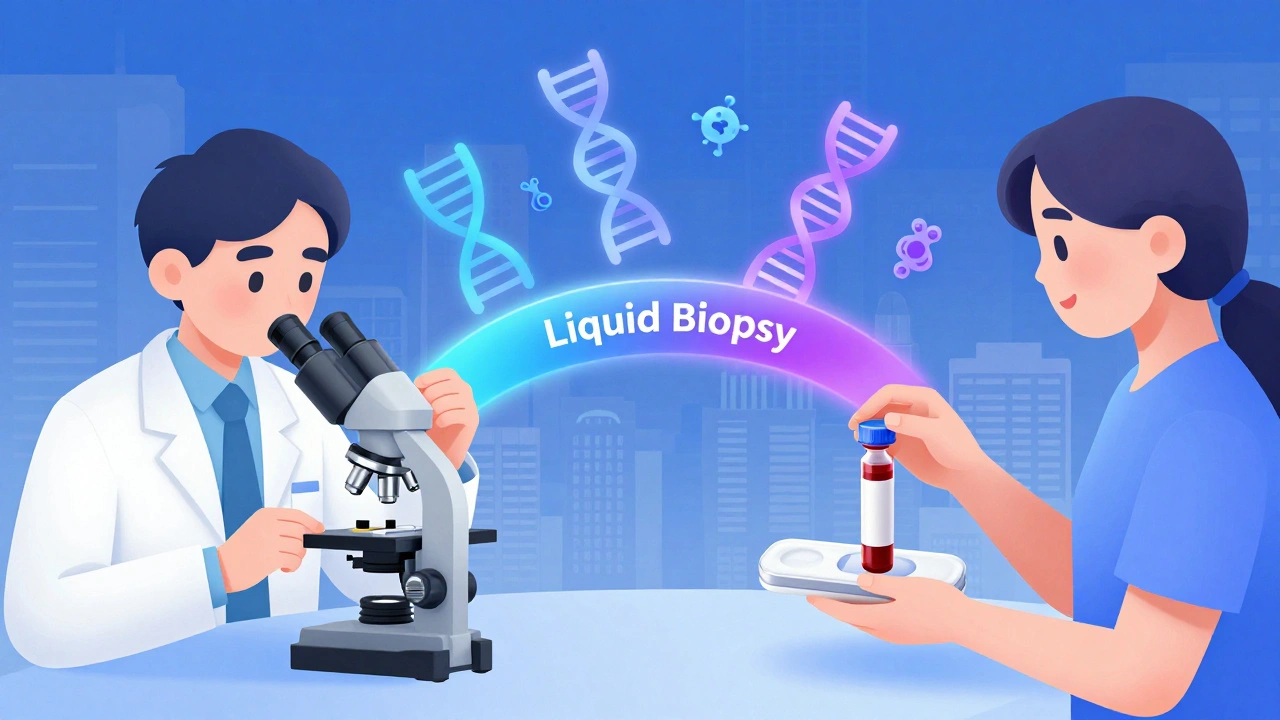
Some trials require a tissue biopsy. Others accept a blood test - called a liquid biopsy - which looks for tumor DNA in your bloodstream. Liquid biopsies are faster, less invasive, and becoming more common. In 2023, 31% of Phase 2+ cancer trials used them, up from just 9% in 2020.
But here’s the catch: Not every hospital can run these tests. You need a lab that’s CLIA-certified and experienced in molecular diagnostics. If your local oncologist doesn’t have the capability, you might need to travel to a major cancer center.
The Hidden Hurdles
Biomarkers sound perfect - and they are, in theory. But in practice, they bring new problems. One big issue? Geographic inequality. A biomarker like HLA-A*02:01 - used in some cell therapies - shows up in over 50% of people in parts of Europe, but less than 20% in some North American populations. That means a trial might be easy to enroll in London but nearly impossible in rural Ohio. Then there’s timing. Biomarker testing can take 7 to 14 days. For someone with aggressive cancer, that delay can mean losing a window of opportunity. One survey of clinical sites found that 68% of coordinators cited testing delays as their top enrollment barrier. And even when you’re eligible, you might not stay eligible. Tumors evolve. A biomarker that was positive at diagnosis might be gone after treatment. Some newer trials now allow “dynamic eligibility” - retesting during the trial to adjust who stays in.Who’s Getting Left Behind?
The biggest concern isn’t science - it’s access. Biomarker testing requires infrastructure: labs, trained staff, funding, and time. Small hospitals and community clinics often can’t afford it. A 2022 survey found that 82% of sponsors reported inconsistent testing protocols across trial sites. That means two patients with the same cancer might get different tests - and one might be excluded because the test wasn’t done right. Patients without insurance, those in rural areas, or those from underrepresented racial groups are more likely to face these barriers. The FDA and EMA are pushing for better equity, but progress is slow. As of 2023, 68% of biomarkers used in early trials still lack full analytical validation - meaning the tests themselves aren’t reliable enough for regulatory decisions.
What’s Next?
The future is multi-omic. Instead of testing one gene, trials are starting to look at dozens - combining DNA, RNA, protein, and immune markers into a single profile. By 2025, 65% of new trials are expected to use these panels. Artificial intelligence is helping too. Top pharmaceutical companies now use AI to find new biomarkers from massive datasets of patient records and genomic data. Some trials are even using real-world data - information from electronic health records - to validate biomarkers faster. Decentralized trials are growing. Patients can now send blood samples by mail to central labs. Some are even using home collection kits for tissue biopsies. These changes could make trials more accessible - if they’re done right.What Should You Do?
If you’re exploring a cancer clinical trial:- Ask your oncologist: “Is there a biomarker test I should have before considering a trial?”
- Find out if your hospital can run the test - or if you’ll need to go elsewhere.
- Ask how long testing takes. If it’s longer than two weeks, ask if a liquid biopsy is an option.
- Request a copy of your biomarker results. Keep them in your personal medical file.
- Don’t assume you’re ineligible. New trials open every week. A biomarker that wasn’t testable last year might be standard today.
Remember: Biomarker eligibility isn’t a rejection. It’s a matchmaker. It’s not about being “too sick” or “not sick enough.” It’s about matching your biology to the best possible treatment.
There’s no magic bullet - but there’s a growing number of precise ones. And if you’re eligible, you’re not just participating in a trial. You’re helping shape the next standard of care.
Are biomarkers required for all cancer clinical trials?
No, not all. But the vast majority of new cancer trials - especially those testing targeted therapies or immunotherapies - now require them. In 2022, 73% of oncology trials included biomarker eligibility criteria, up from 41% in 2017. Traditional chemotherapy trials may still use broader criteria, but they’re becoming rare.
Can I get a biomarker test done before I’m eligible for a trial?
Yes, and you should. Many oncologists now offer routine biomarker testing for common cancers like lung, colorectal, and melanoma. Ask your doctor if your tumor has been tested for EGFR, ALK, ROS1, BRAF, KRAS, HER2, or PD-L1. If not, request it. Having results ahead of time can save weeks during trial screening.
What if my biomarker test comes back negative?
A negative result doesn’t mean no options - it means this specific drug won’t work for you. But many trials are designed for patients without common mutations, or they’re testing combination therapies. Ask about trials that look at tumor mutational burden (TMB), microsatellite instability (MSI), or immune profiles. Also, retesting is sometimes possible if your cancer progresses.
Do I have to pay for biomarker testing in a clinical trial?
Usually not. Most trials cover the cost of biomarker testing required for eligibility. Insurance typically covers standard diagnostic tests (like HER2 or EGFR), but some advanced genomic panels might be paid for by the trial sponsor. Always ask the research team for a written explanation of what’s covered.
How long does biomarker testing take?
It varies. Standard tests like IHC or PCR can take 3-7 days. Next-generation sequencing (NGS) panels often take 10-14 days. Liquid biopsies may be faster, especially if done at a central lab. Some trials offer expedited testing for patients with rapidly progressing disease - ask if that’s an option.
Can biomarker results change over time?
Yes. Cancer evolves. A mutation that was present at diagnosis may disappear after treatment, or new ones may emerge. This is why some trials allow retesting during the study. If your cancer progresses and you’re still eligible, your doctor may recommend a new biopsy or liquid biopsy to check for new targets.
Inna Borovik
December 6, 2025Let’s be real-this whole biomarker system is just pharma’s way of creating exclusive clubs. If you’re not rich, well-connected, or living near a tertiary care center, you’re basically being told to wait your turn while the elite get first dibs on life-saving drugs. It’s not precision medicine-it’s precision exclusion.
Katie O'Connell
December 8, 2025While the scientific rationale for biomarker-driven eligibility is undeniably sound, one cannot overlook the epistemological limitations inherent in reducing complex oncological phenotypes to discrete molecular signatures. The reductionist paradigm, though efficient, risks obfuscating the holistic biologic context in which malignancies manifest.
Akash Takyar
December 8, 2025It is true that biomarkers have revolutionized oncology, and I am deeply encouraged by the progress. However, we must proceed with caution and compassion. Many patients, especially in developing nations, do not have access to even basic molecular testing. Let us not celebrate innovation while leaving millions behind.
Kumar Shubhranshu
December 9, 2025Liquid biopsies are the future. No more invasive procedures. Just a blood draw. Simple. Efficient. Done.
Andrew Frazier
December 9, 2025Y’all act like this is some new thing. We’ve been doing targeted therapy since the 90s. Now it’s just fancy jargon. Meanwhile, chemo still works better for most people, but nobody wants to admit it because it’s not ‘personalized’ enough.
Mayur Panchamia
December 10, 2025Oh wow, so now we’re playing genetic roulette with cancer? Brilliant. First they tell us to get tested, then they tell us we don’t qualify, then they charge us $10k for a test that’s ‘not validated’? This isn’t science-it’s a scam dressed in lab coats.
Jackie Petersen
December 10, 2025Why are we letting Big Pharma control who lives and dies? Biomarkers? Please. They’re just using genetics to justify price gouging. If you’re not American, you’re basically dead on arrival. This system was designed to keep the poor and brown people out.
Rashmi Gupta
December 10, 2025Everyone’s so excited about multi-omic panels… but what if your tumor doesn’t fit into their neat little boxes? What if you’re the outlier? The ‘noise’? They’ll just move on to the next patient with the perfect mutation. Meanwhile, I’m still waiting for someone to care about me.
Karen Mitchell
December 11, 2025This entire discourse is a moral failure. We are not machines. We are not data points. To reduce human suffering to a SNP or a protein expression level is not only scientifically arrogant-it is spiritually bankrupt.
Nava Jothy
December 11, 2025Look… I get it. Science is cool. But my cousin got a negative result… then died waiting for a ‘better’ trial. Meanwhile, the same drug was approved in Europe for ‘low TMB’ patients. Why are we so slow? Why are we so cruel? 😔
brenda olvera
December 13, 2025My abuela in Mexico got a liquid biopsy done through a mobile clinic-no hospital needed. They mailed it to a lab in Texas. She’s now in a trial. Technology isn’t the problem. Access is. We just need to share it better.
Arjun Deva
December 14, 2025Who funded this article? Big Pharma? The NIH? The Gates Foundation? Let me guess-someone’s pushing a new test that costs $8,000 and only works for 3% of people. And you’re all drinking the Kool-Aid like it’s the second coming. Wake up. This is a profit scheme wrapped in a lab coat.
Annie Gardiner
December 16, 2025You know what’s funny? All this talk about precision medicine… but nobody ever mentions that cancer doesn’t care about your biomarkers. It just grows. And sometimes, the person with the ‘wrong’ mutation survives longer because they didn’t wait around for the perfect test. Maybe the real answer isn’t in the DNA… it’s in the will.