
COPD Symptoms: What to Watch For and When to Act
When you have COPD, Chronic Obstructive Pulmonary Disease is a group of lung conditions that make it hard to breathe. Also known as chronic bronchitis or emphysema, it doesn’t go away—but catching it early can slow it down. If you’ve been coughing every morning for years, or get winded walking up a flight of stairs, it’s not just "getting older." It could be your lungs telling you something’s wrong.
COPD symptoms don’t show up all at once. They creep in. A nagging cough with phlegm? That’s often the first clue. Then comes shortness of breath—not just during exercise, but while brushing your teeth or making the bed. You start avoiding stairs, skipping walks, or sitting down more because breathing feels like a chore. These aren’t normal aging signs. They’re signs your airways are narrowing and your lungs are losing elasticity. And if you’ve smoked, even decades ago, your risk is much higher. It’s not just about quitting now—it’s about recognizing what’s already happened.
Some people don’t realize they have COPD until they end up in the hospital. That’s because the symptoms get dismissed. "It’s just a smoker’s cough." "I’m out of shape." But COPD is a real disease, and it’s progressive. Left unchecked, it can lead to frequent lung infections, swelling in the legs, and even heart strain. The good news? Once you know what you’re dealing with, you can take control. Medications, oxygen therapy, and pulmonary rehab can help you breathe better and stay active longer. You don’t have to accept breathlessness as your new normal.
Below, you’ll find real stories and practical advice from people who’ve been there—what symptoms they ignored, what finally made them see a doctor, and how they learned to live with COPD without giving up life. These aren’t just medical facts. They’re survival tips from those who’ve walked the path.
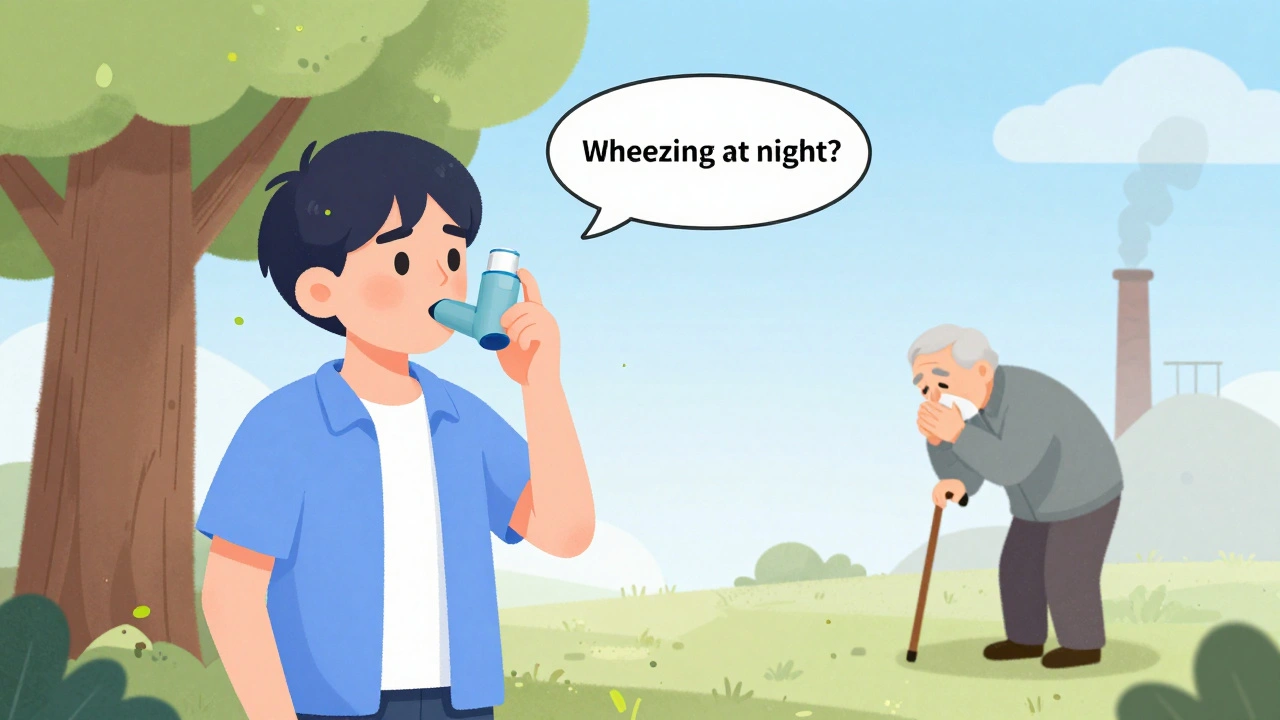
Asthma vs. COPD: Key Differences in Symptoms and Treatment
Asthma and COPD both cause breathing trouble, but they're different diseases with different causes, symptoms, and treatments. Learn how to tell them apart and what each needs for proper care.