
Drug Safety: Protect Yourself from Dangerous Interactions and Side Effects
When you take a medicine, you're not just swallowing a pill—you're introducing a chemical that talks to your body in ways you can't always see. Drug safety, the practice of using medications in a way that minimizes harm while maximizing benefit. Also known as medication safety, it’s not just about following the label—it’s about understanding what your body does with that drug, who else it might hurt, and when it’s better not to take it at all. Too many people think side effects are just annoying rashes or drowsiness. But drug safety includes spotting things like adrenal failure from long-term opioids, red blood cells being destroyed by a common antibiotic, or a generic pill triggering an allergic reaction because of a hidden filler you never knew was there.
It’s not just about the active ingredient. Inactive ingredients, the fillers, dyes, and preservatives in pills that don’t treat your condition but can still make you sick are why two people taking the same generic drug can have totally different reactions. One gets a rash. Another has trouble breathing. And drug interactions, when two or more medications clash in your body to create dangerous side effects? They’re the silent killers. Five combinations—like mixing gabapentin with opioids or soy with thyroid meds—can land you in the ER. Even your pharmacist might miss them if you don’t tell them everything you’re taking, including vitamins and herbal teas.
Drug safety also means knowing who’s at risk. Elderly patients with kidney trouble? Their bodies can’t flush out meds the way they used to. Kids? A single misplaced pill can be fatal. Pets? They don’t care if it’s a painkiller or a blood pressure tablet—they’ll eat it. And then there’s the quiet crisis: people who think generics are risky because of bad headlines, or who keep increasing their opioid dose because it "doesn’t work anymore," not realizing tolerance isn’t addiction but a biological red flag. This isn’t theory. These are real cases, tracked by the FDA, reported by doctors, and buried in fine print you never read.
What you’ll find here isn’t a list of warnings—it’s a practical guide to spotting danger before it hits. From how to read your Medication Guide versus the tiny print in the box, to why your thyroid med loses power if you eat tofu too close to your pill, to how to report a rare reaction that could save someone else’s life. These aren’t abstract ideas. They’re lessons learned from real people who got hurt because no one told them what to watch for. You don’t need a medical degree to stay safe. You just need to know what questions to ask—and what to look for.
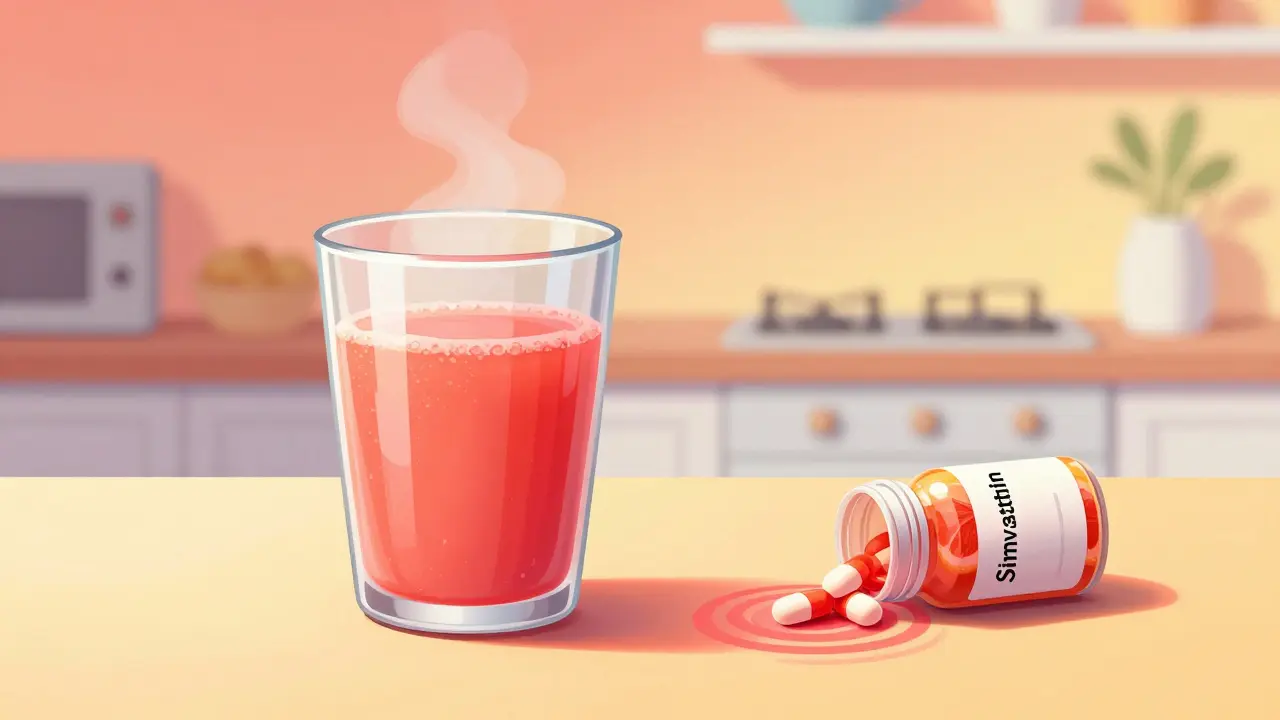
Grapefruit Juice and Medications: What You Need to Know Before You Drink
Grapefruit juice can dangerously increase levels of certain medications, leading to life-threatening side effects. Learn which drugs are affected, why it happens, and how to stay safe.
FDA Boxed Warnings Explained: What You Need to Know Before Taking High-Risk Medications
Boxed warnings on prescription drugs signal serious, potentially life-threatening risks. Learn what they mean, which common medications carry them, and how to talk to your doctor about them safely.