
11 Jan 2026
- 14 Comments
Missing a pill might seem like a small thing-until it’s not. For people managing chronic conditions like high blood pressure, diabetes, or HIV, skipping doses isn’t just inconvenient; it can lead to hospital visits, worsening symptoms, or even life-threatening complications. Globally, medication adherence is a problem: between 30% and 50% of people don’t take their meds as prescribed. The good news? Simple text message reminders can make a real difference-if they’re done right.
Why Text Messages Work for Medication Reminders
Text messages are everywhere. Almost everyone has a phone. In Australia, over 98% of adults own a mobile device. That makes SMS one of the most reliable, low-cost tools to reach people where they are-without needing apps, internet, or tech skills. Studies show that when people get daily text reminders to take their pills, adherence improves by an average of 14 percentage points. That’s not a tiny boost-it’s the difference between barely managing your condition and actually controlling it. One 2017 study tracked post-heart attack patients for a full year. Those who got daily texts were far more likely to take their meds consistently than those who didn’t. Their blood pressure, cholesterol, and even hospital readmission rates improved. The reason it works is simple: memory fails. Life gets busy. People forget. A text acts like a digital nudge. It doesn’t replace other support, but it fills the gap between doctor visits.What Makes a Text Reminder Effective
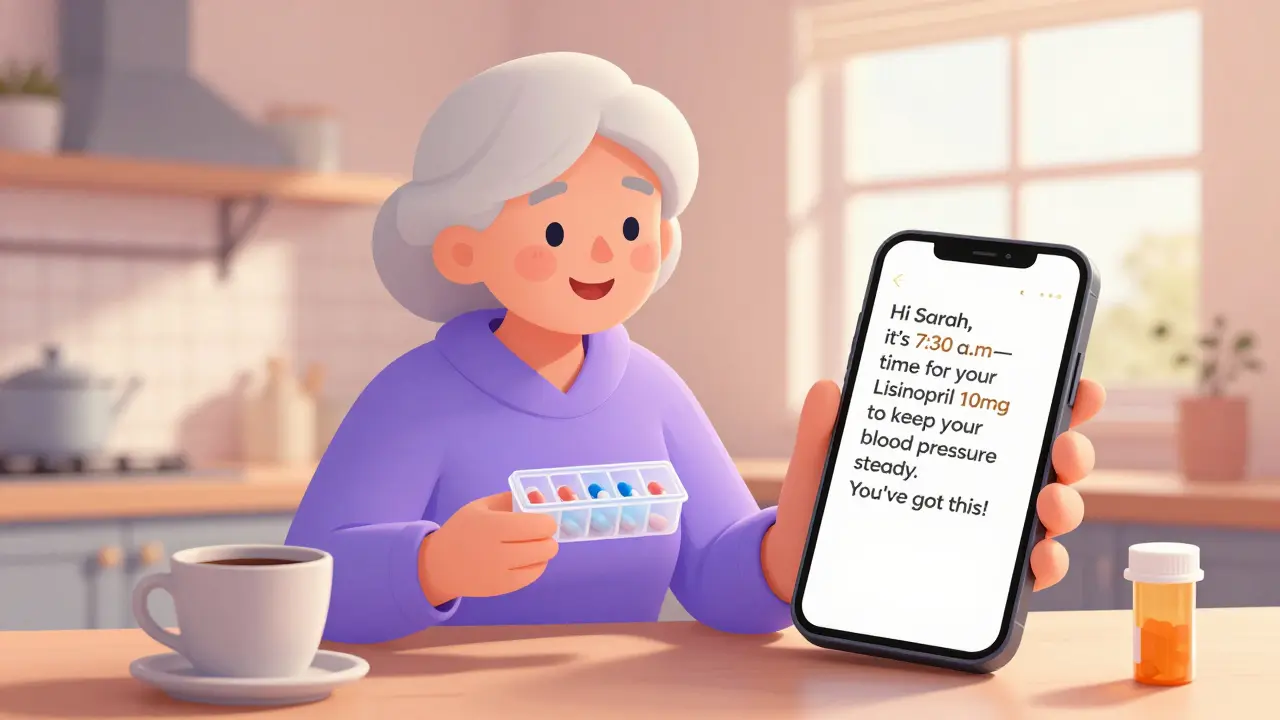
Not all text reminders are created equal. A generic message like “Take your medicine” won’t cut it. The most effective ones are personalized, timely, and consistent. First, timing matters. Sending a text at 8 a.m. for a pill that’s supposed to be taken at 7 a.m. is too late. Studies show effectiveness drops by 35% if the message arrives more than two hours after the scheduled time. Set reminders to go off 15-30 minutes before the dose. That gives people time to grab their pills without feeling rushed. Second, personalization boosts results. Instead of “Take your Lisinopril,” try “Hi Sarah, it’s 7:30 a.m.-time for your Lisinopril 10mg to keep your blood pressure steady. You’ve got this!” Adding a name, specific drug, and a positive tone makes the message feel human, not robotic. Third, frequency should match the schedule. If you take a pill once a day, get one reminder. If you take it three times a day, get three. Too many messages? People turn them off. A 2021 survey found that 23% of users stopped using reminders after six months because they got too many or at the wrong times. Keep it clean. Keep it simple.How to Set Up Text Reminders
You don’t need a fancy app or a tech degree. Here’s how to set it up in three steps:- Identify the medication schedule. Write down every pill, dose, and time. Don’t guess. Check the prescription label or ask your pharmacist. Example: Metformin 500mg-twice daily, with breakfast and dinner.
- Choose your tool. If you’re doing this for yourself, use your phone’s built-in reminder app (iOS Clock or Android Alarm) and set it to repeat daily. If you’re helping someone else, use a free SMS platform like Twilio, Google Voice, or a clinic’s automated system. Many Australian pharmacies now offer free text reminder services for regular prescriptions.
- Customize the message. Use the formula: [Name], [Time]-[Medication] [Dose]. Add a short encouragement if you want. Avoid medical jargon. “Take your warfarin 5mg” is better than “Administer anticoagulant therapy.”
When Text Reminders Don’t Work
Text messages aren’t magic. They fail when they’re too simple or used alone. A major 2023 study of over 9,500 patients with heart disease found that even personalized text reminders didn’t improve medication refill rates after 12 months. Why? Because adherence isn’t just about forgetting-it’s about motivation, cost, side effects, and trust in treatment. If someone can’t afford their pills, or feels the meds are making them worse, a text won’t fix that. Text reminders work best for:- People who forget (not who refuse)
- Conditions where timing is critical (HIV, TB, epilepsy)
- Short-term regimens (like antibiotics or post-surgery meds)
- Patients who already have some motivation to stick with treatment
- People with severe mental health conditions who struggle with routine
- Those without reliable phone access or data
- Complex regimens with 10+ pills a day (too many reminders = noise)
What to Avoid
Even well-intentioned reminders can backfire. Here’s what not to do:- Don’t send reminders at night. People sleep. A 2 a.m. text won’t help-it’ll annoy.
- Don’t use all caps or exclamation marks. “TAKE YOUR MEDS NOW!!!” feels like a scolding, not support.
- Don’t assume everyone understands medical terms. “Take your atorvastatin” → “Take your cholesterol pill.”
- Don’t ignore opt-outs. If someone replies “STOP,” respect it. Pushing reminders after a request to stop is a violation of trust.
Real Stories: What People Say
One woman in Geelong, 68, started getting daily texts for her blood thinner after a stroke. “I used to miss doses because I’d forget if I’d already taken it,” she said. “Now I get a text at 8 a.m. and another at 8 p.m. I check my pill box. I haven’t missed one in 11 months.” A man in Brisbane with type 2 diabetes shared on a health forum: “I was taking my metformin only half the time. My doctor said my HbA1c was 9.5. I signed up for text reminders. Three months later, it was 7.1. I didn’t change my diet. I just started taking the pill when the text came.” But not everyone wins. A 55-year-old in Perth stopped the service after four months: “I got three texts a day. I started ignoring them. Then I stopped getting them entirely. I still miss doses.” The lesson? Consistency and relevance matter more than volume.What’s Next for Text-Based Reminders
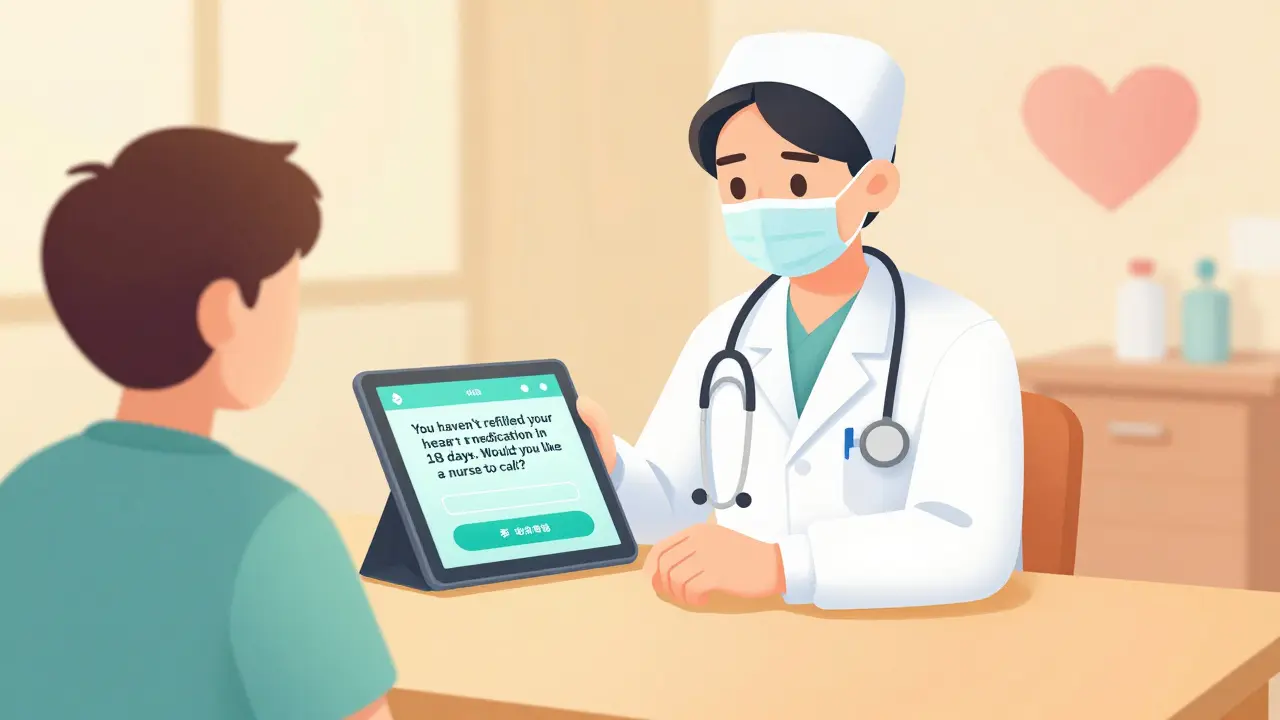
The future isn’t just more texts-it’s smarter texts. New systems are starting to adapt based on behavior. If you don’t respond to a reminder for three days in a row, the system might send a follow-up: “Hey, we noticed you missed your last 3 doses. Would you like to talk to a nurse?” Some trials are testing AI that analyzes refill patterns and predicts who’s at risk. If your prescription hasn’t been refilled in 18 days, you get a message before you even miss a dose. But the biggest shift? Combining texts with human support. A text reminder alone isn’t enough for complex cases. Pair it with a weekly check-in call, a pharmacist consultation, or a community health worker. That’s where the real results happen.Final Thoughts
Text message reminders aren’t a cure-all. But they’re one of the simplest, cheapest, and most proven tools we have to help people stick to their medication schedules. For millions of Australians managing chronic illness, they’re not a luxury-they’re a lifeline. Start small. Personalize. Time it right. Respect limits. And remember: the goal isn’t just to remind someone to take a pill. It’s to help them live better, longer, and with more confidence.Can I use my phone’s built-in alarm as a medication reminder?
Yes, absolutely. Your phone’s alarm or calendar app works just fine for personal use. Set a repeating daily alarm for each dose time. Label it clearly-like “Morning Blood Pressure Pill.” Many people find this easier than downloading apps. Just make sure the sound is loud enough and the phone isn’t on silent.
Do text reminders work for elderly people?
They can, but only if the person is comfortable with phones and can read texts. Many older adults use smartphones successfully, but if someone struggles with small screens or typing, consider using a family member’s phone or a simple SMS service that sends messages to a caregiver’s phone too. Some Australian pharmacies offer free reminder services that notify both the patient and a trusted contact.
Are text reminders free?
Most public health services and pharmacies in Australia offer free text reminder programs for prescription medications. Private apps may charge, but basic SMS reminders sent through your clinic or pharmacy are typically no-cost. Check with your local pharmacy or GP-they often have partnerships with digital health providers.
What if I miss a dose and the text already came?
Don’t panic. Texts are reminders, not commands. If you miss a dose, take it as soon as you remember-unless the medication instructions say otherwise (like with blood thinners or antibiotics). Never double up unless your doctor says it’s safe. The next text will come at the next scheduled time. Consistency over time matters more than perfection.
Can text reminders help with mental health medications?
Yes, especially for conditions like depression or schizophrenia where routine is hard to maintain. A 2019 study found that daily text reminders improved adherence to antipsychotic meds by 40% in patients with schizophrenia. But for these conditions, texts should be part of a broader support plan-including therapy, family involvement, or case management. Texts alone won’t fix underlying challenges like stigma or side effects.
How long should I keep using text reminders?
There’s no set end date. For chronic conditions like hypertension or diabetes, you’ll likely need them long-term. For short-term treatments like antibiotics, you can turn them off after the course ends. Some people keep them going for years because they’ve become part of their routine. Others reduce frequency-from daily to weekly-once they’ve built strong habits. Listen to your body and your results.
Do text reminders work for kids or teens?
For younger users, texts are less effective unless they’re personally motivated. Teens with asthma or epilepsy may respond well if the message comes from a trusted source-like their doctor or a peer health coach. For children, it’s better to use a parent’s phone as the reminder system. Parents can get the text and help the child take the medicine. Apps with gamification (like earning points) often work better for kids than plain texts.
What if I don’t have a smartphone?
You don’t need a smartphone. SMS works on any mobile phone, even basic models. As long as you can receive text messages, you can get reminders. If you don’t have a phone, ask your GP, pharmacist, or community health center-they may be able to help you get one or arrange for a family member to receive the alerts on your behalf.
Sonal Guha
January 12, 2026Text reminders work until you realize half the people on meds can't afford the phone bill. Simple solution? Stop pretending tech fixes systemic failure.
TiM Vince
January 13, 2026I've seen this work with my dad. He's 74, uses a flip phone. Gets a text at 7am for his BP med. No app. No fuss. Just a simple message. It's not magic. It's just human.
gary ysturiz
January 13, 2026This is so important. I used to forget my meds all the time. Then I set up a daily text reminder. Now I take them like clockwork. It changed my life. Small thing. Big impact. Don't underestimate it.
Jessica Bnouzalim
January 14, 2026OMG YES!! I set up texts for my mom’s diabetes meds and she’s been crushing it!! She even started saying ‘Hey text!’ like it’s a friend reminding her!! I cried when she told me she hadn’t missed one in 3 months!!
Craig Wright
January 15, 2026In the UK, we’ve had NHS-run SMS adherence programs since 2016. Results are statistically significant. The notion that this is somehow an American gimmick is frankly misleading. We’ve done it properly. With data. With oversight.
Konika Choudhury
January 15, 2026Text reminders are useless in India where 60% of people don’t have reliable phones or electricity. Stop pushing Western solutions on developing nations without context
Daniel Pate
January 16, 2026If the goal is adherence, why not pair texts with behavioral psychology? The nudge theory is solid. But if the underlying issue is distrust in the medical system or fear of side effects, a text won’t touch that. It’s a bandaid on a hemorrhage.
Amanda Eichstaedt
January 18, 2026I work in public health and we rolled this out for HIV patients last year. The drop in viral load wasn't just from the texts-it was because they felt seen. Someone remembered them. That’s the real win.
Jose Mecanico
January 18, 2026I use my phone’s alarm. It works fine. Just make sure it’s labeled clearly. I have one that says ‘AM: Blood Pressure’ and another ‘PM: Cholesterol’. Simple. No apps needed.
Alex Fortwengler
January 20, 2026This is all a Big Pharma scam. They want you dependent on pills and then sell you ‘reminders’ so you keep buying. The real fix? Stop poisoning people with synthetic drugs in the first place.
Eileen Reilly
January 20, 2026i set up texts for my grandpa and he kept replying with ‘ok’ or ‘done’ and then i realized he couldnt even read them. he just thought they were spam and hit delete. so now his daughter gets them and reminds him. tech is cool but not everyone can use it
Cecelia Alta
January 22, 2026I’ve been on 14 different meds for 8 years and I’ve had 3 different text reminder services. One sent me 17 texts a day. One sent them at 3am. One sent them in ALL CAPS. I stopped them all. Then I started using a pill box with alarms. I didn’t need texts. I needed someone to stop treating me like a child who can’t remember to brush their teeth.
steve ker
January 22, 2026Text reminders? In Nigeria? Most people can’t afford data. The idea that SMS is universally accessible is a myth invented by Western consultants who’ve never stepped foot in a village. This isn’t innovation. It’s colonialism with a UI.
George Bridges
January 23, 2026I’m a nurse. I’ve watched people cry because a text reminded them to take their meds and they realized someone cared enough to check on them. It’s not about the tech. It’s about the message behind it.