
Excipients: What They Are and Why They Matter in Your Medications
When you take a pill, you’re not just swallowing the active drug—you’re also ingesting excipients, non-active ingredients added to medicines to help with stability, absorption, or ease of swallowing. Also known as inactive ingredients, these substances make up most of the tablet or capsule, even though they don’t treat your condition. Think of them like the scaffolding of a building: they hold everything together, ensure the medicine reaches your bloodstream at the right time, and prevent it from breaking down too soon. Without excipients, most pills would crumble, taste awful, or not work at all.
Common excipients include lactose, a sugar often used as a filler in tablets, cornstarch, a binder that helps pills hold their shape, and magnesium stearate, a lubricant that keeps machines running smoothly during manufacturing. These aren’t random choices—they’re carefully selected based on how the drug behaves in your body. But here’s the catch: some people react to them. Lactose intolerance isn’t just about dairy—it can mess with your absorption of thyroid meds or antibiotics. Titanium dioxide, used for color, has raised questions in recent years. Even the coating on a pill can delay release, which matters if you’re taking a drug that needs to hit your system fast.
These ingredients aren’t listed on the bottle in plain language, but they’re in the package insert. If you’ve ever had an unexplained reaction to a generic version of a drug you used to take without issue, the excipients might be why. Different manufacturers use different fillers, and your body might not handle them the same way. That’s why switching brands can sometimes cause side effects—even if the active ingredient is identical.
Understanding excipients helps you take control. It’s not about fearing additives—it’s about knowing what’s in your medicine so you can ask the right questions. If you have allergies, digestive issues, or are on multiple drugs, checking excipients isn’t optional. It’s part of safe use. Below, you’ll find real cases where these hidden ingredients made all the difference—whether by causing problems, solving them, or simply being the reason your pill finally started working right.
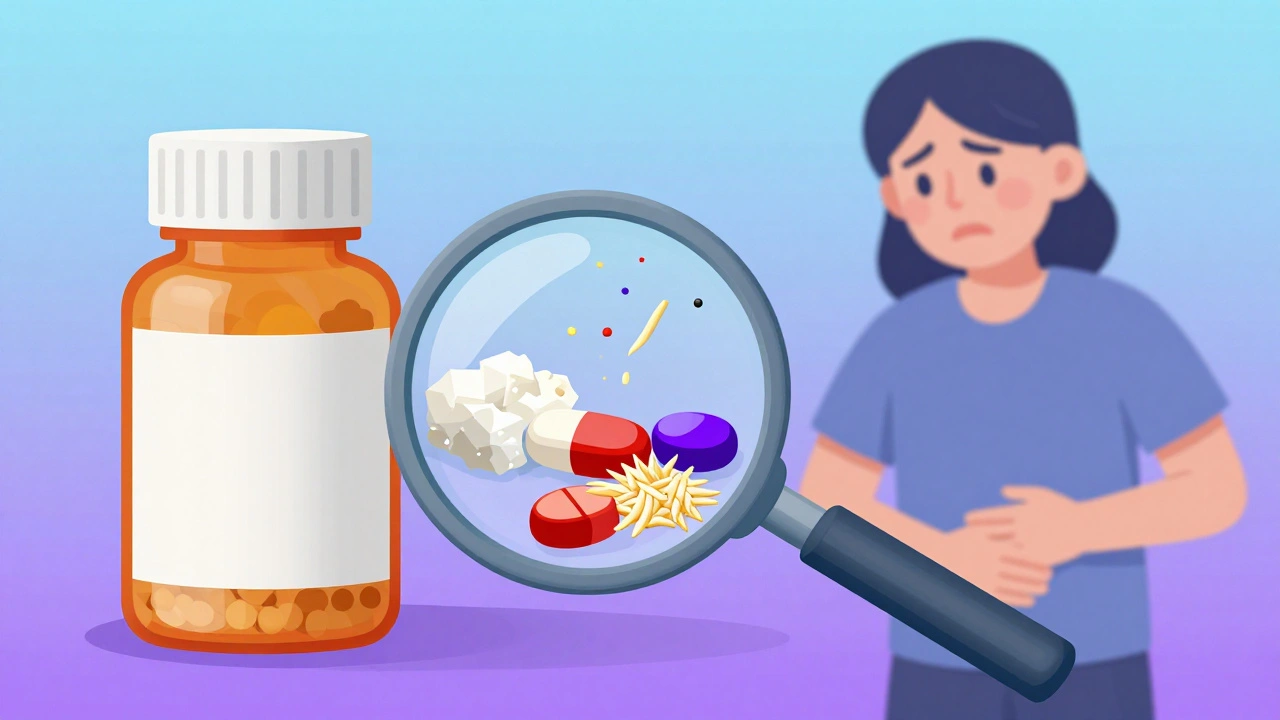
Inactive Ingredients in Generic Medications: What You Need to Know
Generic medications save money but may contain different inactive ingredients that can trigger allergies or side effects. Learn what's really in your pills and how to protect yourself.