
1 Jan 2026
- 13 Comments
Traveling with diabetes isn’t about limiting your adventures-it’s about preparing so you can enjoy them without worry.
You’ve booked the flight, packed your clothes, and planned the itinerary. But if you have diabetes, there’s one more critical step: making sure your blood sugar stays stable while you’re away from home. Whether you’re flying across the country or hiking in the mountains abroad, a single missed dose, a broken sensor, or a lost bag can turn a dream trip into a medical emergency. The good news? With the right plan, you can travel safely-and confidently.
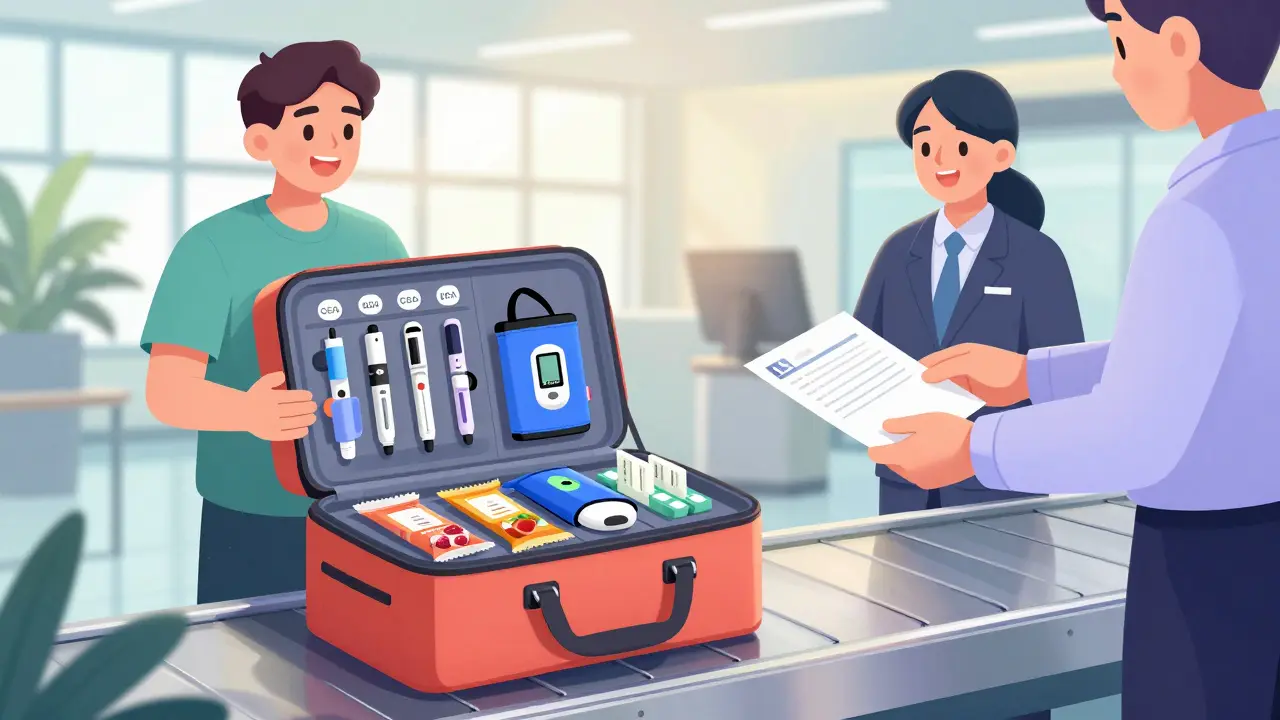
The American Diabetes Association says insulin must always go in your carry-on. Checked luggage can get too cold (below 40°F) or too hot (above 86°F), and that ruins insulin. A 2021 study in the Journal of Diabetes Science and Technology found that insulin exposed to extreme temperatures loses up to 30% of its effectiveness. That’s not a risk you can afford.
Insulin: Bring Twice as Much as You Think You’ll Need
Let’s say you use 10 units of insulin a day. For a 7-day trip, you might think 70 units is enough. It’s not. You need at least 140 units. Why? Because delays happen. Your flight gets canceled. Your bag gets lost. You end up stuck in an airport for 12 hours. Or you have a low blood sugar episode and need extra insulin to correct it.
Insulin comes in vials or pens. If you use pens, bring extra cartridges. If you use vials, bring syringes-even if you have a pump. Pump failures happen. A 2023 survey by Beyond Type 1 found that 18% of travelers lost access to their insulin delivery system during a trip. Having backup syringes and vials saved lives.
Store insulin between 40°F and 86°F. In hot climates, use a Frio Insulin Cooling Sleeve. It’s reusable, lightweight, and works without ice or electricity. Just soak it in water, and it keeps insulin cool for up to 45 hours. For longer trips, a Sugar Medical Insulated Travel Bag is a solid investment. One Reddit user, TravelingT1D, kept insulin safe during a 12-hour flight to Dubai using this bag.
CGM Sensors: Don’t Risk Running Out
Continuous Glucose Monitors (CGMs) like Dexcom or FreeStyle Libre are game-changers-but they’re fragile. A sensor can fall off during a swim, get damaged in your bag, or just stop working early. Dexcom’s 2023 travel report says 12-15% of travelers experience sensor failure mid-trip.
Bring at least two extra sensors for every week you’re away. For a 10-day trip, pack at least four sensors. Also bring spare transmitters. Transmitters don’t last forever, and replacements aren’t always easy to find abroad. In some countries, you can’t buy a Dexcom transmitter without a prescription.
Use Skin Grip CLEAR tape to keep sensors stuck on during showers, swimming, or sweaty hikes. It’s thin, waterproof, and holds better than regular tape. Many travelers swear by it.
Testing Supplies: More Strips, More Lancets, More Batteries
Even if you use a CGM, you still need a backup blood glucose meter. Sensors can glitch. Batteries die. You might need to calibrate or confirm a reading before treating a low.
Bring at least 50% more test strips than you think you’ll need. For a week-long trip, pack 70-100 strips. Also bring extra lancets and a spare battery for your meter. Some meters use AAA batteries; others use button cells. Know which kind yours uses and bring extras.
Before you leave, compare your meter’s reading with your CGM. If they’re off by more than 15%, replace the meter or strips. Accuracy matters when you’re far from a pharmacy.
Insulin Pumps: Have a Backup Plan
If you use an insulin pump, you’re already ahead of the game-but you’re also more vulnerable if it breaks. Bring at least two extra infusion sets and three extra reservoirs. Infusion sets can kink, leak, or get pulled out during sleep or activity.
And yes, bring syringes and insulin vials as backup. Tandem Diabetes Care and Insulet both offer free loaner pump programs if yours fails overseas. But you need to call them before you leave. Don’t wait until you’re stranded in a hotel room in Tokyo with no insulin.
Snacks and Treats: Think Beyond Glucose Tablets
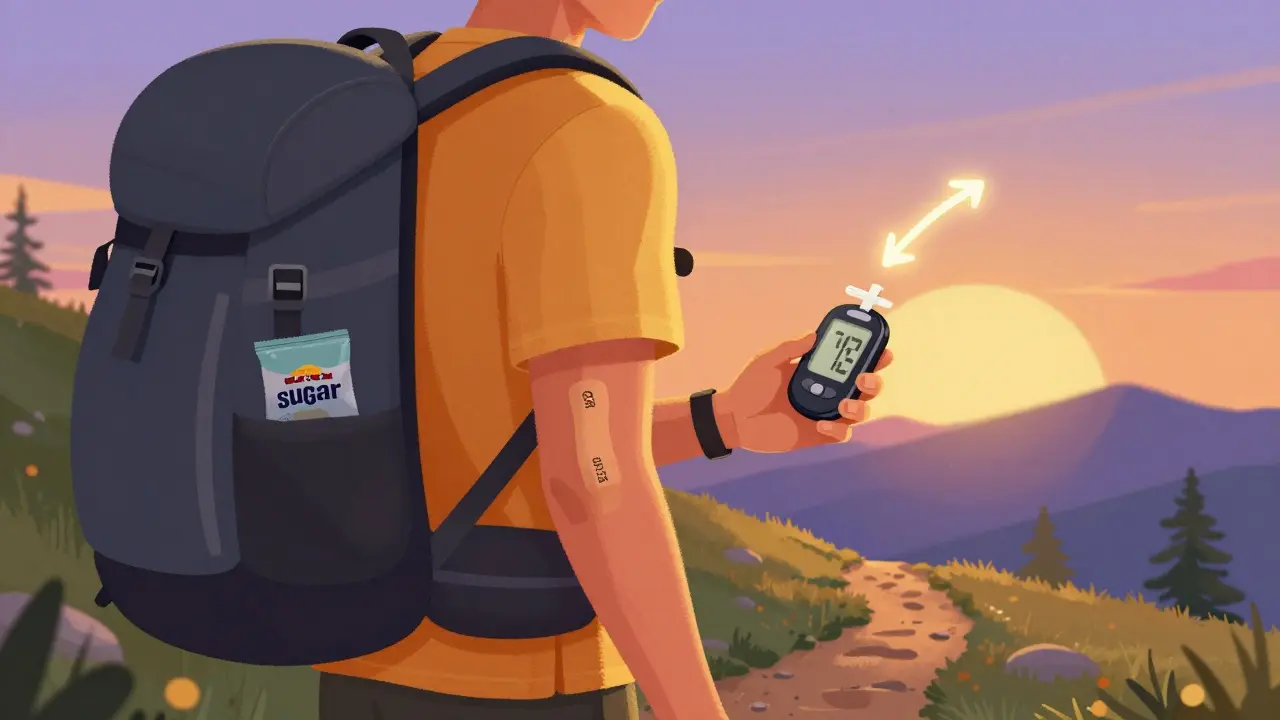
Glucose tablets are fine, but they’re bulky and not exactly delicious. Many travelers prefer Pure Organic Fruit Leathers. They’re small, lightweight, and taste like real fruit. One study by Diabetech.info found that people who used fruit leathers had 37% fewer low-blood-sugar emergencies on the go.
Pack at least three snacks per day. Include fast-acting carbs (like fruit leathers or juice boxes), plus longer-lasting ones (like nuts or protein bars). You never know when you’ll be stuck in security or miss a meal because your flight was delayed.
Pro tip: Put a Post-It note on your front door that says “Insulin? CGM? Snacks?” before you leave. One traveler used this trick and avoided three near-misses in 2020.
Medical Documentation: The Most Overlooked Item
You won’t believe how many people forget this: a doctor’s letter. Not just any note-a detailed letter that includes your diagnosis, daily insulin dose, insulin-to-carb ratio, correction factor, and emergency contacts.
Dr. Anne Peters, Director of Clinical Diabetes Programs at USC, says this single document cuts screening delays at airports by 42%. TSA allows all diabetes supplies, but they need to see proof you’re not carrying suspicious liquids or devices.
Print two copies. Keep one in your carry-on with your supplies. Put the other in your wallet. If you’re stopped by security or need medical help abroad, this letter opens doors.
TSA and Airport Security: What to Expect
TSA lets you bring all diabetes supplies through security-no limits on liquids, no need to put them in a quart bag. But you must declare them. Put everything in a clear, sealable plastic bag. That alone cuts screening time from over 8 minutes to under 5 minutes, according to TSA’s 2022 data.
Insulin pumps and CGMs don’t need to be removed. But if you’re asked to take it off, say no. You can request a private screening. TSA now has a Medical PreCheck program that reduces wait times by 63% for travelers with documented medical needs. Apply at tsa.gov/medical.
Time Zones and Insulin Schedules
Crossing time zones messes with your insulin timing. If you’re flying from New York to Tokyo (14-hour jump), you can’t just take your usual dose at the same clock time.
Plan ahead. For each time zone you cross, spend 15-20 minutes adjusting your schedule. Use your CGM’s trend arrows. If your glucose is dropping, delay your next dose. If it’s rising, take a correction. Many apps like MySugr and Glucose Buddy have built-in time zone converters.
International Travel: Watch Out for Insulin Strengths
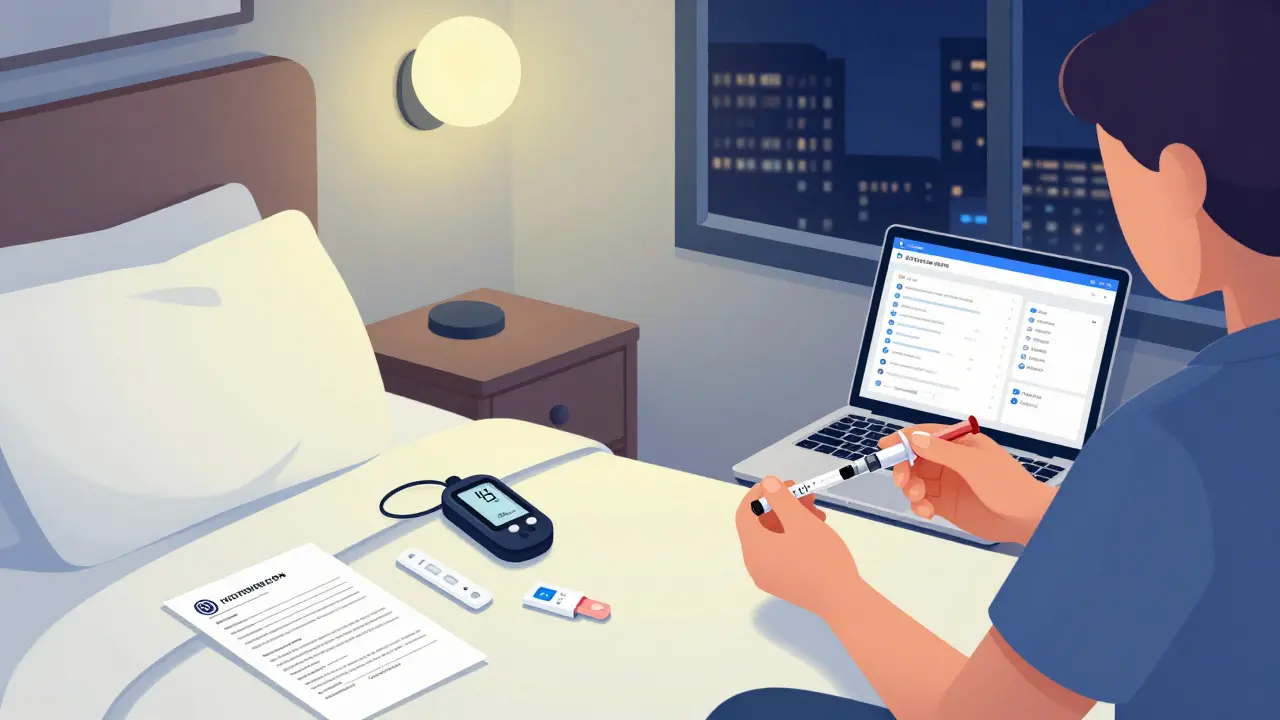
Not all countries use U-100 insulin. In parts of Asia, Africa, and Eastern Europe, U-40 or U-80 is common. Using the wrong concentration can cause a dangerous overdose. Always bring your own insulin. Never buy it abroad unless you’re 100% sure of the strength.
According to Beyond Type 1, 64% of countries don’t reliably stock U-100 insulin. If you’re traveling to one of them, contact your doctor for a letter explaining your needs. Some embassies can help you locate approved suppliers.
What to Pack: The Diabetes Travel Checklist
- Twice the insulin you’ll need for the trip (vials, pens, cartridges)
- Extra syringes (even if you have a pump)
- 2-3 extra CGM sensors per week
- Extra CGM transmitter
- Skin Grip CLEAR tape
- 50-100 test strips
- Extra lancets and meter batteries
- 2-3 extra infusion sets and reservoirs (if using a pump)
- Frio cooling sleeve or insulated travel bag
- Fast-acting carbs: fruit leathers, juice boxes, glucose gel
- Long-lasting snacks: nuts, protein bars
- Doctor’s letter with care plan and emergency contacts
- TSA Disability Notification Card (optional but helpful)
- Travel insurance that covers diabetes emergencies
Common Mistakes and How to Avoid Them
- Mistake: Packing insulin in checked luggage. Solution: Always carry it on.
- Mistake: Forgetting backup syringes. Solution: Pack them even if you think you won’t need them.
- Mistake: Not testing meter accuracy before leaving. Solution: Compare it to your CGM the day before you go.
- Mistake: Underestimating snack needs. Solution: Pack 40-60% more than you think.
- Mistake: Not telling anyone you’re traveling with diabetes. Solution: Let at least one travel companion know what to do if you pass out.
Final Thought: You’ve Got This
Traveling with diabetes used to mean staying close to home. Now, with better tech, better gear, and better knowledge, you can go anywhere. The key isn’t perfection-it’s preparation. Double your supplies. Know your backup plan. Keep your doctor’s letter handy. And don’t forget the fruit leathers.
Every trip you take gets easier. After three or four, you’ll have your own system. And that’s the real win: not just surviving travel-but loving it.
Can I bring insulin through airport security?
Yes. The TSA allows all diabetes-related supplies, including insulin, CGMs, meters, and syringes, through security checkpoints. You must declare them and keep them in a separate clear bag. Insulin must be in your carry-on-never checked luggage.
How much insulin should I pack for a trip?
Pack at least double the amount you expect to use. For example, if you use 10 units a day on a 7-day trip, bring 140 units. This covers delays, lost luggage, or unexpected highs and lows.
Do I need a doctor’s note to travel with diabetes?
It’s not required by law, but it’s strongly recommended. A doctor’s letter explaining your condition, insulin regimen, and emergency protocols can speed up airport security and help if you need medical care abroad.
Can I use my CGM on a plane?
Yes. CGMs are safe to use during flights. You don’t need to turn them off. However, some airlines may ask you to disable Bluetooth or Wi-Fi on your phone if it’s connected to the CGM. Always check with your airline ahead of time.
What if my insulin gets too hot or cold while traveling?
Insulin works best between 40°F and 86°F. Use a Frio cooling sleeve in hot weather or a small insulated bag. Never leave insulin in a car, direct sunlight, or near ice packs. If you suspect your insulin has been damaged, replace it as soon as possible.
Are there special travel bags for diabetes supplies?
Yes. Brands like Sugar Medical and Frio make insulated travel bags designed for diabetes supplies. These keep insulin cool without ice, are TSA-friendly, and have compartments for sensors, meters, and snacks. Many travelers say these bags make trips much less stressful.
What should I do if my insulin pump breaks while traveling?
Switch to insulin injections using your backup syringes and vials. Contact your pump manufacturer-they often offer free loaner pumps for travelers. Tandem and Insulet have global support programs. Don’t wait until you’re in crisis to call.
Can I buy insulin abroad if I run out?
It’s risky. Many countries use different insulin strengths (U-40 or U-80), which can cause dangerous overdoses if you’re used to U-100. Always bring enough insulin for your entire trip. If you must buy abroad, ask for U-100 and verify the concentration on the label.
Kristen Russell
January 3, 2026I used to panic before every trip, but this checklist changed everything. Double the insulin? Yes. Fruit leathers? Yes. Frio sleeve? Always. I just got back from Bali and zero stress.
Bryan Anderson
January 3, 2026The data cited from the Journal of Diabetes Science and Technology is compelling. Insulin stability under thermal stress is a well-documented concern, and the 30% efficacy loss aligns with pharmacokinetic models. I would only add that refrigeration during transit should be passive, not active, to avoid condensation damage.
Matthew Hekmatniaz
January 4, 2026I’ve traveled across 12 countries with T1D. The doctor’s letter is non-negotiable. In India, they didn’t believe my insulin was real until I showed the letter. Also, bring extra tape - Skin Grip is magic. I’ve seen sensors survive monsoons and mountain hikes thanks to it.
Liam George
January 5, 2026You know who really controls the insulin supply chain? The pharmaceutical cartel. They push U-100 everywhere because it’s more profitable. That’s why you can’t find U-40 in the US - they want you dependent. The Frio sleeve? Just a distraction. Real solution: stop trusting corporations and learn to make your own insulin from plants. I’ve done it.
sharad vyas
January 6, 2026In India, we use U-40 insulin often. I once had to explain to a pharmacist why my US insulin was different. He was very kind. But I agree - always bring your own. Also, carry a small notebook with your dose written in Hindi and English. People help when they understand.
Paul Ong
January 7, 2026Fruit leathers are the real MVP I ate five on my flight to Vegas and never hit a low and no one even noticed I was diabetic
Andy Heinlein
January 9, 2026I forgot my backup syringes once and panicked for 3 days in Colorado. Now I keep them in my shoe. Weird? Maybe. But it saved me. Also the Frio sleeve is a game changer i bought one after reading this post
gerard najera
January 10, 2026Insulin doesn’t care about your itinerary. It follows biology, not schedules.
Layla Anna
January 10, 2026This post made me cry 😭 I’ve been traveling with T1D for 15 years and no one ever told me about Skin Grip. I just taped my sensor with duct tape and prayed. Thank you 🙏
Heather Josey
January 12, 2026The TSA Medical PreCheck program is underutilized. I applied last year and now I bypass security lines entirely. The documentation is straightforward - your doctor’s letter, a copy of your prescription, and your CGM manual. It’s worth the 10 minutes.
Donna Peplinskie
January 12, 2026I love that you included the fruit leathers - they’re so much better than glucose tabs! I also pack a tiny container of honey in my pocket, just in case. And I always tell my travel partner where I keep my glucagon - even if they say they don’t want to know. Better safe than sorry.
jaspreet sandhu
January 14, 2026You say bring twice the insulin but what if you don't need it? You are just encouraging waste. People in developing countries die because rich people hoard medicine. Why not just carry what you need and trust the universe? Or maybe you are just afraid of being responsible for yourself.
Alex Warden
January 14, 2026TSA lets you bring all this? What’s next? Bringing a whole pharmacy on a plane? This country is going downhill. Back in my day, we just dealt with our diabetes and didn’t need 17 different gadgets and letters just to get through security.