
Lithium: What It Is, How It Works, and What You Need to Know
When doctors talk about lithium, a naturally occurring salt used as a mood stabilizer for bipolar disorder. Also known as lithium carbonate, it's one of the oldest and most studied psychiatric medications still in wide use today. Unlike newer drugs that target specific brain chemicals, lithium works more broadly—calming overactive nerve signals and helping the brain reset its emotional balance. It doesn’t make you feel numb. It helps you feel like yourself again, without the wild highs and crushing lows.
People take lithium for bipolar disorder, a condition marked by extreme mood swings between mania and depression, but it’s also used off-label for treatment-resistant depression and sometimes to boost the effect of other antidepressants. It’s not a quick fix—it can take weeks to work, and your doctor will need to check your blood levels often. Too little and it won’t help. Too much and it becomes dangerous. That’s why regular blood tests are non-negotiable. Lithium has a very narrow window between helpful and toxic, and your kidneys and thyroid have to work harder to keep up.
Common side effects include shaky hands, increased thirst, frequent urination, and weight gain. These aren’t just annoyances—they’re signals your body is adjusting. Many people get used to them. But if you start feeling confused, vomit often, or lose coordination, that could be lithium toxicity, a serious condition caused by too much lithium in the blood. It’s rare if you’re monitored, but it can happen if you get sick, sweat a lot, or take NSAIDs like ibuprofen without telling your doctor. Even a simple cold can throw off your levels.
Many don’t realize lithium also affects your thyroid, the gland that controls metabolism and energy. About 1 in 5 people on long-term lithium develop low thyroid function, which can mimic depression—fatigue, weight gain, brain fog. That’s why thyroid tests are part of routine care. It’s not a reason to quit lithium. It’s a reason to adjust your treatment. A simple daily pill can fix it.
You won’t find lithium in every pharmacy aisle. It’s not sold over the counter. It’s a prescription drug with strict rules because it’s powerful. But for millions, it’s been the only thing that stopped the cycle of breakdowns. It’s not perfect. It’s not flashy. But when it works, it changes lives. The posts below cover real stories and science: how lithium interacts with other meds, what to do when side effects pile up, why some people stop taking it, and how to talk to your doctor when you’re scared or frustrated. You’re not alone in this. The information here isn’t theoretical—it’s what people actually deal with every day.
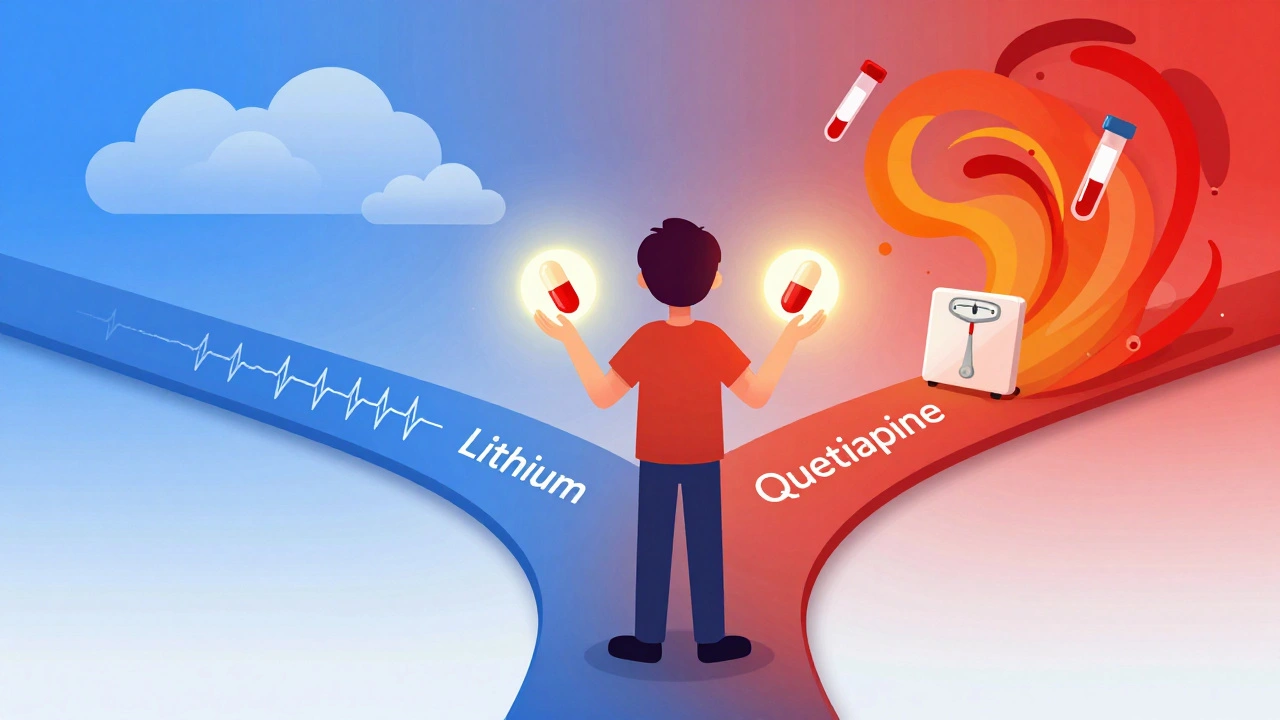
Bipolar Disorder: How Mood Stabilizers and Antipsychotics Really Work in Practice
Learn how mood stabilizers and antipsychotics work in real-world bipolar disorder treatment, including side effects, monitoring, and what works best based on current evidence and patient experiences.