
12 Dec 2025
- 8 Comments
Rifampin Birth Control Risk Calculator
How Rifampin Affects Birth Control
Rifampin increases liver enzyme activity by 37-67% for estrogen and over 50% for progestin, significantly reducing hormonal contraception effectiveness. Risk persists for 2-4 weeks after stopping treatment.
Enter Your Treatment Details
Risk Assessment
Risk Window: From to
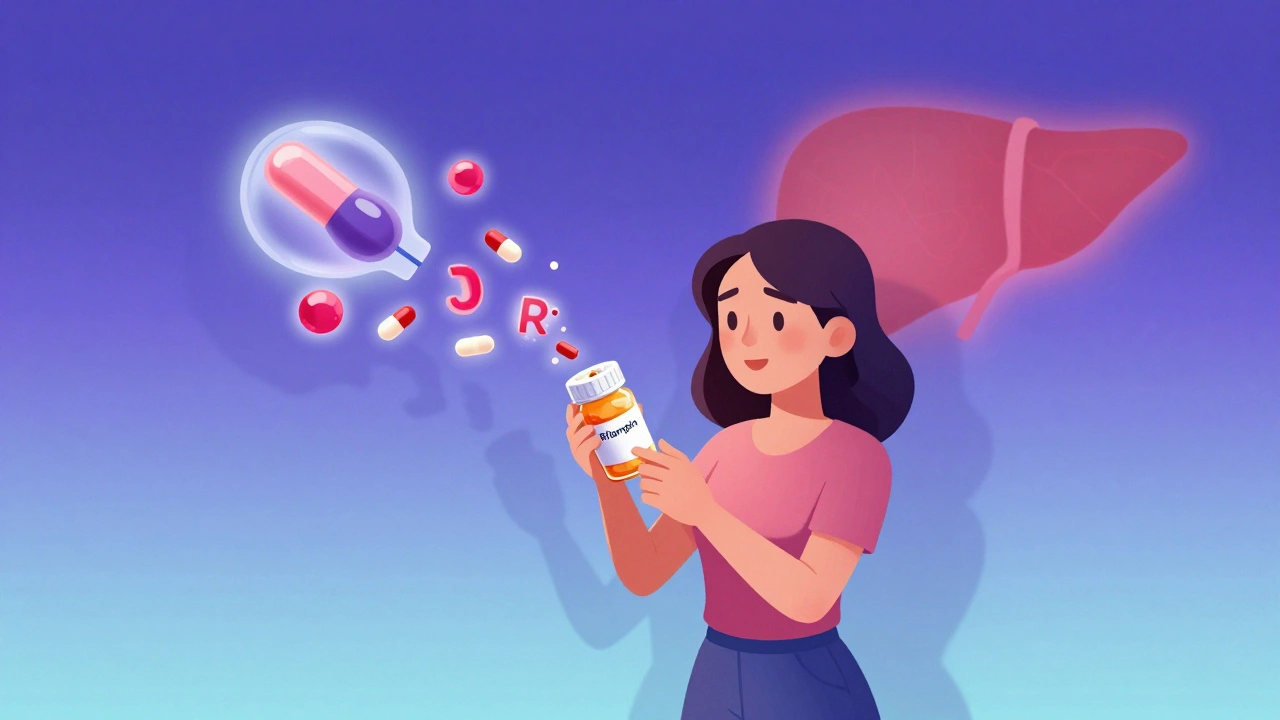
When you’re prescribed rifampin for tuberculosis or a stubborn staph infection, your main concern is getting better. But if you’re on the pill, there’s a hidden risk you might not know about - one that could lead to an unplanned pregnancy. Rifampin doesn’t just kill bacteria. It also messes with your hormones in a way no other antibiotic does.
Why Rifampin Breaks Birth Control
Rifampin is a powerful antibiotic that turns on a switch in your liver. That switch - called the CYP3A4 enzyme - starts breaking down hormones faster than normal. If you’re taking combined oral contraceptives (the kind with estrogen and progestin), your body clears out the active ingredients before they can do their job. Studies show rifampin can slash estrogen levels by up to 67% and progestin by over 50%. That’s not a small drop. That’s enough to stop ovulation suppression and let your body ovulate again.This isn’t theoretical. Women have gotten pregnant while taking rifampin and the pill. Some had breakthrough bleeding or spotting first - a red flag that the hormones weren’t working. Others didn’t notice anything until they missed a period. The first documented cases appeared in the 1970s, and since then, dozens more have been reported worldwide. What’s scary is that this doesn’t happen with most antibiotics. Penicillin? No effect. Azithromycin? No effect. Even erythromycin, which people often worry about, doesn’t cause this. Only rifampin - and its cousin rifabutin - have solid proof.
How Long the Risk Lasts
Many people think the risk ends when they finish their antibiotics. It doesn’t. Rifampin doesn’t just hang around in your blood - it reprograms your liver. Even after you stop taking it, the enzyme activity stays high for 2 to 4 weeks. That means your hormones are still being broken down too fast. If you stop your backup contraception too soon, you’re still at risk.Doctors recommend using a non-hormonal backup method - like condoms or a copper IUD - for the entire time you’re on rifampin and for 28 days after your last dose. Skipping that 28-day window is one of the most common mistakes. I’ve seen patients stop using condoms after finishing their 8-week TB course and assume they’re safe. They’re not. The enzyme activity lingers. Your body needs time to reset.
What Other Antibiotics Do - And Don’t Do
There’s a lot of confusion out there. You’ve probably heard that all antibiotics can make birth control fail. That’s not true. Between 1970 and 1999, the UK’s safety committee received 117 reports of contraceptive failure linked to penicillin, tetracycline, and similar drugs. But here’s the catch: when researchers looked at actual studies, they found no increase in ovulation or hormone changes. Those reports were likely coincidental - missed pills, vomiting, or other factors.Rifampin is the exception. It’s the only antibiotic with clear, repeated, and proven evidence of causing contraceptive failure. A 1999 review in the Canadian Journal of Infectious Diseases found that every single documented case with strong evidence involved rifampin. Other antibiotics? Zero. That’s why guidelines from the American College of Obstetricians and Gynecologists and the CDC are so clear: Only rifampin and rifabutin require backup contraception.
Even then, rifabutin - used for MAC infections - is less risky. At 300mg daily, it reduces hormone levels by only 20-30%, compared to rifampin’s 37-67%. It’s not safe to assume it’s harmless, but the risk is lower. Still, most experts recommend backup contraception with rifabutin too, just to be safe.

What to Use Instead
If you’re on rifampin, your best options are non-hormonal methods:- Copper IUD: Lasts up to 10 years, 99% effective, no hormones. Works perfectly with rifampin.
- Condoms: Must be used correctly every time. Not as effective as an IUD, but better than nothing.
- Progestin implants (like Nexplanon): Early data from a 2023 study showed no pregnancies in 47 women using etonogestrel implants during rifampin treatment. The sample was small, but the results are promising. Higher hormone levels may be enough to resist enzyme breakdown.
- Depo-Provera shot: Also progestin-only. Less data, but likely safer than the pill.
Switching to a higher-dose pill won’t help. Studies show even 50mcg estrogen pills still drop below effective levels with rifampin. The problem isn’t dose - it’s speed of breakdown. Your liver is just too efficient.
Why Doctors Miss This
A 2017 survey found only 42% of primary care doctors consistently warn patients about this interaction. Twenty-eight percent told patients to use backup contraception for all antibiotics. That’s wrong - and dangerous. When you overwarn, people tune out. They start thinking, “Oh, it’s just another antibiotic warning,” and ignore the real threat.At the same time, 63% of women prescribed rifampin in a 2022 study said they received no proper counseling. That’s a system failure. TB patients are often from marginalized communities with limited access to reproductive care. They might not even know they’re on birth control. Or they might be using it for acne or heavy periods and don’t realize it’s also contraception.
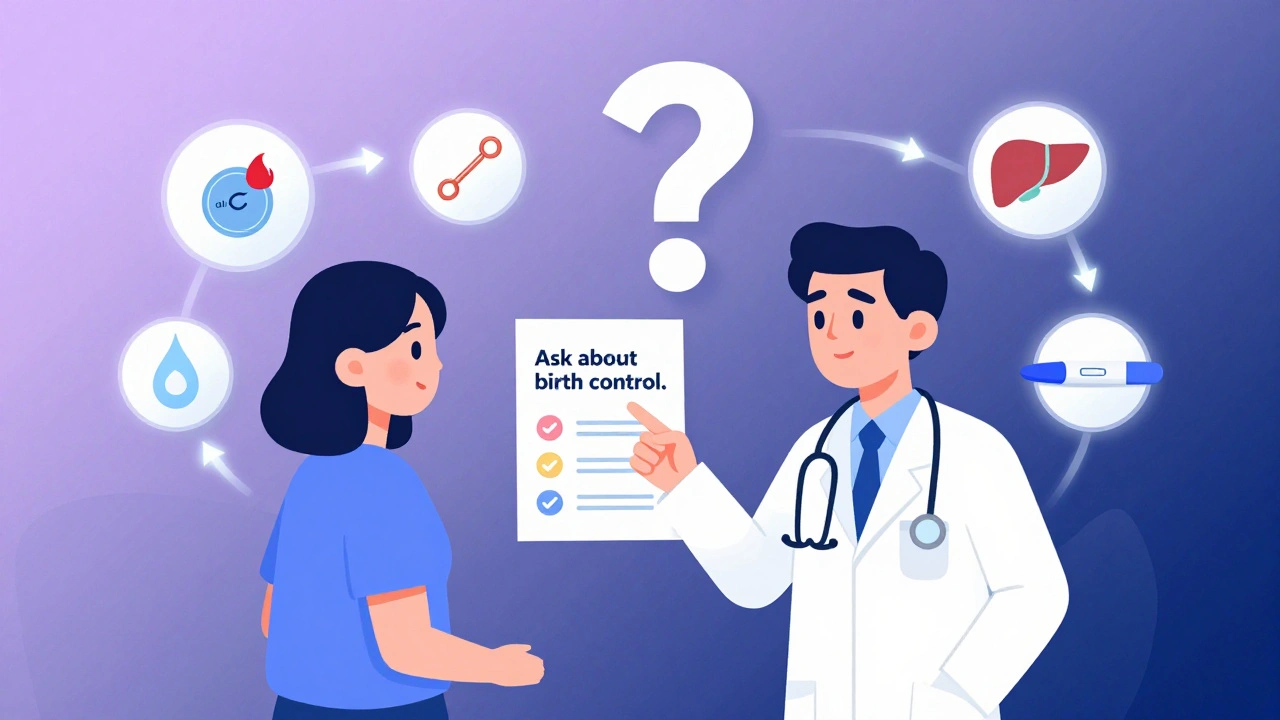
Doctors need to ask: “Are you using hormonal birth control?” - and mean it. Not as an afterthought. Not while typing the prescription. Right at the start.
What’s New in 2025
Research is shifting. New TB regimens are being tested that skip rifampin entirely. One 4-month combo of rifapentine and moxifloxacin, studied by the CDC, finished enrollment in 2022. Results are expected soon. If it works as well as the standard 6-month rifampin regimen, it could change everything.Meanwhile, drugmakers now test every new hormonal contraceptive against rifampin before approval. The FDA and EMA require it. That’s why newer pills, patches, and rings come with clear warnings - but older ones might not. If you’re on a generic pill from 2018, check the label. If it doesn’t mention rifampin, ask your pharmacist.
There’s also growing evidence that permanent contraception - like tubal ligation - is being used more often in high-TB areas. In parts of sub-Saharan Africa, where TB and limited contraceptive access overlap, this interaction has real-life consequences. Unplanned pregnancies during TB treatment can mean delaying care, risking the baby’s health, or even maternal death.
What You Should Do Now
If you’re taking rifampin:- Confirm you’re on hormonal birth control - even if you think it’s for acne or periods.
- Stop relying on the pill, patch, or ring.
- Start using a copper IUD or condoms daily for the entire course of rifampin.
- Keep using backup contraception for 28 days after your last dose.
- If you’re considering long-term birth control, talk to your doctor about implants or IUDs.
If you’re not on rifampin - but are prescribed an antibiotic - don’t panic. Most antibiotics are fine. Only rifampin and rifabutin need extra caution. If you’re unsure, ask: “Is this a rifamycin?” If they say no, you’re probably safe.
Why This Matters Beyond the Pill
This isn’t just about birth control. It’s about trust in medicine. When a drug interaction is this well-documented, yet still ignored, it shows how easily gaps form in patient care. Women are expected to know this on their own. But the science doesn’t care about your knowledge level - it only cares about enzyme activity.If you’re on rifampin, your body is in a different metabolic state. What worked before won’t work now. That’s not your fault. It’s not the pill’s fault. It’s just how the drug works. The right response isn’t guilt or confusion - it’s action. Use backup. Talk to your doctor. Ask for alternatives. Your health depends on it.
Emma Sbarge
December 13, 2025Rifampin wiping out birth control isn't even up for debate anymore. I've seen three patients get pregnant on it while on the pill. No excuses. No "maybe". Doctors who don't bring this up are negligent. If you're on rifampin and still relying on hormonal birth control, you're playing Russian roulette with your future.
Sheldon Bird
December 14, 2025This is such an important post. I'm a nurse and I can't tell you how many times I've had to explain this to patients who thought "antibiotic = all the same." The 28-day window after finishing is the part people always miss. I tell them: "Your liver doesn't forget." And yes, copper IUDs are the MVP here. Life-changing for TB patients who want control.
Michael Gardner
December 14, 2025Wait, so you're telling me the only antibiotic that breaks birth control is the one used for TB, which affects poor people in developing countries? Funny how the medical establishment only "cares" when it's inconvenient for the masses. Meanwhile, every other antibiotic gets a free pass. Coincidence? I think not.
Willie Onst
December 15, 2025Man, this hits different. I had a cousin in South Africa on rifampin for TB and she didn't even know she was on birth control-she was using it for acne. No one told her. She got pregnant and had to choose between stopping treatment or risking the baby. That’s not a medical issue-it’s a moral one. We need better systems. Not just more warnings. Real care. And maybe, just maybe, more doctors who actually listen.
Ronan Lansbury
December 15, 2025Of course rifampin affects hormones. It’s a rifamycin-designed to induce cytochrome P450 enzymes. But why is this only discussed in the context of contraception? The same mechanism lowers levels of anticoagulants, antivirals, even antidepressants. The FDA knows this. Pharmaceutical companies know this. Yet they let women bear the burden of "user error." It’s not ignorance-it’s institutional neglect disguised as medical advice.
nina nakamura
December 15, 2025Anyone who thinks Depo-Provera is safer is delusional. The same enzyme breaks down progestin too. That 2023 study had 47 women. That's not data. That's a footnote. And no, higher dose pills don't work. I've seen the lab results. Estrogen drops below 20 pg/mL. That's menopausal range. You're not ovulating because you're in hormonal shock, not because the pill's working. Stop pretending.
Hamza Laassili
December 16, 2025Okay so like... rifampin = bad for birth control, got it. But like, why do people keep using the pill anyway? I mean, if you're on antibiotics for TB, you're already in a medical nightmare. Why not just get an IUD? Or like, don't have sex? I'm not being mean, I'm just saying... if you're gonna take a drug that's basically a chemical grenade, maybe don't rely on a pill that's already 91% effective? Just saying.
Constantine Vigderman
December 17, 2025THIS. THIS RIGHT HERE. I'm so glad someone finally laid this out. I was on rifampin for 8 weeks last year and my doctor didn't say a word. I found out by accident when I Googled "antibiotics and my period" and landed here. I was so scared. I switched to condoms and it felt like a total downgrade. But now I'm getting a copper IUD next month. Best decision ever. Seriously, if you're reading this and on rifampin-don't wait. Don't assume. Don't hope. Act. Your body deserves better.