
2 Jan 2026
- 0 Comments
Drug Side Effect Frequency Tool
Find Side Effect Information
Enter the name of a medication to see its common side effects and their frequency using the EMA/WHO classification system.
Side effects shown below are based on the EMA/WHO classification system.
Common Side Effects
Less Common Side Effects
Sorry, we don't have information for that medication in our database. Check for spelling errors or try a different drug name.
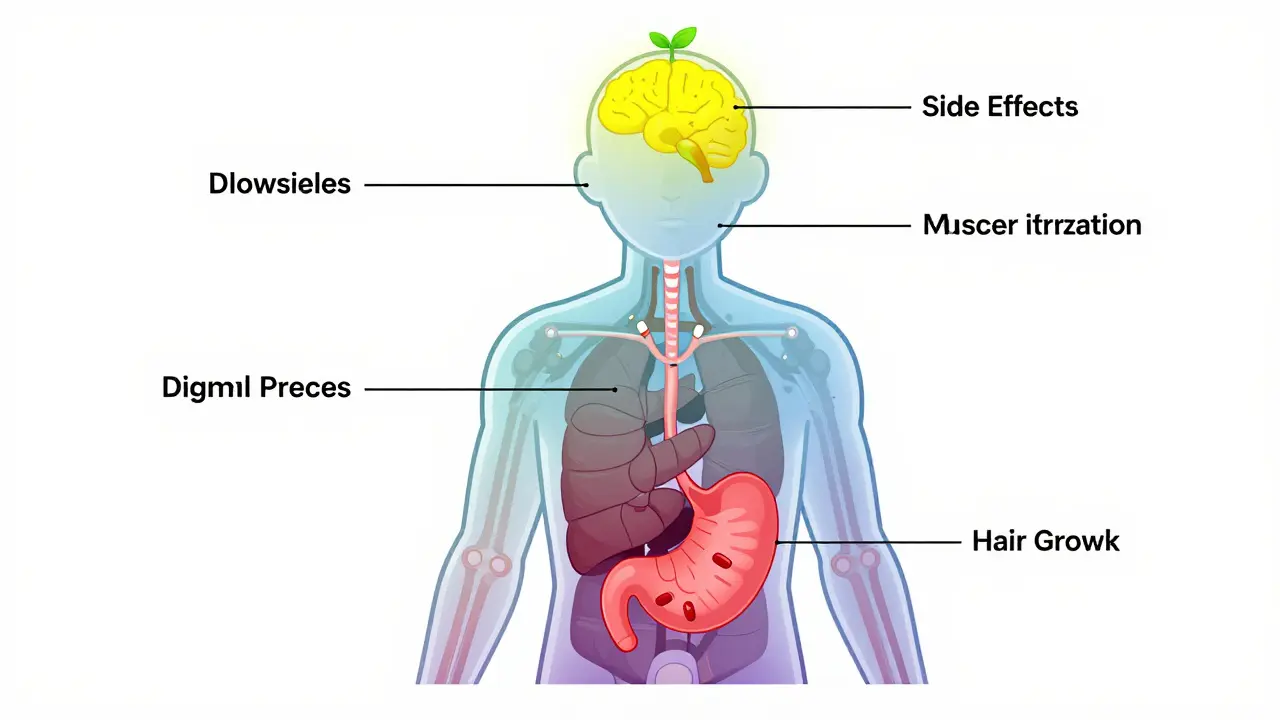
When you take a pill for high blood pressure, an antibiotic for a sinus infection, or even a daily vitamin, you’re not just getting the benefit you want. Your body reacts in ways you might not expect. These unexpected reactions are called drug side effects. They’re not always bad - sometimes they’re annoying, sometimes they’re serious, and occasionally, they’re even helpful. But no matter what, understanding them is key to staying safe and making smarter choices about your health.
What Exactly Is a Drug Side Effect?
A drug side effect is any effect that happens because of a medication - other than the one it was meant to treat. The U.S. Food and Drug Administration (FDA) defines them as "unwanted, undesirable effects that are possibly related to a drug." That’s broad, and it’s meant to be. It includes everything from a dry mouth after taking an antihistamine to liver damage from long-term use of certain painkillers.
Here’s the twist: not all side effects are harmful. Some are neutral, like drowsiness from an allergy pill that doesn’t bother you. Others can be useful. For example, minoxidil was originally developed as a blood pressure medication. Doctors noticed patients taking it grew thicker hair - so it became a treatment for hair loss. That’s a beneficial side effect. The same goes for finasteride, used for enlarged prostates, which also helps men keep their hair. These aren’t "side effects" in the traditional sense of something gone wrong - they’re just effects you didn’t plan for.
Technically, experts call all these outcomes "adverse drug reactions" (ADRs) when they’re unwanted. But in everyday language, "side effect" covers both the bad and the surprisingly good. The key is knowing what’s likely, what’s rare, and what needs your attention.
Why Do Side Effects Happen?
Drugs work by interacting with your body’s chemistry. They bind to receptors, block enzymes, or change how cells behave. But your body isn’t a single-purpose machine. The same receptor a drug targets in one organ might exist in another. That’s why a heart medication might also cause dizziness - it’s affecting blood vessels in your brain too.
There are two main types of side effects, based on how predictable they are:
- Type A (Predictable): These make up 85-90% of all side effects. They’re dose-related - the higher the dose, the more likely you’ll feel them. Examples: nausea from antibiotics, drowsiness from antihistamines, or low blood sugar from insulin. These are usually not dangerous, just unpleasant.
- Type B (Unpredictable): These are rare (10-15%) but can be serious. They’re not about dosage. They happen because of your unique biology - like a genetic quirk or an immune system reaction. Anaphylaxis to penicillin or severe skin reactions from allopurinol fall into this category.
Age plays a big role. People over 65 are 3 to 5 times more likely to experience side effects. Why? Their bodies process drugs slower. Their kidneys and liver don’t work as efficiently. And they’re often on multiple medications - a situation called polypharmacy. Taking five or more drugs at once increases your risk of side effects by 88%.
Genetics matter too. Around 40-95% of people have variations in liver enzymes (like CYP450) that change how fast they break down drugs. Someone with a slow CYP2C19 enzyme might not respond to clopidogrel (a blood thinner), while another person with a fast version could get too much effect and bleed easily. That’s why genetic testing before certain treatments is becoming more common.
Common Examples Across Medication Types
Some side effects are so common they’re practically expected. Here’s what you might actually run into:
- NSAIDs (like ibuprofen or naproxen): Up to 30% of regular users develop stomach irritation, ulcers, or bleeding. That’s why doctors often prescribe a stomach protector alongside them.
- Antibiotics (like amoxicillin or ciprofloxacin): Diarrhea affects 5-30% of people. That’s because antibiotics kill off good gut bacteria along with the bad ones. Probiotics can help, but not always.
- Doxycycline (an antibiotic): About 10% of users get severe sunburns from normal sun exposure. This is called phototoxicity. You need to avoid direct sunlight and wear sunscreen.
- Chemotherapy drugs: Nausea and vomiting hit 30-90% of patients, depending on the drug. New anti-nausea medications have improved this a lot, but fatigue and hair loss remain common.
- Immune checkpoint inhibitors (for cancer): These drugs boost your immune system to fight tumors - but they can turn it against your own organs. About 60-85% of patients develop immune-related side effects like colitis, thyroid problems, or skin rashes.
- SGLT2 inhibitors (for diabetes): These drugs help lower blood sugar by making your kidneys flush out glucose. But they also increase the risk of lower limb amputations - about 1.77 times higher than placebo, based on the CANVAS trial.
Even vaccines have side effects. The CDC reports that mRNA COVID-19 vaccines led to myocarditis (heart inflammation) in about 40.6 cases per million second doses among males aged 12-29. The Janssen (Johnson & Johnson) vaccine had a rare but serious clotting disorder - thrombosis with thrombocytopenia syndrome - at 3.23 cases per million doses. These are rare, but they’re tracked closely because they’re serious.
What You’re Not Being Told - And What You Should Know
Medication labels list every possible side effect, no matter how rare. That’s why a simple painkiller might say it can cause "severe liver damage" or "death." But that doesn’t mean it will. The FDA requires manufacturers to list even one reported case - even if it happened to just one person out of 10 million.
Here’s what the labels don’t tell you: frequency. The European Medicines Agency (EMA) and WHO use clear categories:
- Very common: affects 1 in 10 or more
- Common: affects 1 in 10 to 1 in 100
- Uncommon: affects 1 in 100 to 1 in 1,000
- Rare: affects 1 in 1,000 to 1 in 10,000
- Very rare: affects fewer than 1 in 10,000
Most side effects you’ll experience fall into the first two categories. The scary ones? They’re usually very rare. But if you’re on a drug with a boxed warning - the FDA’s strongest safety alert - you need to know the signs.
Another big issue: the nocebo effect. In one study, 62% of people who stopped statins because of muscle pain had the same pain when given a placebo. Their brains expected side effects - so they felt them. That doesn’t mean the pain wasn’t real. But it shows how much our expectations shape our experience.
What to Do When You Notice a Side Effect
Don’t panic. But don’t ignore it either.
- Check the frequency. Is it common? Then it’s likely to pass. Is it rare and serious? Call your doctor.
- Don’t stop cold turkey. Stopping some meds suddenly can be dangerous - like blood pressure or antidepressant drugs. Talk to your provider first.
- Track it. Write down when it started, how bad it is, and if anything makes it better or worse. This helps your doctor decide if it’s the drug or something else.
- Report it. The FDA’s MedWatch program lets patients report side effects online. Even if you’re not sure, it helps them spot patterns. Over 22 million reports are in their system.
- Ask about alternatives. If a side effect is unbearable, there’s usually another drug in the same class that won’t cause it.
For older adults, the Beers Criteria® 2023 Update lists 30 medications that should be avoided because they’re more likely to cause harm than benefit. These include certain antihistamines, sleeping pills, and bladder medications. If you’re over 65, ask your doctor if any of your meds are on this list.
How Are Side Effects Monitored and Improved?
Drug safety doesn’t stop after approval. The FDA runs the Sentinel Initiative, which tracks side effects in real time using data from over 200 million Americans’ electronic health records. It spots problems 18-24 months faster than old reporting systems.
The European Union’s EudraVigilance database and the WHO’s global network collect millions of reports every year. In 2022 alone, EMA processed 1.7 million cases. That’s how they caught the rare clotting risk with the Janssen vaccine - and why some drugs get new warnings or are pulled from the market.
New tools are helping too. The FDA’s MedWatcher app, updated in October 2023, lets patients report side effects on their phones. Early data shows 23% of users caught drug interactions their doctors missed.
And it’s getting smarter. The FDA is testing AI models that predict who’s most likely to have a side effect - using age, genetics, medical history, and even what other meds they’re taking. One pilot program predicted NSAID-related stomach bleeding with 82% accuracy.
Final Thoughts: Side Effects Are Part of the Deal
Every medication comes with trade-offs. The goal isn’t to avoid side effects completely - that’s impossible. It’s to understand them, weigh them against the benefits, and make informed choices.
If you’re on a new drug, ask: "What’s the most common side effect? What’s the rare but serious one? What should I do if I notice it?" Don’t rely on the label alone. Talk to your pharmacist. Use the FDA’s Medication Guide. Track your symptoms.
Side effects aren’t a failure of medicine. They’re a reminder that our bodies are complex. The best treatment isn’t always the one with the fewest side effects - it’s the one that gives you the most benefit for the least risk. And that’s something you can only figure out with the right information and the right questions.
Are side effects the same as allergic reactions?
No. Side effects are predictable or unintended pharmacological responses to a drug, even when taken correctly. Allergic reactions are immune system responses - your body mistakes the drug for a threat. Symptoms include hives, swelling, trouble breathing, or anaphylaxis. Allergies can be life-threatening and usually happen the first time you take the drug. Side effects can happen anytime and are rarely immune-related.
Can side effects show up weeks or months after starting a drug?
Yes. Some side effects are delayed. For example, statins can cause muscle pain after months of use. Certain cancer drugs trigger thyroid problems or diabetes years later. Immune-related side effects from checkpoint inhibitors can appear weeks after treatment ends. Always report new symptoms - even if they seem unrelated.
Why do some people get side effects and others don’t?
It comes down to genetics, age, liver and kidney function, other medications, and even your gut bacteria. Two people taking the same drug at the same dose can have completely different experiences. For example, CYP2D6 gene variants affect how 25% of all prescription drugs are processed. Someone with a slow-metabolizer variant might get too much drug in their system and feel side effects - while someone else clears it quickly and feels nothing.
Should I stop taking a drug if I get a side effect?
Only if it’s life-threatening - like trouble breathing, chest pain, or swelling of the face. For most side effects, stopping abruptly can be dangerous. Talk to your doctor first. They might lower your dose, switch you to another drug, or add a treatment to counter the side effect. Never stop a blood pressure, heart, or mental health medication without medical advice.
Are natural supplements safer than prescription drugs?
No. Many people assume "natural" means safe, but that’s not true. St. John’s Wort can interfere with antidepressants, birth control, and blood thinners. Green tea extract has caused liver damage. Kava can lead to severe liver toxicity. Supplements aren’t tested like prescription drugs, and side effects are often underreported. Always tell your doctor what supplements you’re taking.
How can I find out how common a side effect really is?
Look for the frequency labels on the medication guide: very common, common, uncommon, rare. These are based on clinical trial data. The FDA’s Drug Approval Package or the EMA’s European Public Assessment Report (EPAR) also list exact percentages. If the label just says "may cause" without numbers, it’s likely very rare. Ask your pharmacist for the official prescribing information - it’s more detailed than the patient leaflet.