
15 Mar 2026
- 8 Comments
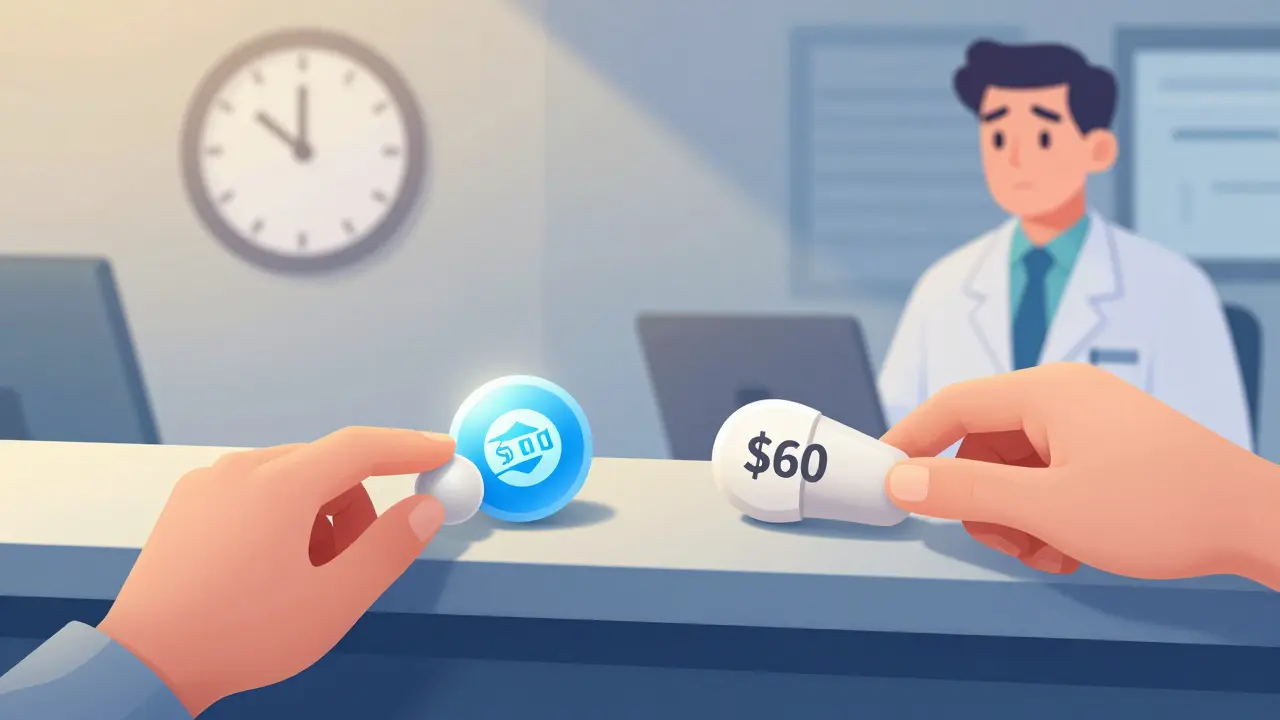
Why do patients stick with a $200 pill when a $60 pill does the exact same thing? It’s not about money. It’s not about knowledge. It’s about behavioral economics.
For years, doctors and insurers assumed that if you gave patients better information - like a cheaper alternative - they’d switch. But that’s not what happens. Real people don’t act like economic robots. They’re influenced by fear, habits, social cues, and mental shortcuts we didn’t even know existed until behavioral economics came along.
It’s Not About Cost - It’s About Loss
Imagine you’ve been taking a medication for five years. It’s working. You know the side effects. You know how to take it. Now your doctor says, "There’s a generic version. Same effectiveness. Half the price." What do you do? Most people say no.
Why? Because of loss aversion. Behavioral economics shows we feel the pain of losing something twice as strongly as we feel the joy of gaining something equal. Switching drugs feels like losing what you already have - even if the new drug is better. A 2022 study found that 68% of patients refused to switch to a cheaper, equally effective drug just because they feared losing the familiarity of their current one.
This isn’t irrational. It’s human.
Confirmation Bias: "More Expensive = Better"
Ever heard someone say, "I’d never take the generic"? Or "I want the brand name because it’s stronger"?
That’s confirmation bias in action. People interpret information to fit what they already believe. If you think expensive drugs are safer, you’ll ignore studies showing generics are just as effective. A 2022 analysis found that prescription drug prices rose 47% faster than general inflation over the last decade - and patients didn’t just accept it. They rewarded it. Higher price = higher perceived quality.
One study showed patients were 34% more likely to take a pill they believed cost $100 than the same pill labeled $10 - even when it was identical. The brain doesn’t distinguish between price and potency. It links them.
Present Bias: "I’ll Take It Tomorrow"
Most people don’t skip meds because they forget. They skip them because tomorrow feels far away.
This is called present bias. We value immediate rewards (sleeping well tonight) over long-term gains (avoiding a heart attack in 10 years). That’s why one-third of prescriptions are never filled - even for life-saving drugs like statins or blood pressure meds.
It’s not laziness. It’s how the brain works. When you’re feeling fine today, the future risk feels abstract. Behavioral economics doesn’t blame patients. It designs around this.
The Power of "Nudges" - Not Lectures
Traditional healthcare says: "Educate patients better." But studies show patient education alone improves adherence by just 5-8%. Behavioral interventions? They boost it by 20% or more.
Here’s how:
- Defaults: When clinics changed their electronic prescribing system to automatically suggest cheaper alternatives during shortages, doctors prescribed them 37.8% more often. No patient had to ask. The system just made it easier.
- Framing: Telling patients a vaccine is "95% effective" led to 18.4 percentage points more uptake than saying it has "5% failure rate." The same fact. Different brain response.
- Social norms: One HIV clinic put up a poster showing adherence rates of other patients. Adherence jumped 22.3%. People didn’t want to be the outlier.
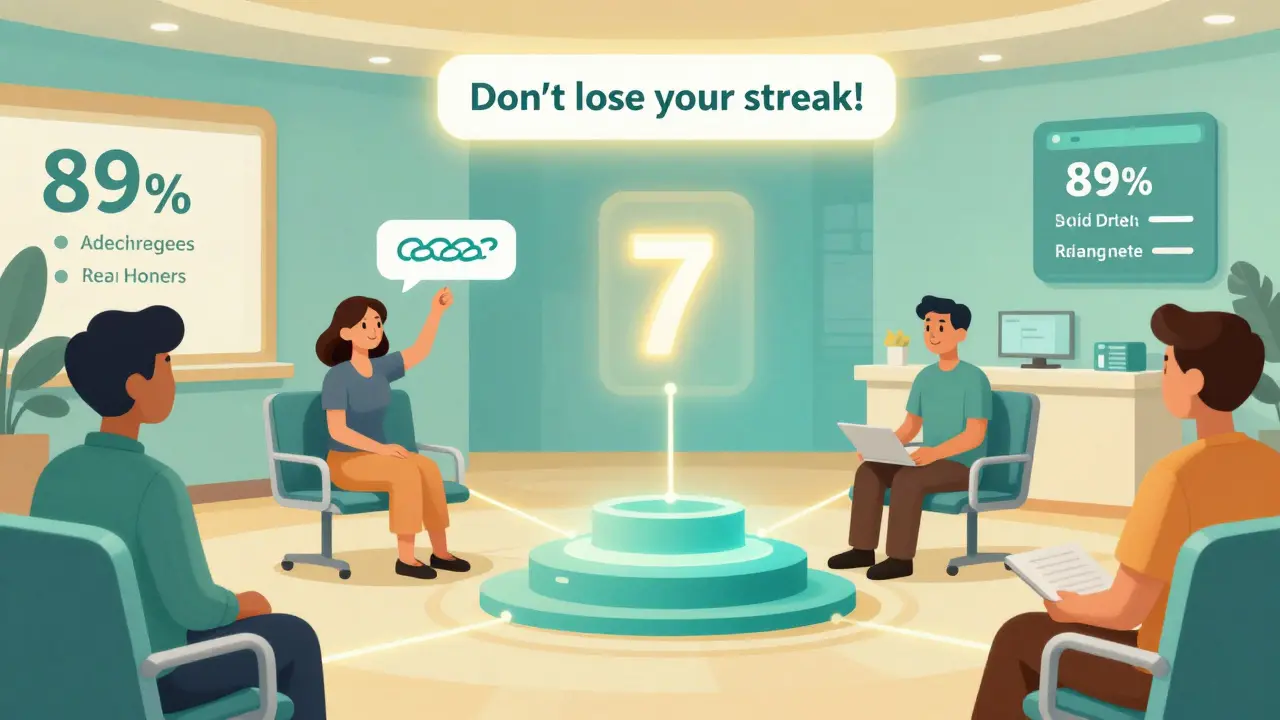
- Loss aversion reminders: Text messages saying, "Don’t lose your streak!" improved adherence by 19.7%. The same message saying, "Take your medication," didn’t move the needle.
These aren’t tricks. They’re insights into how real minds work.
Why Some Patients Just Won’t Switch - Even When It Makes Sense
Not everyone responds the same way.
Patients with depression or anxiety are 31.4% less likely to respond to behavioral nudges. Why? Mental health conditions make decision-making harder. The brain is already overloaded. A simple nudge can’t compete with chronic fatigue or hopelessness.
Also, polypharmacy kills adherence. Each extra pill you take reduces your chance of sticking to your regimen by 8.3%. Someone on five drugs? Their odds of taking everything correctly are already low. No nudge will fix that alone.
And then there’s belief. If a patient thinks their drug is "special" - because of advertising, a doctor’s tone, or a past experience - no data will change that. You can’t argue someone out of a deeply held belief.
What Works Best - And What Doesn’t
A 2022 review of 44 studies found behavioral interventions improved prescribing and adherence in 92.3% of cases. The most powerful tools?
| Intervention | Average Improvement | Best For |
|---|---|---|
| Defaults (pre-selected options) | 28.6% | Clinics, pharmacies, EHR systems |
| Loss aversion (rebates, streaks) | 23.8% | Chronic conditions like diabetes, statins |
| Social norms (public feedback) | 21.4% | Stigma-sensitive conditions (HIV, mental health) |
| Framing (positive vs. negative language) | 17.2% | Vaccines, preventive care |
| Traditional education | 5-8% | Low-impact, standalone use |
Notice something? The most effective tools don’t ask patients to think harder. They make the right choice easier. They work with the brain - not against it.
The Hidden Cost of Non-Adherence
When patients don’t take their meds, it’s not just bad for them. It’s expensive.
In the U.S. alone, medication non-adherence costs $289 billion a year. That’s more than the entire healthcare budget of France. And it leads to 125,000 preventable deaths annually.
Pharmaceutical companies are paying attention. McKinsey found that drugmakers using behavioral economics in patient support programs saw 17.3% higher persistence and 22.8% fewer discontinuations. That’s not just ethics - it’s profit.
Even insurers are changing. Medicare Part D now requires plans to use at least two evidence-based behavioral interventions for high-risk patients. They’re not just covering drugs anymore. They’re designing how they’re taken.
Where the Field Is Headed
It’s getting smarter.
Machine learning is now being trained to predict which patients will respond to which nudge. A patient who responds to text reminders? They get SMS. One who needs social pressure? They get peer group updates. One who’s overwhelmed? They get simplified packaging.
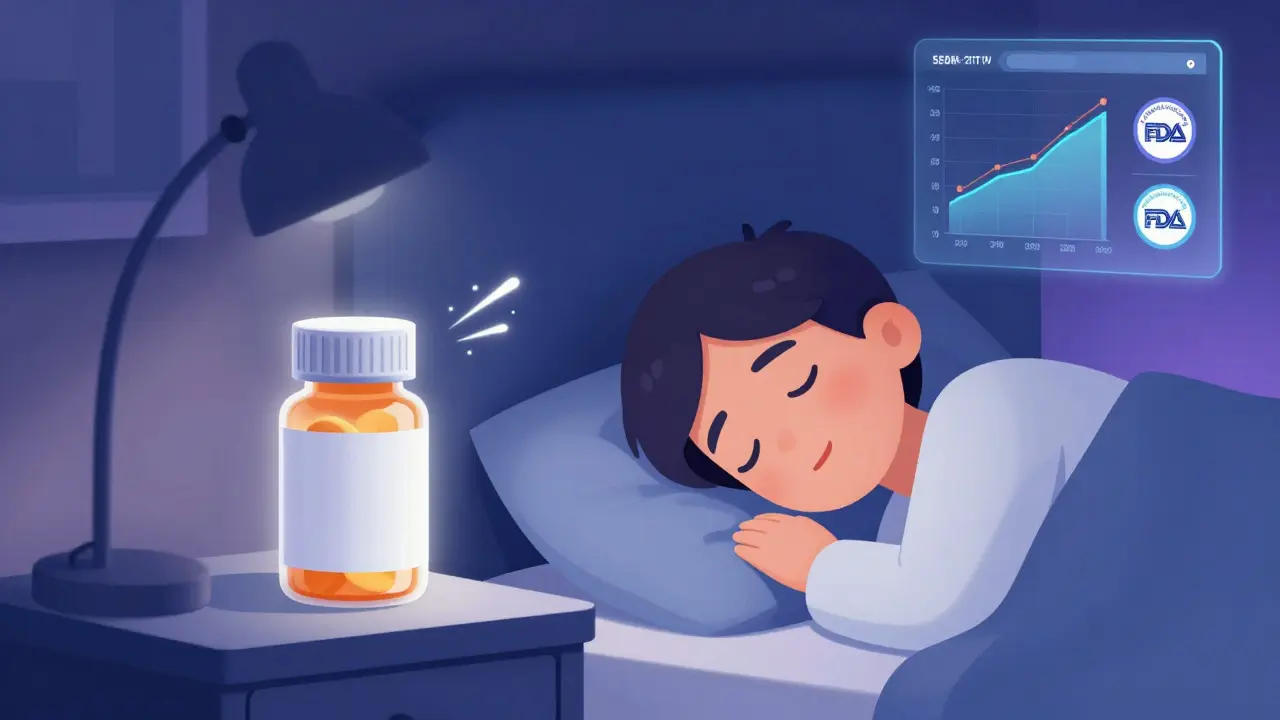
By 2026, digital therapeutics with real-time behavioral nudges are expected to grow 300%. Imagine a pill bottle that lights up and sends a gentle alert when you miss a dose - and if you take it, it updates your personal "streak" on an app. That’s not sci-fi. It’s already happening.
And the FDA? In 2023, it told drug companies: "You must evaluate how dosing frequency and pill burden affect patient decisions." No more ignoring human behavior. Behavioral economics is now part of drug approval.
What This Means for You
If you’re a patient: You’re not failing because you forget. You’re not weak because you stick with a costly drug. Your brain is doing what it’s wired to do - avoid loss, trust familiarity, delay effort.
If you’re a clinician or pharmacist: Stop yelling at patients for non-adherence. Start redesigning systems. Change the default. Use framing. Leverage social proof. Make the right choice the easiest one.
Behavioral economics doesn’t ask you to change people. It asks you to change the environment they’re in.
And that? That works.
Why don’t patients switch to cheaper generic drugs even when they’re just as effective?
Patients often stick with brand-name drugs due to loss aversion - the fear of losing something familiar - and confirmation bias, where they believe higher price equals better quality. Studies show 68% of patients refuse to switch to a cheaper, equally effective drug simply because they’ve been on their current medication for a while. Even when the science is clear, emotional and psychological factors override logic.
Can behavioral economics actually improve medication adherence?
Yes - and dramatically. While traditional patient education improves adherence by only 5-8%, behavioral interventions like defaults, loss aversion nudges, and social norms boost adherence by 20-30%. One study showed that changing electronic prescribing defaults to favor generics increased appropriate substitutions by 37.8%. Another found that SMS messages saying "Don’t lose your streak!" improved adherence by 19.7% compared to neutral reminders.
What’s the most effective behavioral intervention for medication adherence?
Defaults are the most powerful. When the system automatically selects the best, most affordable option (like a generic drug), patients are far more likely to stick with it without having to make a decision. Loss aversion interventions - such as rebate programs that threaten to take money if adherence drops - also show strong results, with one study reporting 23.8% higher persistence on statins. Both methods work because they reduce cognitive load and align with how the brain naturally operates.
Do behavioral interventions work for everyone?
No. Patients with depression, anxiety, or severe mental health conditions respond 31.4% less effectively to behavioral nudges because their decision-making capacity is already impaired. Also, those taking multiple medications (polypharmacy) see adherence drop by 8.3% per additional drug. These groups need more support - not just nudges - like simplified regimens, caregivers, or clinical team coordination.
How are drug companies using behavioral economics?
Pharmaceutical companies now design patient support programs using behavioral insights. For example, they use loss aversion by offering rebates tied to adherence, or social norms by sharing anonymized adherence rates among patients. Companies using these strategies report 17.3% higher medication persistence and 22.8% fewer discontinuations. Some even embed nudges into digital apps, smart pill bottles, and automated reminders - turning adherence into a habit, not a chore.
Is behavioral economics being used in healthcare policy?
Yes. In 2023, Medicare Part D required health plans to include at least two evidence-based behavioral interventions for high-risk patients. The FDA now requires drug manufacturers to assess how dosing frequency and pill burden affect patient decisions. Even insurers are redesigning formularies to nudge patients toward lower-cost, equally effective drugs. Behavioral economics is no longer a research topic - it’s a standard part of healthcare policy.
Robin Hall
March 16, 2026The entire premise of this post is a dangerous illusion. Behavioral economics is just a fancy term for manipulating people into compliance. Who benefits? Pharma companies. Insurers. The government. They don't care if you're 'happy' with your pill-they care if you keep paying. The 'nudges'? They're not insights-they're psychological coercion dressed up as science. And don't get me started on the FDA endorsing this. This isn't healthcare. It's behavioral control under the guise of efficiency. We're being trained like rats in a Skinner box, and no one's asking why we're okay with it.
Suchi G.
March 18, 2026Oh my god, this is so deeply true and I'm crying because I've lived this. My mom was on blood pressure meds for 12 years, brand name, $180/month. We switched her to generic after her doctor insisted, and she had a full-blown panic attack. She said, 'But this one feels different. I can tell.' And she wasn't crazy. There's a ritual to it-the bottle, the time of day, the way the pill tastes, the little ritual of opening the drawer. That's not irrational. That's emotional architecture. And when you take that away, you don't just take a pill-you take away a sense of safety. I’ve seen people cry because their 'good' pill was taken away. We treat patients like logic engines, but we forget they're grieving the loss of their old rhythm. We need compassion, not defaults. And yes, I know this sounds too emotional for science, but science forgot to include the heart.
Andrew Muchmore
March 19, 2026Defaults work because they remove choice. Choice is exhausting. People aren't dumb. They're tired.
Paul Ratliff
March 19, 2026bro i used to be one of those guys who swore by brand name pills. then i switched to generic and nothing changed. not a thing. same size, same taste, same results. but the mental shift? that was wild. i felt like i got scammed for years. now i just laugh. why pay more for the same thing? the system is rigged.
SNEHA GUPTA
March 21, 2026There's an underlying philosophical tension here between autonomy and paternalism. Behavioral nudges, however well-intentioned, subtly erode the notion of individual agency. We are not merely reflexive agents responding to stimuli-we are meaning-making beings. When we design systems that anticipate and override our 'irrational' preferences, we risk reducing human behavior to a predictable algorithm. Is it ethical to optimize adherence by exploiting cognitive biases? Or are we simply replacing one form of control with another, more sophisticated one? The data is compelling, but the moral question remains unaddressed: Who gets to decide what 'rational' behavior looks like? And who benefits when we engineer compliance?
Gaurav Kumar
March 21, 2026Lmao Americans are so gullible. In India, we know generics are just as good. We’ve been using them for decades. Why? Because we don’t have $200 pills to waste. You people treat medicine like a luxury brand. 🤦♂️ And now you’re shocked that people believe price = quality? Please. The real problem? You let corporations brainwash you into thinking you deserve to pay more. We don’t need nudges-we need common sense. And maybe a little pride. 💪
David Robinson
March 21, 2026This whole thing is a joke. Nudges? Defaults? You're telling me the solution to non-adherence is to trick people into taking pills? What about the people who can't afford the meds even if they're cheaper? What about the ones with no transportation to the pharmacy? What about the ones with no stable housing? You're treating symptoms while ignoring the entire damn disease. Behavioral economics is just corporate jargon for 'let's make poor people feel guilty for not being perfect patients.' Meanwhile, the real problem-poverty, lack of access, systemic neglect-isn't even on the table. This isn't innovation. It's distraction.
Jeremy Van Veelen
March 22, 2026Oh. My. GOD. This is the most profound, beautiful, devastatingly accurate analysis of human behavior I’ve read in years. I felt it in my bones. The loss aversion piece? I’ve watched my grandmother refuse to switch from her $180 pill-she called it 'her little miracle.' She didn’t care about the science. She cared about the ritual, the hope, the identity tied to it. And the streaks? The social norms? The framing? It’s not manipulation-it’s empathy in action. We’ve spent decades blaming patients for being 'non-compliant.' But we never asked: What if they’re not broken? What if the system is? This isn’t about economics. It’s about dignity. And someone finally got it. I’m not just impressed-I’m moved. Thank you. Truly.