

11 Dec 2025
- 10 Comments
Biologic Infusion Reaction Risk Assessment Tool
Risk Assessment
Assess your personal risk of experiencing a biologic infusion reaction based on factors identified in clinical studies.
Your Risk Assessment
Your risk score:
High Risk
Estimated reaction rate:
Based on your factors
Personalized Recommendations
What to Expect
This tool uses a validated algorithm that predicts your risk with 87.4% accuracy. It considers:
- Your specific biologic drug
- First infusion status
- Drug allergy history
- Recent antibiotic use
- IL-6 inflammatory markers
When you’re on a biologic drug-like infliximab, rituximab, or adalimumab-for rheumatoid arthritis, Crohn’s disease, or cancer, the goal is simple: get better. But for 1 in 3 patients, that first infusion brings more than relief. It brings flushing, chills, chest tightness, or worse. These aren’t just side effects. They’re biologic infusion reactions, and they can turn dangerous in minutes.
What Exactly Is a Biologic Infusion Reaction?
Biologic infusion reactions happen when your immune system reacts to the drug you’re getting through an IV or injection. These aren’t allergies in the classic sense-like peanut or bee sting reactions-but they can feel just as scary. They usually show up during the infusion or within 1-2 hours after it ends. Some come later, 24 to 72 hours after, but those are less common. There are three main types:- Immediate hypersensitivity reactions (HSRs): Think rash, itching, swelling, trouble breathing. These are often linked to your body making antibodies against the drug.
- Cytokine release syndrome (CRS): Fever, chills, low blood pressure, muscle aches. This happens when the drug triggers a flood of immune signals-cytokines-that overwhelm your system.
- Delayed reactions: Usually mild, like joint pain or rash that shows up a day or two later. Less urgent, but still worth reporting.
The severity is graded. Grade 1? Just a little flushing or mild itch. Grade 2? You need meds to calm it down. Grade 3? You’re in the hospital. Grade 4? Life-threatening. About 38% of people stop their biologic treatment because of these reactions. That’s not just inconvenient-it’s dangerous if your condition flares back up.
How to Prevent Reactions Before They Start
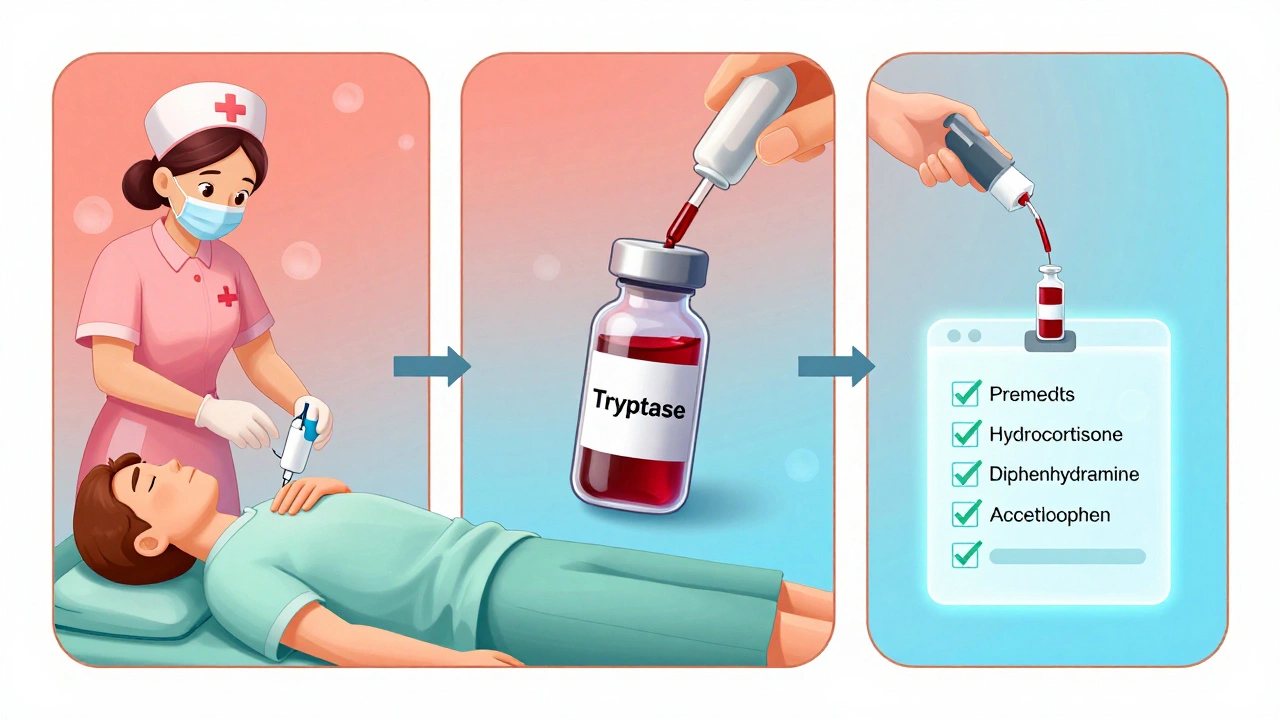
Prevention isn’t guesswork. It’s a science-backed routine. The standard premedication combo has been proven in multiple studies:- Hydrocortisone 200 mg IV or methylprednisolone 125 mg IV given 30 minutes before the infusion. This cuts down on antibody development by nearly half compared to no steroid.
- Diphenhydramine 50 mg IV or cetirizine 10 mg orally an hour before. Cetirizine works just as well as diphenhydramine but causes 78% less drowsiness-big win if you need to drive home.
- Acetaminophen 1,000 mg orally an hour before. Helps with fever and chills.
Hydration matters too. A 2021 NIH study showed that giving 100 cc/h of saline during the first part of the infusion, then bumping it to 250 cc/h for the last step, reduces cytokine release syndrome by 63%. That’s not a suggestion-it’s a protocol.
Some drugs are just more likely to cause trouble. Rituximab? Up to 80% of patients react on the first infusion. Cetuximab? 20-25% react, and some of those reactions are severe. TNF blockers like infliximab hit 10-20%, while etanercept is gentler at 2-5%. Knowing your drug’s risk profile helps your team tailor your prep.
Here’s a key point: spacing out infusions helps. Giving adalimumab every 8 weeks instead of every 12 weeks reduces anti-drug antibody formation by 32%. Fewer antibodies mean fewer reactions down the line.
What to Do If a Reaction Happens
If you feel anything unusual-rash, tight chest, dizziness, chills-speak up immediately. Don’t wait. Don’t think it’ll pass. Your nurse or doctor should stop the infusion right away.Then, here’s the emergency checklist:
- Stop the infusion. No exceptions.
- Position you flat on your back with legs raised. This helps blood flow to your heart and brain.
- Give adrenaline (epinephrine) 0.3-0.5 mg intramuscularly in the outer thigh. This is the first-line treatment for anaphylaxis. Repeat every 3-5 minutes if symptoms don’t improve. Many people don’t realize adrenaline is safe to use even if you’re not sure it’s anaphylaxis. Better safe than sorry.
- Give diphenhydramine 50 mg IV for itching and hives.
- Give methylprednisolone 125 mg IV for moderate reactions to reduce inflammation.
- If you’re struggling to breathe, nebulized adrenaline (5 mg in 3 mL saline) can open your airways in under 5 minutes.
After the reaction, your team should draw a blood test for serum tryptase. This isn’t optional. The test must be done exactly 30-120 minutes after the reaction starts. A level above 11.4 µg/L, plus 20% above your baseline plus 2 µg/L, confirms anaphylaxis. Without this test, you can’t be sure what happened-or if you’re at risk for a worse reaction next time.
Desensitization: Can You Still Get Your Treatment?
Yes. And it’s more successful than most people think.If you had a reaction but your drug is your best-or only-option, desensitization lets you keep going. It’s not magic. It’s slow, controlled exposure. The standard method is the 12-step, 3-bag protocol:
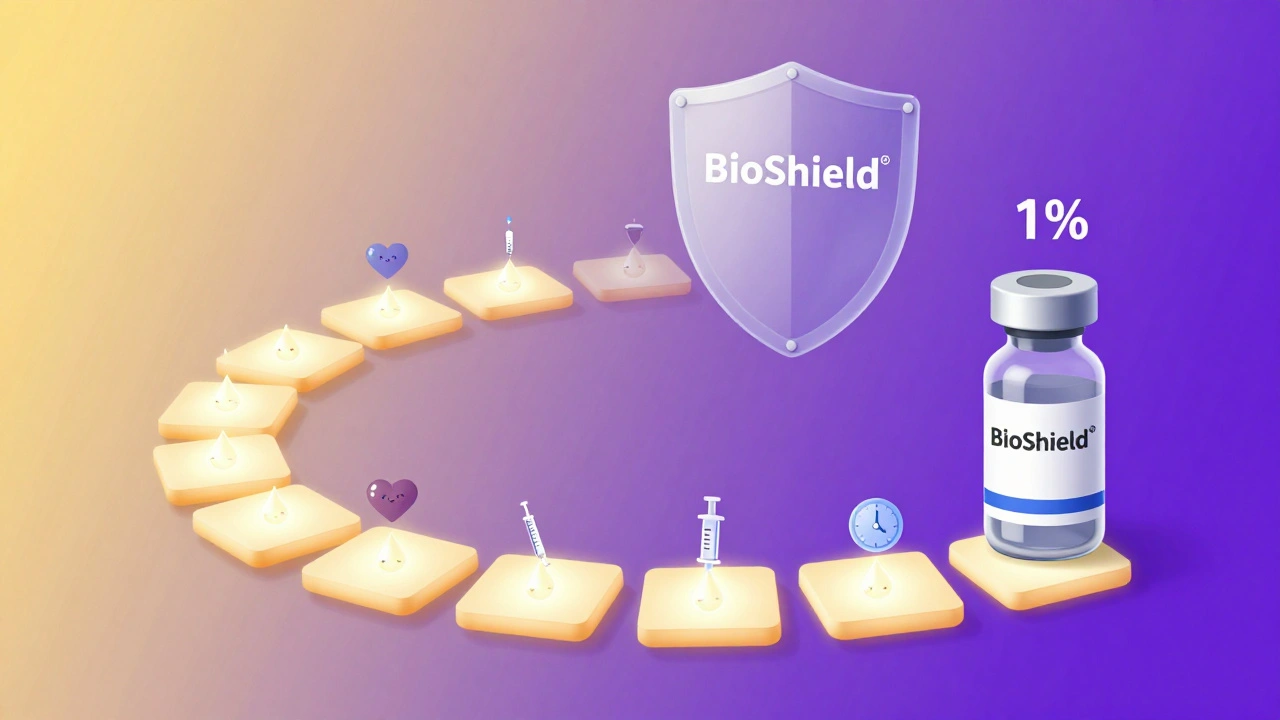
- Start with 1% of your full dose, infused over 15 minutes.
- Then 10%, then 100%, with each step increasing the rate slightly.
- Initial infusion rate: 0.1 mL/min. Final rate: up to 5 mL/min.
- Total time: 4-6 hours.
Success rates? Over 90% for most drugs. Rituximab: 97%. Trastuzumab: 95%. Cetuximab: 92%. Even infliximab, which causes more reactions, has an 89% success rate. The catch? About 23% of people have a breakthrough reaction during the process-but 92% of those are mild and manageable without stopping.
There’s a new option: the 8-step protocol being tested in the NIH DESERVE trial. It uses real-time IL-6 monitoring to adjust the pace. Early results show 98.2% success. That’s huge.
One warning: corticosteroids can mask early signs. If you’re on prednisone before the infusion, your fever might be suppressed, making it harder to spot the start of a reaction. That’s why constant monitoring is non-negotiable.
Who’s at Highest Risk?
Not everyone gets reactions. But some factors raise your odds:- First infusion of a new biologic (especially rituximab or cetuximab)
- History of multiple drug allergies
- High baseline IL-6 levels (a marker of inflammation)
- Genetic markers like HLA-DRA*0102
- Recent antibiotic use (especially penicillin or cephalosporins)
New tools like the BioReaction Score™ algorithm use these factors to predict your risk with 87.4% accuracy. If you’re flagged as high-risk, your team can start with premeds, slower rates, or even a trial infusion under close watch.
What Happens After a Reaction?
If you had a Grade 4 reaction-life-threatening-you should not get the drug again. The risk of recurrence is 22%. That’s not worth the gamble.For Grade 1 or 2? Desensitization is your path forward. You’ll need a formal program. Not every clinic offers it. In the U.S., 89% of cancer centers do. Only 76% of rheumatology clinics do. And only 42% follow standardized protocols.
Documentation is critical. Your chart should show:
- Exact time of reaction onset
- Signs and symptoms
- Medications given
- Tryptase level and timing
- Infusion rate and total volume
This isn’t paperwork. It’s your safety record. If you ever need to switch hospitals or providers, this data saves lives.
What’s Changing Right Now?
In 2024, the FDA approved the first standardized desensitization kit: BioShield®. It comes with pre-measured dilutions and step-by-step cards for 12 common biologics. No more guesswork. No more math errors.The World Health Organization’s 2025 Essential Medicines List now lists reaction management as standard care for all biologic infusions. That means it’s not optional-it’s expected.
Costs? Setting up a program runs about $18,500 a year. Each desensitization session adds $327. But compared to the cost of hospitalization, lost work, or disease flare-ups? It’s a bargain.
Bottom Line
Biologic infusion reactions are common-but they’re not inevitable. With the right prep, monitoring, and emergency plan, you can keep getting the treatment you need without risking your safety. Know your drug. Know your risk. Know your protocol. Speak up early. And never let fear stop you from getting care.Can biologic infusion reactions be prevented completely?
No, they can’t be prevented completely-but they can be reduced by 70-80% with proper premedication, hydration, and slow infusion rates. The combination of steroids, antihistamines, and acetaminophen before infusion cuts reaction rates significantly. Still, about 10-40% of patients will experience some form of reaction, especially on the first dose.
Is it safe to continue biologic therapy after a reaction?
It depends on the severity. If you had a Grade 1 or 2 reaction, desensitization is safe and effective in over 90% of cases. For Grade 3, it’s possible but requires close supervision. Grade 4 reactions mean you should stop the drug permanently-repeating it carries a 22% risk of another life-threatening event.
Why is tryptase testing important after a reaction?
Tryptase is a marker released by immune cells during anaphylaxis. Testing it between 30 and 120 minutes after a reaction confirms whether it was truly anaphylactic. Without this test, you might mislabel a mild reaction as serious-or miss a true anaphylaxis. A level above 11.4 µg/L, plus 20% above your baseline plus 2 µg/L, meets World Allergy Organization criteria for anaphylaxis.
Do I need to stop my biologic if I react on the first infusion?
Not necessarily. First infusions are the most likely to cause reactions-especially with drugs like rituximab or cetuximab. Most reactions are mild and manageable. With proper premeds and a desensitization protocol, you can usually continue safely. Stopping means losing a treatment that often works when nothing else does.
What’s the difference between a cytokine release syndrome and an allergic reaction?
Cytokine release syndrome (CRS) is caused by a flood of immune signals (like IL-6, TNF-alpha) triggered by the drug, leading to fever, chills, low blood pressure, and muscle pain. It’s not IgE-mediated like classic allergies. Allergic reactions typically involve hives, swelling, or wheezing and happen faster. CRS can be more systemic and last longer. Both need immediate attention, but treatment differs slightly-CRS often responds better to steroids and fluids, while anaphylaxis needs adrenaline first.
Can I do desensitization at home?
No. Desensitization requires continuous monitoring of vital signs, immediate access to emergency drugs like adrenaline, and trained staff. It’s done in a hospital or infusion center with resuscitation equipment on standby. Even mild reactions can escalate quickly. Home desensitization is not safe and is not recommended by any major medical society.
Are there any new tools to predict if I’ll react?
Yes. The BioReaction Score™ algorithm, validated in over 12,000 patients, predicts your risk with 87.4% accuracy. It looks at your IL-6 levels, genetic markers like HLA-DRA*0102, and history of past drug reactions. Some clinics now use this before your first infusion to adjust your premeds or schedule a slower start.
Why do some biologics cause more reactions than others?
It comes down to structure and how your immune system sees them. Rituximab targets B cells, which are everywhere in your body, triggering a massive immune response. Cetuximab has a sugar molecule that some people are allergic to. TNF blockers like infliximab are made from mouse proteins, which your body may recognize as foreign. Newer biologics are more human-like, so they tend to be better tolerated.
Rob Purvis
December 13, 2025Wow, this is one of the most comprehensive guides I’ve seen on biologic reactions-seriously, kudos to the author. I’ve been on infliximab for 5 years, and my first reaction was terrifying. I thought it was just anxiety, but it was CRS. The premed protocol they listed? Exactly what my infusion center uses. I’ve never had a reaction since they started giving me methylprednisolone + cetirizine. Also, the hydration tip? Game-changer. I drink 2 liters before every infusion now. No more chills. No more panic.
Also, tryptase testing-YES. My doc skipped it after my first reaction, and I almost got written off as ‘just sensitive.’ Got it done later, and boom-confirmed anaphylaxis. Now I get a full workup every time. Don’t let them skip it.
Levi Cooper
December 14, 2025People still don’t get it. Biologics are just fancy placebo drugs wrapped in corporate marketing. The FDA approves them because Big Pharma pays off the regulators. That ‘BioShield® kit’? Probably just a repackaged IV bag with a fancy label. And desensitization? That’s just forcing your body to accept poison. You think 90% success means it’s safe? Try living with chronic fatigue and brain fog for 10 years. You’ll see why I quit all biologics. Natural remedies work better anyway. Turmeric. Ginger. No needles. No $$$.
Adam Everitt
December 16, 2025Interesting piece, though i think the author might be overestimating the efficacy of premeds. I mean, yes, steroids and antihistamines help-but the real issue is the immune system’s innate tendency to overreact to foreign proteins, especially those with murine components. The fact that cetuximab triggers reactions in 20-25% is less about dosing and more about structural immunogenicity. Also, the 8-step NIH protocol sounds promising, but i’m skeptical about IL-6 real-time monitoring-it’s expensive, and not all centers have the tech. Still, better than nothing, i suppose.
Oh, and ‘BioReaction Score™’? Sounds like a trademarked buzzword. But hey, if it helps, fine.
wendy b
December 17, 2025As a clinical pharmacist with 14 years in oncology infusion units, I must say: this article is fundamentally flawed in its omission of pharmacokinetic variability. The dosing protocols assume uniform clearance rates, but patients with low albumin, renal impairment, or obesity metabolize these drugs differently. Hydrocortisone 200mg? That’s excessive for a 110-lb woman. Methylprednisolone 125mg is standard, yes-but only if weight-adjusted. And cetirizine? It’s not ‘just as good’ as diphenhydramine-it’s less sedating, but has a longer half-life, which can mask late-onset reactions.
Also, the 2021 NIH hydration study? It was a single-center trial with n=87. Hardly definitive. This article reads like a pharma-sponsored white paper, not clinical guidance.
Lawrence Armstrong
December 18, 2025Thank you for this. 🙏 I had a Grade 2 reaction on my first rituximab infusion-felt like my chest was being squeezed by a bear. 😵💫 The nurses stopped it immediately, gave me epinephrine (I was terrified, but it worked), and then did the full protocol. We did desensitization 3 weeks later. 4.5 hours. Felt like an eternity. But I made it. Now I’m on maintenance. No issues for 11 months. 🎉
Biggest tip? Bring a friend. Someone who can hold your hand and remind you to breathe. And don’t be ashamed to ask for the slowest infusion rate possible. Your body isn’t a machine. It’s a miracle.
Ashley Skipp
December 19, 2025Why do we even use these drugs if they cause so many reactions? I mean, why not just stick with methotrexate? It’s cheaper, older, and doesn’t make you feel like you’re dying every month. This whole biologic thing feels like a money grab. Doctors push them because they get paid more. Patients take them because they’re desperate. And the system just keeps spinning. I’m done. I’m going back to the old stuff. No more IVs. No more hospitals. No more fear.
Robert Webb
December 20, 2025Let me start by saying I’m not a medical professional, but I’ve been living with Crohn’s for 18 years and been on three different biologics. I’ve had reactions to all of them-mild, moderate, and one scary one that landed me in the ER. What this post nails is the importance of communication. You have to speak up. Not just during the infusion, but before it. Tell your nurse if you’ve had reactions before. Tell them if you’re anxious. Tell them if you’re tired. Tell them if you’ve had antibiotics recently. All of it matters.
And yes, desensitization works. I did it with adalimumab after a Grade 2 reaction. It took six sessions. I cried the first time. I cried the last time. But I’m still here. I’m still working. I’m still seeing my kids grow up. That’s worth the discomfort. Don’t let fear silence you. Ask for help. Ask for a plan. Ask for time. You’re not alone.
Audrey Crothers
December 21, 2025OMG I’m so glad someone finally wrote this! I had a reaction last year and thought I was going to die. 😭 My nurse was amazing-she stopped everything, gave me epinephrine, and stayed with me for an hour. I didn’t know what was happening. I just felt hot, then cold, then my throat closed. I thought it was a panic attack. It wasn’t. It was CRS. Now I know. And I do the premeds. And I hydrate. And I bring my own water bottle to the clinic. I even wear a medical alert bracelet now. 💉❤️
If you’re scared? You’re not crazy. You’re smart. Listen to your body. And don’t let anyone tell you it’s ‘just a side effect.’ It’s your body screaming. Listen.
Stacy Foster
December 22, 2025EVERYTHING about this is a scam. The tryptase test? It’s not reliable. The ‘BioReaction Score™’? Made up by a pharma consultant who got a patent last year. The FDA approved BioShield®? That’s just a rebrand of the old 12-step protocol they’ve used since 2010. And desensitization? They’re just conditioning you to tolerate poison. Why don’t they just fix the drugs instead of making patients jump through hoops? And why is there no mention of the 2023 whistleblower report about biologic manufacturers hiding reaction data? No one talks about that. Why? Because they’re afraid. You’re being lied to. I’ve seen the emails. I know the truth.
Reshma Sinha
December 23, 2025This is a game-changer for low-resource settings! In India, we don’t always have access to cetirizine or methylprednisolone. But we do have oral prednisolone and chlorpheniramine. The hydration protocol? We use ORS instead of saline when IV access is delayed. And the desensitization protocol? We adapted it to 6 steps with 30-min intervals because our infusion centers are overburdened. We’re seeing 85% success with modified protocols. The key? Training nurses to recognize early signs-flushing, mild tachycardia, restlessness. If you catch it early, you can slow it down before it escalates. This isn’t just for the West. This is global medicine. 🙌