

6 Jan 2026
- 15 Comments
For years, if you had restless legs syndrome (RLS), your doctor likely prescribed a dopamine agonist like Mirapex or Requip. It made sense-these drugs worked fast. You’d take one before bed, and the crawling, tingling, urge-to-move feeling in your legs would vanish. But for many, that relief came with a hidden cost. Today, the rules have changed. Dopaminergic medications are no longer the go-to for RLS. In fact, they’re now considered a second-line option, and for good reason.
The Real Problem With Dopamine Agonists
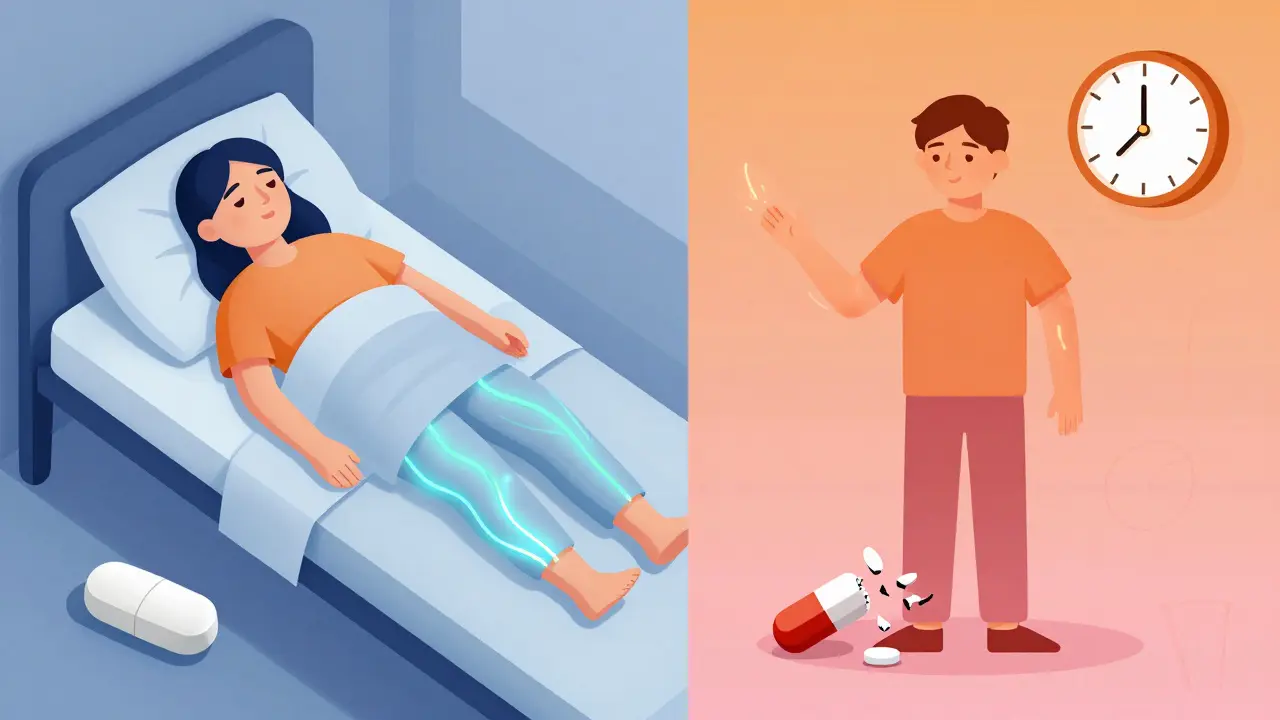
Dopamine agonists like pramipexole and ropinirole mimic dopamine in the brain. That’s why they help with RLS symptoms. But over time, they don’t just help-they start to break the system. The biggest issue? Augmentation. This isn’t just a side effect. It’s a worsening of the disease itself.Augmentation means your symptoms don’t just stay at night anymore. They start earlier-sometimes by 2 to 6 hours. What used to happen at 10 p.m. now hits at 4 p.m. Then your legs aren’t the only problem. The discomfort spreads to your arms. The intensity spikes. You go from needing to move your legs 3 nights a week to nearly every night. A 2018 study in Neurology found that 40-60% of people on dopamine agonists for more than a year develop augmentation. After five years, that number climbs to nearly 80%.
And it’s not just the legs. A 2024 review from the American Academy of Sleep Medicine found that 30-40% of patients see symptoms spread to their upper body. That’s not a fluke. It’s a direct result of long-term dopamine stimulation. The brain gets used to the artificial boost and starts to misfire on its own.
The Hidden Risks You Might Not Know About
Beyond augmentation, dopamine agonists carry other serious risks. About 6% of people taking these drugs develop impulse control disorders-compulsive gambling, shopping, binge eating, or even hypersexuality. That’s more than 10 times the rate in the general population. One patient I spoke with described spending $12,000 on online auctions without remembering why. When she stopped the medication, it stopped. No one warned her this could happen.Even the FDA now requires a black box warning on all dopamine agonists for RLS. That’s the strongest warning they give. It’s not just about drowsiness or nausea. It’s about fundamentally changing how your brain works over time.
What Doctors Are Prescribing Instead
The new first-line treatment? Alpha-2-delta ligands. That’s a mouthful, but the drugs are simple: gabapentin enacarbil (Horizant) and pregabalin (Lyrica). These aren’t new, but their role in RLS has completely flipped.Unlike dopamine agonists, these don’t trick your brain into thinking it has more dopamine. Instead, they calm overactive nerve signals in the spinal cord. That’s why they don’t cause augmentation. A 2023 meta-analysis in JAMA Neurology showed that after 12 weeks, gabapentin enacarbil and pramipexole worked just as well. But at 52 weeks? Pramipexole’s effectiveness dropped by 35%. Gabapentin enacarbil? Still working strong.
They’re not perfect. Dizziness affects about 26% of users. Weight gain is common-around 2.5 kg over 12 weeks. But these are manageable. You don’t suddenly start gambling or feel your legs burning at lunchtime. And unlike dopamine drugs, you can take them long-term without fear of the symptoms coming back worse.
Why the Shift Happened So Fast
The change didn’t come from a single study. It came from years of real-world data. Dr. John Winkelman at Massachusetts General Hospital was one of the first to sound the alarm. His research showed that patients who started on dopamine agonists were ending up sicker, not better. By 2024, the American Academy of Sleep Medicine officially updated their guidelines: dopamine agonists should no longer be first-line for chronic RLS.Prescription trends reflect that. In 2010, 75% of new RLS prescriptions were for dopamine agonists. In 2024, it was 20%. Alpha-2-delta ligands now make up 65% of new prescriptions. In Europe, the shift happened even faster-85% of neurologists now start with gabapentin enacarbil or pregabalin.
Even the market is responding. Dopamine agonist sales for RLS are projected to drop from $360 million in 2024 to $120 million by 2030. Meanwhile, alpha-2-delta ligand sales are expected to climb to nearly $900 million. This isn’t just a guideline change-it’s a full industry pivot.
When Dopamine Agonists Might Still Make Sense
That doesn’t mean dopamine agonists are useless. They still have a place-for people with occasional RLS (less than 3 nights a week) or those who need fast relief. A single dose of carbidopa-levodopa (Sinemet) can knock out symptoms in under an hour. That’s useful if you’re traveling, pulling an all-nighter, or dealing with temporary RLS during pregnancy.But if you’re taking it every night? That’s where the danger starts. Even the guidelines say: don’t use dopamine agonists daily for more than 6 months. If you’ve been on them longer, you’re at high risk for augmentation. And if you’ve already noticed your symptoms getting worse or spreading? You need to talk to your doctor about tapering off-slowly, and with a replacement plan.
What You Can Do Right Now
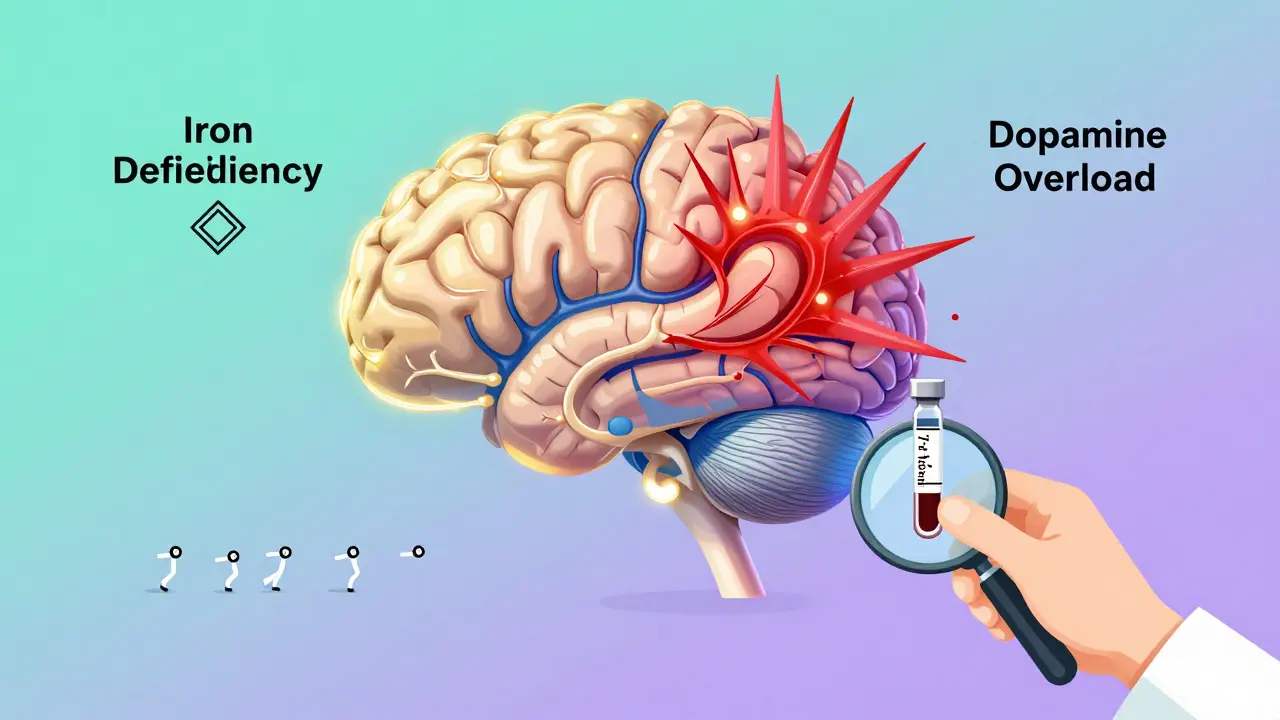
Medication isn’t the whole story. Many people don’t realize how much lifestyle changes can help. Cutting out caffeine? That alone can reduce symptoms by 20-30%. Alcohol worsens RLS in 65% of people. Even a small reduction helps.Iron deficiency is another hidden driver. If your ferritin level is below 75 mcg/L, iron supplements can improve symptoms by 35% in 12 weeks. That’s not a miracle cure, but it’s a real, evidence-backed option. Ask your doctor for a blood test. Many people with RLS are iron-deficient and never know it.
And sleep hygiene matters. Going to bed and waking up at the same time every day-even on weekends-can stabilize your nervous system. Regular, moderate exercise in the afternoon helps too. Just avoid intense workouts right before bed.
What to Do If You’re Already on Dopamine Agonists
If you’ve been on pramipexole or ropinirole for more than a year, here’s what to do:- Don’t stop cold turkey. That can cause severe rebound symptoms.
- Ask your doctor about switching to gabapentin enacarbil or pregabalin.
- Reduce your dopamine agonist dose by 25% every 1-2 weeks while starting the new medication.
- Monitor for worsening symptoms. If they spike, your doctor may need to adjust the pace.
- Get your ferritin level checked. Iron supplementation can ease the transition.
A 2023 study in Sleep Medicine found that 85% of patients successfully switched without major setbacks when they followed this plan. That’s the key: a structured taper with a better alternative in place.
The Future of RLS Treatment
Research is moving beyond dopamine and alpha-2-delta drugs. Three new therapies are in phase 3 trials as of 2025:- A drug called Fazupotide that targets brain iron deficiency-the root cause for many.
- A selective dopamine receptor agonist designed to avoid triggering augmentation.
- Transcranial magnetic stimulation, a non-drug option that uses magnetic pulses to calm overactive nerves.
These aren’t available yet, but they show where the field is headed: away from patching symptoms and toward fixing the underlying problem.
For now, the message is clear: if you have chronic RLS, dopamine agonists are not the answer. They’re a short-term fix with long-term consequences. The real relief is in the alternatives-and in understanding your body well enough to choose wisely.
Are dopamine agonists still used for restless leg syndrome?
Yes, but only in specific cases. Dopamine agonists like pramipexole and ropinirole are no longer first-line treatment for chronic RLS due to the high risk of augmentation. They may still be used occasionally for people with infrequent symptoms (less than 3 nights a week) or for short-term relief, such as during pregnancy or travel. Daily, long-term use is strongly discouraged.
What are the best alternatives to dopamine agonists for RLS?
The current first-line treatments are alpha-2-delta ligands: gabapentin enacarbil (Horizant) and pregabalin (Lyrica). These drugs calm nerve signals without causing augmentation. Studies show they’re just as effective as dopamine agonists in the short term, but far more sustainable long-term. Iron supplements are also recommended if ferritin levels are low (below 75 mcg/L).
What is augmentation in restless leg syndrome?
Augmentation is when RLS symptoms worsen due to long-term use of dopamine agonists. Instead of appearing only at night, symptoms start earlier in the day (often 2-6 hours sooner), spread to the arms or other body parts, become more intense, and occur more frequently. It affects 40-60% of patients on dopamine agonists after 1-3 years and up to 80% after five years.
Can I stop dopamine agonists cold turkey if I’m experiencing augmentation?
No. Stopping abruptly can cause severe rebound symptoms, including extreme discomfort, insomnia, and anxiety. Always work with your doctor to taper off slowly-typically reducing the dose by 25% every 1-2 weeks-while starting a safer alternative like gabapentin enacarbil. Most patients successfully switch with proper planning.
How long does it take for gabapentin enacarbil to work for RLS?
Unlike dopamine agonists, which work in 30-60 minutes, gabapentin enacarbil takes several days to weeks to reach full effect. Most patients notice improvement within 5-7 days, but it can take up to 3-4 weeks for maximum benefit. Patience is key. The payoff is long-term symptom control without the risk of augmentation.
Can lifestyle changes really help with RLS?
Yes. Eliminating caffeine can reduce symptoms by 20-30%. Reducing alcohol intake helps, as alcohol worsens RLS in 65% of people. Regular moderate exercise, consistent sleep schedules, and iron supplementation (if deficient) are all proven non-drug strategies. Many patients find they need less medication-or none at all-when these habits are in place.
Is there a blood test to check if I’m a candidate for iron supplements?
Yes. A simple blood test for serum ferritin measures your iron stores. If your level is below 75 mcg/L, iron supplementation is recommended. Oral iron (100-200 mg elemental iron daily) has been shown to improve RLS symptoms by 35% in 12 weeks for those who are deficient. Many doctors don’t routinely test for this, so ask if you haven’t been tested.
RLS doesn’t have to be a life sentence of worsening symptoms and risky meds. The tools to manage it better are here. The question is whether you’re using the right ones.
Alex Danner
January 6, 2026Dopamine agonists were a godsend when I first got RLS-until they weren't. I was on pramipexole for three years and didn't realize my symptoms were getting worse until I started feeling them at 3 p.m. and my arms were on fire too. When I finally switched to Horizant, it took a few weeks, but now I sleep like a baby without the gambling urges or the dread of midnight leg torture. This post nailed it.
Elen Pihlap
January 7, 2026OMG I thought I was going crazy but now I get it why my legs feel like ants are crawling all day and why I spent $8k on shoes I never wore. I’m so mad my doctor never told me this. I’m quitting my meds today.
Sai Ganesh
January 7, 2026In India, many doctors still prescribe dopamine drugs because they're cheaper and faster. But the augmentation problem is real-we see it every month in our neurology clinic. Gabapentin is not perfect, but it’s safer. Iron deficiency is also wildly underdiagnosed here. Many patients don’t even know to ask for ferritin tests.
Paul Mason
January 9, 2026Look, I’m not a doctor but I’ve read a lot. This whole dopamine thing is just Big Pharma pushing pills. They knew augmentation was a problem but kept selling it because it made billions. Now they’re pushing gabapentin like it’s magic. Same game, different drug. Don’t trust the system.
Katrina Morris
January 11, 2026i never knew iron could help with rls i had no idea my ferritin was low until i read this and got tested and now i take iron and my symptoms are way better like 50% less wow i feel so dumb for not asking sooner
Anthony Capunong
January 12, 2026Why are we letting foreign guidelines dictate our medicine? In America we’ve got the best science and the best drugs. If dopamine meds work, why switch? This is just another case of European overcaution. I’m keeping my Mirapex.
Jonathan Larson
January 12, 2026The transition from dopamine agonists to alpha-2-delta ligands represents a paradigm shift in neurology-one that prioritizes long-term neurological integrity over short-term symptom suppression. The evidence is now overwhelming: chronic dopaminergic stimulation induces maladaptive plasticity in the basal ganglia, leading to augmentation and behavioral dysregulation. The medical community’s delayed recognition of this phenomenon underscores the need for greater vigilance in pharmacovigilance and patient education.
Kamlesh Chauhan
January 13, 2026so i was on ropinirole for 5 years and now i cant sleep at all and my arms are worse and my wife says i talk in my sleep and scream and i just spent 3 hours scrolling through amazon buying random stuff i dont need and i just found out its all because of the drug? this is insane i feel so used
Emma Addison Thomas
January 13, 2026Thank you for sharing this. I’ve been terrified to stop my medication because I thought I’d be worse off. Hearing that 85% of people switch successfully gives me hope. I’ll talk to my neurologist next week about tapering. No more dopamine for me.
Rachel Steward
January 15, 2026Let’s be real-this isn’t about science. It’s about lawsuits. The drug companies got burned by the gambling and binge eating lawsuits, so now they’re pushing gabapentin because it’s cheaper to defend. The real problem? We’ve turned a neurological condition into a pharmaceutical profit center. You think your doctor cares? They get kickbacks. Read the FDA documents.
Anastasia Novak
January 16, 2026Ugh I’m so tired of people acting like gabapentin is some miracle cure. It makes you foggy, fat, and sleepy. I’d rather have the augmentation than feel like a zombie all day. This post is just another corporate-approved narrative. Who even funded this?
Kyle King
January 17, 2026they’re hiding the truth. dopamine agonists are fine. the real cause of augmentation is 5g wifi radiation and chemtrails messing with your brain. they don’t want you to know. the FDA is in on it. i know someone who took gabapentin and his legs turned blue. it’s all a scam.
steve rumsford
January 18, 2026honestly i just started taking iron and cut out coffee and my legs are way better. no meds needed. who knew it was that simple? i thought i needed a pill for everything
Andrew N
January 18, 2026Augmentation isn't even real. It's just RLS getting worse naturally over time. The drugs aren't causing it. Studies are biased. I’ve been on Mirapex for 10 years and I’m fine. People just don’t understand their own bodies.
Alex Danner
January 19, 2026Just saw someone say they stopped cold turkey. DON’T. I did that once. Woke up at 3 a.m. with my whole body screaming. Took me 3 weeks to recover. Taper slowly. Use gabapentin as a bridge. And get your ferritin checked. It’s not complicated, but it’s not instant.