
7 Jan 2026
- 12 Comments
When your blood clots too easily, it can lead to life-threatening problems like deep vein thrombosis, pulmonary embolism, or stroke. But if it doesn’t clot enough, even a small cut can become dangerous. Finding the right balance is the core challenge of anticoagulation therapy - and it’s more complex than most people realize.
What Is INR, and Why Does It Matter?
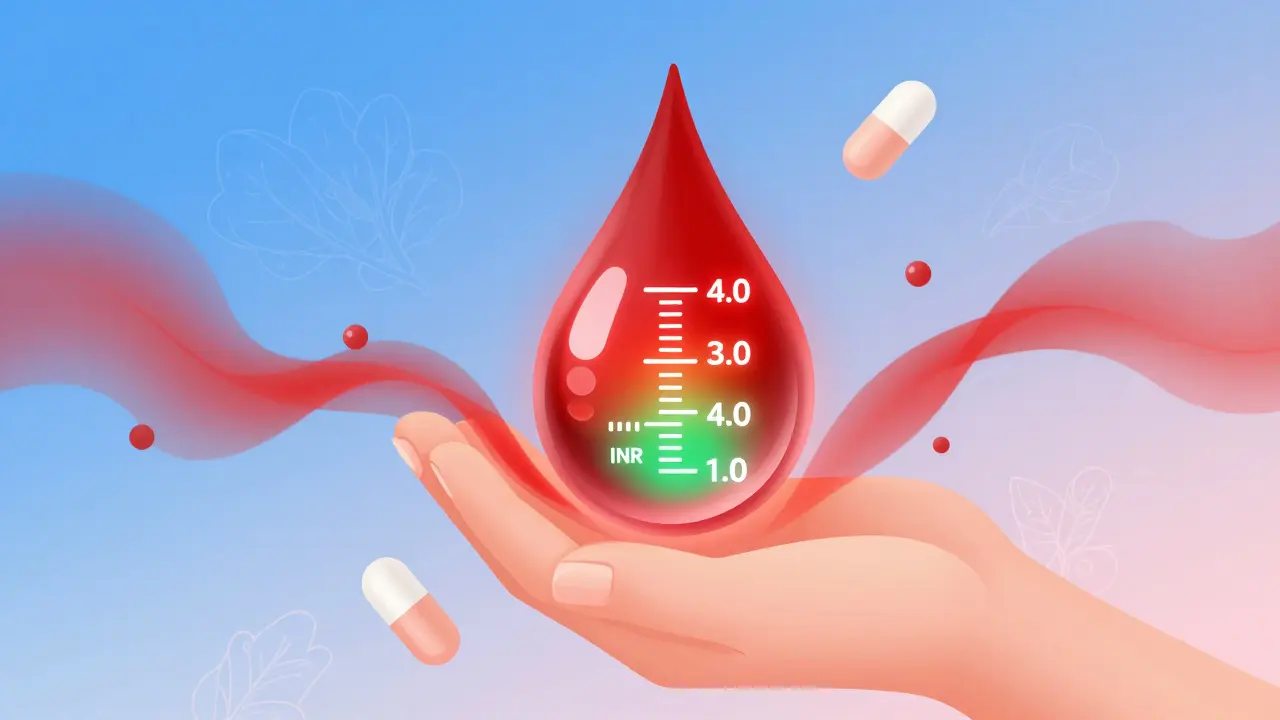
The INR - or International Normalized Ratio - is the gold standard for measuring how long it takes your blood to clot when you’re on warfarin. It’s not just a number on a lab report. It’s your safety dial. Too low, and clots can form. Too high, and you risk bleeding inside your brain, stomach, or elsewhere.
For most people on warfarin, the target range is 2.0 to 3.0. If you have a mechanical heart valve, your doctor might push it higher - between 2.5 and 3.5. That’s because these valves are like foreign objects in your bloodstream. Your body sees them as threats and tries to clot around them. Warfarin keeps that from happening.
But INR isn’t stable. It swings based on what you eat, what meds you take, even how well you sleep. Vitamin K in leafy greens can make warfarin less effective. Antibiotics can make it stronger. That’s why weekly blood tests are common when you first start, and even after that, you’ll need checks every 2 to 4 weeks. Studies show that keeping your INR in range at least 70% of the time - called Time in Therapeutic Range - cuts your stroke and bleeding risk in half.
DOACs: The New Generation of Blood Thinners
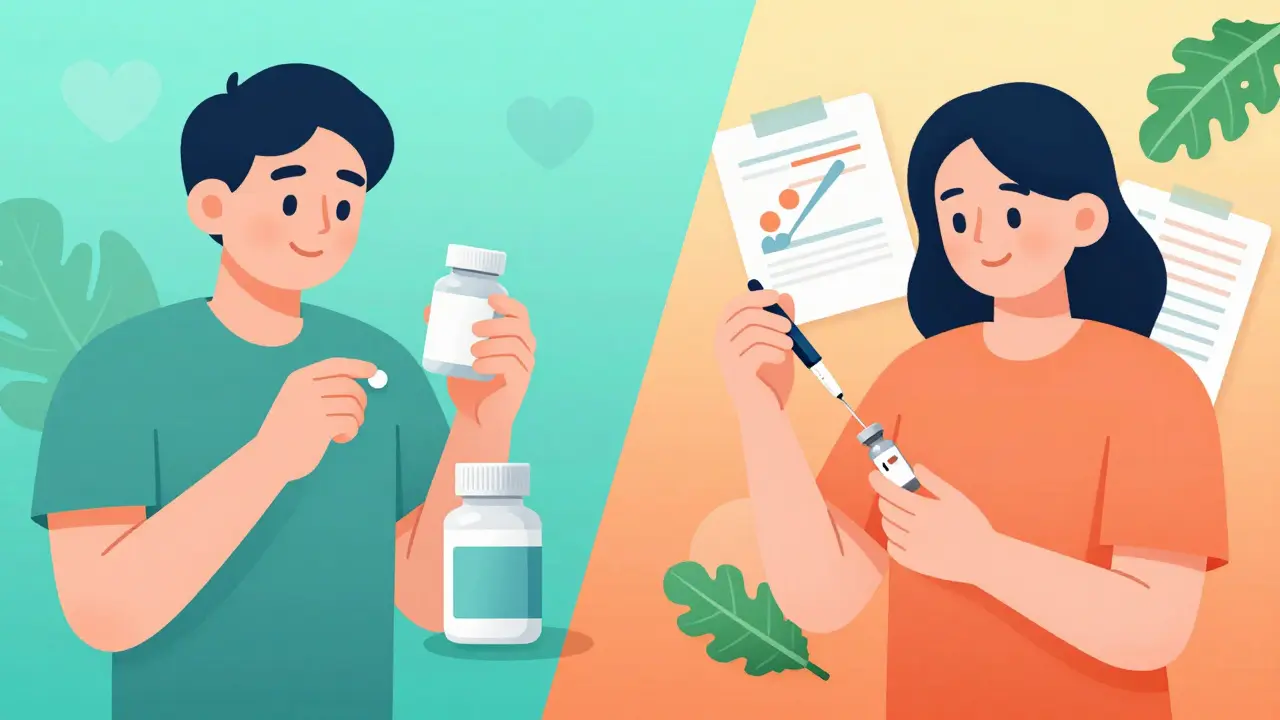
In the last decade, a new class of drugs called Direct Oral Anticoagulants (DOACs) has changed the game. These include apixaban (Eliquis), rivaroxaban (Xarelto), dabigatran (Pradaxa), and edoxaban (Savaysa). Unlike warfarin, they don’t need routine INR checks. You take the same dose every day, no matter what you eat or what other pills you’re on.
They work differently too. Warfarin blocks vitamin K, which affects multiple clotting factors. DOACs target just one: either factor Xa (apixaban, rivaroxaban, edoxaban) or thrombin (dabigatran). This precision means fewer interactions - and fewer surprises.
For people with atrial fibrillation - an irregular heartbeat that raises stroke risk - DOACs are now the first choice. The American Heart Association and other major groups recommend them over warfarin for nearly all non-valvular AFib patients. Why? Because in large trials like ARISTOTLE, apixaban cut major bleeding by 31% compared to warfarin. Rivaroxaban and dabigatran were also safer overall, though they carry a higher risk of stomach bleeding.
Safety Isn’t One-Size-Fits-All
Every anticoagulant has risks. The biggest one? Bleeding. It’s not just nosebleeds or cuts that won’t stop. It’s internal bleeding - in your brain, your gut, your muscles. And it can happen without warning.
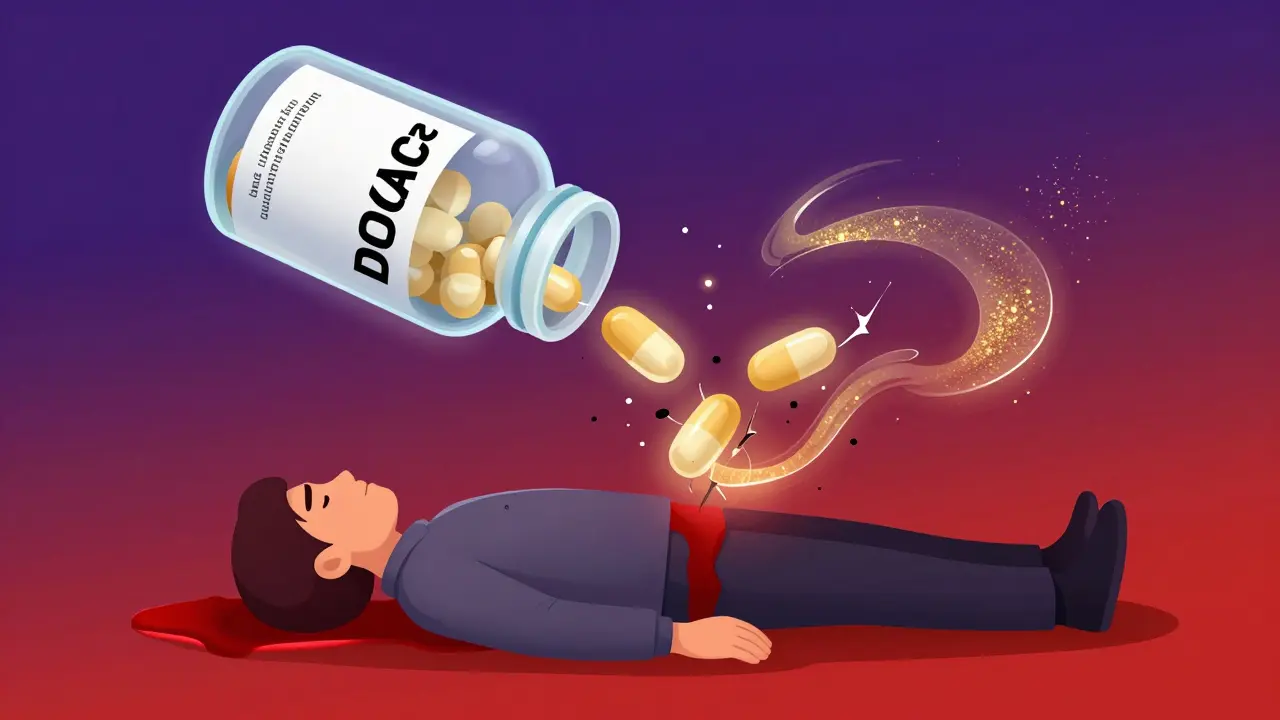
With warfarin, you have a clear warning system: your INR. If it climbs above 4.0, your risk of major bleeding jumps 2.5 times. That’s your cue to call your doctor. With DOACs, there’s no such signal. You might feel fine until you suddenly collapse from internal bleeding.
That’s why kidney function matters. DOACs are cleared through your kidneys. If your creatinine clearance drops below 15-30 mL/min - common in older adults or those with chronic kidney disease - these drugs can build up to dangerous levels. Your doctor should check your kidney function at least once a year, more often if you’re over 75 or have other health issues.
And then there’s cost. Warfarin costs $4 to $30 a month. DOACs? $350 to $550. That’s why nearly 30% of Medicare patients stop taking DOACs within a year - not because they’re unsafe, but because they can’t afford them. Some people switch back to warfarin, even with the weekly blood tests, just to stay on treatment.
When DOACs Aren’t an Option
DOACs are great - but they’re not perfect for everyone.
If you have a mechanical heart valve, DOACs are off the table. They simply don’t work well enough. Warfarin is still the only approved option. Same goes for moderate-to-severe mitral stenosis. These are structural heart problems that DOACs can’t reliably prevent clots in.
People with certain cancers - especially stomach, pancreas, or bladder cancer - also face higher bleeding risks on DOACs. For them, low-molecular-weight heparin (LMWH) injections are still preferred. The Hokusai VTE Cancer trial showed DOACs caused 55% more bleeding in these patients than LMWH.
And if you’re having spinal surgery or an epidural? DOACs can cause a rare but devastating spinal hematoma. Guidelines now say you must stop them 24 to 48 hours before the procedure - and wait longer after. No exceptions.
Bridging: The Dangerous Middle Ground
When you need surgery or a procedure, you can’t just keep taking your blood thinner. But stopping it too early can trigger a clot. That’s where bridging comes in.
With warfarin, you stop it 5 days before surgery. Then you start injections of heparin or LWMH to keep your blood thin while your INR drops. You wait until your INR is below 1.5 before surgery, then restart warfarin and heparin together until your INR hits target again. It’s messy. It’s risky. And it’s often unnecessary.
With DOACs, you just hold them for 24 to 48 hours before surgery - no injections needed. You restart them the day after, once bleeding risk is low. That’s a huge win for patients. No needles. No weekly blood tests. Less stress.
But bridging isn’t always needed, even with warfarin. If you’re low-risk for clots - like someone with lone atrial fibrillation and no other heart issues - you might not need it at all. Your doctor should use a risk score to decide.
Reversing Anticoagulants: What Happens When Things Go Wrong?
What if you fall and hit your head? What if you start bleeding internally? Reversing these drugs isn’t as simple as taking a pill.
For warfarin, you have options: vitamin K (takes hours to days), fresh frozen plasma (quick but bulky), or prothrombin complex concentrate (PCC - fast, targeted, expensive). These are well-tested and available in most hospitals.
For DOACs, reversal is trickier. Dabigatran can be reversed with idarucizumab (Praxbind), which costs about $5,000 per dose. Factor Xa inhibitors like apixaban and rivaroxaban can be reversed with andexanet alfa - but that runs around $18,000 per dose. And it’s not always stocked in smaller hospitals.
There’s hope on the horizon. A drug called ciraparantag is in phase 3 trials and could reverse nearly all DOACs with one injection. It’s not approved yet, but it’s coming. Until then, doctors rely on activated charcoal (if taken recently), dialysis (for dabigatran), and supportive care - fluids, pressure, transfusions.
What Patients Really Say
Real people have real experiences. A nurse in Melbourne, Juliet, ignored her own leg swelling because she was too busy caring for her kids. She ended up with a pulmonary embolism. She’s now on apixaban and says, “I’d rather take a pill than get poked every week.”
Online forums are full of similar stories. In one survey of 142 people on anticoagulants, 87% said the biggest reason they chose DOACs was “no regular blood tests.” But 41% reported stomach upset with rivaroxaban. Almost 80% said they bruised easily. Two-thirds admitted they worried daily about bleeding.
Yet 92% of DOAC users in a Cleveland Clinic survey said they were satisfied. Why? Because they got their lives back. No more driving to the lab every Tuesday. No more counting kale. No more wondering if their INR was too high.
What’s Next?
The future of anticoagulation is personal. In 2023, a new drug called milvexian - which blocks factor XIa - showed 22% less bleeding than apixaban in trials, without losing effectiveness. It’s not on the market yet, but it’s a sign of where things are headed.
Researchers are also testing RNA-based drugs like fitusiran, which targets antithrombin. And AI is being used to predict who’s most likely to bleed based on genetics, kidney function, age, and even social factors like diet and alcohol use. One study showed AI could predict bleeding risk with 82% accuracy.
But for now, the choice is still between warfarin and DOACs. And that choice isn’t just medical - it’s financial, emotional, and lifestyle-based.
Don’t let the convenience of DOACs blind you to their risks. Don’t let the cost of warfarin make you skip your INR checks. Talk to your doctor. Ask about your bleeding risk score (HAS-BLED). Ask about kidney function. Ask about reversal options. And if you’re unsure - get a second opinion. Your life depends on it.
What does INR stand for, and why is it checked so often?
INR stands for International Normalized Ratio. It measures how long your blood takes to clot compared to a standard. It’s checked often - especially when you’re on warfarin - because your body’s response to the drug changes based on diet, other medications, and even your genetics. Keeping your INR between 2.0 and 3.0 (or higher for mechanical valves) reduces stroke risk without causing dangerous bleeding. Weekly checks are common at first, then every 2-4 weeks once stable.
Are DOACs safer than warfarin?
For most people, yes. DOACs like apixaban cause 31% less major bleeding than warfarin, according to the ARISTOTLE trial. They also don’t require frequent blood tests or strict diet changes. However, they carry a higher risk of stomach bleeding than warfarin, especially rivaroxaban and dabigatran. They’re not safe for everyone - like those with mechanical heart valves or severe kidney disease. Safety depends on your individual health profile.
Can I stop taking my blood thinner if I feel fine?
Never stop without talking to your doctor. Even if you feel fine, stopping anticoagulants can cause a clot to form within days. People with atrial fibrillation or a history of blood clots are at high risk for stroke or pulmonary embolism if they stop suddenly. Your doctor will assess your risk before deciding if you can stop - and if so, when and how.
Why are DOACs so expensive, and are there alternatives?
DOACs are expensive because they’re newer, brand-name drugs with no generic versions available for most yet. Monthly costs range from $350 to $550. Warfarin costs as little as $4-$30. If cost is an issue, ask about patient assistance programs, generic warfarin, or whether your insurance can cover a DOAC with prior authorization. Some people switch back to warfarin - not because it’s better, but because they can’t afford the alternative.
What should I do if I start bleeding while on anticoagulants?
Call emergency services immediately. Signs include unexplained bruising, blood in urine or stool, vomiting blood, severe headaches, or sudden weakness. Don’t wait. For warfarin, vitamin K or PCC can reverse it. For DOACs, reversal agents exist but are expensive and not always available. In the meantime, lie down, apply pressure to external bleeding, and avoid aspirin or NSAIDs. Keep a list of your meds and doses handy for paramedics.
Do I need to avoid certain foods or alcohol?
If you’re on warfarin, you need to keep your vitamin K intake steady - not avoid it. Sudden changes in leafy greens, broccoli, or liver can throw off your INR. Alcohol should be limited - more than 2 drinks a day increases bleeding risk. DOACs don’t have food interactions, but heavy drinking still raises bleeding risk. Always tell your doctor about your diet and alcohol use - even if you think it’s harmless.
What to Do Next
If you’re on an anticoagulant, make sure you know: your drug name, your target INR (if on warfarin), your kidney function number, and your bleeding risk score. Write them down. Keep them in your wallet.
Set phone reminders for doses. Use a pill organizer. Tell a family member what you’re taking. If you’re on DOACs, ask if you’re eligible for a manufacturer’s savings card. If you’re on warfarin, schedule your next INR check before you leave the clinic.
And if you’re unsure whether you’re on the right drug - ask for a review. Your needs change over time. So should your treatment plan.
Dave Old-Wolf
January 8, 2026Man, I never realized how much goes into this until my dad had to switch from warfarin to Eliquis after his AFib diagnosis. The weekly blood draws were killing him-early mornings, long waits, always wondering if he’d be told to eat less spinach. Now he just pops a pill and forgets about it. But I worry he doesn’t take it seriously enough. One time he skipped a dose because he was ‘feeling fine.’ I had to lecture him for 20 minutes. You don’t get to negotiate with your blood.
Joanna Brancewicz
January 10, 2026DOACs reduce major bleeding by 31% vs warfarin in ARISTOTLE-but only if taken consistently. Non-adherence is the silent killer here. And kidney function? That’s the hidden variable most patients don’t know to track.
Manish Kumar
January 10, 2026You know what’s wild? We’ve spent centuries trying to control blood clotting-from leeches to heparin to now these fancy pills that cost more than my monthly rent-and yet we still can’t predict who’s going to bleed out in the night with no warning. It’s like driving a car with no dashboard. You know the engine runs, but you have no idea if the fuel line’s about to burst. Warfarin at least gave you a gauge. DOACs? You get a silent, expensive, kidney-dependent gamble. And don’t get me started on the reversal agents. $18,000 to un-thin your blood? That’s not medicine-that’s a ransom note written by a pharmaceutical boardroom.
Aubrey Mallory
January 11, 2026Let me be clear: if your doctor isn’t discussing your HAS-BLED score, your eGFR, and your financial access to meds-you’re not getting proper care. This isn’t just about clinical guidelines. It’s about equity. A 78-year-old on Medicare shouldn’t have to choose between insulin and anticoagulants. If your system can’t afford to keep people alive, then the system is broken. Period.
Prakash Sharma
January 12, 2026Americans act like DOACs are magic. In India, we still use warfarin because it’s cheap and we’ve learned to manage it. We don’t have the luxury of $500 pills. But here’s the truth-no drug is perfect. The problem isn’t the medicine. It’s the people who think convenience equals safety. My cousin took rivaroxaban, didn’t get kidney checked, and ended up in ICU with GI bleeding. No one told him his creatinine was dropping. You think a pill makes you invincible? It doesn’t. It just makes you complacent.
Lois Li
January 13, 2026Just wanted to say thank you for this post. I’ve been on apixaban for 3 years after a DVT. I didn’t know about the kidney thing until my last checkup. My doctor didn’t bring it up. I had to ask. Now I get my labs every 6 months. Also-yes, I bruise like a peach. And yes, I panic every time I get a headache. But I’d rather be paranoid than dead.
Evan Smith
January 13, 2026So let me get this straight. You’re telling me I can pay $500 a month for a pill that doesn’t need blood tests… but if I bleed out, they charge me $18,000 to fix it? That’s not a medical treatment. That’s a pyramid scheme with a stethoscope.
Luke Crump
January 15, 2026Here’s the uncomfortable truth no one wants to say: anticoagulation is a luxury. We’ve turned a physiological balance into a consumer product. You want safety? Pay more. You want convenience? Pay more. You want to live? Pay more. Meanwhile, people in rural clinics are still using warfarin with a ruler and a prayer. This isn’t progress-it’s capitalism dressed up in white coats. And the real winners? The shareholders. The losers? The ones who can’t afford to be alive.
Annette Robinson
January 17, 2026I’m a nurse, and I’ve seen patients stop their meds because they couldn’t afford the refill. One woman told me she was saving her pills for ‘the days she felt unsafe.’ I cried in the supply closet after that. This isn’t just clinical-it’s human. If you’re on anticoagulants, please, please, please talk to your pharmacist about patient assistance programs. You’re not alone. And you’re not failing if you can’t afford the perfect solution.
Molly Silvernale
January 17, 2026INR isn’t just a number-it’s a heartbeat written in blood. Warfarin doesn’t just thin your blood-it thins your life. Every leafy green, every antibiotic, every sleepless night-it all echoes in that decimal point. DOACs? They’re like a silent symphony. No orchestra. No conductor. Just… music. But when it stops? No one hears it coming. And the silence? That’s when the clot sings.
Donny Airlangga
January 19, 2026My uncle had a mechanical valve. He’s been on warfarin for 17 years. He does his own INR tests at home with a handheld device. Pays $2 per strip. He says it’s the most empowering thing he’s ever done. He knows his body better than any lab. Maybe the future isn’t just better drugs-it’s better patient tools.
Kristina Felixita
January 20, 2026Just had to say-this post saved my life. I was on rivaroxaban, had been ignoring my kidney numbers because I thought ‘I’m young, I’m fine.’ Then I got dizzy, peed blood, and my doctor said my creatinine clearance was 28. I was one week away from a hemorrhage. Now I’m on warfarin, I track my greens, I set phone alarms, and I’ve started a support group for anticoag patients in my town. You’re not just giving info-you’re giving people a chance to breathe.