
3 Jan 2026
- 9 Comments
When a blockbuster drug’s core patent expires, generics flood the market. Prices drop. Profits vanish. But for some drugs, that’s not the end of the story. Companies like Roche, Genentech, and AstraZeneca don’t just wait for the clock to run out. They build a second layer of protection - not on the drug’s chemical structure, but on how it’s combined, dosed, and delivered. This is where formulation patents on drug combinations come in.
What Exactly Is a Formulation Patent?
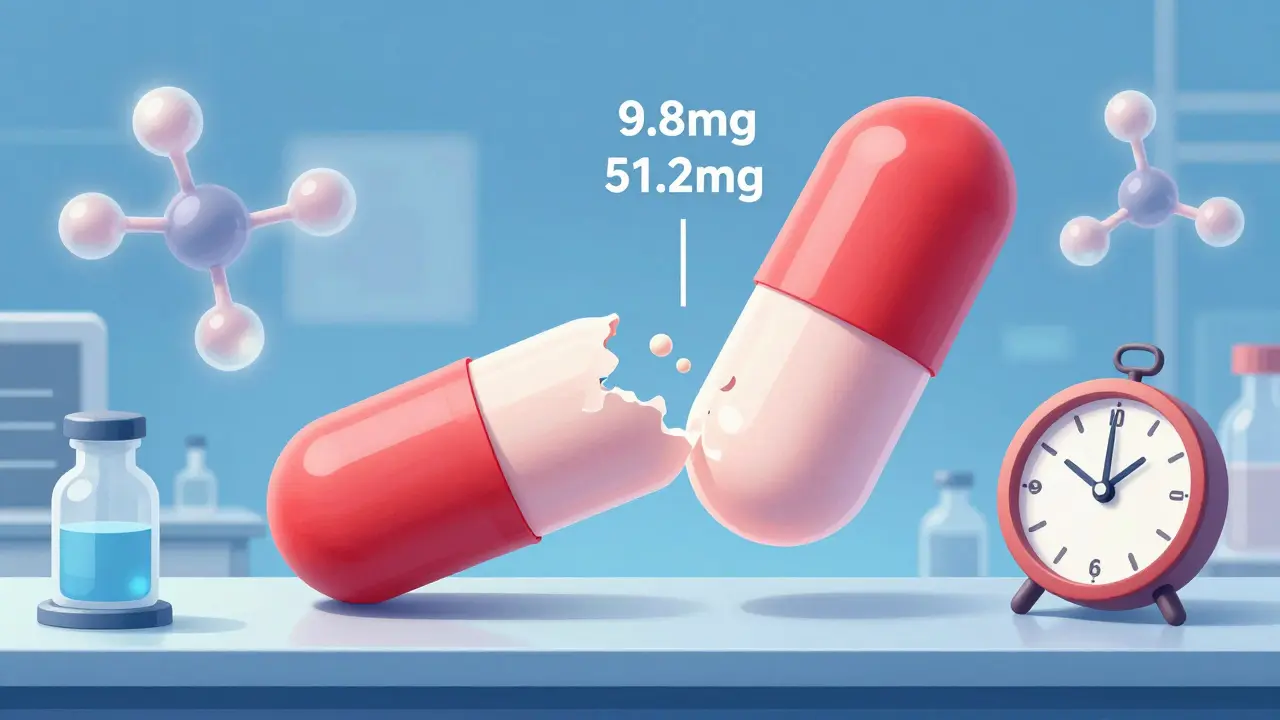
A formulation patent doesn’t protect the active ingredients themselves. It protects the specific way those ingredients are put together. Think of it like a recipe. The ingredients - say, trastuzumab and pertuzumab - might be known. But the patent covers the exact ratio: 10mg of Drug A with 51.2mg of Drug B. Or the delivery method: a subcutaneous injection instead of an IV drip. Or the release profile: a tablet that releases half the dose now, the other half over 12 hours.
The U.S. Patent and Trademark Office (USPTO) tracks these as secondary patents. They’re not the first line of defense. That’s the composition-of-matter patent - the original one that covers the molecule itself. But formulation patents? They’re the follow-up. And they’re everywhere. Between 2015 and 2020, 78% of new drug applications included at least one formulation or combination patent, according to the Journal of Managed Care & Pharmacy. These aren’t fringe tactics. They’re standard operating procedure for big pharma.
Why Do Companies Bother?
Because money is on the line. Developing a new drug costs an average of $2.6 billion and takes 10-15 years, per Tufts Center for Drug Development. When the core patent expires, generic versions can legally enter. But if there’s a formulation patent still active, generics can’t copy the exact combo. They have to redesign it. And redesigning means new clinical trials. More time. More cost. Delayed entry.
Take Phesgo®. Roche’s subcutaneous combo of trastuzumab and pertuzumab. The original IV versions had expired patents. But Phesgo® wasn’t just a new delivery method - it was faster, less invasive, and easier for patients. The formulation patent blocked generics from offering the same subcutaneous combo. Result? Market exclusivity extended by over 6 years beyond the original patent. That’s billions in revenue protected.
And it’s not just about delivery. Ratios matter. One patent attorney on Reddit noted seeing a 10mg/50mg claim get rejected - but a 9.8mg/51.2mg claim get approved. That’s not a typo. That’s precision. The patent office demands specificity. Vague claims like “a combination of A and B” won’t cut it. You need exact numbers, exact methods, and proof it works better than what’s already out there.
The Legal Hurdle: Overcoming Obviousness
Getting a formulation patent isn’t easy. The bar is high. Under U.S. patent law (35 U.S.C. § 103), combining two known drugs for a known purpose is presumed obvious. That’s the standard set by the 2007 KSR v. Teleflex Supreme Court case. So how do companies get around it?
They prove unexpected results. Not just “it works.” But “it works significantly better.” That means clinical data. Statistically significant improvements in efficacy, safety, or patient outcomes - with p-values under 0.01. The FDA requires this for 3-year exclusivity under the “new clinical investigation” rule. It’s not enough to say, “We mixed them.” You have to show: “When we mixed them this way, hospitalizations dropped by 32% compared to the separate IV doses.”
That’s expensive. Companies spend $28-42 million extra on R&D just to generate this data. Merck’s IP team confirmed this at the 2023 BIO Convention. For every formulation patent, you’re not just filing paperwork. You’re running new trials. Recruiting patients. Measuring outcomes. It’s a second drug development cycle - just focused on the delivery, not the molecule.

What Gets Protected? The Three Types
The FDA’s Orange Book breaks down these patents into three categories:
- Combination patents - protect the specific mix of two or more active ingredients.
- Formulation patents - protect the physical form: tablets, capsules, injectables, extended-release systems.
- Method-of-use patents - protect a specific treatment protocol: “Use this combo for stage 3 breast cancer,” not just “use for cancer.”
Between 2018 and 2022, method-of-use and formulation patents made up 63% of all secondary patents filed. That’s the bulk of the action. Combination patents are the hardest to get - because they’re the most likely to be challenged. But they’re also the most valuable. Once granted, they block generic manufacturers from copying the exact combo, even if they have the individual drugs.
The Dark Side: Evergreening and Product Hopping
This strategy has a name: evergreening. Critics call it abuse. The Federal Trade Commission (FTC) says it inflates drug prices by 17-23% beyond what innovation justifies. And they’re not wrong.
Some companies don’t improve the drug. They just tweak it. Change the salt form. Swap one inactive ingredient. Add a new coating. Then discontinue the old version. Patients are forced to switch - not because it’s better, but because the old one’s gone. This is called product hopping. The FTC has 17 active investigations into this right now.
Take Nexium®. AstraZeneca extended its exclusivity for years by switching from omeprazole to esomeprazole - a single enantiomer. The clinical benefit? Minimal. But the patent? Strong. Revenue? Over $189 billion. That’s the model. And it’s working - for the companies, not necessarily for patients or payers.
Even worse: 31% of formulation patents between 2015 and 2022 covered changes with no proven clinical benefit, according to FDA data. Dr. Aaron Kesselheim of Harvard called it “patent privateering.” No innovation. Just legal maneuvering.

Why Some Fail - And How the Best Succeed
Not every formulation patent sticks. The invalidation rate for these patents is 38% - nearly double that of primary patents. Why? Three reasons:
- Weak data - not enough proof of unexpected results.
- Poor drafting - claims too broad, or too vague.
- Failure to list in the Orange Book - if you don’t file the patent with the FDA within 30 days of issuance, you lose your market protection. 92% of formulation patents’ value depends on this listing.
Companies that win? They plan early. Start building the patent portfolio 5-7 years before the core patent expires. They invest in robust clinical trials. They draft claims with surgical precision. They layer multiple patents: one for the ratio, one for the delivery device, one for the dosing schedule. One patent attorney told IPWatchdog: “I’ve seen 10 patents on one drug. Four of them were for different injection pen designs.”
Compare that to Amgen’s failed Enbrel® injector patent. They spent $147 million in legal fees trying to protect a subcutaneous pen. The court ruled it was just “obvious automation.” No innovation. Just a better tool. And it got tossed.
The Future: Regulatory Crackdown and Shifting Tactics
The tide is turning. The FDA proposed new rules in May 2024 requiring proof of “clinical superiority” for any new formulation seeking 3-year exclusivity. That’s a game-changer. No more patenting minor tweaks.
Congress is also looking at the Preserve Access to Affordable Generics Act. If passed, it would require formulation patents to prove “meaningful clinical benefit” - not just convenience or cost savings. That could invalidate 28% of current patents, according to the Congressional Research Service.
But the industry isn’t backing down. They’re adapting. Roche’s 2023 patent for a trastuzumab-deruxtecan combo with pH-sensitive release? That’s the new frontier. It doesn’t just deliver the drugs - it releases them only in tumor tissue. That’s innovation. That’s defensible. That’s worth 8.5 extra years of exclusivity.
Generic manufacturers are fighting back too. Paragraph IV challenges - legal filings to invalidate patents before generic entry - jumped from 517 in 2020 to 842 in 2023. Success rates are up to 45%. Courts are applying KSR’s “common sense” standard more strictly. The days of easy evergreening are fading.
What This Means for Patients and the System
On one hand, formulation patents fund innovation. They let companies recoup massive R&D costs. Without them, many combo therapies - especially in oncology and rare diseases - might never get developed.
On the other hand, they delay access to affordable generics. In the U.S., where 68% of global formulation patent value is concentrated, drug prices stay high. The Congressional Budget Office estimates that reforming these practices could save $150 billion in healthcare costs by 2028.
The real question isn’t whether formulation patents are legal. They are. The question is whether they’re ethical. Are they protecting innovation - or just profits?
For now, the system still rewards the ones who play it smart. The ones who invest in real science. The ones who don’t just change the pill - they change the outcome.
What’s the difference between a composition-of-matter patent and a formulation patent?
A composition-of-matter patent protects the chemical structure of a single active ingredient - the molecule itself. It’s the first and strongest patent. A formulation patent protects how multiple ingredients are combined, dosed, or delivered - like a specific ratio, a slow-release tablet, or a subcutaneous injection. It doesn’t protect the drugs, just the way they’re packaged and used together.
Can generic companies copy a drug if the formulation patent is still active?
No - not if they want to copy the exact combination. Generics can make the individual drugs, but they can’t legally sell them together in the same ratio, delivery method, or dosage form covered by the formulation patent. To enter the market, they must design a non-infringing version - which often requires new clinical trials and delays entry by years.
Why do formulation patents have such high invalidation rates?
Because they’re often challenged as “obvious.” Under the KSR v. Teleflex ruling, combining known drugs for a known purpose is presumed obvious unless the applicant proves unexpected results - like significantly better safety, efficacy, or patient outcomes. Many patents fail because they lack strong clinical data or make vague claims.
How long do formulation patents extend exclusivity?
On average, they extend exclusivity by 3 to 8 years beyond the original patent expiration. Some, like Eli Lilly’s Humalog insulin formulations, have extended it up to 16 years total. The extension depends on the strength of the patent, the therapeutic area, and whether regulatory exclusivities like 3-year new formulation protection are also granted.
Are formulation patents only used in the U.S.?
No, but the U.S. is the biggest market for them. The U.S. accounts for 68% of global formulation patent value due to stronger patent enforcement and longer exclusivity periods. Other countries, like those in the EU, have stricter rules on evergreening and often require proof of clinical superiority before granting patent extensions.
Which therapeutic areas rely most on formulation patents?
Oncology leads, with 29% of all formulation patents, because combo therapies are common and delivery precision matters. Immunology (21%) and rare diseases (17%) follow closely. These areas often involve complex dosing, sensitive delivery systems, or combination regimens where small changes make big clinical differences - making them ideal for patentable innovation.
Akshaya Gandra _ Student - EastCaryMS
January 4, 2026so like... if they just change the ratio from 10mg/50mg to 9.8mg/51.2mg and call it a patent... thats not innovation thats like... changing the font on a document and calling it a new version?? 😅
en Max
January 5, 2026The legal framework governing secondary pharmaceutical patents is predicated upon the doctrine of non-obviousness, as codified under 35 U.S.C. § 103, and further refined by the precedent established in KSR v. Teleflex. Consequently, the burden of proof rests squarely upon the patent applicant to demonstrate unexpected pharmacokinetic or pharmacodynamic outcomes-statistically significant (p < 0.01)-that are not merely incremental, but clinically transformative.
Enrique González
January 7, 2026Honestly? If you’re spending $40M just to prove your combo works better than two separate pills, you’re doing it right. That’s real science. Not just slapping a new label on an old bottle.
Aaron Mercado
January 8, 2026THIS IS WHY DRUGS COST $100K A YEAR!!! THEY’RE NOT INNOVATING-THEY’RE LAUNDERING PATENTS!!! 31% OF THESE PATENTS HAVE NO CLINICAL BENEFIT??? THAT’S NOT BUSINESS-THAT’S FRAUD!!! THE FTC NEEDS TO SHUT THIS DOWN-NOW!!!
saurabh singh
January 8, 2026Bro in India we see this every day-some pharma company stops selling the cheap version and forces you to buy the ‘new’ one that’s 5x more expensive. Same pills, different packaging. It’s not pharma-it’s a scam with a lab coat. But hey, at least they create jobs 😅
Dee Humprey
January 8, 2026I’ve seen patients switch from IV to subcutaneous and never go back-less time in the clinic, less stress, fewer infections. Sometimes the ‘tweak’ is life-changing. Not every patent is evil. Some are just… smarter delivery. 🤍
John Wilmerding
January 9, 2026It's important to distinguish between legitimate innovation and evergreening. The distinction lies in the quality and reproducibility of the clinical data supporting the formulation's superiority. Without robust, peer-reviewed outcomes, the patent lacks ethical and scientific justification.
Charlotte N
January 9, 2026I wonder if the FDA’s new ‘clinical superiority’ rule will actually stick-or if big pharma will just find another loophole. They’ve been playing this game for decades. I’m not optimistic.
Catherine HARDY
January 11, 2026What if the whole system is rigged? What if the patent office is just a shell company for Big Pharma? What if the ‘unexpected results’ are cooked? I’ve read about ghost trials, ghost authors… this isn’t science. It’s a financial instrument disguised as medicine.