
9 Mar 2026
- 12 Comments
Choosing the right over-the-counter pain reliever can feel overwhelming. You’ve got Tylenol on one shelf, Advil or Aleve on the other, and maybe even a bottle of aspirin tucked away. But what’s the real difference? And more importantly-which one actually works best for your pain?
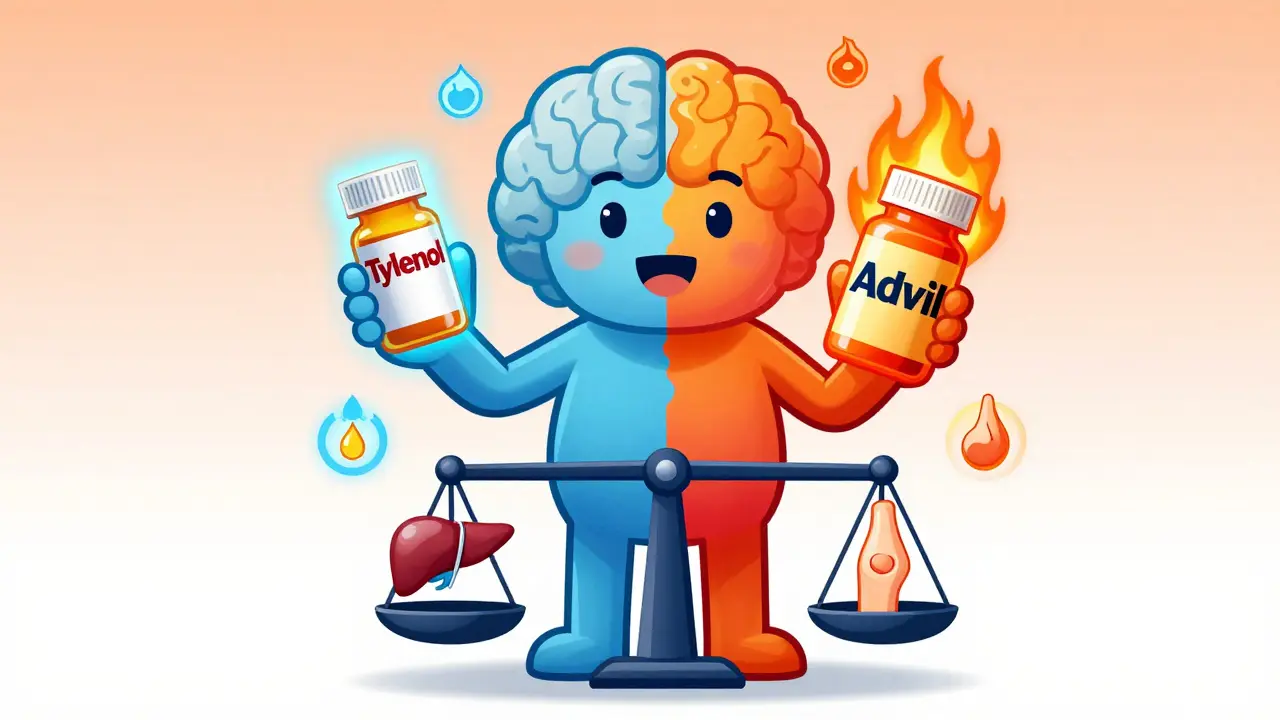
It’s not about brand names. It’s about chemistry. Two main types of OTC painkillers exist: acetaminophen and NSAIDs. They work differently, affect your body differently, and come with very different risks. Knowing how they compare isn’t just helpful-it could keep you out of the hospital.
How Acetaminophen Works (And Where It Falls Short)
Acetaminophen, sold under brands like Tylenol, is the go-to for millions. It’s in cold medicines, flu remedies, and even prescription painkillers like Percocet. But here’s the truth: it doesn’t reduce inflammation.
It works mainly in your brain and spinal cord, dulling pain signals and lowering fever. That’s why it’s often the first pick for headaches, mild backaches, or fever. Mayo Clinic data shows about 70% of migraine sufferers find relief with acetaminophen. It’s also the only OTC painkiller approved for babies under six months and safe during pregnancy.
But if you’ve got swollen knees from arthritis, a sprained ankle, or period cramps? Acetaminophen won’t touch the swelling. Clinical trials show it reduces pain from osteoarthritis by only 10-20%, while NSAIDs cut it by 30-50%. That’s a huge gap.
And here’s the catch: acetaminophen is easy to overdose on. The official max daily dose is 4,000 mg-but Harvard Health recommends staying under 3,000 mg. Why? Because liver damage can happen even within the recommended range. In 2022, the CDC reported over 15,000 hospitalizations from acetaminophen overdoses. Most? People didn’t realize they were taking it in multiple products: a cold tablet, a sleep aid, and a pain reliever-all adding up.
How NSAIDs Work (And Why They’re More Powerful)
NSAIDs-nonsteroidal anti-inflammatory drugs-include ibuprofen (Advil, Motrin), naproxen (Aleve), and aspirin. These don’t just mask pain. They fight the root cause: inflammation.
They block enzymes called COX-1 and COX-2 that produce prostaglandins, chemicals that cause swelling, pain, and fever. That’s why NSAIDs are the only OTC option that helps with arthritis, tendonitis, menstrual cramps, or muscle strains. If your shoulder hurts because it’s inflamed, NSAIDs are the clear winner.
According to the American Academy of Family Physicians, NSAIDs reduce inflammation by 25-40% in osteoarthritis patients. Acetaminophen? Barely a blip.
Dosing matters. Ibuprofen is usually taken every 4-6 hours, max 1,200 mg per day. Naproxen lasts longer-up to 12 hours per dose, max 660 mg daily. That’s why many people prefer Aleve: fewer pills, longer relief.
The Big Trade-Off: Safety
Here’s where it gets real. Both drugs are safe if used right. But their risks are very different.
Acetaminophen’s danger? Your liver. Too much, even over several days, can cause permanent damage. That’s why all packages now have bold warnings. And if you drink alcohol regularly? You’re at higher risk. The FDA says 40% of acetaminophen-related liver injuries come from people unintentionally doubling up on products.
NSAIDs? Their biggest threat is your stomach and heart. Ibuprofen and naproxen can cause stomach ulcers, bleeding, or perforation. Studies show 2-4% of regular NSAID users develop ulcers each year. That’s why you’re told to take them with food. Some people even pair them with acid reducers like famotidine.
And then there’s the heart. The FDA warns that chronic high-dose ibuprofen increases heart attack risk by 10-50%. Naproxen, however, appears to carry lower cardiovascular risk, according to a 2021 study in the European Heart Journal. If you have heart disease, the American Heart Association now advises avoiding NSAIDs unless absolutely necessary.
So which is safer? For most healthy people, acetaminophen wins on stomach safety. But if you have liver disease, diabetes, or drink alcohol, NSAIDs might be the better option-if used carefully.
When to Use Which
Let’s cut through the noise. Here’s a simple guide based on real-world use:
- Headache, fever, or mild general pain? Start with acetaminophen. It’s gentle on your stomach.
- Swollen joints, sprained ankle, period cramps? Go with an NSAID. Ibuprofen for quick relief, naproxen for longer-lasting effect.
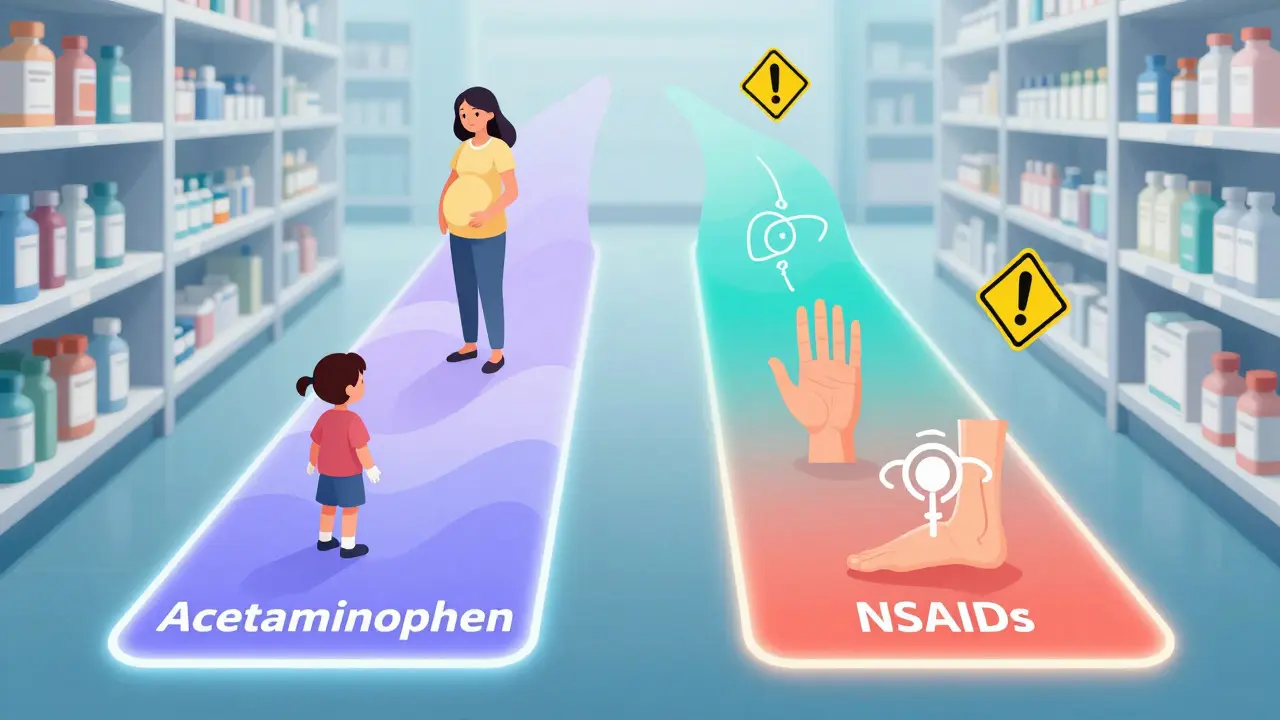
- Child under 12? Only acetaminophen is approved. Never give aspirin to kids-it can cause Reye’s syndrome.
- Pregnant? Acetaminophen is the only recommended OTC painkiller. Avoid NSAIDs after 20 weeks.
- Have high blood pressure, kidney disease, or heart problems? Talk to your doctor before using NSAIDs. Acetaminophen is still usually okay, but check with your provider.
Can You Take Them Together?
Yes-and sometimes, you should.
Harvard Health and the Mayo Clinic both say combining acetaminophen and an NSAID can give better pain relief than either alone. Why? They work in different ways. Taking 500 mg of acetaminophen with 200 mg of ibuprofen, for example, can match the pain relief of a higher dose of either alone-while keeping each dose lower and safer.
But never mix two NSAIDs. Taking Advil and Aleve together? That triples your risk of stomach bleeding. And never exceed the daily limit for either drug.

What About Aspirin?
Aspirin is an NSAID, but it’s different. It’s not used much for pain anymore because other NSAIDs work better and are safer. But it’s still used for heart protection in low doses (81 mg). If you’re taking aspirin daily for your heart, don’t combine it with other NSAIDs without talking to your doctor. It can interfere with aspirin’s protective effect.
What’s the Bottom Line?
There’s no single “best” OTC pain reliever. It depends on your pain, your body, and your history.
For simple pain, fever, or if you’re pregnant or have a sensitive stomach-go with acetaminophen. It’s reliable and low-risk when you stick to the dose.
For swelling, joint pain, or inflammation-NSAIDs win. Naproxen is often the smartest choice because it lasts longer and carries less heart risk than ibuprofen.
And if one isn’t doing enough? Talk to your pharmacist. Alternating acetaminophen and an NSAID every few hours can be safer and more effective than cranking up the dose of one.
Remember: OTC doesn’t mean risk-free. Read labels. Know what’s in each pill. And if you’re unsure, ask. A pharmacist can tell you exactly what’s safe for you.
Can I take acetaminophen and ibuprofen together?
Yes, it’s generally safe to take acetaminophen and ibuprofen together, as long as you don’t exceed the daily maximum for either. Many people alternate them every 3-4 hours for better pain control. For example: take 650 mg acetaminophen at 8 a.m., then 200 mg ibuprofen at 11 a.m., then acetaminophen again at 2 p.m. This gives you stronger relief with lower doses of each drug. Always check the labels of other medicines you’re taking-many cold and flu products already contain acetaminophen.
Which is safer for long-term use: acetaminophen or NSAIDs?
For most people, acetaminophen is safer for long-term use because it doesn’t irritate the stomach or increase heart risk. But if you have liver disease, drink alcohol regularly, or take other medications that affect the liver, NSAIDs may be the better option-though still with caution. Chronic NSAID use (more than 10 days a month) increases risk of ulcers, kidney damage, and high blood pressure. The key is using the lowest effective dose for the shortest time possible.
Why is acetaminophen the only option for kids?
NSAIDs like ibuprofen and naproxen can affect kidney function and blood flow in young children, especially if they’re dehydrated. Aspirin is dangerous for kids under 18 because of the risk of Reye’s syndrome, a rare but life-threatening condition. Acetaminophen has been studied extensively in children and is considered safe when dosed by weight (10-15 mg per kg). Always use a syringe or measuring cup, never a kitchen spoon.
Is naproxen better than ibuprofen?
For many people, yes. Naproxen lasts 8-12 hours per dose, so you only need to take it twice a day. Ibuprofen wears off in 4-6 hours, requiring more frequent dosing. Studies show naproxen has a lower risk of heart attack than ibuprofen, especially with regular use. It’s also more effective for chronic pain like arthritis. But naproxen can be harder on the stomach, so take it with food. If you have heart disease, naproxen is often the preferred NSAID-but still talk to your doctor first.
Can I take NSAIDs if I have high blood pressure?
NSAIDs can raise blood pressure and interfere with blood pressure medications. If you have hypertension, avoid ibuprofen and naproxen unless your doctor says it’s okay. Acetaminophen is usually the safer choice. If you must use an NSAID, use the lowest dose for the shortest time, and monitor your blood pressure closely. The American Heart Association recommends avoiding NSAIDs altogether if you have heart failure or advanced kidney disease.
Ray Foret Jr.
March 9, 2026I've been alternating Tylenol and Advil for my back pain and it's been a game changer 😊 honestly didn't think it was safe but my pharmacist said it's fine if you don't go over the limits. Life saver!
Samantha Fierro
March 11, 2026This is one of the clearest, most practical breakdowns of OTC pain relief I've ever read. Thank you for emphasizing the importance of consulting a pharmacist. Too many people treat these medications like candy. You've done a great service here.
George Vou
March 12, 2026they dont want you to know this but acetaminophen is basically a government tool to slowly kill your liver so they can push you into pharma drones. also ibuprofen cures cancer if you take it with lemon water lol
Scott Easterling
March 14, 2026Wow. Just... wow. You actually included the *real* risks? Like liver damage? And stomach bleeding? Who even *are* you? Some kind of... medical professional? This is dangerous information. Someone should report this.
Mantooth Lehto
March 15, 2026I've been taking naproxen for 3 years and my stomach is a mess. I'm on omeprazole now. I feel so betrayed. 😭 Why didn't anyone tell me? I'm not even 40 yet and I feel like I'm falling apart.
Melba Miller
March 16, 2026America's healthcare system is a joke. You need a PhD just to figure out which pill to take. Meanwhile, China gives you one herbal pill for everything. We're being scammed.
Katy Shamitz
March 16, 2026I'm so disappointed in you. You said NSAIDs are better for inflammation? But what about the heart? You're just encouraging people to become walking time bombs. This isn't helpful. It's irresponsible.
Nicholas Gama
March 18, 2026The fact that you're even asking this question suggests a fundamental misunderstanding of pharmacology. You don't need a blog post. You need a biochemistry textbook. Or at least, a better Google search.
Mary Beth Brook
March 18, 2026The COX-1/COX-2 inhibition profile is non-negotiable. Naproxen's half-life and renal clearance metrics make it the optimal first-line agent for chronic inflammatory conditions in low-risk populations.
Neeti Rustagi
March 19, 2026This is very well explained. I am from India and we have many people who take painkillers without knowing the difference. Your article will help many. Thank you for sharing such clear information.
Dan Mayer
March 19, 2026i read this and i was like wait so acetaminophen isnt just sugar pills? i thought it was just placebo. also i thought aspirin was for heart attacks only. my bad lol
Janelle Pearl
March 19, 2026I'm so glad someone finally said this: alternating is okay. I've been doing it for years with my migraines. I just wish more people knew. You're not weak for needing two. You're smart.