
22 Mar 2026
- 14 Comments
Isotretinoin Mental Health Risk Calculator
Personal Risk Assessment
This tool estimates your risk of mood changes during isotretinoin treatment based on clinical factors.
Your Risk Assessment
0
Recommended Actions
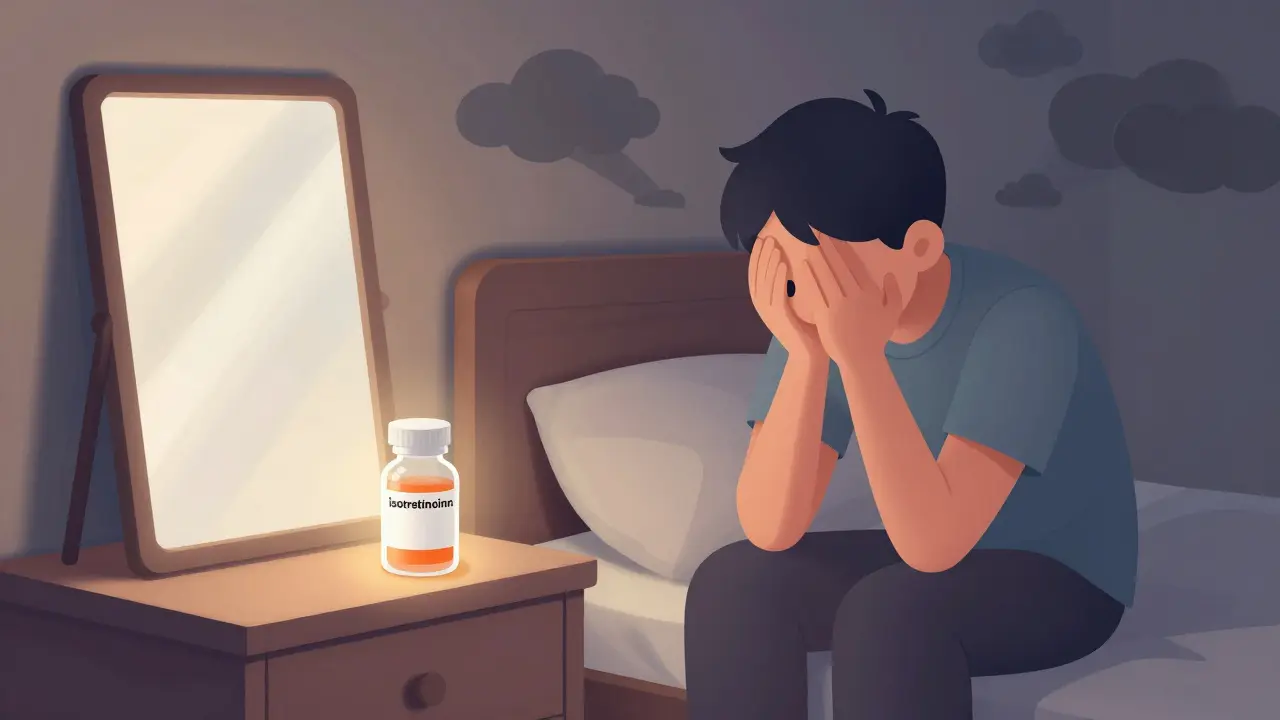
When you’re struggling with severe acne, isotretinoin can feel like a lifeline. It clears skin that hasn’t responded to anything else-sometimes in just a few months. But for some, that same treatment brings something unexpected: a shift in mood, overwhelming sadness, or even thoughts they never had before. The connection between isotretinoin and depression isn’t simple. Some people swear it saved their mental health by clearing their skin. Others say it triggered a crisis. So what’s really going on?
How Isotretinoin Works-and Why It Might Affect Your Mood
Isotretinoin is a powerful drug. It shrinks oil glands, cuts sebum production by up to 90%, and stops acne at the source. That’s why 85% of people who finish a full course see long-term clearance, according to a 2018 study in the Journal of the American Academy of Dermatology. But it doesn’t just target your skin. It’s a retinoid, meaning it interacts with vitamin A pathways that are also active in the brain. This is where things get complicated.
Some researchers believe isotretinoin may lower serotonin levels or affect neuroinflammation. Others point to stress from skin changes-like peeling, dryness, or initial flare-ups-as a trigger. And then there’s the emotional toll of acne itself. Many patients report feeling more confident after treatment, which can make it hard to tell if a low mood came from the drug or from the relief of seeing their skin improve.
The Evidence: Conflicting Studies, Real Risks
Two major studies from 2023 and 2025 paint very different pictures.
The JAMA Dermatology meta-analysis looked at over 1.6 million patients across 24 studies. It found no higher risk of suicide or depression compared to the general population. The 1-year risk of suicide attempt was just 0.14%. That’s lower than the 0.84-1.3% rate seen in teens without acne. Depression rates were about 3.83%, which lines up with normal adolescent rates.
But then there’s the FDA’s own data. From 2004 to 2024, over 19,000 psychiatric events were reported in the FDA Adverse Event Reporting System. Of those, nearly half were depression. Suicidal ideation showed up in 17.7% of cases-with a reporting odds ratio of 11.16, meaning it was far more common in isotretinoin users than in non-users. Anxiety and mood swings followed closely behind.
So which one do you trust? The truth is, both matter. The JAMA study tells us that for most people, the risk is low. But the FDA data reminds us that for some, the reaction is severe-and often sudden.
Who’s Most at Risk?
Not everyone is equally vulnerable. Three key factors stand out:
- History of mental illness: People with prior depression, anxiety, or bipolar disorder are at higher risk. A 2023 study found they were 3 times more likely to experience psychiatric side effects.
- Age and gender: Young men are more likely to report completed suicide attempts, while younger women report higher rates of depression and anxiety. This matches broader suicide trends.
- Timing: Symptoms don’t show up on day one. The median time to onset? 80 days. But 44% of cases happen within the first 8 weeks. That’s why monitoring in the first two months is critical.
There’s also a surprising twist: higher cumulative doses seem to lower suicide risk. Why? Possibly because patients who take more are closely monitored, or because those with severe acne (who need higher doses) experience greater mood improvement once their skin clears.
What Doctors Are Doing Now
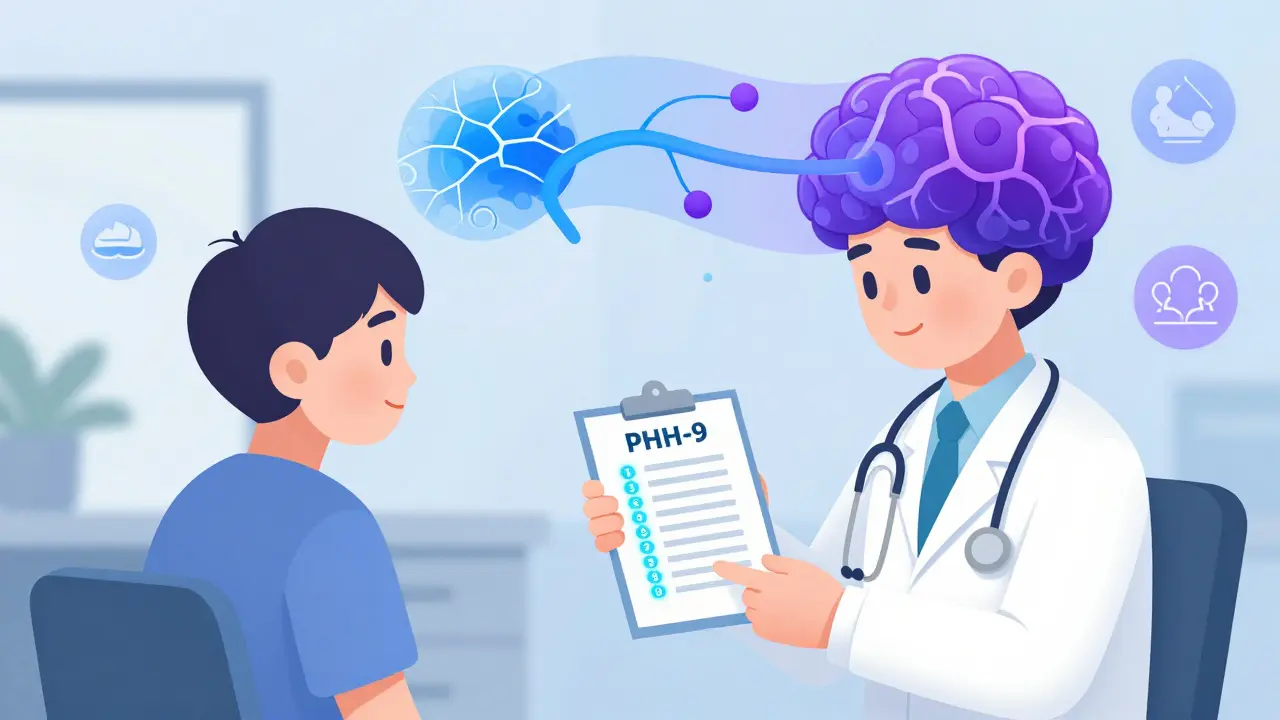
Since 2020, the U.S. iPLEDGE program has required monthly depression screenings using the PHQ-9-a simple 9-question tool that scores depression severity. A score of 10 or higher triggers an automatic referral to a mental health provider.
Top clinics have gone further. The University of California, San Francisco, now requires a mandatory in-person check-in at week 8. If you’re not feeling right, treatment stops until you’re cleared. Other practices use the Beck Depression Inventory or ask patients to log mood changes daily via an app.
The FDA now requires all prescribers to complete 2 hours of mental health training each year. Miss it, and you lose your ability to prescribe isotretinoin. Australia and the EU have tightened rules too, requiring doctors to rule out vitamin B12 deficiency (which affects nearly 1 in 5 users) before blaming isotretinoin for mood swings.
What You Should Do Before and During Treatment
If you’re considering isotretinoin, here’s what to do:
- Get a baseline mental health check. Talk to your doctor about your history-yours and your family’s. Mention past anxiety, depression, therapy, or medication use.
- Ask for a PHQ-9 screening before starting. Know your score. It’s your reference point.
- Watch the first 8 weeks like a hawk. If you feel numb, weepy, irritable, or hopeless-don’t wait. Call your dermatologist. Don’t assume it’s "just stress".
- Track your sleep, energy, and social withdrawal. These are early warning signs, even if you don’t feel "depressed".
- Don’t stop without talking to your doctor. Abruptly quitting can cause rebound acne and worsen mood. But if you have suicidal thoughts-stop immediately and seek help.
Real Stories: Two Sides of the Same Coin
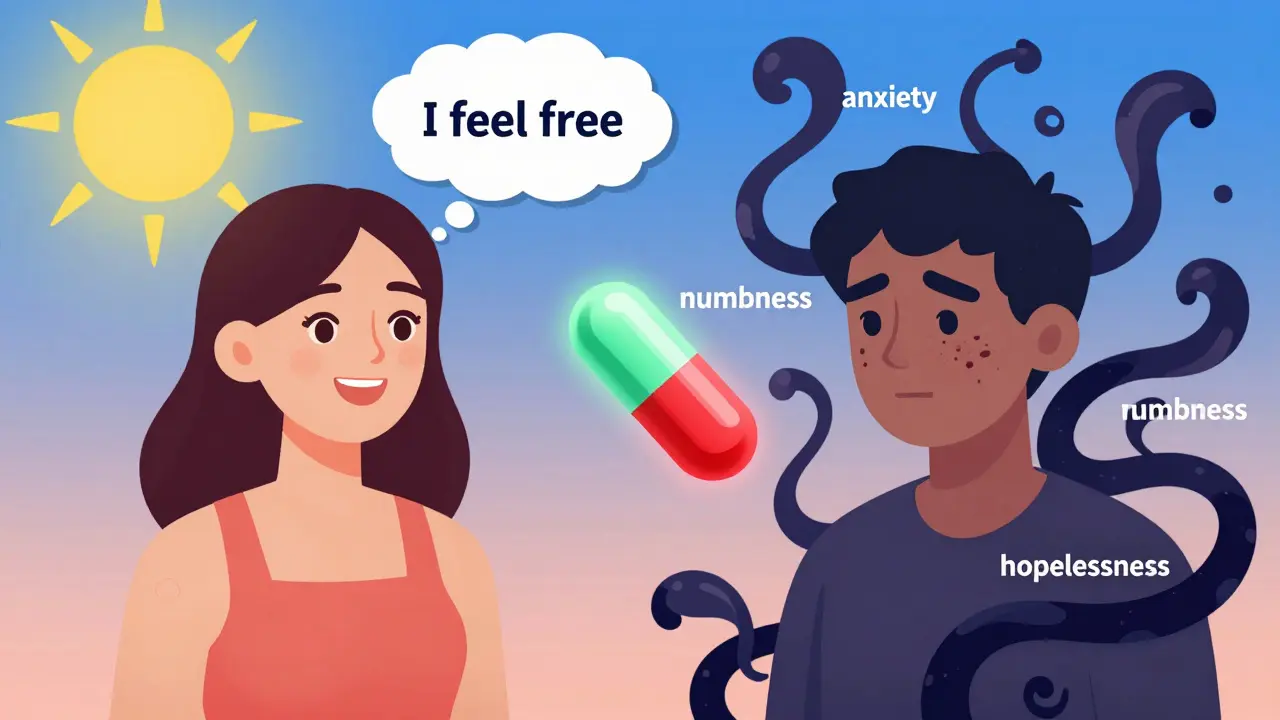
On Reddit’s r/Accutane community, over 147,000 people share their experiences. One user, "SkinWarrior2023," wrote: "Week 8 brought severe depression I’d never experienced before-constant crying, loss of interest in everything. I stopped treatment. Symptoms faded in three weeks."
Another, "ClearSkin4Life," said: "My depression lifted dramatically on isotretinoin. My acne was making me feel worthless. Clear skin didn’t just change my face-it changed my life."
These aren’t outliers. In a Drugs.com review of 1,842 users, 38% cited mental health as a negative. But 18% said their mood improved. The drug doesn’t cause depression in everyone. But for those who are vulnerable, it can be a trigger.
What About Other Acne Treatments?
Isotretinoin isn’t the only option. Antibiotics like minocycline carry their own psychiatric risks-1.7% of users report depression, according to a 2017 study. Topical retinoids? Minimal mental health impact. But they don’t work for severe nodular acne.
That’s why isotretinoin still matters. It’s often the last option for people who’ve tried everything else. The goal isn’t to scare you off. It’s to make sure you’re prepared.
What’s Next? Genetic Testing and Personalized Care
Research is moving fast. A July 2024 study in the Journal of Clinical Psychiatry found that a specific gene variant-BDNF Val66Met-predicts susceptibility to isotretinoin-induced depression with 68% accuracy. That’s not routine yet, but it’s coming.
The American Psychiatric Association’s 2025 guidelines will soon recommend personalized monitoring based on risk, not a one-size-fits-all approach. That means some people may need weekly check-ins. Others, with no history and stable mood, may only need monthly calls.
For now, the message is clear: isotretinoin is safe for most. But safety isn’t just about statistics. It’s about knowing your body, listening to your mind, and having a plan.
Can isotretinoin cause suicide?
Isotretinoin has been linked to suicidal ideation and completed suicide in rare cases, but the absolute risk remains very low. The FDA has recorded over 19,000 psychiatric adverse events, with completed suicide accounting for a small fraction. Studies show the risk is higher in people with a prior psychiatric history. While most users do not experience these effects, any thoughts of self-harm must be taken seriously and addressed immediately by stopping treatment and seeking emergency care.
How long after starting isotretinoin do mood changes happen?
The median time to onset for psychiatric symptoms like depression or anxiety is about 80 days, but symptoms can appear as early as the first week. Nearly half of reported cases occur within the first 8 weeks. This is why close monitoring during the first two months is critical. If you notice sudden mood shifts, loss of interest in activities, or increased irritability, don’t wait-contact your doctor.
Should I stop isotretinoin if I feel depressed?
If you experience mild mood changes, talk to your dermatologist before stopping. But if you have suicidal thoughts, feel emotionally numb, or have sudden, severe anxiety, stop the medication immediately and seek medical help. Many patients report that symptoms reverse within weeks after stopping. Never try to manage severe depression on your own while continuing treatment.
Is isotretinoin safe if I already have depression?
It can be, but only with close supervision. If you have a history of depression, your doctor should screen you before starting, coordinate care with your mental health provider, and increase monitoring frequency. Some patients with controlled depression do well on isotretinoin, especially if their acne was a major source of emotional distress. But untreated or unstable depression increases risk. Never start isotretinoin without discussing your psychiatric history.
Do I need to get tested for vitamin B12 deficiency before taking isotretinoin?
It’s not required everywhere, but it’s becoming standard practice. About 18.7% of isotretinoin users develop low B12 levels, which can mimic depression symptoms like fatigue, irritability, and brain fog. European guidelines now recommend checking B12 before and during treatment. If your mood changes, a simple blood test can rule this out-making it easier to know if the drug is the cause.
Final Thought: Awareness, Not Fear
Isotretinoin isn’t dangerous because it causes depression in everyone. It’s dangerous because it can trigger it in people who are already vulnerable-and no one knows who those people are until it happens. That’s why monitoring isn’t about suspicion. It’s about care. Your skin matters. But so does your mind. And with the right precautions, you can clear your skin without losing yourself.
Kenneth Jones
March 23, 2026Isotretinoin isn't the villain. The system is. Doctors get paid to prescribe, not to monitor. PHQ-9? A checkbox. No one's checking if you're sleeping, eating, or talking to anyone. They just want your acne gone. And if you break? Well, that's just collateral.
Caroline Dennis
March 23, 2026The BDNF Val66Met variant is the key. We've known for years that neuroplasticity modulation is dose-dependent. Most clinicians still treat this like a dermatology issue. It's a neuropharmacological one. We need genomic screening before prescription. Not after the crash.
Aaron Sims
March 25, 2026So... the FDA reports 19,000 psychiatric events, but JAMA says 'no risk'? LOL. Of course the study funded by Big Pharma says it's safe. Next they'll tell us vaping doesn't cause lung damage. Wake up.
Korn Deno
March 26, 2026The real issue isn't the drug. It's that we treat mental health as an afterthought in medical care. You get a skin check, a blood test, but no one asks if you cried last night. We need systemic change, not just more forms.
Zola Parker
March 26, 2026I took it. Got clear skin. Then I lost my joy. 😔 Maybe it was the acne. Maybe it was the drug. Maybe it was life. Who knows? I'm just glad I'm back to baseline. Not everyone gets that.
florence matthews
March 28, 2026I'm from a country where mental health is still taboo. My mom said 'just pray' when I started crying. But isotretinoin? It made me feel like I was disappearing. I didn't want to live. I'm so glad I stopped. No skin is worth losing yourself.
Kevin Y.
March 29, 2026Thank you for this comprehensive overview. As a healthcare professional, I appreciate the nuance. The key takeaway: individual risk stratification > blanket warnings. We're moving toward precision medicine, and that's a good thing.
Raphael Schwartz
March 30, 2026Why are we even talking about this? Just don't take it if you're weak. My cousin took it. Got acne back. Said it was the drug. Nah. He was just lazy. Stop making excuses.
Agbogla Bischof
March 31, 2026In Nigeria, we rarely see this because isotretinoin is expensive and access is limited. But when we do, we screen for B12, thyroid, and cortisol first. Mental health symptoms are often somatic in origin. Don't jump to conclusions.
Mihir Patel
April 1, 2026i took accutane and it was like my brain just... turned off. i didnt care about anything. not even my gf. then i stopped and 3 weeks later i was me again. i dont care if its 0.14% risk. it happened to me. and i almost lost everything.
Marissa Staples
April 3, 2026It's ironic. We fix your skin, then your mind breaks. Maybe the real cure was never the drug. Maybe it was the acceptance we never learned to give ourselves.
Grace Kusta Nasralla
April 3, 2026I felt like a ghost. No tears. No anger. Just... hollow. They told me it was 'adjustment'. But I knew. I stopped. And slowly, the color came back. I wish someone had asked me if I was still me.
Stephen Alabi
April 4, 2026The JAMA meta-analysis is methodologically flawed. It conflates correlation with causation. The FDA's spontaneous reporting system, while imperfect, captures real-world outcomes. You cannot dismiss 19,000 adverse events as noise. That is not science. That is negligence.
Rachele Tycksen
April 4, 2026i just took it for my acne and now i cant even be bothered to reply to this. idk. maybe i shouldnt have.