

17 Feb 2026
- 16 Comments
When a patient walks up to the counter to pick up a prescription, most people assume the medication inside the bottle is correct. But mistakes happen-sometimes the wrong drug, the wrong dose, or the wrong instructions get packed. And while barcode scanners and double-checks help, patient counseling is still the most powerful tool pharmacies have to catch these errors before they reach the patient. In fact, research shows that up to 83% of dispensing mistakes are found and fixed during a simple conversation between the pharmacist and the patient.
Why Patient Counseling Works Better Than Technology
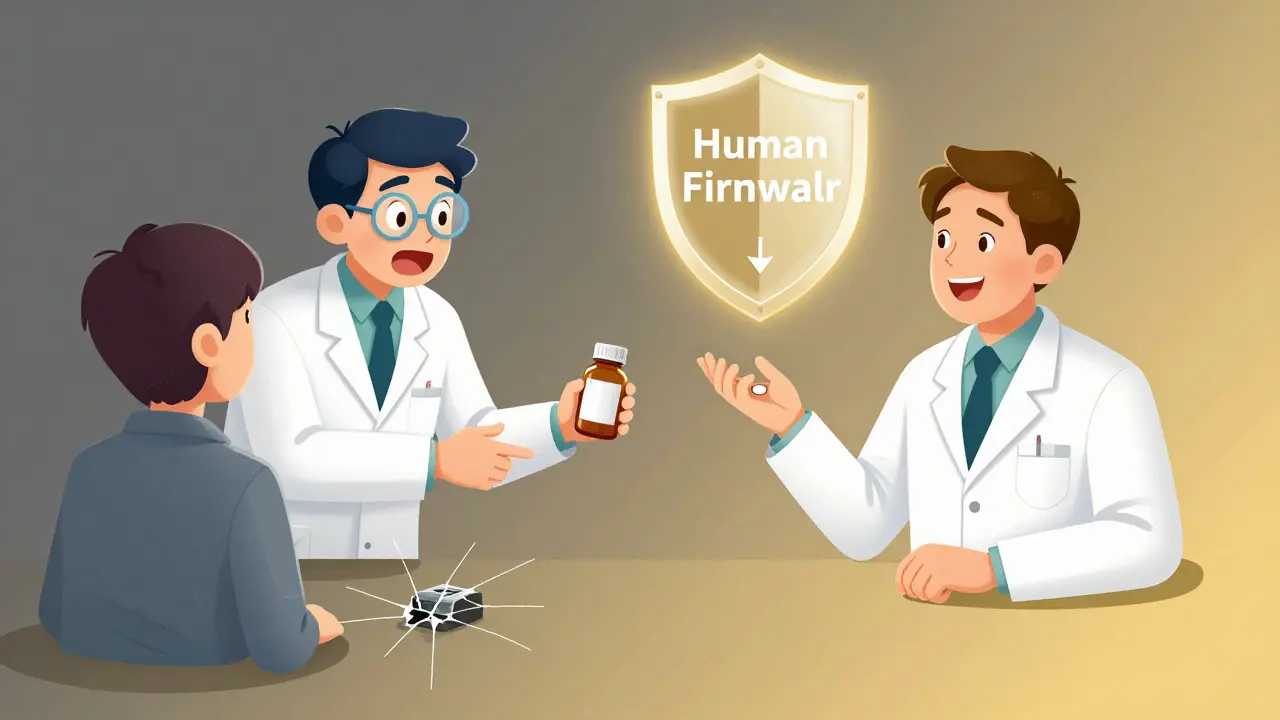
Barcode scanning and automated verification systems catch about half of all errors. Pharmacist double-checks get you closer-around 67%. But nothing beats talking to the person who’s actually going to take the medicine. Why? Because machines can’t ask, “What do you think this pill is for?” or notice when someone says, “I’ve never seen this blue capsule before.” Patients often notice things technology misses. A change in color, size, or shape. A different smell. A label that doesn’t match what they remember. These are red flags that only a human conversation can uncover. The Institute for Safe Medication Practices calls this the “human firewall”-a final, irreplaceable layer of protection.The Four Critical Checks Every Pharmacist Should Make
Effective counseling isn’t just about reading instructions. It’s about asking the right questions and listening closely. Here’s what works:- Confirm the purpose: Ask, “What condition are you taking this medication for?” Don’t assume they know. Many patients don’t understand why they’re on a new drug. If they say it’s for “chest pain” but the prescription is for diabetes, that’s a major red flag.
- Verify understanding: Use the “teach-back” method. Ask them to explain how to take it in their own words. “Can you show me how you’ll take this pill?” If they say, “I crush it and mix it in my coffee,” and it’s a slow-release tablet, you’ve caught a dangerous mistake.
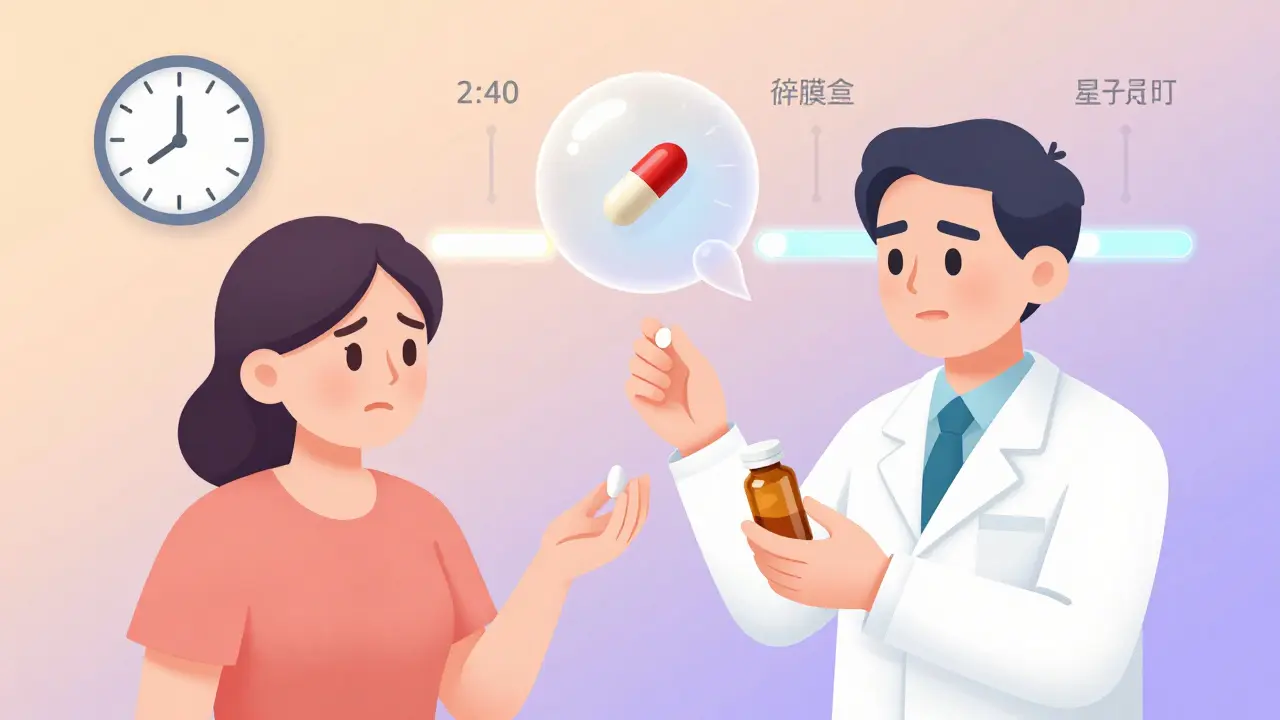
- Check the appearance: Show them the medication and ask, “Does this look like what you’ve taken before?” Studies show this catches 29% of look-alike errors, especially with high-risk drugs like insulin, opioids, or blood thinners.
- Review history and interactions: Ask about other medications, supplements, or allergies. A patient on warfarin might not mention they started taking garlic supplements. That interaction could be deadly.
Research from the National Center for Biotechnology Information (NCBI) found that each extra 30 seconds of counseling reduces error rates by 12.7%. That means a 2.3-minute conversation isn’t just helpful-it’s necessary.
What Happens When Counseling Is Rushed
In many pharmacies, especially large chains, pharmacists are under pressure to move patients through quickly. The average counseling session lasts just 1.2 minutes-far below the recommended 2.3 minutes. And it shows. When pharmacists are handling more than 14 prescriptions per hour, error detection during counseling drops from 83% to 41%. Pharmacy technicians at CVS Health ran a pilot program in 150 stores where they added one simple question: “Does this look like what you’ve taken before?” In three months, they caught 1,247 errors that would’ve gone unnoticed. Walgreens saw a 58% drop in errors after implementing their “Medication Checkpoint” protocol, which includes showing the patient the actual pill and asking them to confirm its purpose. But not everyone is happy. Some patients complain about delays. And some pharmacists feel forced to skip steps. One Reddit user wrote: “We’re told not to slow down the line. So we say ‘Take as directed’ and move on.” That’s not counseling. That’s compliance theater.Who Benefits Most from Thorough Counseling?
Not all patients are the same. Some are at much higher risk of harm from a dispensing error.- Patients over 65: They’re 3.7 times more likely to suffer serious harm from a dosing mistake.
- Patients with low health literacy: Nearly half of all undetected errors happen with this group. They may nod along even if they don’t understand.
- Those starting new high-alert medications: Insulin, opioids, anticoagulants, and chemotherapy drugs are involved in 1 in 5 dispensing errors. Counseling is critical here.
- People on five or more medications: For these patients, counseling catches 87% of errors. Polypharmacy is a minefield.
Patients starting a new prescription are 91% more likely to have an error caught during counseling than those refilling an old one. That’s because refills often feel routine-patients assume nothing changed. But sometimes, the generic switched brands, or the dose was accidentally doubled. Counseling forces a fresh look.
How to Make Counseling Work in Real Life
The American Pharmacists Association (APhA) recommends a 4-step framework that takes about 2 minutes and 40 seconds:- Identity verification (27 seconds): Confirm name, date of birth, and prescription.
- Purpose confirmation (43 seconds): Ask what the medication is for and why they’re taking it.
- Appearance and administration check (52 seconds): Show the pill, ask if it looks familiar, and have them demonstrate how they’ll take it.
- Interaction and allergy review (38 seconds): Ask about other meds, supplements, and allergies.
Pharmacies that use this method see error detection rates jump from 61% to 85% within six months. But it takes training-and time.
One solution? Use pharmacy technicians for preliminary counseling. In 42 states, they’re allowed to ask basic questions and flag concerns before the pharmacist steps in. This can increase effective counseling time by 37% without adding workload to the pharmacist.
Documentation matters too. Pharmacies using the NABP’s 2022 Counseling Documentation Standards cut liability claims by 44%. If you didn’t document the conversation, the court won’t believe you had it.
The Bottom Line: Counseling Isn’t Optional-It’s Essential
The Omnibus Budget Reconciliation Act of 1990 made counseling mandatory for Medicare patients. Today, it’s standard practice everywhere. And for good reason. It’s cheap, effective, and human.Compared to barcode systems ($1.35 per prescription) or pharmacist double-checks ($2.10), counseling costs just $0.87 per script. Independent pharmacies report a 19% drop in malpractice premiums after adopting structured counseling. CMS now ties 8.5% of Medicare Part D payments to documented counseling that includes error verification.
Patients notice too. In a 2023 review of over 1,200 patient comments, 89% said they appreciated when pharmacists caught errors. One wrote: “The pharmacist caught that my new blood thinner was the wrong strength when I said it looked smaller than before.” That’s not just service-that’s safety.
Dr. Michael Cohen of ISMP says it best: “Patient counseling isn’t just about education; it’s the last line of defense where the patient becomes the final quality checker-no technology can replace this human verification point.”
Technology helps. But it doesn’t replace the conversation. The bottle might be labeled right, but if the patient doesn’t understand it, the error still happened. Counseling turns the patient into a partner-not a passive recipient. And in pharmacy practice, that’s the most powerful safety net we have.
How long should a patient counseling session last to catch dispensing errors?
To effectively catch dispensing errors, a counseling session should last at least 2.3 minutes, according to research from the NCBI’s StatPearls. Each additional 30 seconds reduces error rates by 12.7%. The APhA recommends a 4-step protocol that totals 2 minutes and 40 seconds, covering identity, purpose, appearance, and interaction checks.
What’s the most effective way to ask a patient about their medication?
Use open-ended questions and the teach-back method. Instead of asking, “Is this for your blood pressure?” say, “What do you understand this medication is for?” This catches 3.2 times more errors. Then ask them to explain how they’ll take it in their own words. If they can’t, there’s likely a misunderstanding.
Can pharmacy technicians help with patient counseling for error detection?
Yes. In 42 states, pharmacy technicians are allowed to perform preliminary counseling under pharmacist supervision. They can ask about medication purpose, appearance, and basic instructions, then flag concerns for the pharmacist. This increases effective counseling time by 37% and helps manage workload without sacrificing safety.
Why is patient counseling better than barcode scanning?
Barcode scanning verifies the right drug and dose are being dispensed, but it can’t confirm the patient understands it or recognizes a change in appearance. Counseling catches errors that machines miss-like wrong strength, wrong formulation, or mismatched patient expectations. Studies show counseling detects 83% of errors, compared to 53% for barcode systems.
Do patients really care about thorough counseling?
Yes. In a 2023 analysis of over 1,200 patient reviews, 89% said they appreciated when pharmacists caught potential errors during counseling. Many specifically mentioned feeling safer and more informed. While 11% complained about delays, the vast majority valued the extra time as a sign of quality care.
Carrie Schluckbier
February 19, 2026Let me guess-this whole 'patient counseling' thing is just Big Pharma’s way to keep pharmacists busy so they don’t notice the real problem: the pills are being switched at the warehouse. I’ve seen it. The blue capsule? It was supposed to be white. The label said 'Lisinopril' but the bottle had 'Losartan'-and no one caught it because they were too busy asking 'What’s this for?' instead of checking the supply chain logs. This isn’t safety. It’s theater. They want you to think the pharmacist is your guardian angel when really, they’re just the last guy before the pill gets swallowed and the liability shifts to YOU.
And don’t get me started on the 'teach-back method.' You think Grandma knows what 'slow-release' means? She just nods because she’s scared to say she doesn’t understand. That’s not counseling-that’s coercion wrapped in a white coat.
Also-why is no one talking about how CVS and Walgreens use this as a PR stunt? They cut staffing by 30% and then slap on a 'Medication Checkpoint' sign like it’s a badge of honor. It’s not. It’s a Band-Aid on a hemorrhage.
Liam Earney
February 19, 2026Oh, I see… so now we’re supposed to believe that a two-minute conversation with a pharmacist-rushed, distracted, overworked, underpaid-is somehow the 'human firewall' against pharmaceutical chaos? Really? You’re telling me that the same person who’s been scanning 14 prescriptions an hour for nine hours straight, while being yelled at by a diabetic who can’t find their parking spot, is going to notice that the 30mg oxycodone tablet is actually 40mg? With a smile? With eye contact? With a warm tone?
And yet, we’re told to trust this. To rely on this. To elevate this as 'essential.' But where’s the data on burnout? Where’s the study on how many errors are missed because the pharmacist was crying in the back room? Where’s the empathy for the person doing the counseling? We’re not talking about systems-we’re talking about human beings pushed beyond breaking point, and then blamed when they fail.
It’s not the patient’s fault. It’s not the pharmacist’s fault. It’s the system. And this article? It’s a beautiful distraction.
guy greenfeld
February 20, 2026Here’s the uncomfortable truth no one wants to admit: the entire model of 'patient counseling' is built on the illusion of control. We pretend that if we just ask the right questions, we can prevent every mistake. But what if the mistake isn’t in the pill? What if it’s in the belief that a human can be trusted to catch every error? What if the real problem is that we’ve outsourced safety to the emotional labor of underpaid workers?
Pharmacy is not medicine. Pharmacy is logistics. And logistics are optimized for speed, not safety. The 2.3-minute rule? It’s not a standard-it’s a fantasy. A myth we tell ourselves so we can sleep at night.
And yet, we keep clinging to it. Like a rosary. Like a talisman. We chant 'teach-back' and 'appearance check' as if incantations will ward off death.
But death doesn’t care about protocols. Death waits for the moment when the system cracks. And it always cracks.
So tell me-when the next patient dies because the wrong drug was dispensed… who do you think the court will blame? The pharmacist? Or the corporation that never gave them time to breathe?
Adam Short
February 20, 2026Let’s be honest-this whole 'counseling' nonsense is an American mess. Over here in the UK, we’ve got a system that works. Pharmacists don’t waste time asking patients if the pill 'looks familiar.' We have standardized packaging, national barcode integration, and mandatory electronic prescribing with clinical decision support built into the system. No one’s asking a 78-year-old woman if she remembers her last metformin bottle. We just make sure the right drug goes in the right bottle.
And guess what? Our medication error rates are 40% lower than yours. Why? Because we don’t rely on emotional labor. We rely on systems. And yes, I know-Americans love their 'human touch.' But when your system is built on trust instead of verification, you’re not being compassionate-you’re being reckless.
Sam Pearlman
February 21, 2026I get it, I really do. But let’s not pretend this is some magic fix. I work in a pharmacy, and let me tell you-half the time, patients lie. They say they're taking their blood pressure med 'every day' when they skip it on weekends. They say they 'never take supplements' when they’re downing ginseng, turmeric, and CBD gummies like candy.
And the 'teach-back'? Half the time, they just repeat what you said. They don’t understand. They just want to leave. So we ask, they nod, we move on. It’s not that we’re lazy. It’s that the system is broken.
Yeah, counseling helps. But it’s not a cure. It’s a bandage. And if you want real change? Stop blaming pharmacists. Start paying them enough to actually have time to care.
Steph Carr
February 23, 2026Oh, the irony. We’ve turned a deeply human act-asking someone how they feel, what they understand, whether they’re scared-into a checklist. A KPI. A productivity metric. '2.3 minutes.' '4-step framework.' 'Documentation standards.'
Let me ask you: when was the last time you felt truly heard? Not because someone ticked a box, but because they paused, looked you in the eye, and said, 'Tell me what this means to you.'
That’s what counseling used to be. Now it’s a performance. A script. A corporate compliance dance.
And yes, it catches errors. But at what cost? We’re not just losing safety-we’re losing trust. And trust, once gone, can’t be regained by a checklist.
Brenda K. Wolfgram Moore
February 23, 2026I’ve been a pharmacist for 22 years. I’ve seen every trend come and go. Barcodes. AI. Automated dispensing. And every time, we’re told this is the solution. But the truth? The only thing that’s ever saved a life is a pharmacist who stopped, looked, and asked.
I once caught a lethal interaction because a patient said, 'I’ve been taking this green pill since my husband died.' He was on warfarin. The green pill was St. John’s Wort. He didn’t know it was an herbal supplement. He thought it was 'just for sadness.'
That took 47 seconds.
Not 2.3 minutes. Not a checklist. Just a moment of presence.
Don’t turn this into a protocol. Turn it into a practice. And pay us enough to do it right.
Linda Franchock
February 24, 2026So… you’re saying we should trust patients to catch errors? That’s cute. But what about the ones who don’t know what 'insulin' is? Or the ones who think 'generic' means 'cheaper but same thing'? Or the ones who just nod because they’re scared to look stupid?
And let’s be real-most patients don’t even know what their meds are for. I had a guy ask me last week if his 'diabetes pill' was the same as his 'heart pill.' He was on three different drugs. All for different things. He didn’t know which was which.
So yeah, counseling helps. But it’s not a magic wand. It’s a tool. And if we don’t fix the root problem-poor health literacy-we’re just rearranging deck chairs on the Titanic.
Agnes Miller
February 26, 2026just fyi, the 83% stat is from a 2015 study that was never replicated. the 2.3 minute thing? that was based on 12 patients in a single clinic. and the '4-step framework'? it’s not even in the official APhA guidelines. they recommend 3 minutes, not 2:40. someone just rounded down to make it sound cleaner.
also, technicians can’t legally do counseling in 8 states. the article says 42. that’s wrong. it’s 38. i checked the NABP site yesterday.
don’t get me wrong-counseling matters. but please stop citing stats that don’t exist. we’re not helping anyone by lying to make our point.
Geoff Forbes
February 26, 2026Look, I’m all for 'human firewall' nonsense. But let’s be real-this is just another way for pharmacies to justify not hiring more staff. If counseling catches 83% of errors, why aren’t we mandating 5 minutes per script? Why aren’t we reducing the prescription load to 8/hour? Why are we still pushing 14? Because the bottom line matters more than the patient’s life.
And don’t give me that 'technicians can help' crap. In most states, techs aren’t trained. They’re trained to count pills, not ask about drug interactions. And when they flag something? The pharmacist often says, 'It’s fine.' Because they’re behind schedule.
This isn’t safety. It’s PR.
Jonathan Ruth
February 28, 2026Barcodes catch 53% errors counseling catches 83% so obviously counseling is better
but here’s the thing nobody says
the 30% gap isn’t because patients are smart
it’s because they’re confused
they don’t know what they’re taking
they don’t know why
they don’t know the difference between a pill and a capsule
and the system is designed to let them stay that way
so we call it 'counseling'
but really we’re just cleaning up the mess we made
we don’t need more questions
we need better labeling
better packaging
better education
not more talking
Philip Blankenship
March 1, 2026I’ve been a pharmacy tech for 15 years. I’ve seen it all. The patient who says, 'I’ve never seen this before'-turns out it’s a different generic. The one who says, 'My last one was bigger'-turns out the dose was doubled. The guy who says, 'This tastes weird'-turns out the formulation changed from immediate to extended release.
And you know what? None of that was caught by a barcode. None of that was caught by a double-check.
It was caught because a tech paused. Looked. Asked. Listened.
It’s not about the time. It’s about the attention.
And if your pharmacy won’t give you that? It’s not the pharmacist’s fault. It’s the system’s.
But hey-at least we got a stat to put on a poster.
Oliver Calvert
March 3, 2026Here’s the thing nobody talks about: counseling only works if the patient feels safe enough to speak up. But in many pharmacies, especially chains, the atmosphere is transactional. Rushed. Cold. The pharmacist doesn’t look up. They don’t smile. They don’t make eye contact. They’re reading from a script.
So why would a patient say, 'This looks different'? They think they’ll be ignored. Or worse-laughed at.
So we get the 83% number from studies done in ideal settings. But in real life? It’s more like 40%. Because trust isn’t built by a checklist. It’s built by presence.
And presence costs time. And time costs money.
So we’re stuck.
Kancharla Pavan
March 4, 2026What kind of society lets a pharmacy worker be the last line of defense against death? What kind of society thinks a 3-minute conversation is enough to prevent a fatal interaction between warfarin and garlic? We have AI that can predict cancer. We have robots that can perform surgery. And yet we ask a minimum-wage worker with 14 scripts in front of them to be the guardian of life?
This isn’t healthcare. This is a moral failure.
And if you think this is about 'patient safety'-you’re lying to yourself. It’s about profit. It’s about cost-cutting. It’s about avoiding regulation.
Real safety doesn’t rely on a tired pharmacist asking, 'Does this look familiar?'
Real safety means the pill is always right. No questions. No counseling. No miracles. Just precision.
PRITAM BIJAPUR
March 5, 2026❤️ This is why I became a pharmacist. Not for the money. Not for the title. But for moments like this: when a patient says, 'I think this is wrong,' and you pause… and you listen… and you change their life.
I had a woman last week say, 'This pill is purple now. My last one was blue.' We checked. The dose was wrong. She was on 5mg. They dispensed 10mg. She was terrified. I held her hand. We called the prescriber. We fixed it.
That’s not a protocol. That’s humanity.
And yes, it takes time. Yes, it’s hard. Yes, it’s exhausting.
But it’s worth it.
Because in a world that’s losing its soul… this is where we keep it alive.
Thank you for writing this.
❤️
Brenda K. Wolfgram Moore
March 6, 2026You’re right. The real issue isn’t counseling. It’s that we’ve turned healthcare into a production line. And when you treat people like inventory, you lose the humanity that keeps them alive.
I’ve been doing this for 22 years. I’ve seen it all. But I still remember the woman who said, 'I’ve never seen this pill before.' We caught it. She cried. So did I.
It’s not about the time. It’s about the connection.
And no algorithm will ever replace that.