
29 Dec 2025
- 10 Comments
Serotonin Syndrome Risk Checker
Critical Warning
Combining 5-HTP with SSRIs can cause life-threatening serotonin syndrome. This tool does not replace medical advice.
If you're currently taking an SSRI and considering 5-HTP, stop immediately and consult your doctor.
Symptoms to Watch For
- Shivering, sweating, diarrhea
- Rapid heartbeat, muscle twitching
- Confusion, restlessness
- High fever (>104°F)
- Muscle rigidity or seizures
EMERGENCY INSTRUCTIONS
If you experience any symptoms, stop 5-HTP immediately and seek emergency medical help. Do NOT wait.
Call emergency services or go to the nearest hospital. Tell them you're taking an SSRI and have taken 5-HTP.
Safer Alternatives
Instead of combining 5-HTP with SSRIs, consider these evidence-based options:
- Therapy (CBT) - Proven effective for depression
- Regular exercise - Boosts natural serotonin
- Light therapy - Especially for seasonal depression
- Optimizing sleep and nutrition - Low vitamin D/B12 linked to depression
- Discuss medication adjustment with your psychiatrist
Important Notes
5-HTP supplements are NOT regulated like medications. 2022 testing found 31% had doses 72-128% of labeled amounts.
The FDA recommends a minimum 2-week washout period between stopping an SSRI and starting 5-HTP. For paroxetine, wait 4 weeks.
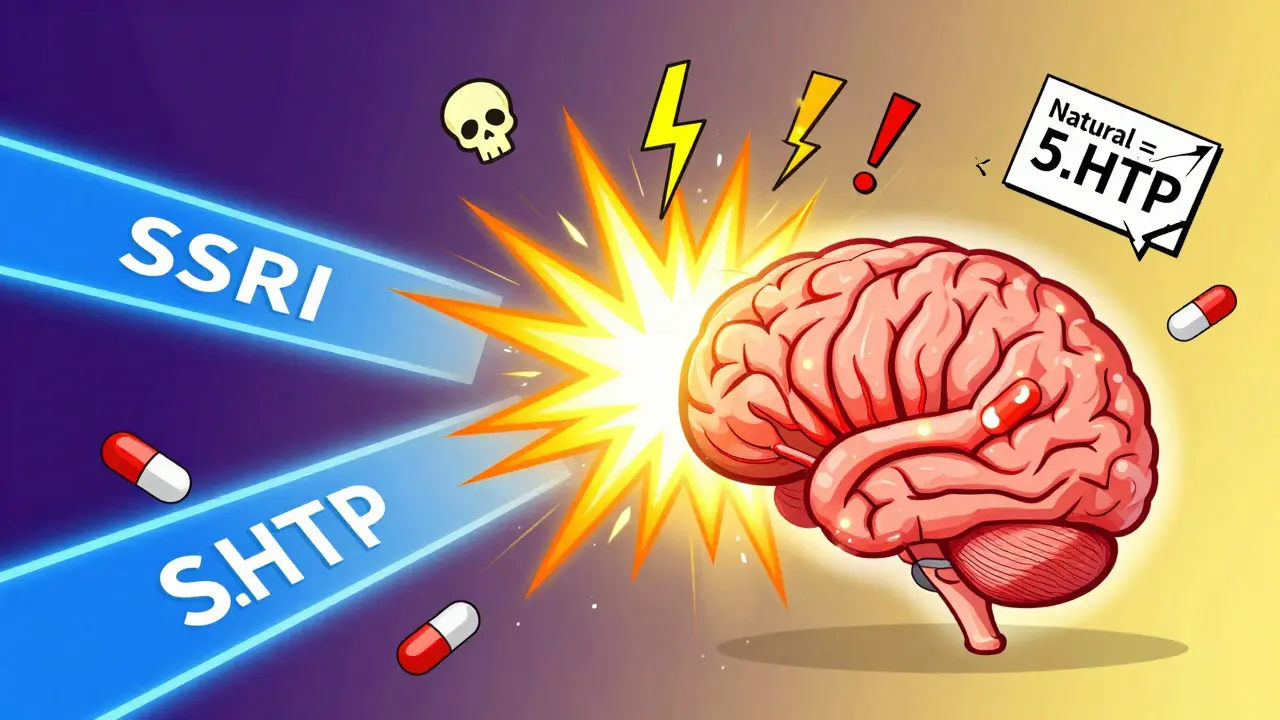
Combining 5-HTP with SSRIs isn’t just a bad idea-it’s a medical emergency waiting to happen. If you’re taking an SSRI like sertraline, fluoxetine, or escitalopram for depression or anxiety, and you’re thinking about adding 5-HTP to feel better faster, stop. This isn’t a harmless natural boost. It’s a recipe for serotonin syndrome, a condition that can turn deadly in hours.
What Exactly Is Serotonin Syndrome?
Serotonin syndrome isn’t just feeling a little jittery or having a stomachache. It’s a dangerous overstimulation of your brain’s serotonin system. Think of serotonin as a chemical messenger that helps regulate mood, sleep, and digestion. When too much of it builds up in your brain, your nervous system goes into overdrive. Symptoms start mild: shivering, sweating, diarrhea, or a rapid heartbeat. But they can escalate fast-muscle rigidity, high fever above 106°F, seizures, loss of consciousness. In severe cases, it kills. Studies show mortality rates between 2% and 12% for hospital-treated cases.Why 5-HTP and SSRIs Are a Dangerous Mix
SSRIs work by blocking the reabsorption of serotonin after it’s released. That means more serotonin stays active in your brain. 5-HTP, on the other hand, is a direct building block your body uses to make serotonin. It skips the slow, regulated step of turning tryptophan into serotonin and dumps more of it into your system, right when your SSRI is already preventing it from being cleared out. This isn’t just theory. The American College of Medical Toxicology calls this combination contraindicated-meaning it’s officially unsafe. A 2021 review in CNS Drugs found zero high-quality evidence supporting its safety, but dozens of case reports of people ending up in the ER after mixing them. One woman in her 40s took 100 mg of 5-HTP with 20 mg of fluoxetine and developed a fever of 104°F. Another had violent tremors and had to be rushed to the hospital. These aren’t rare outliers. They’re predictable outcomes.The Numbers Don’t Lie
SSRIs alone cause serotonin syndrome in about 0.08 to 0.52 cases per 1,000 people per year. Add 5-HTP, and the risk jumps dramatically-comparable to mixing SSRIs with MAOIs, one of the most dangerous drug combos known in psychiatry. A 2019 study in the Journal of Clinical Psychiatry found MAOI-SSRI combinations carry a 16.4% risk of serotonin syndrome. While 5-HTP isn’t quite that bad, it’s still far riskier than other supplements. St. John’s Wort? About 2.3% risk. Tramadol? 4.6%. 5-HTP? No solid number, but experts agree it’s close to the top of the danger list. And here’s the kicker: 5-HTP supplements aren’t regulated like drugs. A 2022 ConsumerLab test found 31% of 5-HTP products had doses that were 72% to 128% of what was listed on the label. You think you’re taking 50 mg? You might be taking 80 mg-or 130 mg. No one knows. No one checks. No one is monitoring you.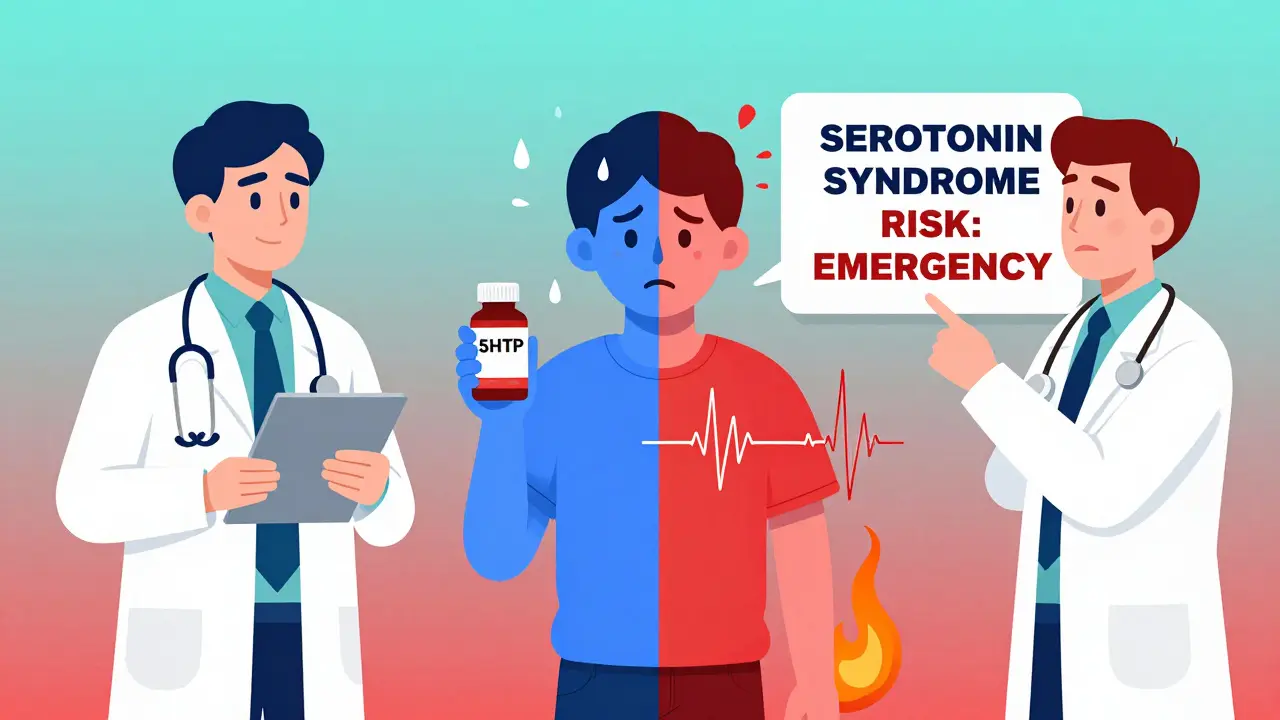
Who’s at Risk-and Why Nobody’s Talking About It
About 12.8% of people taking antidepressants in the U.S. are also using 5-HTP, according to the 2022 National Health Interview Survey. That’s over 4 million people. Most don’t tell their doctor. A 2022 Healthline survey found 41% of supplement users believe “natural” means “safe.” Another 28% of antidepressant users admit they’re taking 5-HTP despite warning labels. Doctors aren’t always aware either. A 2020 survey by the American Society of Health-System Pharmacists found only 38% of primary care physicians correctly identified 5-HTP as a serotonin syndrome risk. Many think it’s just another vitamin. It’s not. It’s a potent biochemical agent with no safety buffer.What the Experts Say
The FDA issued a Drug Safety Communication in 2020 after reviewing 127 adverse event reports-including 9 deaths-linked to 5-HTP and SSRIs between 2015 and 2019. The American Psychiatric Association now recommends doctors specifically ask patients about supplement use during mental health evaluations. The FDA is also pushing for new warning labels on all SSRI packaging by mid-2025. Some alternative practitioners argue that 5-HTP can be safely used to reduce SSRI doses. Dr. Kent Holtorf claims it can cut SSRI dosage by 30-50%. But there’s no solid evidence. No large trials. No peer-reviewed protocols. Just anecdotes. Meanwhile, the overwhelming consensus from toxicologists, pharmacologists, and psychiatrists is clear: don’t mix them.What to Do If You’re Already Taking Both
If you’re currently taking 5-HTP and an SSRI, don’t stop the SSRI cold turkey. That can cause withdrawal. But don’t keep going either. Contact your doctor or pharmacist immediately. They’ll need to assess your symptoms and create a safe plan. The standard advice is a two-week washout period between stopping an SSRI and starting 5-HTP. But some SSRIs, like paroxetine, stick around in your system for up to four weeks. That means you might need to wait longer. Your doctor should check the half-life of your specific medication. If you start feeling any of these symptoms-tremors, confusion, rapid heartbeat, sweating, high fever-go to the ER. Don’t wait. Serotonin syndrome can worsen rapidly. The antidote is cyproheptadine, but it only works if given early.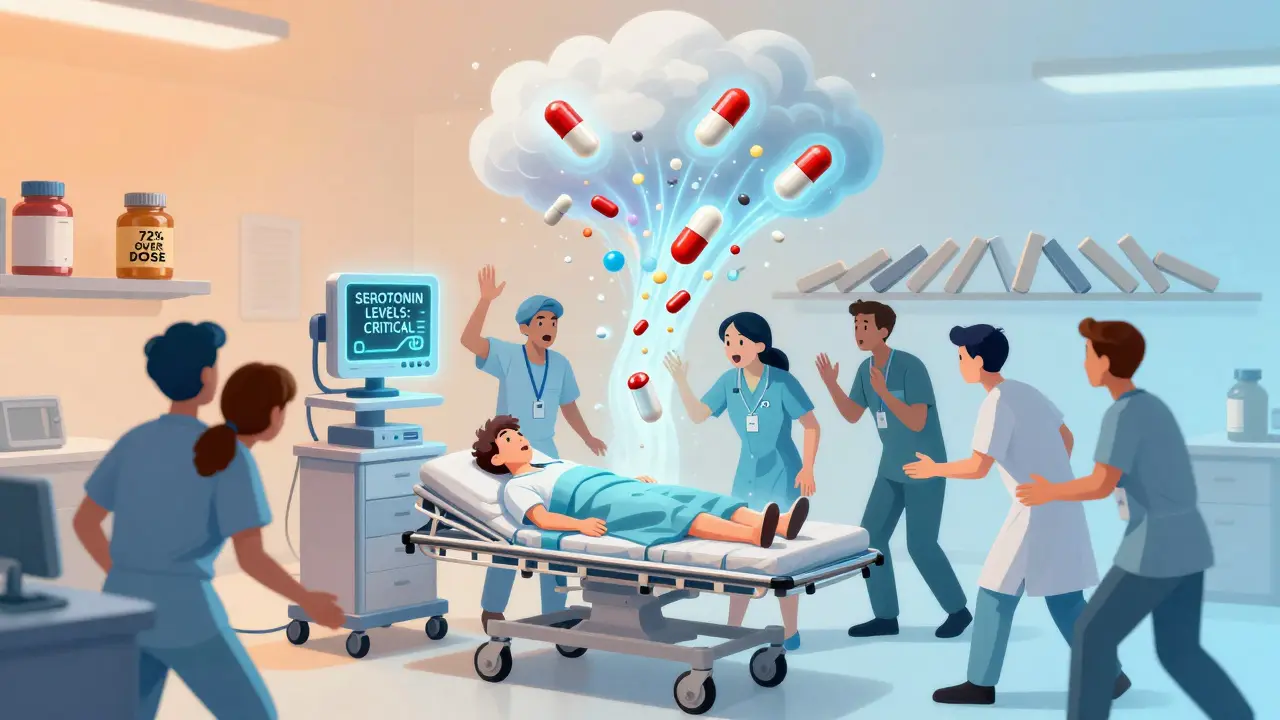
Alternatives That Actually Work
If you’re on an SSRI and still feeling low, there are safer ways to improve your mood:- Therapy-CBT and other evidence-based approaches have proven results.
- Exercise-even 30 minutes of brisk walking five days a week boosts serotonin naturally.
- Light therapy-especially helpful in winter months or for seasonal depression.
- Optimizing sleep and nutrition-low vitamin D and B12 levels are linked to worse depression outcomes.
- Discussing a medication adjustment with your psychiatrist-sometimes a small dose change or switch makes all the difference.
The Bigger Problem: Supplements Are a Wild West
The 5-HTP industry is worth nearly $200 million a year. Most of it operates under the Dietary Supplement Health and Education Act of 1994, which lets companies sell supplements without proving they’re safe or effective. The FDA can only act after harm is done. Since 2018, they’ve sent 14 warning letters to companies making illegal claims about 5-HTP. But enforcement is slow, and labels are misleading. What’s worse? Many people believe “natural” equals “safe.” It doesn’t. Foxglove is natural. Poison ivy is natural. 5-HTP, when combined with SSRIs, is just as dangerous as a misused prescription drug.Bottom Line: Don’t Risk It
There’s no safe way to combine 5-HTP and SSRIs. Not yet. Not ever, based on current science. The risk isn’t theoretical. It’s documented, measured, and deadly. Your brain doesn’t care if the serotonin came from a pill or a capsule labeled “natural.” It only cares about the total amount-and too much triggers a cascade your body can’t control. If you’re struggling with your current treatment, talk to your doctor. Don’t self-medicate with supplements. The consequences aren’t worth the gamble.Can I take 5-HTP if I stop my SSRI first?
Yes, but only after a proper washout period. For most SSRIs, wait at least two weeks after your last dose before starting 5-HTP. For longer-acting SSRIs like paroxetine, wait four weeks. Always consult your doctor before making any changes-stopping SSRIs abruptly can cause withdrawal symptoms like dizziness, nausea, and brain zaps.
Is 5-HTP safer than St. John’s Wort with SSRIs?
No. Both carry risk, but 5-HTP is more dangerous. St. John’s Wort has a known serotonin syndrome risk of about 2.3%, while 5-HTP’s risk is significantly higher and harder to predict due to inconsistent dosing in supplements. 5-HTP also directly increases serotonin production, while St. John’s Wort works more indirectly. Neither should be combined with SSRIs.
What are the early warning signs of serotonin syndrome?
Early signs include shivering, sweating, diarrhea, restlessness, rapid heartbeat, and muscle twitching. You might feel unusually anxious or confused. These symptoms can appear within hours of taking a new supplement or increasing a dose. If you notice them and you’re on an SSRI, stop the supplement immediately and seek medical help.
Can my doctor test for serotonin levels to check if I’m at risk?
No. Blood serotonin levels aren’t used to diagnose serotonin syndrome. The diagnosis is based on symptoms and medication history using the Hunter Criteria. Lab tests like elevated creatine kinase or white blood cell count can support the diagnosis in severe cases, but they don’t confirm it. Your doctor will rely on your symptoms and what you’re taking-not a blood test.
Are there any supplements that are safe to take with SSRIs?
Some supplements like omega-3 fatty acids, vitamin D, and magnesium have been studied alongside SSRIs with no major interaction risks. But always check with your doctor first. Even “safe” supplements can interact with other medications or medical conditions. Never assume a supplement is harmless just because it’s natural or sold in a health store.
David Chase
December 30, 2025OMG I CAN'T BELIEVE PEOPLE ARE STILL DOING THIS!!! 😱 I took 5-HTP with sertraline for 3 weeks and almost ended up in the ER-tremors, sweating, heart racing like I'd downed 10 Red Bulls. My pharmacist almost cried when I told her. STOP. JUST. STOP. 🚫💊 #SerotoninSyndromeIsReal
Emma Duquemin
December 31, 2025I’m a nurse in a psych unit, and let me tell you-serotonin syndrome isn’t some ‘mild side effect’ you can ‘tough out.’ I saw a 28-year-old guy last month who thought 5-HTP was ‘just herbal Prozac.’ He had a fever of 107.2°F, rigid muscles, and was hallucinating. We had to intubate him. He’s lucky he’s alive. This isn’t a ‘natural wellness hack.’ It’s a biological grenade with the pin pulled. Please, for the love of all that’s holy, don’t be that person.
Kevin Lopez
January 1, 2026Pharmacokinetic interaction: SSRI inhibits SERT → 5-HTP bypasses rate-limiting step in 5-HT synthesis → supra-physiological 5-HT accumulation → 5-HT2A/1A overstimulation → CNS hyperexcitability. Case reports confirm. FDA warning issued. No credible RCT supports safety. End of discussion.
Samar Khan
January 2, 2026I did it... and I'm still here. 😇 But I swear, I only took 25mg and it was fine. Everyone’s just scared of anything that’s not a pill. My therapist said I’m ‘self-medicating’ but I feel better than I have in years. Maybe it’s not for everyone... but it worked for me. 🙃
Russell Thomas
January 3, 2026Oh wow, so now we’re treating people like lab rats because they want to feel better? 🤡 Next you’ll tell me sunlight is dangerous because it can cause skin cancer. Chill. 5-HTP isn’t cocaine. It’s a supplement. If you’re dumb enough to mix it with SSRIs without asking your doctor, yeah, you deserve what you get. But don’t act like you’re the FDA’s personal enforcer.
Greg Quinn
January 4, 2026There’s something deeply human about trying to fix our pain with what feels gentle-herbs, light, rituals. But the brain doesn’t care if the serotonin came from a capsule or a prescription. It only knows overload. Maybe the real danger isn’t 5-HTP... it’s the belief that we can outsmart biology with willpower and ‘natural’ labels. We’re not gods. We’re biochemistry in motion.
Marie-Pierre Gonzalez
January 6, 2026I am so grateful for this post. As a mental health advocate, I have witnessed too many individuals self-medicate due to lack of access to proper care. The unregulated supplement industry preys on vulnerability. Please, if you are struggling, reach out to a licensed professional. Your well-being matters. 🌿💛
Nisha Marwaha
January 7, 2026In India, 5-HTP is sold over the counter at every pharmacy. No prescription. No counseling. No warning labels. I’ve seen patients come in with serotonin syndrome after buying it from the corner store. We need better public health education-not just warnings, but accessible alternatives. Therapy is free in government clinics. Why aren’t people using it?
Paige Shipe
January 7, 2026I took 5-htp for 6 months with Lexapro and never had an issue. I dont understand why everyone is panicking. Its not like its crack. Maybe your body just handles it fine. Also, you spelled serotonin wrong in paragraph 3. lol.
Tamar Dunlop
January 7, 2026Thank you for this deeply thoughtful and meticulously researched piece. As a Canadian healthcare provider, I have seen the devastating consequences of unmonitored supplement use in vulnerable populations. The cultural myth of ‘natural equals safe’ is not only misleading-it is lethal. I will be sharing this with every patient I see. With profound gratitude and respect for your courage in speaking truth.