
23 Feb 2026
- 15 Comments
When you have diabetes and take insulin or pills like glyburide or glipizide, drinking alcohol isn’t just about getting buzzed. It’s about risking a life-threatening drop in blood sugar-sometimes hours after you’ve finished your drink. This isn’t a rare side effect. It’s a well-documented, predictable, and preventable danger that affects tens of thousands of people every year. And many don’t even realize it’s happening until it’s too late.
Why Alcohol Makes Your Blood Sugar Crash
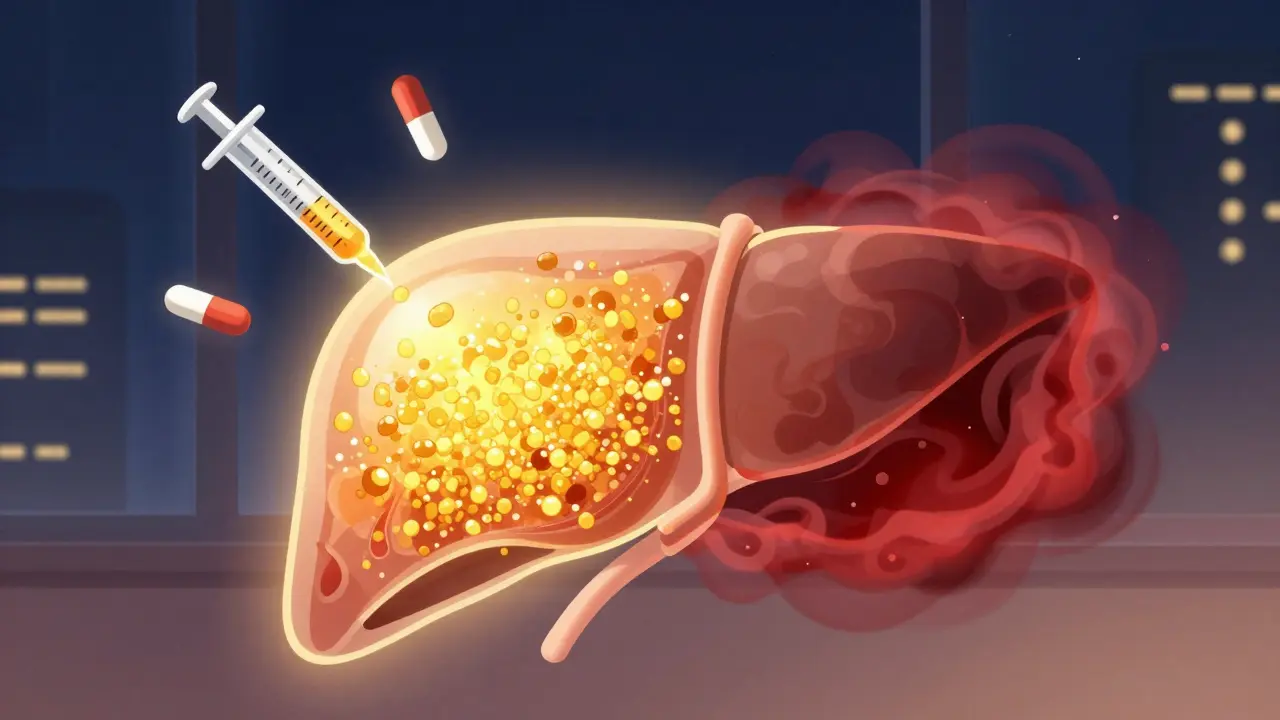
Your liver is your body’s glucose factory. When your blood sugar dips, it steps in and releases stored sugar to keep you stable. But alcohol shuts that factory down. The moment you drink, your liver prioritizes breaking down ethanol over making glucose. This isn’t a minor delay. Research shows alcohol can cut liver glucose production by up to 37% for up to 8 hours. That’s why your blood sugar can plummet while you’re sleeping, long after your last sip. This gets worse if you’re on insulin or sulfonylureas. These medications already push your blood sugar down. Alcohol doesn’t just add to that-it traps you in a dangerous loop. Your body can’t make more sugar, and your meds keep pushing it lower. The result? A hypoglycemic episode that can leave you confused, sweaty, shaking, or even unconscious.Which Medications Are the Most Dangerous?
Not all diabetes drugs react the same way with alcohol. Some are riskier than others.- Insulin: This is the biggest concern. Alcohol can extend the risk of low blood sugar for up to 24 hours. Even if you feel fine after dinner, your blood sugar might crash at 3 a.m. while you’re asleep.
- Sulfonylureas (like glipizide, glyburide): These drugs force your pancreas to release more insulin. When combined with alcohol, studies show the risk of hypoglycemia jumps by 2.3 times. A 2020 meta-analysis confirmed this isn’t a small increase-it’s a major red flag.
- Metformin: This one’s tricky. It doesn’t cause low blood sugar on its own, but alcohol raises your risk of lactic acidosis-a rare but deadly condition where lactic acid builds up in your blood. The FDA’s boxed warning says acute alcohol use while on metformin increases this risk by 5.7 times. Symptoms? Rapid heartbeat, muscle pain, nausea, and confusion. These can be mistaken for drunkenness.
- Chlorpropamide: This older sulfonylurea is especially dangerous. Even a single drink can trigger a disulfiram-like reaction: flushing, nausea, fast heartbeat. It’s been pulled from many markets for this reason.
Metformin users often think they’re safe. They’re not. And sulfonylurea users who skip meals while drinking? That’s a recipe for emergency room visits.
Real People, Real Consequences
Online diabetes forums are full of stories that sound like horror movies-but they’re real. One user on Reddit, ‘SugarFreeSince19’, passed out after tequila shots. Friends thought they were just drunk. Their blood sugar? 42 mg/dL. They woke up in the ER. Another, ‘Type1Warrior’, needed glucagon three times after drinking beer with their insulin pump. They didn’t realize the low would hit 8 hours later. Data backs this up. A 2021 study found 68% of hypoglycemia-related ER visits in young adults (18-45) involved alcohol. And 82% of those happened between 11 p.m. and 6 a.m.-when your body’s natural defenses are weakest. Alcohol blunts your adrenaline response. That means you won’t feel the warning signs: shaking, sweating, dizziness. You just feel tired… or drunk.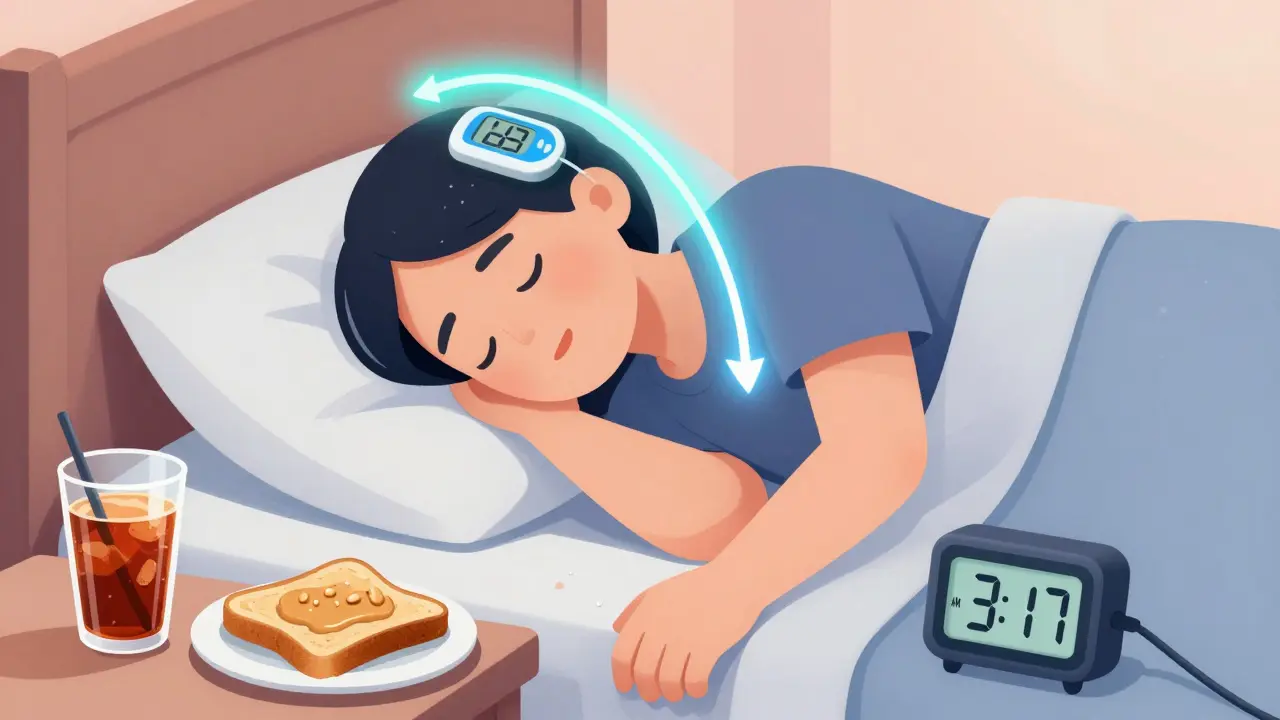
What Counts as a “Safe” Drink?
The American Diabetes Association says moderate drinking is possible-but only if you know what you’re drinking.- One drink = 12 oz beer, 5 oz wine, or 1.5 oz distilled spirits (vodka, gin, whiskey).
- For women: Max one drink per day.
- For men: Max two drinks per day.
But here’s the catch: what you mix it with matters more than the alcohol itself.
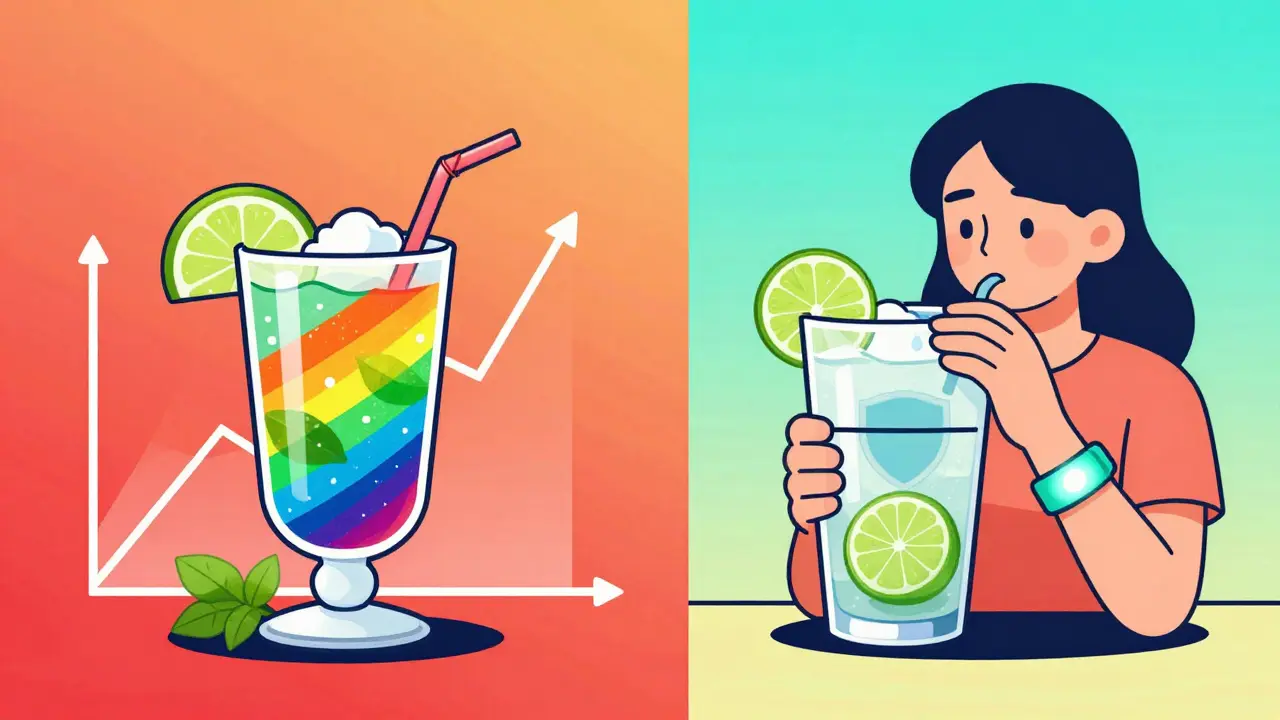
- A mojito? 24 grams of sugar. That’s more than a candy bar.
- A vodka soda with lime? 0 grams of sugar. Much safer.
- Sweet wine? 8-14 grams of sugar per glass. Avoid.
- Light beer? Under 5 grams of carbs. A better choice.
WebMD’s 2023 analysis shows sugary mixers spike your blood sugar first, then crash it later-especially when alcohol hits. That double whammy is why people end up in the hospital.
How to Drink Safely (If You Choose To)
If you decide to drink, follow these steps. No exceptions.- Never drink on an empty stomach. Always eat a meal with carbs first. A sandwich with peanut butter or whole grain toast gives your liver something to work with.
- Check your blood sugar before you drink. If it’s below 100 mg/dL, eat something. Don’t start with a low number.
- Monitor during and after. Check again 2 hours after drinking, and again before bed. If it’s under 100 mg/dL, eat 15-30 grams of fast-acting carbs (like juice or glucose tablets), then add a snack with protein or complex carbs (like peanut butter or cheese).
- Set an alarm. If you’re on insulin or sulfonylureas, wake up once during the night to check your blood sugar. Hypoglycemia at night is silent-and deadly.
- Wear your medical ID. If you pass out, someone needs to know you have diabetes. Emergency responders act 47% faster when they see a medical bracelet.
- Tell someone. Make sure a friend or partner knows you have diabetes. Give them a simple instruction: “If I look confused or can’t wake up, give me juice or call 911.”
What About Low-Carb or “Sugar-Free” Drinks?
A lot of people think, “I’ll just have vodka and soda-no sugar, no problem.” But here’s the truth: it’s still risky. Even without sugar, alcohol blocks your liver. You can still crash. One study showed that people drinking sugar-free cocktails still had drops of 15-20 mg/dL within 2-3 hours. And if you’re on insulin, even a small drop can be dangerous. Also, alcohol affects your judgment. You might think, “I’m fine,” when your body is in trouble. That’s why checking your glucose-even if you’re drinking “safe” drinks-is non-negotiable.What’s New in 2026?
Technology is catching up. Dexcom’s G7 continuous glucose monitor, released in late 2023, now lets users log alcohol intake directly into the app. The system alerts you if your glucose trend drops after drinking, even if you’re asleep. Research is also shifting. A 2024 pilot study found that drinking alcohol within 4 hours after dinner reduced nighttime lows by 31%. Why? Because eating dinner first gives your liver time to process food before alcohol shuts it down. And in 2024, the ADA announced $2.3 million in funding to build AI tools that predict your personal risk based on your meds, liver function, and drinking history. This isn’t science fiction-it’s coming soon.Final Reality Check
You don’t have to quit alcohol forever. But you need to treat it like a medication-with clear rules, timing, and monitoring. If you’re unsure, talk to your doctor. Ask: “Which of my meds interact with alcohol? How do I know if I’m at risk?” Most people think this is just about avoiding sugar. It’s not. It’s about protecting your liver, your brain, and your life. One drink might seem harmless. But in the context of diabetes meds? It’s a gamble with serious stakes.Can I drink alcohol if I have type 2 diabetes and take metformin?
You can, but with serious caution. Metformin doesn’t cause low blood sugar on its own, but alcohol increases your risk of lactic acidosis-a rare but dangerous condition. The FDA warns that drinking even one or two drinks while on metformin raises this risk by 5.7 times. Symptoms include muscle pain, rapid heartbeat, nausea, and confusion. If you choose to drink, never do it on an empty stomach, limit yourself to one drink per day (women) or two (men), and avoid binge drinking. Always check your blood sugar before bed if you’ve had alcohol.
Why does alcohol cause low blood sugar hours after drinking?
Your liver is busy breaking down alcohol instead of making glucose. This process can last 8-24 hours, depending on how much you drank and your liver health. If you’re on insulin or sulfonylureas, your blood sugar keeps dropping because your meds are still working, but your liver can’t refill your glucose supply. That’s why people wake up in the middle of the night with dangerously low levels-sometimes without any warning signs.
Is it safer to drink wine or beer with diabetes?
Dry wines (under 1 gram of sugar per 5 oz serving) and light beers (under 5 grams of carbs per 12 oz) are better choices than sweet wines or regular beer. Sweet wines can have 8-14 grams of sugar, and regular beer can have 10-15 grams. The sugar spikes your blood sugar first, then alcohol crashes it later. That rollercoaster is dangerous. Stick to dry wines, vodka soda, or light beer, and always pair with food.
Can I drink alcohol if I use an insulin pump?
Yes, but you need to be extra careful. Insulin pumps deliver steady doses, and alcohol can make your blood sugar drop unpredictably-sometimes hours later. Many users report lows during sleep, even if they checked their levels before bed. Always set an alarm to check your glucose at least once overnight. Consider lowering your basal rate slightly if you plan to drink, but only under your doctor’s guidance. Never skip meals or snacks when drinking, even if you feel fine.
What should I do if I feel dizzy or confused after drinking?
Don’t assume you’re just drunk. Test your blood sugar immediately. If it’s below 70 mg/dL, treat it like a hypoglycemic emergency: consume 15 grams of fast-acting carbs (like 4 oz juice or 3-4 glucose tablets). Wait 15 minutes, then check again. If it hasn’t risen, repeat. If you can’t test or feel too confused to treat yourself, call for help. Tell someone nearby you have diabetes. If you’re alone and feel like you’re passing out, call 911. Delaying treatment can lead to seizures or coma.
Gabrielle Conroy
February 23, 2026OH MY GOSH, THIS IS SO IMPORTANT!!! 🙌 I had a friend pass out after one glass of wine-thought she was just tipsy, but her BG was 38!!! 😱 We learned the hard way: ALWAYS check before bed, ALWAYS tell your date you have diabetes, and NEVER drink on an empty stomach. I keep glucose tabs in my purse, my car, my damn wallet now. It’s not a hassle-it’s a lifesaver. 💉❤️
Spenser Bickett
February 25, 2026so like… alcohol is bad? shocking. next you’ll tell me water is wet. 🤡 i mean, come on. if you’re on meds that make you crash, maybe don’t take them? just a thought. also, why are we treating alcohol like it’s nuclear waste? it’s a drink. not a death sentence. unless you’re a diabetic. then it’s a death sentence. got it.
Christopher Wiedenhaupt
February 26, 2026I appreciate the thorough breakdown, especially the part about liver metabolism. The 37% reduction in glucose production is backed by solid studies, and the timing-8 hours-is critical. Many people think 'I stopped drinking at 10, I'm fine by midnight.' Not true. The liver doesn't care about your social schedule. Also, the metformin + alcohol lactic acidosis risk is wildly under-discussed. I've seen ER docs miss it because they assume 'alcohol = drunk,' not 'alcohol = metabolic disaster.' Always test. Always tell someone. Always eat.
John Smith
February 26, 2026alcohol shuts down your liver? wow. who knew? next up: oxygen is flammable. you're telling me the same organ that processes your morning coffee can't handle a beer? maybe the problem isn't the drink-it's the meds. just sayin'. also, why are we still using 2020 data? haven't we invented apps for this? or is this just another way to scare people into sobriety?
Natanya Green
February 27, 2026YESSSSS!!! I’m a type 1 and I drink-BUT ONLY IF I’M PREPPED!! 😘 I set THREE alarms. One before bed. One at 2 a.m. One at 4 a.m. I keep juice under my pillow. My boyfriend knows the code: ‘JUICE OR 911.’ I even have a little sticker on my pump that says ‘ALCOHOL MODE: ACTIVATE.’ It’s not extra-it’s essential. And yes, I cried after my first ER trip. But now? I’m alive. And I’m teaching my whole family. You’re not weak for needing precautions. You’re smart.
Steven Pam
February 28, 2026Love this post. Seriously. It’s not about saying ‘no’ to alcohol-it’s about saying ‘yes, but smart.’ I used to think I was invincible until I woke up at 3 a.m. drenched in sweat, heart pounding, thinking I was having a panic attack. Turned out? BG 41. I didn’t even feel it coming. Now I drink like I’m a scientist: check, eat, monitor, sleep with a glucose meter on my chest. It’s not glamorous, but it’s freedom. You can still have a glass. You just have to be the boss of your body. And honestly? That’s kind of empowering.
Timothy Haroutunian
March 2, 2026This whole thing feels like overkill. I’ve been diabetic for 15 years and I’ve had a few drinks. I’m fine. The fear-mongering here is ridiculous. People don’t die from a beer. They die from bad decisions. If you’re on insulin and you don’t eat, you’re gonna crash-alcohol or not. This article reads like a PSA from a hospital that hates fun. I’m not saying don’t be careful. I’m saying stop treating every sip like a death sentence. Also, who the hell is still using glyburide? That drug’s older than my dad’s Ford.
Michael FItzpatrick
March 2, 2026Let me paint you a picture: your liver is a bouncer at a club. Alcohol walks in, throws a wild party, and says, ‘No glucose allowed.’ Meanwhile, your insulin is still handing out passes to the sugar zone. The bouncer’s distracted. The sugar’s flooding in. Then it crashes. That’s the party. And guess who gets the hangover? Your brain. Your heart. Your life. So yeah-don’t just ‘avoid sugar.’ Protect your liver. It’s the only one you’ve got. And if you’re on metformin? That’s not a party. That’s a chemical grenade with a 5.7x fuse. Don’t light it.
Gwen Vincent
March 3, 2026I’m so glad someone finally put this together clearly. I’ve been trying to explain this to my sister for years. She thinks ‘sugar-free’ means ‘safe.’ It doesn’t. The liver doesn’t care if it’s vodka or wine-alcohol is alcohol. And the delayed crash? That’s the silent killer. I always tell people: if you’re going to drink, treat it like a medical procedure. Pre-check. Eat. Monitor. Sleep with a backup. And wear your ID. I did all that after my last episode-and I’m still here. It’s not about fear. It’s about respect.
Nandini Wagh
March 3, 2026So let me get this straight. In America, if you have diabetes and drink, you’re a danger to yourself. But in India, we drink daily and no one dies. Maybe the problem isn’t alcohol. Maybe it’s the meds. Or maybe it’s the culture of overmedicalizing everything. I’ve seen my uncle drink whiskey every night with his rice. He’s 72. Diabetic. Still walking. Still cooking. Still laughing. Maybe we need to ask: is this really about health-or control?
Holley T
March 4, 2026Let’s be real. The ADA says ‘moderate drinking’ but never defines what ‘moderate’ means for someone on sulfonylureas. Is one drink safe? Two? What if I’m 65? What if I have fatty liver? What if I’m on metformin and also take a statin? No one answers that. And the ‘set an alarm’ advice? What if you’re a single parent? What if you work third shift? What if your phone dies? This feels like advice written by people who’ve never missed a meal, never worked two jobs, never slept through an alarm. Real life isn’t a clinical trial. And yet we’re expected to follow it like a religion.
Maranda Najar
March 6, 2026THIS ISN’T JUST ABOUT BLOOD SUGAR. IT’S ABOUT AUTONOMY. IT’S ABOUT THE ER STAFF WHO LOOK AT YOU AND SAY ‘SHE’S JUST DRUNK’ WHILE YOU’RE HAVING A SEIZURE. IT’S ABOUT THE FRIEND WHO DOESN’T KNOW THE DIFFERENCE BETWEEN INTOXICATION AND HYPGLYCEMIA. IT’S ABOUT THE SYSTEM THAT TELLS YOU TO ‘JUST BE CAREFUL’ WHILE IGNORING THE FACT THAT YOUR MEDS AREN’T DESIGNED FOR ALCOHOLIC METABOLISM. THIS ISN’T A LIFESTYLE CHOICE. IT’S A SURVIVAL MANUAL. AND IF YOU THINK YOU CAN ‘JUST HANDLE IT’-YOU’RE ONE DRINK AWAY FROM A CORONER’S REPORT.
Sanjaykumar Rabari
March 7, 2026Alcohol is poison. Diabetes is a curse. Putting them together is asking for trouble. I heard on the news that Big Pharma is pushing this ‘safe drinking’ thing so they can sell more glucose monitors and glucagon pens. They make money when you crash. They don’t care if you live. They care if you buy. So don’t drink. Don’t trust the FDA. Don’t trust the ADA. Just say no. Always.
Kenzie Goode
March 7, 2026I’m so glad I found this. I thought I was the only one who had to wake up at 2 a.m. to check my meter. My partner thinks I’m paranoid. But last month, I had a 37 mg/dL episode and didn’t feel a thing. I just woke up confused, cold, and crying. I didn’t drink much. Just one glass of wine. And I ate. But the meds + alcohol + sleep = silent killer. Now I have a red light on my nightstand that flashes if my BG drops. I’m not dramatic. I’m alive. And I’m telling everyone I know: don’t wait until it’s too late.
Dominic Punch
March 8, 2026Let me be blunt: if you're on insulin or sulfonylureas and you're drinking without a plan-you're playing Russian roulette with your brain. This isn't fearmongering. This is physiology. Your liver isn't a switch. It's a factory. And alcohol doesn't just pause it-it shuts it down for hours. You think you're 'fine' because you didn't feel shaky? That's your adrenaline being blunted. You're not drunk-you're in danger. And if you're not checking your BG before bed? You're gambling. I've seen too many people lose. Don't be one of them. Wear the ID. Tell your people. Set the alarm. It's not extra. It's essential. And if you're on metformin? You're not off the hook. Lactic acidosis doesn't care if you're 'just having one.' It kills quietly. Stay sharp. Stay safe. You're worth it.