
22 Dec 2025
- 14 Comments
When you need a cheaper version of a brand-name drug, you’ve probably heard of generics. They’re the small, white pills that cost a fraction of the original - and they work just as well. But what if your medicine isn’t a pill? What if it’s an injection you get every few weeks for rheumatoid arthritis, cancer, or Crohn’s disease? That’s where authorized biologic alternatives - better known as biosimilars - come in. They’re not exact copies like generics. They’re more like very close twins. And understanding the difference could save you thousands.
Why Biosimilars Aren’t Like Regular Generics
Generic drugs are simple. They’re chemically identical to their brand-name counterparts. If you take a generic version of lisinopril, you’re getting the exact same molecule as in Zestril. The FDA approves them through a straightforward process: prove it’s bioequivalent, and you’re good to go. Biosimilars? Not even close. Biologics - the drugs biosimilars copy - are made from living cells. Think yeast, bacteria, or animal cells grown in giant vats. These aren’t chemicals you can mix in a lab. They’re complex, fragile, and sensitive to tiny changes in temperature, pH, or even the water used in production. No two batches are ever perfectly identical - not even the original brand-name product. So, you can’t make an exact copy. You can only make something highly similar. That’s why the FDA requires biosimilars to go through a whole different approval path. They don’t just test blood levels like with generics. They look at the protein structure, how the drug behaves in the body, how it triggers immune responses, and whether it works just as well in clinical trials. The goal? No clinically meaningful difference in safety or effectiveness.Interchangeable Biosimilars: The Closest Thing to a Generic
Not all biosimilars are the same. There’s a special subset called interchangeable biosimilars. These are the ones that can be swapped for the original brand at the pharmacy - no doctor’s note needed. That’s exactly what happens with generics. As of late 2023, only a handful of biosimilars have earned this status. The first interchangeable version of Humira (adalimumab), called Amjevita, got FDA approval in November 2023. That was a big deal. Humira was the top-selling drug in the U.S. for years, costing patients over $2,000 a month. Amjevita cuts that cost by up to 50%. But here’s the catch: even if a biosimilar is interchangeable, your state has to allow pharmacists to swap it without telling your doctor. Right now, only 32 states - including California, New York, and Texas - have laws that let this happen. In the other 18, your pharmacist must call your doctor first. That slows things down.Cost Savings: It’s Not as Big as You Think
Generics typically cost 80-85% less than the brand. Biosimilars? They’re cheaper, but not that much. Most save you 10-50%, depending on the drug and where you live. Why the gap? Because biologics are expensive to make. The manufacturing process is complex, and companies spend billions developing them. Even when a biosimilar enters the market, the original manufacturer often lowers prices or offers rebates to keep patients loyal. Still, the savings add up. In 2023, biosimilars helped give patients over 344 million extra days of treatment that they otherwise couldn’t have afforded. For someone with psoriasis or rheumatoid arthritis, that means staying on treatment - not skipping doses because of cost.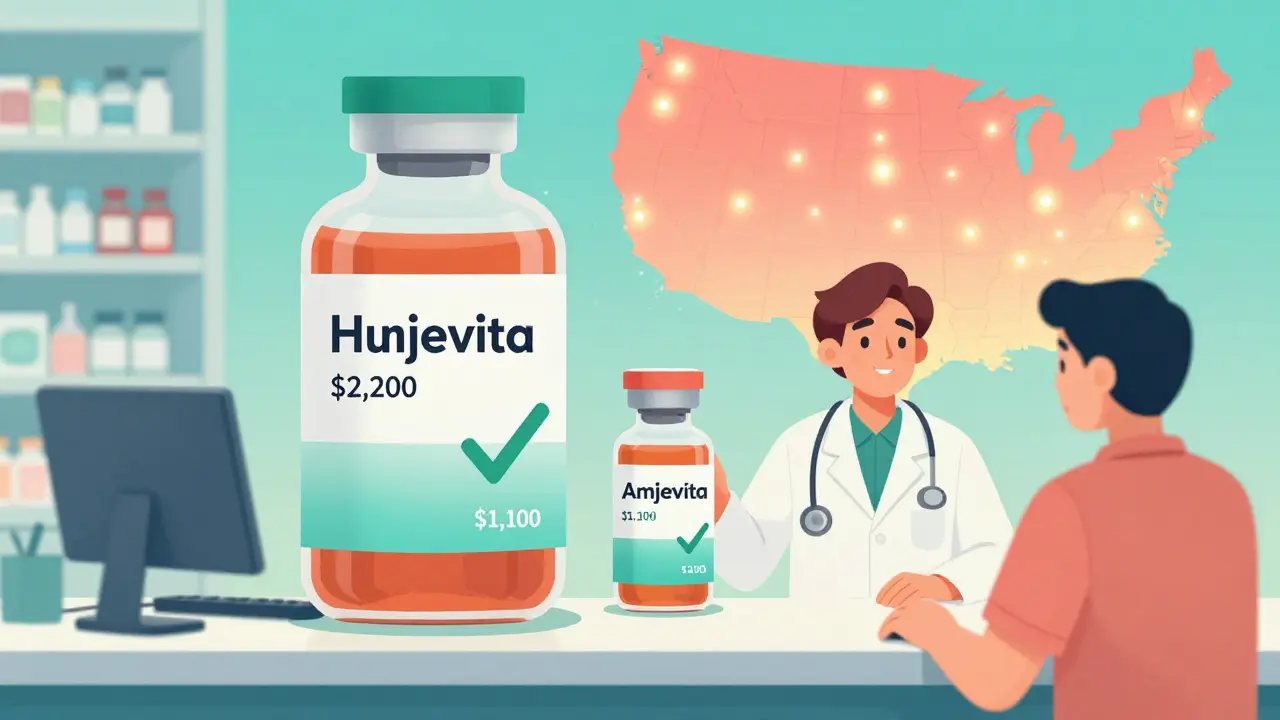
Real People, Real Experiences
Some patients report no difference at all after switching. One woman on the American Cancer Society’s forum switched from Herceptin to its biosimilar for breast cancer. Her out-of-pocket cost dropped from $1,200 to $450 per infusion. No new side effects. Same results. But not everyone has a smooth ride. Some patients on Reddit and in arthritis support groups talk about being switched multiple times - brand to biosimilar, then to another biosimilar, then back again - all driven by insurance changes. One patient developed new injection site reactions after her third switch. Was it the drug? Or just bad timing? No one knows for sure. A 2022 survey by the Arthritis Foundation found that 37% of patients had their treatment disrupted by forced switches. But only 12% actually felt worse. That’s a key point: disruption doesn’t always mean harm.Doctors and Pharmacists Are Still Learning
Many doctors didn’t learn about biosimilars in medical school. They were trained on brand-name drugs. Now, they’re being asked to prescribe something they don’t fully understand. The American College of Rheumatology says it takes an average of 6-8 hours of continuing education for physicians to feel confident prescribing biosimilars. Pharmacists, too, need training on substitution rules - especially since those rules change by state. That’s why some providers hesitate. Not because they doubt the science. But because they’re worried about confusion, paperwork, and patients getting anxious.
What’s Changing in 2025?
The FDA is pushing hard to speed things up. In 2023, they approved 15 new biosimilars. Their goal? 15-20 per year by 2025. That’s a big jump from just a few years ago. The first interchangeable biosimilar for Humira opened the floodgates. More are coming. By 2028, over $115 billion in global biologic sales will face biosimilar competition. Drugs like Enbrel, Rituxan, and Avastin are next on the list. Meanwhile, Medicare Part D plans are starting to favor biosimilars. In 2023, 62% of plans put them on the same cost tier as the brand. That means lower copays. Some plans even require you to try a biosimilar first.What You Should Do
If you’re on a biologic drug and it’s expensive:- Ask your doctor if a biosimilar is available for your condition.
- Check with your pharmacy to see if your plan covers it - and if it’s interchangeable.
- Don’t panic if you’re switched. Most patients do just fine.
- Keep track of any new side effects. Report them to your doctor.
- Know your state’s substitution laws. You have rights.
Why This Matters
Biosimilars aren’t perfect. But they’re the best option we have to make life-saving biologics affordable. They’re not generics. They’re something new - and they’re working. The science is solid. The FDA’s approval process is rigorous. The savings are real. And the number of patients benefiting is growing fast. The real challenge isn’t the science. It’s the system. Insurance rules. Doctor habits. Patient fears. State laws. Those are the things holding back faster adoption. But change is coming. And if you’re paying out of pocket for a biologic, you deserve to know about your options.Are biosimilars safe?
Yes. The FDA requires biosimilars to prove they have no clinically meaningful differences in safety, purity, or effectiveness compared to the original biologic. Thousands of patients have used them since 2015, and studies show no increase in side effects or reduced effectiveness. The approval process includes detailed lab tests, clinical trials, and long-term monitoring.
Can a pharmacist substitute a biosimilar without my doctor’s approval?
Only if the biosimilar is labeled as "interchangeable" AND your state allows it. As of 2025, 32 states - including California, New York, and Texas - permit pharmacists to substitute interchangeable biosimilars without contacting your doctor. In the other 18 states, the pharmacist must get your doctor’s OK first. Always ask your pharmacist about your state’s rules.
How much money can I save with a biosimilar?
Savings vary by drug and insurance plan, but most biosimilars cost 10% to 50% less than the original biologic. For example, a monthly Humira injection might drop from $2,200 to $1,100 with its biosimilar. Some patients report out-of-pocket costs falling from $1,200 to under $500 per infusion. Medicare and private insurers are increasingly pushing biosimilars to lower costs.
Why aren’t more people using biosimilars?
Three main reasons: fear, confusion, and barriers. Many patients and doctors worry biosimilars aren’t as good - even though science says otherwise. Insurance companies sometimes force switches without warning, causing disruption. And in many states, pharmacists can’t substitute interchangeable biosimilars without a doctor’s note. Education and clearer rules are slowly changing this.
Is there a difference between biosimilars from different companies?
All approved biosimilars for the same reference product are equally safe and effective. But they’re not identical to each other. Think of them as different brands of the same car model - same engine, same safety rating, but different interiors or features. Switching between biosimilars isn’t recommended unless your doctor approves it. Most patients do best staying on one version.
Lu Jelonek
December 23, 2025I switched to a biosimilar for my rheumatoid arthritis last year. My copay dropped from $800 to $120. No side effects, no flare-ups. I was nervous as hell, but my doctor said the data’s solid. Turns out, I’m one of the lucky ones who got lucky with the switch.
Now I tell everyone I know who’s on Humira to ask about it. It’s not magic, but it’s close enough.
Ademola Madehin
December 25, 2025bro i got switched from brand to biosimilar and then back to brand and then to another biosimilar in 6 months. my butt is raw from all the injections and my insurance keeps playing musical chairs with my meds. this system is broken. someone needs to get fired.
Jeffrey Frye
December 26, 2025ok but let’s be real - biosimilars aren’t ‘twins,’ they’re like a 70% accurate deepfake of the original. the FDA says ‘no clinically meaningful difference,’ but that’s legalese for ‘we didn’t find a statistically significant difference in a 6-month trial with 300 people.’
What about long-term immunogenicity? What about patients with autoimmune disorders who are hypersensitive to trace contaminants? Nobody’s tracking that at scale. And don’t get me started on the ‘interchangeable’ label - that’s just pharma’s way of saying ‘we want you to swap without asking.’
Andrea Di Candia
December 27, 2025It’s funny how we treat medicine like it’s a car model - interchangeable parts, same engine, different paint.
But this isn’t a Toyota Camry. This is your immune system we’re tinkering with. And yet - here we are, trying to make it cheaper. I don’t think we should be afraid of biosimilars. I think we should be afraid of a system that forces people to choose between their health and their rent.
Maybe the real breakthrough isn’t the science. Maybe it’s us finally admitting that healthcare shouldn’t be a luxury.
Also - thank you to everyone who’s shared their stories. That’s the real data.
Joseph Manuel
December 29, 2025While the FDA’s regulatory framework for biosimilars is scientifically rigorous, the clinical translation remains inconsistent across patient populations. The absence of long-term, real-world pharmacovigilance data raises legitimate concerns regarding cumulative immunogenicity risks, particularly in pediatric and geriatric cohorts.
Furthermore, the term ‘interchangeable’ is misleading in a clinical context. It implies equivalence, when in fact, the data supports similarity - a nuanced but critical distinction. Until state-level substitution laws are harmonized and provider education is standardized, widespread adoption remains premature.
Lindsey Kidd
December 30, 2025just wanted to say thank you to everyone who shared their stories 💙
i switched to a biosimilar for my psoriasis and honestly? i cried when i saw the bill. $45 instead of $900. no side effects, no drama. just… life.
to the docs and pharmacists learning this stuff - you’re doing god’s work. to the patients scared to switch - you’re not alone. and you’re not crazy for being nervous. but please, talk to someone. ask questions. you deserve to feel safe.
and to the system? we see you. we’re not mad. we’re just… tired. let’s do better.
Rachel Cericola
December 31, 2025Let me tell you what no one’s talking about: the insurance middleman is the real villain here.
My mom was on Enbrel for 8 years. Stable. Happy. Then, in 2022, her plan switched her to a biosimilar without telling her. No warning. No paperwork. Just a new pen in the mail. She didn’t notice a difference - until she did. Two months later, she developed a rash. Not severe. Not dangerous. But it scared her. She didn’t know if it was the drug, the stress, or her body just… giving up.
She called the pharmacy. They said, ‘It’s interchangeable.’ She called her doctor. He said, ‘I didn’t authorize it.’ She called the insurer. They said, ‘It’s cheaper. We’re saving you money.’
Here’s the truth: biosimilars are great. But forcing patients into them without consent? That’s not innovation. That’s exploitation. And it’s happening every day. We need patient autonomy, not cost-cutting shortcuts.
Also - 37% of patients had their treatment disrupted? That’s not a statistic. That’s 37% of people who had their lives upended by bureaucracy. We need to fix that.
And yes - I’m mad. And I’m not sorry.
Blow Job
December 31, 2025Just got my first biosimilar shot last week. Felt weird at first - like my body was like ‘wait, who are you?’ But after two days, nothing. Same energy, same pain levels, same life.
My pharmacist actually took 15 minutes to explain everything. No rush. No jargon. Just ‘here’s what’s happening, here’s what to watch for.’
That’s what we need more of. Not just cheaper drugs. Better communication.
EMMANUEL EMEKAOGBOR
January 2, 2026While I am not a medical professional, I find the discourse surrounding biosimilars to be profoundly insightful. The distinction between chemical generics and biologic analogues underscores the complexity inherent in modern pharmaceutical science.
It is commendable that regulatory bodies have established stringent criteria for biosimilar approval. Nevertheless, the disparity in state-level substitution laws presents a significant administrative and ethical challenge. Harmonization of these policies would facilitate equitable access across jurisdictions.
Furthermore, the psychological dimension of patient trust cannot be underestimated. Even in the presence of robust clinical evidence, perceived risk may deter adherence. Thus, education and transparent communication remain indispensable components of successful implementation.
CHETAN MANDLECHA
January 3, 2026in india we don’t have access to most biosimilars yet. the ones we do are cheaper but not always reliable. some are imported, some are made locally - no one knows which is which. doctors just pick what’s in stock.
we need better regulation here. not just cheaper drugs - trustworthy ones.
Jillian Angus
January 4, 2026my cousin switched and now she’s fine
but i heard someone else had a bad reaction
so idk
Paula Villete
January 5, 2026Oh wow. A 50% discount on a drug that costs $2,200 a month. That’s like saying ‘here’s your $1,100 off coupon… now go buy a Tesla.’
Let’s not pretend this is about patient care. It’s about insurers finally realizing they can outsource their greed to the FDA.
And don’t get me started on ‘interchangeable.’ That’s not a medical term. That’s a legal loophole dressed up like a superhero cape.
Also - ‘no clinically meaningful difference’? That’s the exact phrase they used for Vioxx too. Until people started dying.
So no. I’m not ‘optimistic.’ I’m just waiting for the lawsuit.
Georgia Brach
January 6, 2026The assertion that biosimilars are ‘safe’ is not substantiated by longitudinal, head-to-head comparative studies against the originator biologic across diverse comorbid populations. The FDA’s approval pathway, while technically compliant, relies heavily on surrogate endpoints and short-term clinical trials.
Furthermore, the proliferation of interchangeable designations without uniform state adoption creates a regulatory patchwork that undermines clinical consistency. This is not progress. It is regulatory arbitrage disguised as innovation.
Until post-marketing surveillance is mandatory, standardized, and publicly accessible, any claim of equivalence remains speculative.
Katie Taylor
January 7, 2026Stop acting like this is a hard choice. If you’re paying $2,000 a month for a drug, you’re already being robbed. Biosimilars aren’t the problem - the system is. If you’re scared to switch, that’s not because the science is shaky. It’s because you’ve been lied to for years.
Try the biosimilar. If something goes wrong, you go back. But don’t let fear keep you from saving your life. You’re not a guinea pig. You’re a person who deserves to breathe without bankruptcy.