

28 Jan 2026
- 0 Comments
Why Ginkgo Biloba and Blood Thinners Don’t Play Nice
People take Ginkgo biloba for memory, focus, or better circulation. It’s one of the most popular herbal supplements in the U.S., with over 12 million users. But if you’re on a blood thinner-like warfarin, aspirin, or clopidogrel-this supplement could be riskier than you think. You might not feel anything unusual. No dizziness. No bruising. Just a quiet, invisible danger building inside you.
Here’s the problem: Ginkgo biloba doesn’t just sit there. It interacts with your blood’s ability to clot. Not always. Not in everyone. But enough times to cause real harm. There are documented cases of brain bleeds, nosebleeds that won’t stop, and emergency surgeries because of unexpected bleeding. And the worst part? Many people don’t even realize they’re mixing the two.
How Ginkgo Biloba Affects Your Blood
Ginkgo biloba comes from the leaves of a tree that’s been around for 270 million years. It’s not just an old plant-it’s a powerful one. The standardized extract used in supplements, called EGb 761, contains compounds that interfere with platelets. Platelets are the tiny cells in your blood that stick together to form clots when you get cut. Think of them like emergency responders.
When you take Ginkgo, it makes these platelets less likely to clump. That sounds good if you’re trying to prevent clots, right? But if you’re already on a blood thinner, you’re already slowing down clotting. Adding Ginkgo is like stepping on the gas pedal. You’re not just slowing down-you’re going into overdrive.
Some studies say this effect is small. Others say it’s enough to matter. The truth? It’s not about whether Ginkgo is strong. It’s about whether you can afford the risk.
Which Blood Thinners Are Riskiest?
Not all blood thinners react the same way with Ginkgo. Some combinations are more dangerous than others.
- Warfarin (Coumadin, Jantoven): This is the big red flag. Warfarin works by blocking vitamin K, which your body needs to make clotting proteins. Ginkgo may make warfarin more powerful by changing how your liver breaks it down. Case reports link this combo to serious bleeding-even fatal brain bleeds. GoodRx and the Mayo Clinic both list this as a high-risk interaction. Avoid it.
- Aspirin: Aspirin stops platelets from sticking together. Ginkgo does something similar. Studies show mixed results: some say no big risk, others show increased bleeding after surgery. If you’re on daily aspirin for heart health, talk to your doctor before adding Ginkgo.
- Clopidogrel (Plavix): This is another antiplatelet drug, often used after stents or strokes. Ginkgo and clopidogrel together have been linked to bleeding in over 60 prescriptions in one study. That’s not a coincidence.
- DOACs (like apixaban, rivaroxaban): These newer blood thinners are often seen as safer. But Ginkgo can still interfere. One 2020 study found 18% of patients taking DOACs also used Ginkgo, and nearly half of those were at risk for dangerous interactions.
Even if your doctor says your blood thinner is "safe," Ginkgo doesn’t play by the same rules as prescription drugs. It’s not regulated the same way. One bottle might be pure. Another might be weak-or worse, contaminated.
The Evidence Is Mixed-So What Should You Do?
Some experts say Ginkgo is fine. A 2008 review in PubMed found no strong evidence that Ginkgo increases bleeding when taken with aspirin or warfarin. They blamed bad case reports-unverified stories from people who took unknown products.
But here’s the catch: those "bad" case reports? They’re the ones that ended up in the ER. The ones that made headlines. The ones that scared doctors into warning patients.
The American Society of Health-System Pharmacists calls the risk "theoretical." But the Natural Medicines Comprehensive Database says "Moderate-Be cautious." The Institute for Safe Medication Practices lists Ginkgo as a high-alert herbal product. That’s not a small warning. That’s a red light.
And then there’s the real world. In a 2022 survey of 500 pharmacists, 78% routinely warn patients about Ginkgo and blood thinners. Sixty-three percent say to stop it before surgery. That’s not paranoia. That’s experience.
What Doctors and Pharmacists Really Recommend
Most professionals don’t say "never." They say "be careful."
- Mayo Clinic: Says Ginkgo may raise bleeding risk with aspirin, clopidogrel, or warfarin. Don’t take it without talking to your doctor.
- Cleveland Clinic: Lists blood thinners as a direct contraindication. No gray area.
- GoodRx: Warns against warfarin entirely. Says aspirin and clopidogrel need doctor approval.
- American Society of Anesthesiologists: Recommends stopping Ginkgo at least two weeks before surgery.
- Dr. Michael Murray (author of The Encyclopedia of Natural Medicine): Says stop Ginkgo 36 hours before surgery.
- Dr. Tieraona Low Dog: Recommends two weeks off-same as the anesthesiologists.
Notice the pattern? Even if the science is unclear, the advice is consistent: when in doubt, pause it.
What About Over-the-Counter Supplements?
Not all Ginkgo is the same. The brand matters. The extract matters. The dose matters.
Most studies showing safety used EGb 761-a specific, standardized extract. But what’s on the shelf at your local store? You don’t know. It might be weaker. Or stronger. Or mixed with other herbs like garlic or ginseng, which also thin the blood.
Here’s a fact: 42% of Ginkgo products now carry warnings about blood thinners. That’s up from 28% in 2018. Companies are starting to get scared. And they should be.
And here’s another: the FDA has received 18 reports of bleeding linked to Ginkgo between 2008 and 2020. They couldn’t prove Ginkgo caused them-but they couldn’t rule it out either. That’s enough for hospitals to flag it in their systems.
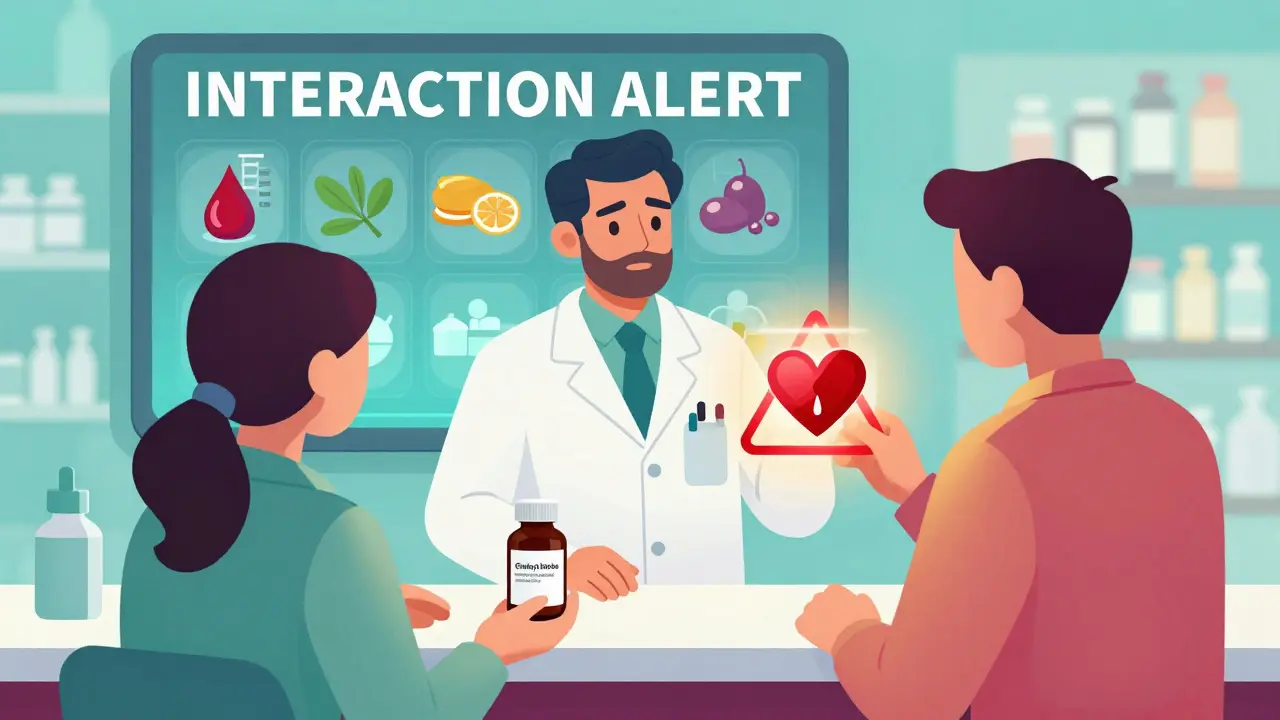
Epic and Cerner, the two biggest electronic health record systems, now trigger alerts when Ginkgo is added to a patient’s list of blood thinners. Epic only warns for warfarin. Cerner warns for all anticoagulants. Why? Because someone got hurt. And now the system is trying to stop it.

What You Should Do Right Now
If you’re on a blood thinner and taking Ginkgo biloba:
- Stop taking it until you talk to your doctor or pharmacist.
- Bring your supplement bottle with you. Don’t just say "I take Ginkgo." Show them the label. The dose matters.
- Ask: "Could this interact with my blood thinner?" Don’t assume it’s safe because it’s "natural."
- If you’re scheduled for surgery-even a dental extraction-ask if you need to stop Ginkgo. Two weeks is the safest window.
If you’re not on a blood thinner but thinking about starting Ginkgo:
- Check your medication list. Are you on aspirin? NSAIDs like ibuprofen? Even those can add up.
- Ask your pharmacist. They’re trained to spot these hidden interactions.
- Consider whether you really need it. Is it helping? Or are you taking it because you read it’s good for memory? There are safer ways to support brain health.
What Else Can Thin Your Blood?
Ginkgo isn’t alone. Other herbs and supplements can do the same thing:
- Garlic
- Danshen (Chinese herb)
- Evening primrose oil
- Fish oil (in high doses)
- Green tea extract
- Curcumin (from turmeric)
If you’re on a blood thinner, you need to treat all of these the same way: ask before you take them. One supplement might be fine. Two or three together? That’s when things get dangerous.
Bottom Line: Don’t Guess. Ask.
You don’t need to fear Ginkgo biloba. But you do need to respect it. It’s not harmless. It’s not a vitamin. It’s a bioactive substance with real effects on your body.
Doctors don’t know everything. Neither do supplement companies. But you have the power to ask the right questions before you take something new.
If you’re on a blood thinner, and you’re thinking about Ginkgo biloba: don’t start it. Don’t keep taking it. Talk to your doctor. Bring your bottle. Get it in writing. Your body will thank you.
Can I take Ginkgo biloba with warfarin?
No. Combining Ginkgo biloba with warfarin is considered a high-risk interaction. Case reports have linked this combination to serious bleeding, including brain hemorrhages. Even though some studies show no effect, the potential danger is too great to ignore. The Mayo Clinic and GoodRx both advise avoiding this combination entirely.
How long before surgery should I stop Ginkgo biloba?
Most experts recommend stopping Ginkgo biloba at least two weeks before any surgical procedure, including dental work. Some doctors suggest 36 hours, but two weeks is the safer standard. This gives your body time to clear the supplement and reduces the risk of unexpected bleeding during or after surgery.
Is Ginkgo biloba safe with aspirin?
It’s not clearly safe. While some studies show no significant interaction, others have linked Ginkgo and aspirin to increased bleeding risk, especially around surgery. Because both affect platelet function, the combined effect could be unpredictable. Talk to your doctor before taking them together.
Do all Ginkgo supplements have the same effect?
No. Most research on safety used a specific standardized extract called EGb 761. Many store-bought supplements are not standardized and may contain varying amounts of active ingredients-or even contaminants. You can’t assume a bottle labeled "Ginkgo biloba" is the same as what was studied. Always check the label for extract type and dosage.
What should I do if I’m already taking Ginkgo and a blood thinner?
Stop taking Ginkgo immediately and schedule a conversation with your doctor or pharmacist. Bring the supplement bottle with you. They’ll help you assess your risk based on your specific medications, health history, and reason for taking Ginkgo. Do not restart it without their approval.
Are there any blood thinners that are safe with Ginkgo?
There’s no blood thinner proven to be completely safe with Ginkgo biloba. Even newer drugs like apixaban or rivaroxaban have shown interaction risks in studies. The safest approach is to avoid combining them unless your doctor, after reviewing your case, gives you a clear green light. Don’t assume safety just because a drug is "newer" or "stronger."