
1 Dec 2025
- 13 Comments
Every day, millions of people take generic drugs. They’re cheaper, just as safe, and approved by the same agencies that oversee brand-name medicines. Yet, if you ask someone why they won’t switch from a brand-name pill to a generic, you’ll often hear: "I don’t trust it." Not because it’s false. Not because it’s been proven ineffective. But because of what they read in the news.
What the headlines don’t tell you
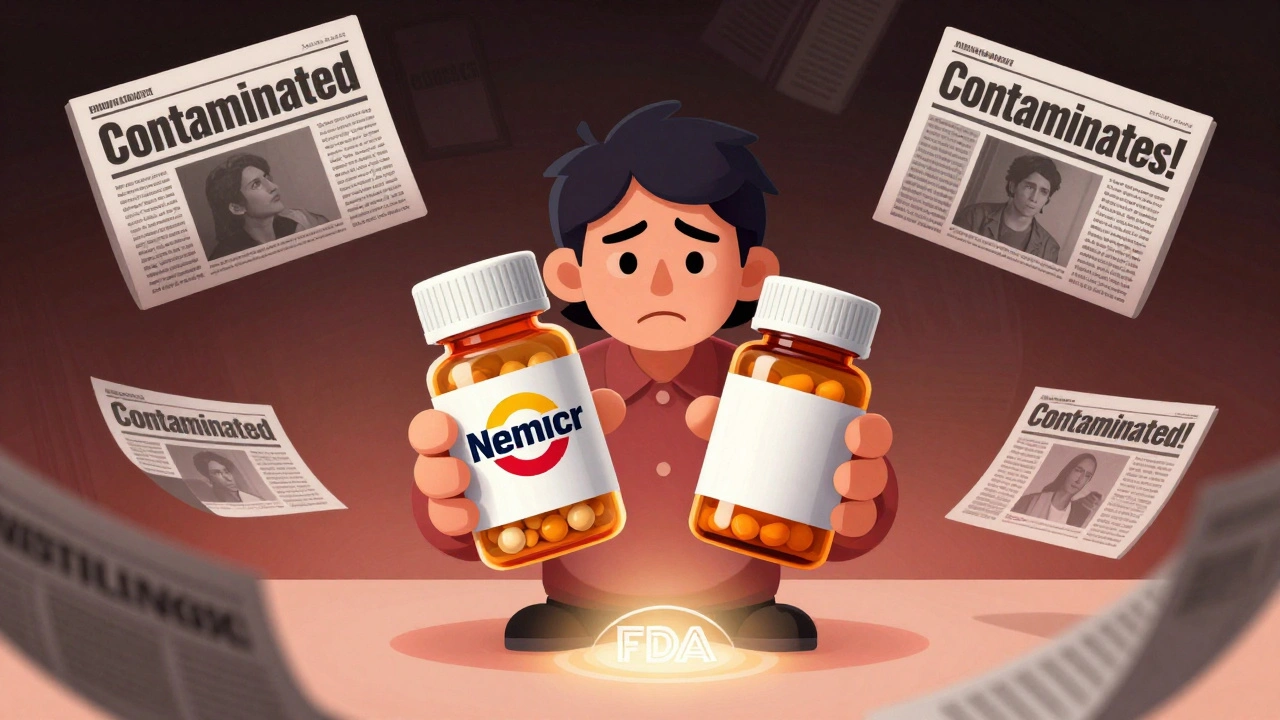
You’ve seen them: "Contaminated Generic Drugs Reveal an Urgent Public Health Crisis," "How Some Generic Drugs Could Do More Harm Than Good," "Medicines Made in India Set Off Safety Worries." These aren’t niche blogs. These are headlines from major newspapers and TV networks. And they stick. Even when the stories are about a single batch of pills from one factory, they’re framed as if every generic drug in the country is dangerous. The truth? The FDA approves over 90% of all prescriptions as generics. They’re required to have the same active ingredients, strength, and dosage as their brand-name counterparts. The agency tests them rigorously. But you won’t hear that in the news. Instead, you hear about a bad batch. And that’s all most people remember. A 2014 study in JAMA Network found that only 2% of newspapers had official policies requiring reporters to use generic drug names. The rest? They called everything by its brand name. So when a story says, "Lipitor alternatives may be risky," you think: "Lipitor is the real one. The rest are knockoffs." That’s not just misleading-it’s dangerous. It makes people pay more, skip doses, or avoid treatment entirely.The psychology of fear over facts
Human brains don’t process risk logically. We react to stories, not statistics. One headline about a contaminated pill creates more fear than a thousand studies showing 99% safety rates. That’s why, even though 84% of prescriptions in the U.S. are filled with generics, nearly 40% of people still can’t tell the difference between a generic and a brand-name package. Only 17% could correctly identify a generic medication by its label. This isn’t ignorance. It’s learned skepticism. And it’s fueled by media patterns. News outlets don’t report on the 10,000 safe generic pills shipped every day. They report on the one that had a foreign particle. Why? Because fear drives clicks. And fear drives behavior. A 2023 study from the University of Texas at Dallas found something chilling: when patients received bad news about their health-say, a new diagnosis of high blood pressure or diabetes-they were far more likely to demand the brand-name drug, even if it cost three times as much. And the effect peaked within the first 90 days after the diagnosis. In moments of vulnerability, people reach for what feels safer. Even if it’s not.
Who’s really behind the mistrust?
It’s not just the media. Pharmaceutical companies have a financial interest in keeping you afraid of generics. Brand-name drugs can cost 10 to 20 times more. When generics enter the market, prices drop-by about 20% when there are three or more competitors, according to the HHS ASPE report. That’s good for patients. Bad for profits. And yet, the same companies that profit from high prices often fund the very research that gets reported in the news. A 2014 study found that only 2% of newspaper articles disclosed pharmaceutical funding. Most didn’t say a word. So when you read a study claiming "generic metformin is less effective," you have no idea if it was paid for by the maker of Glucophage. Pharmacists know this. They see patients walk in, holding a brand-name box, asking, "Can I get this cheaper?" They know the generic is identical. But they also know the patient doesn’t believe it. So they spend extra minutes explaining. They show the FDA approval stamp. They talk about how generics are tested for bioequivalence-meaning your body absorbs them the same way. They’re the last line of defense against misinformation.Doctors and pharmacists: the real influencers
Here’s the surprising part: when your doctor or pharmacist recommends a generic, you’re far more likely to take it-even if you’re scared. A systematic review in the PMC found that patient trust in their healthcare provider overrides personal doubts about generics. That’s not because doctors are more persuasive. It’s because they’re seen as credible. They’re the ones who know your history, your condition, your concerns. If they say, "This generic will work just as well," you believe them. But here’s the problem: many doctors don’t bring it up. They assume you’ll just take what’s dispensed. Or worse-they’re skeptical themselves. A 2015 study found that even some pharmacists and physicians prefer brand-name drugs for their own families, not because they think generics are worse, but because they’re unsure about minor formulation differences. Those differences? They exist. A generic insulin pen might have a slightly different button feel. A generic inhaler might have a different color. But the active ingredient? Identical. The effect? The same. The FDA requires this. Yet, most patients don’t know that. And most providers don’t explain it.
Myson Jones
December 2, 2025It's fascinating how media framing shapes perception more than clinical data. The fact that 84% of prescriptions are generics yet 40% of people can't visually identify them speaks volumes about the power of branding over science. We've turned pharmaceuticals into celebrity products-Lipitor isn't a drug, it's a status symbol.
Albert Essel
December 3, 2025The FDA’s bioequivalence standards are among the most rigorous in the world. A generic drug must demonstrate within 80–125% of the brand’s absorption rate-statistically indistinguishable in clinical outcomes. Yet we treat them like knockoff handbags. This isn’t skepticism; it’s irrational consumerism disguised as caution.
Rashi Taliyan
December 4, 2025I’m from India and I’ve worked in pharma manufacturing-our factories supply 40% of the world’s generics. We have stricter quality control than most U.S. labs realize. When headlines scream ‘contaminated’, they ignore the entire supply chain audit system. It’s not just misleading-it’s insulting to the engineers who work 12-hour shifts to ensure purity.
And yes, I’ve seen the same pill made in New Jersey and in Hyderabad. Same batch number. Same machine. Same inspector. Only the label changes.
Rashmin Patel
December 5, 2025Let’s be real-people don’t distrust generics because they’re stupid. They distrust them because they’ve been lied to for decades. Big Pharma spent billions on ads telling us ‘brand = better’. They paid doctors to say it. They funded ‘studies’ that subtly implied generics were ‘less reliable’. And now? We’re paying the price in lives lost to non-adherence because someone couldn’t afford their meds.
I’ve had patients cry because they chose insulin over rent. Then they find out the generic is identical-and they feel guilty for doubting it. That’s not ignorance. That’s trauma.
And the worst part? Pharmacists are the only ones left holding the truth. We’re not just dispensing pills-we’re doing emotional labor every single day.
We need media literacy in schools. We need doctors to say ‘I prescribe this generic because it’s just as good’ out loud. We need newsrooms to stop treating every batch recall like the end of civilization.
And if you’re reading this and still think ‘brand = safer’? Please, just ask your pharmacist. They’ll show you the FDA report. They’ll show you the bioequivalence data. They’ll show you the truth.
And then? Maybe you’ll stop paying $200 for a pill that costs $2.
James Kerr
December 6, 2025My grandma takes her generic blood pressure med every day. She doesn’t know what ‘bioequivalence’ means. But she knows it keeps her out of the hospital. And that’s all that matters. 🙌
bobby chandra
December 8, 2025Let me just say-this entire system is a scam wrapped in a lab coat. Big Pharma doesn’t want you to know that the pill in your hand costs 1% of what they charge. They want you to believe that the color, the shape, the logo-that’s what makes it work. It’s psychological branding at its most cynical. And we’re all complicit.
Next time you see a commercial for ‘Brand-X’ with a sunset and a dog wagging its tail? Laugh. Then ask your doctor for the generic. It’s the same damn thing.
Archie singh
December 9, 2025This article is just woke corporate propaganda. If generics were so good why do they look different? Why do they have different side effects? You think the FDA is some saint? They’re bought and paid for. I’ve seen people get sick on generics. You ignore that at your peril.
Joykrishna Banerjee
December 10, 2025One must interrogate the epistemological foundations of pharmaceutical trust. The hegemony of brand-name nomenclature, as articulated by the JAMA study, constitutes a semiotic distortion wherein the signifier (Lipitor) is fetishized over the signified (atorvastatin). This is not mere misinformation-it is a structural collapse of pharmacological semiotics in the public sphere.
Further, the neoliberal commodification of health outcomes has rendered patients as consumers rather than subjects of medical epistemology. The media, in its algorithmic imperative, amplifies deviant cases to maximize affective engagement-thereby reinforcing a pathological schema wherein safety is measured not by statistical reliability but by narrative salience.
One wonders if the FDA’s initiative is merely performative. Is it not the case that the very institutions tasked with safeguarding public health are complicit in the commodification of fear? The solution, then, lies not in education-but in deconstructing the capitalist logic that renders medicine a spectacle.
Cindy Lopez
December 10, 2025This is the same tired argument. Everyone knows generics are cheaper. But cheaper doesn’t mean better. I’m not buying it.
Kara Bysterbusch
December 11, 2025As someone who’s lived in both India and the U.S., I’ve seen firsthand how cultural narratives shape medicine. In India, generics are the norm-and people don’t question them. In the U.S., we’ve been sold a fantasy that ‘more expensive = more effective’. It’s not science. It’s marketing.
But here’s what’s beautiful: when you take a patient aside, show them the FDA’s side-by-side comparison, and say, ‘Your body doesn’t know the difference’-they breathe easier. It’s not about changing the system overnight. It’s about changing one conversation at a time.
And honestly? The fact that pharmacists are the unsung heroes here? That’s the real story. They’re not just filling prescriptions-they’re rebuilding trust, one pill at a time.
Chloe Madison
December 11, 2025My dad was diagnosed with diabetes last year. He refused the generic metformin for three months because of a news headline. He spent $180/month. When I finally sat him down with the FDA’s fact sheet, he just looked at me and said, ‘I didn’t know they were the same.’
He switched. Saved $150/month. His A1c dropped. He cried. Not because he was mad. Because he felt stupid for believing the fear.
So yeah. This isn’t about policy. It’s about people. And we owe them better than headlines.
vinoth kumar
December 13, 2025As someone who works in a pharmacy in Delhi, I can confirm: the same tablets we make here go to the U.S., Canada, and Europe. Same factory. Same batch. Same QC. The only difference? The label. And the price. People in the U.S. pay 10x more and think they’re getting something better. It’s heartbreaking.
But I’ve also seen patients here refuse generics because they think ‘Indian-made’ means ‘low quality’. So we’re all trapped in the same cycle.
Education is the only way out. Not laws. Not ads. Just honest conversations.
Vincent Soldja
December 15, 2025Generics are fine. But sometimes they don't work as well. End of story.