
10 Jan 2026
- 0 Comments
What Exactly Is Nephrotic Syndrome?
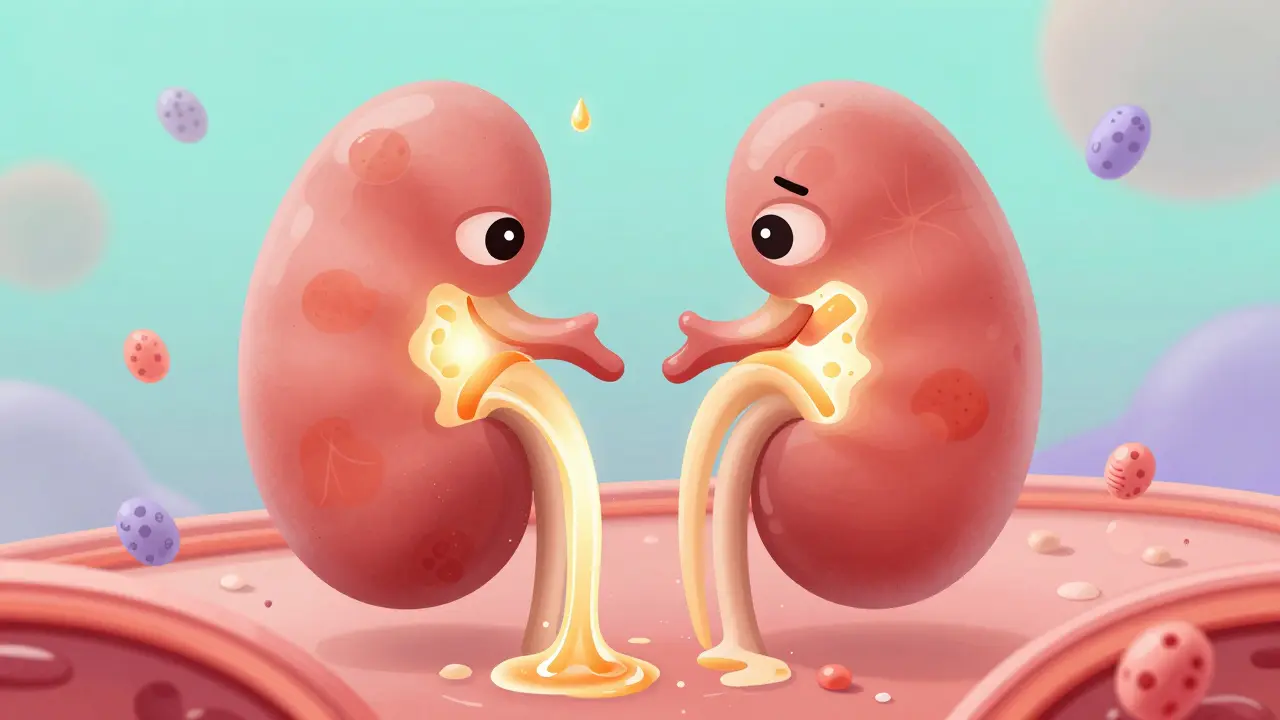
Nephrotic syndrome isn’t a disease on its own-it’s a warning sign your kidneys are leaking. Normally, your kidneys filter waste while keeping important proteins like albumin in your blood. But when the filtering units (glomeruli) get damaged, they let too much protein escape into your urine. That’s called heavy proteinuria: more than 3.5 grams of protein lost every day in adults. This isn’t just a lab number-it’s the start of a chain reaction.
When your blood loses albumin, fluid starts pooling in your tissues. That’s why people with nephrotic syndrome wake up with puffy eyes, gain weight overnight, and find their shoes too tight. The swelling, or edema, can go from mild around the ankles to severe, with fluid building up in the abdomen (ascites) or lungs (pleural effusion). At the same time, your liver tries to compensate by making more fats, so cholesterol and triglycerides skyrocket-often above 300 mg/dL. This isn’t just high cholesterol from diet. It’s a direct result of kidney damage.
Why Does This Happen? The Real Cause Behind the Symptoms
The problem starts deep inside the kidney’s filtering system. Tiny cells called podocytes wrap around the glomeruli like fingers, forming a mesh with proteins like nephrin and podocin. Think of them as gatekeepers. When these proteins are damaged-by immune attacks, genetic mutations, or long-term stress from diabetes or lupus-the gates open too wide. Proteins slip through, and the body can’t hold onto them.
That’s why the cause of nephrotic syndrome depends heavily on age. In children under 6, it’s usually minimal change disease-where the kidneys look normal under a microscope, but the filters are temporarily broken. In adults, it’s more likely to be focal segmental glomerulosclerosis (FSGS), where parts of the glomeruli scar over time, or membranous nephropathy, where immune deposits clog the filters. Diabetes is another major culprit, especially in older adults. About 30-40% of nephrotic syndrome cases in people over 65 are linked to long-standing diabetes. And in rare cases, especially in babies under 3 months, it’s genetic-mutations in the NPHS1 gene cause congenital nephrotic syndrome, with protein loss over 10 grams a day.
How Is It Diagnosed? Beyond the Swelling
Swelling and foamy urine are red flags, but diagnosis needs proof. Doctors don’t guess-they measure. A 24-hour urine collection is the gold standard: if you’re losing more than 3.5 grams of protein in a day, that’s heavy proteinuria. Blood tests show low albumin (below 3.0 g/dL) and high cholesterol. Sometimes, a simple urine dipstick shows 3+ or 4+ protein, which is a strong clue.
But here’s what most people don’t realize: not all proteinuria is nephrotic syndrome. Nephritic syndrome-often from kidney inflammation-shows blood in the urine, high blood pressure, and reduced kidney function. Nephrotic syndrome? Usually no blood, no high blood pressure (at first), and massive protein loss. The difference matters because the treatments are totally different.
For adults, a kidney biopsy is often needed to find the exact cause-especially if steroids don’t work. In kids with minimal change disease, doctors often skip the biopsy and start treatment right away because the response rate is so high. But if a child is under 1 year old, has a family history, or doesn’t respond to steroids, genetic testing is recommended. It can prevent months of unnecessary immunosuppression.

First-Line Treatment: Steroids and What to Expect
For children with minimal change disease, steroids like prednisone are the go-to. About 80-90% respond within 4 weeks. The dose? Around 60 mg per square meter of body surface area (usually capped at 80 mg daily) for 4 to 6 weeks, then slowly tapered over 2 to 5 months. Adults get similar drugs, but the response is slower and less reliable-only 60-70% go into remission. And relapses? Common. About half of all patients will have another flare, often after a cold or flu.
The side effects are real. Parents report kids gaining 10-20% of their body weight from increased appetite. Moon face, mood swings, trouble sleeping-these aren’t just side effects, they’re part of the treatment journey. One mother in Bristol told me her 5-year-old went from shy to aggressive during steroid therapy. It wasn’t bad parenting-it was the medicine. That’s why monitoring isn’t just about urine tests. It’s about watching behavior, growth, and bone health.
What If Steroids Don’t Work? Second-Line Options
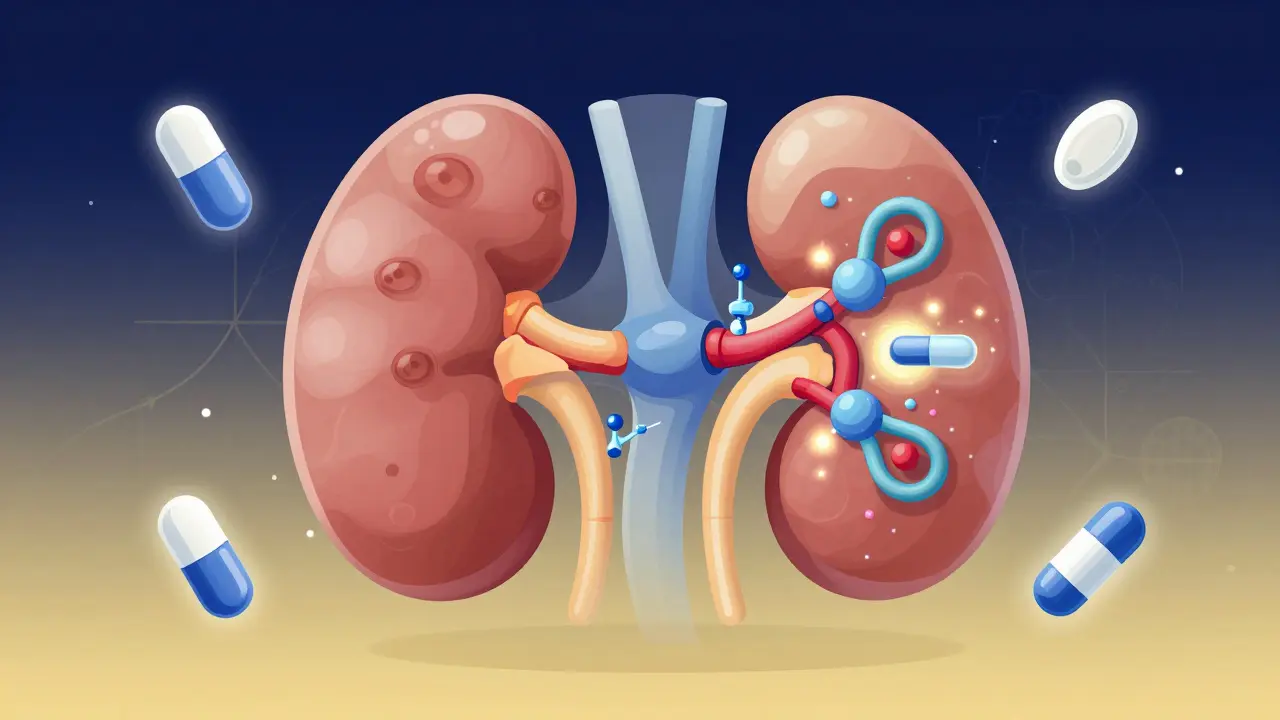
When steroids fail-or the patient relapses too often-doctors turn to other immunosuppressants. Calcineurin inhibitors like tacrolimus or cyclosporine are common. They work by calming the immune system’s attack on the kidneys. But they’re not gentle: they can raise blood pressure, damage the kidneys over time, and require regular blood tests to avoid toxicity.
Rituximab, a drug originally for lymphoma, is now used off-label for steroid-dependent or steroid-resistant cases. It targets B-cells that may be driving the kidney damage. Studies show it can keep proteinuria down for months, sometimes years, after just four weekly infusions. But it costs $1,200 to $2,500 a month, and insurance doesn’t always cover it. For families, this isn’t just medical-it’s financial stress.
Newer drugs are coming. Sparsentan, a dual blocker of angiotensin and endothelin, showed a 47.6% drop in proteinuria in a 2022 trial-far better than older drugs. Budesonide (Tarpeyo), approved in 2023 for IgA nephropathy, is also being tested in FSGS. And in the lab, drugs targeting the actin cytoskeleton in podocytes are reducing protein leakage by 60-70% in animal models. Precision medicine is no longer science fiction-it’s on the horizon.
Managing the Side Effects: Diet, Blood Clots, and Infections
It’s not just about stopping protein loss. You have to manage the fallout. Edema? Sodium restriction helps. Cutting salt to under 2,000 mg a day can reduce swelling by 30-50% in just 72 hours. That means no processed food, no canned soups, no salty snacks. Protein intake? Don’t overdo it. Eating 0.8 to 1.0 gram of protein per kilogram of body weight keeps your body nourished without forcing your kidneys to work harder.
One of the most dangerous complications? Blood clots. With albumin below 2.0 g/dL, your blood thickens. Renal vein thrombosis happens in up to 40% of severe adult cases. That’s why doctors often prescribe low-dose blood thinners like aspirin or warfarin during active disease. It’s not optional-it’s life-saving.
Infections are another risk. Steroids and immunosuppressants lower your defenses. That’s why vaccines are critical. Inactivated shots (flu, pneumonia, COVID) are safe during treatment. But live vaccines like MMR or chickenpox? Absolutely not. Wait until therapy ends and immune function returns.
Monitoring Progress: What Remission and Relapse Really Mean
Remission isn’t just feeling better. It’s three consecutive days of negative or trace protein on a urine dipstick. Relapse? Three days of 2+ or 3+ protein. Parents are taught to test urine daily during active phases. Many keep a logbook-tracking protein levels, weight, and any signs of infection.
For kids, relapses often follow viral illnesses. A cold, an ear infection, even a mild stomach bug can trigger a flare. That’s why many pediatric nephrologists recommend flu shots every fall and teach families to act fast at the first sign of illness. Early intervention-starting steroids again within 48 hours-can prevent full-blown relapse.
Long-term, the goal is complete remission: protein under 0.3 grams a day. Anything above 1 gram per day, even after treatment, increases the risk of kidney failure by over four times. That’s why follow-up isn’t optional. It’s survival.
Prognosis: What Happens Next?
Outcomes vary wildly by cause. Children with minimal change disease have a 95% chance of keeping their kidneys healthy for 10 years. FSGS? Only 50-70%. Diabetic nephrotic syndrome? The worst-just 40-50% survival at 10 years. Membranous nephropathy sits in the middle, around 60-80%.
But here’s the hopeful part: if you get proteinuria under control, your kidneys have a fighting chance. The earlier you treat it, the better. And with new drugs like sparsentan and targeted therapies in development, the outlook is improving faster than ever.
Is nephrotic syndrome the same as kidney failure?
No. Nephrotic syndrome is a sign of kidney damage, not failure. Many people, especially children with minimal change disease, go into full remission and live normal lives with healthy kidneys. But if proteinuria stays high for years without treatment, it can lead to scarring and eventually kidney failure. That’s why early, aggressive treatment matters.
Can adults get nephrotic syndrome from childhood?
Yes. While most childhood cases are minimal change disease and resolve with steroids, about 10-15% of kids develop steroid-resistant forms. These children often go on to develop FSGS or other chronic kidney diseases as adults. It’s not a guarantee, but it’s a known risk path.
Why does my child keep relapsing after steroids?
Relapses are common-up to 70% of children have at least one. They’re often triggered by viral infections like colds or flu. The immune system gets activated, and that can restart the kidney damage. That’s why many doctors recommend quick restart of steroids at the first sign of illness and emphasize avoiding sick contacts during treatment.
Are there natural remedies for nephrotic syndrome?
No. While diet and salt restriction help manage symptoms, there’s no herb, supplement, or alternative therapy that can fix the damaged kidney filters. Relying on unproven treatments can delay real care and lead to permanent kidney damage. Always follow your nephrologist’s plan.
Can I still have children if I have nephrotic syndrome?
Yes, but pregnancy is high-risk. Nephrotic syndrome can worsen during pregnancy, and some medications like ACE inhibitors are unsafe. If you’re planning a pregnancy, work with a nephrologist and high-risk OB-GYN first. Ideally, you should be in stable remission for at least a year before conceiving.
How often do I need kidney check-ups?
During active disease, weekly urine tests and monthly blood work are typical. Once in remission, check-ups every 3-6 months are standard. If you’re on long-term immunosuppressants, you’ll need even closer monitoring-for kidney function, blood pressure, and drug levels. Don’t skip appointments, even if you feel fine.
What’s Next? The Future of Treatment
The future of nephrotic syndrome isn’t just about stronger steroids or more drugs. It’s about knowing exactly what’s broken in each patient’s kidneys. The NEPTUNE study has already identified three molecular subtypes of FSGS-each with different responses to treatment. Soon, a biopsy won’t just show scarring. It’ll show a genetic fingerprint, guiding therapy like never before.
Researchers are testing drugs that protect podocytes-the gatekeeper cells-by stabilizing their internal structure. Early results in animals show dramatic drops in proteinuria. If these work in humans, we might one day treat nephrotic syndrome not by suppressing the immune system, but by repairing the kidney itself.
For now, the message is clear: catch it early, treat it aggressively, and don’t give up. With the right care, many people with nephrotic syndrome go on to live full, active lives-with healthy kidneys and no limits.