
5 Feb 2026
- 12 Comments
When you see behind-the-counter medications at your pharmacy, you're looking at a special category that sits between regular over-the-counter drugs and prescription-only medicines. These products require a pharmacist's consultation but don't need a doctor's prescription. This system started in the US after the Combat Methamphetamine Epidemic Act of 2005, which moved pseudoephedrine (a common cold medicine ingredient) behind counters to stop its use in making illegal methamphetamine. Today, about 15-20 medications fall into this category, including emergency contraceptives and insulin. Let's break down exactly what this means for you.
What Are Behind-the-Counter Medications?
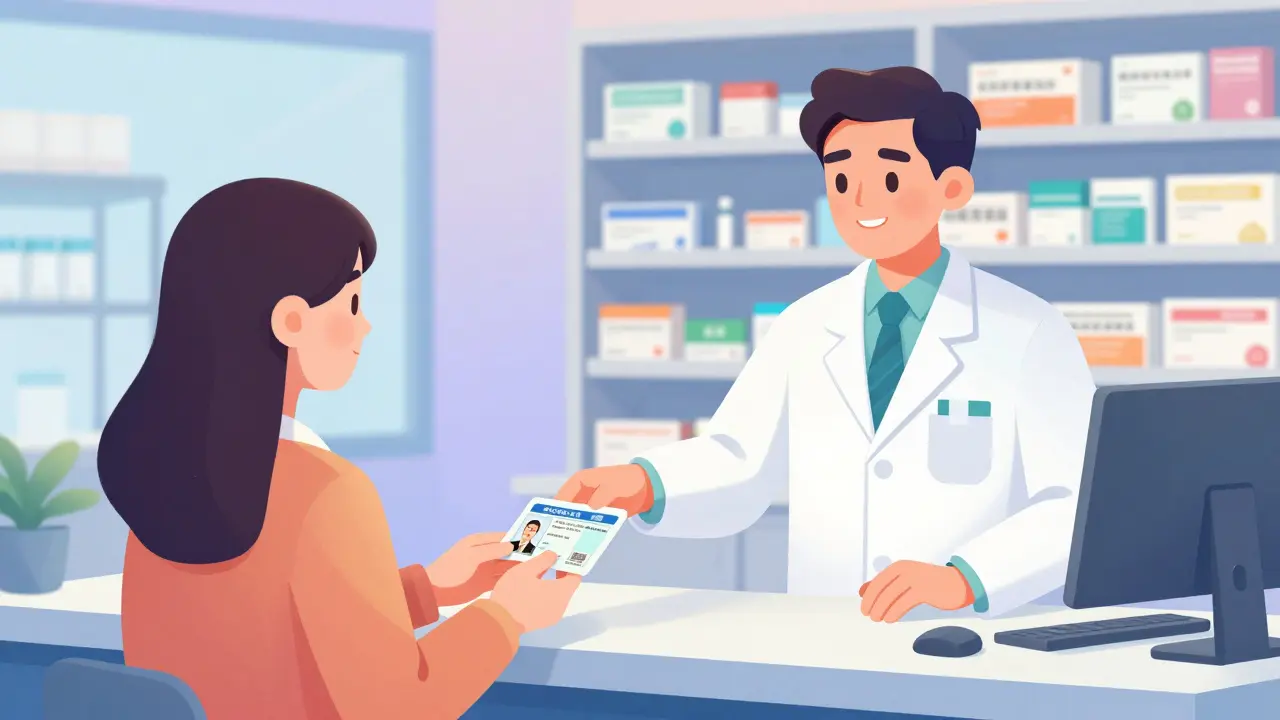
Behind-the-counter (BTC) medications aren't prescription drugs, but they also aren't like regular OTC pills you can grab off a shelf. They sit in a middle ground. You can't buy them yourself like aspirin or allergy meds-you need to ask the pharmacist for them. The pharmacist will check your ID, ask a few questions, and log the sale in a national tracking system. This extra step exists because some medications can be misused or require professional guidance to use safely. For example, pseudoephedrine in Sudafed is great for congestion, but it's also used to make meth. By keeping it behind the counter, regulators balance access with safety.
Unlike prescription drugs, BTC medications don't need a doctor's note. Unlike regular OTC drugs, they aren't available in supermarkets or gas stations. This "third class" of medicine was created by pharmacists and regulators to protect public health while keeping important treatments accessible. As of 2023, BTC products make up about 3% of all OTC medication sales in the US, according to the National Community Pharmacists Association.
Why Do These Restrictions Exist?
The main reason behind BTC restrictions is safety. Some medications have serious risks if misused. Take pseudoephedrine: before 2006, you could buy it freely in stores. Criminals used it to cook methamphetamine, leading to a surge in illegal labs. The Combat Methamphetamine Epidemic Act forced these products behind counters. Now, you can only buy 3.6 grams of pseudoephedrine per day (about 12 regular Sudafed tablets) and 9 grams in 30 days. Every purchase is logged in systems like NPLEx (National Precursor Log Exchange), which tracks sales across pharmacies.
Other BTC medications have similar logic. Emergency contraceptives like Plan B One-Step became BTC in 2013. Before that, you needed a prescription. Now, anyone 17+ can get it without a prescription, but you still need to talk to a pharmacist. This prevents misuse while keeping it available when needed. Insulin is another example. Walmart's ReliOn brand offers regular insulin for $25 per vial without a prescription, but you must consult a pharmacist first. This helps people with diabetes access life-saving medication without the cost of a doctor's visit.

Common BTC Medications and Their Rules
Here's what you'll actually find behind pharmacy counters:
- pseudoephedrine (Sudafed, Claritin-D): Requires ID, purchase limits, and electronic tracking. Available in 30-60mg doses per tablet.
- Plan B One-Step: Available for people 17+ without prescription. Must be sold by a pharmacist, not self-service. Studies show it's 89% effective if taken within 72 hours of unprotected sex.
- ReliOn insulin: Walmart's generic insulin for $25-$40 per vial. No prescription needed, but pharmacists must confirm it's safe for you to use.
- Codeine cough syrup (in some states): Limited to 12.8mg doses per tablet. Requires pharmacist consultation and ID verification.
Each medication has unique rules. For example, Oregon limits pseudoephedrine to 7.5 grams per month, while Texas allows 9 grams. Emergency contraceptives are legal to sell to minors in most states, but 22% of pharmacies still refuse them to underage teens despite federal rules. These inconsistencies happen because states have different laws governing BTC medications.
What to Expect When Buying BTC Medications
Buying BTC meds isn't like grabbing a soda from a cooler. You'll need to:
- Ask the pharmacist directly (they're not on the shelf)
- Show government-issued ID (driver's license, passport)
- Answer basic health questions (e.g., "Are you pregnant?" for Plan B)
- Have the sale logged in a national database
This process takes 5-7 minutes for first-time buyers. Pharmacists check for drug interactions or misuse risks. For example, if you're buying pseudoephedrine, they'll verify you're not buying more than the legal limit. If you're getting Plan B, they'll confirm your age and discuss side effects. This isn't just bureaucracy-it's a safety check. Clinical studies show pseudoephedrine works better than OTC alternatives like phenylephrine (72% effectiveness vs. 38%), but its BTC status ensures people use it safely.
Many users appreciate this extra step. A Pharmacy Times survey found 76% of respondents felt "more confident about proper usage" after BTC consultations compared to regular OTC purchases. But it's not always smooth. In rural areas where pharmacies are scarce, 60 million Americans live more than 10 miles from a pharmacy. For them, BTC restrictions can mean delays or missed treatment.
Challenges and Controversies
Despite its benefits, the BTC system has real problems. First, state laws clash. With 28 different state-level BTC frameworks in effect, a traveler might find themselves unable to buy Plan B in one state but able to get it easily in another. This confusion frustrates customers and pharmacists alike.
Racial disparities also exist. A University of Michigan study found Black customers were 3.2 times more likely to face refusal or extra questioning when buying pseudoephedrine compared to white customers, even with identical purchase patterns. This isn't about safety-it's about bias.
Pharmacies also struggle with costs. Maintaining BTC tracking systems costs about $1,200 per location annually, plus 8 hours of staff training. Small pharmacies sometimes skip these requirements, leading to inconsistent enforcement. Meanwhile, critics like Dr. Aaron Kesselheim of Harvard argue that BTC restrictions on pseudoephedrine haven't stopped meth production: "Illicit manufacturers have shifted to alternative precursors, making these rules ineffective for their intended purpose."
The Future of BTC Medications
The BTC category is growing fast. In May 2023, the FDA approved LoRez (low-dose naltrexone) for alcohol use disorder treatment as a BTC medication. Industry analysts predict 5-7 more prescription drugs will move to BTC status by 2027. Candidates include low-dose atorvastatin for cholesterol and mifepristone for gynecological conditions.
Market data shows BTC sales grew 4.7% annually since 2016-faster than the overall OTC market. By 2026, BTC medications could reach $8.5 billion in sales, or 7% of total OTC drug revenue. This growth comes from pharmacists' expertise: the American Pharmacists Association says they're "uniquely positioned to assess appropriateness of use" for these intermediate-risk drugs.
But challenges remain. Without federal standardization, states will keep making their own rules. Dr. Joshua Sharfstein of Johns Hopkins warns: "Without federal standardization, the BTC category risks becoming a patchwork of regulations that undermines its original purpose of balancing access and safety." Still, 73% of pharmacists surveyed in 2023 support expanding BTC medications, suggesting this middle ground is here to stay.
What's the difference between behind-the-counter medications and regular OTC drugs?
Regular OTC drugs (like Tylenol or Benadryl) are sold openly on store shelves. You can buy them without talking to anyone. Behind-the-counter medications require you to ask a pharmacist for them. They're stored behind the counter, and you must show ID, answer health questions, and have your purchase logged in a tracking system. This extra step exists for safety reasons-for example, to prevent misuse of pseudoephedrine in making methamphetamine.
Why is pseudoephedrine behind the counter?
Pseudoephedrine (found in Sudafed) was moved behind the counter in 2006 because it's a key ingredient in making illegal methamphetamine. Before this rule, criminals bought large quantities to cook meth. Now, you can only buy 3.6 grams per day (about 12 tablets) and 9 grams in 30 days. Every purchase is logged in a national tracking system like NPLEx, which helps law enforcement spot suspicious activity. Despite this, studies show meth production shifted to other precursors, so the rule's effectiveness is debated.
Can I buy Plan B without a prescription?
Yes, Plan B One-Step is available behind-the-counter for anyone 17 years or older without a prescription. You still need to ask a pharmacist for it-they'll check your ID and answer questions about your health. It's 89% effective if taken within 72 hours of unprotected sex. However, some pharmacies illegally refuse to sell it to minors, even though federal law allows it for ages 17+. A 2022 Kaiser Health News investigation found 22% of pharmacies surveyed would sell Plan B to underage teens without verification.
Why are insulin products behind the counter?
Walmart's ReliOn brand insulin is sold behind the counter as a BTC medication. This allows people to buy it without a prescription for $25-$40 per vial. Pharmacists verify it's safe for you to use and explain how to inject it. This is crucial for low-income diabetics who can't afford regular prescription insulin. Before this, many skipped doses due to cost. ReliOn captured 18% of the OTC insulin market within 18 months of its 2021 launch, showing how BTC status can improve access to life-saving treatments.
What should I do if a pharmacist refuses to sell me a BTC medication?
If a pharmacist refuses to sell you a BTC medication you're legally allowed to buy (like Plan B for ages 17+), ask to speak to the store manager. If that doesn't work, contact your state pharmacy board or the FDA's OTC Drug Division. For pseudoephedrine, refusal might be due to purchase limits-you can check your current month's total using the NPLEx system. If you're being treated unfairly due to race or other bias, file a complaint with the U.S. Department of Health and Human Services. Pharmacists must follow federal rules, and refusal without cause is illegal.
Kieran Griffiths
February 6, 2026This is a great overview of behind-the-counter medications. The system truly serves as a middle ground between OTC and prescription drugs. For instance, pseudoephedrine's placement behind the counter has significantly reduced meth production while still allowing legitimate access. Emergency contraceptives like Plan B require pharmacist consultation, ensuring safety without a prescription. Pharmacists check ID, health status, and potential interactions. The NPLEx system tracks purchases to prevent abuse. However, state laws vary-Oregon limits pseudoephedrine to 7.5g/month vs. Texas's 9g. This inconsistency causes confusion for travelers. Rural areas struggle with access; 60 million Americans live over 10 miles from a pharmacy. Despite challenges, studies show 76% of people feel more confident after pharmacist consultations. The FDA recently approved LoRez as a BTC medication for alcohol use disorder. Industry analysts predict BTC sales will hit $8.5B by 2026. While federal standardization would help, the current system balances safety and access effectively. Pharmacists are trained professionals who ensure medications are used correctly, which is essential for public health.
Lisa Scott
February 7, 2026this is all government propaganda the real reason is control they want to monitor everything pseudoephedrine tracking is just the start next they'll control all meds no evidence it stops meth anyway just power grab
Tehya Wilson
February 9, 2026the behind the counter system is unnecessary bureaucracy it creates more work for pharmacists without real benefit people should be trusted to make their own choices this is just another example of overregulation
jan civil
February 11, 2026Studies show it reduces meth production.
Jennifer Aronson
February 12, 2026This is a well-structured explanation of behind-the-counter medications. The system indeed serves as a crucial middle ground between over-the-counter drugs and prescription-only medications. For instance, pseudoephedrine's placement behind the counter has significantly reduced its misuse in meth production, though some critics argue it's not entirely effective. Emergency contraceptives like Plan B also benefit from this system, ensuring they're available when needed while providing necessary counseling. Pharmacists play a vital role in verifying age, health status, and potential interactions. The National Precursor Log Exchange (NPLEx) system tracks purchases, which helps law enforcement spot suspicious activity. However, there are inconsistencies across states-Oregon limits pseudoephedrine to 7.5 grams per month while Texas allows 9 grams. This patchwork of regulations can confuse both consumers and pharmacists. Rural areas face challenges too, with 60 million Americans living more than 10 miles from a pharmacy. For them, BTC restrictions can mean delays in accessing essential medications. Despite these issues, studies show 76% of respondents feel more confident about proper usage after consulting a pharmacist. The recent FDA approval of LoRez for alcohol use disorder as a BTC medication shows this category is expanding. By 2026, BTC sales could reach $8.5 billion, reflecting growing trust in pharmacists' expertise. While federal standardization would help, the current system generally balances safety and access effectively.
Kate Gile
February 13, 2026Great to see how pharmacists help bridge the gap between OTC and prescription meds. This system really protects public health while keeping access. Kudos to the professionals involved!
Gregory Rodriguez
February 14, 2026Oh wow, sure, pharmacists are superheroes saving the day. Because nothing says 'healthcare' like having to ask for insulin like it's a forbidden fruit. /s
Johanna Pan
February 15, 2026I think its important to reccognize the role pharmacists play. They ensure safe usage. Even with the misspelling, I appreciate the effort. Keep up the good work!
Jenna Elliott
February 16, 2026This is why America needs to stop overregulating. We're better than this. The government is controlling everything. It's un-American.
Elliot Alejo
February 18, 2026The BTC system works well in practice. Pharmacists are trained to assess needs. For example, with Plan B, it's better to have a pharmacist confirm than no access at all. It's a solid middle ground.
lance black
February 19, 2026Pharmacists are key. Safety first.
Pamela Power
February 20, 2026Your simplistic view ignores the systemic issues. This is why we need experts, not just 'pharmacists' doing basic checks. It's a flawed system that needs overhauling by real professionals.