
19 Dec 2025
- 10 Comments
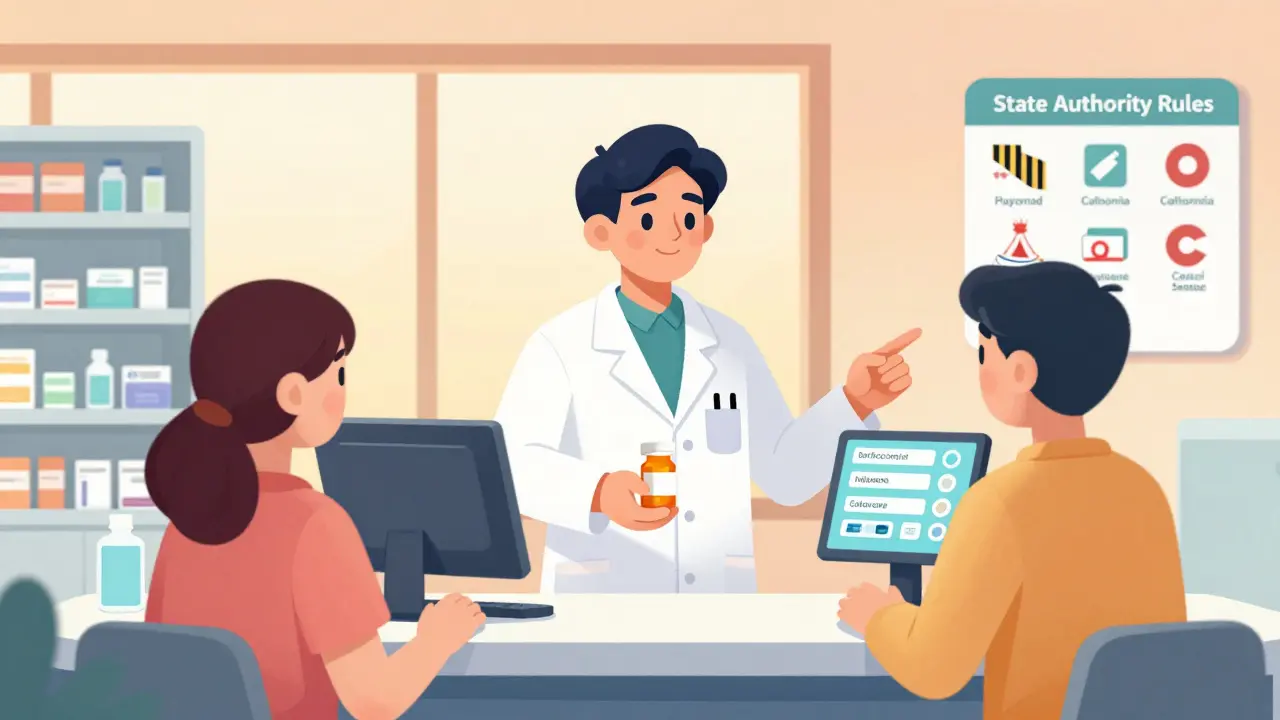
For decades, pharmacists were seen as the people who handed out pills based on a doctor’s script. But that’s not the whole story anymore. Today, in many parts of the U.S., pharmacists can change your medication, prescribe birth control, offer emergency opioid reversal, and even adjust your blood pressure drugs-all without calling your doctor first. This shift isn’t random. It’s the result of state laws changing to fill gaps in care, especially in rural areas where doctors are scarce and people drive hours just to refill a prescription.
What Exactly Is Pharmacist Substitution Authority?
Pharmacist substitution authority means a pharmacist has legal permission to make changes to a prescription under specific rules. It’s not about guessing or improvising. It’s a structured, regulated process that varies from state to state. The most common form is generic substitution. In every state, if a doctor writes a prescription for, say, Lipitor, the pharmacist can give you the generic version, atorvastatin, unless the doctor specifically writes “dispense as written.” This has been standard for years. But now, states are going further.Some states allow therapeutic interchange. That’s when a pharmacist can swap one drug for another in the same class-not just the same chemical. For example, if you’re on a brand-name statin and the generic isn’t working well, a pharmacist in Arkansas, Idaho, or Kentucky can switch you to a different statin, like rosuvastatin, if it’s safer or cheaper. But here’s the catch: the doctor has to mark the prescription with “therapeutic substitution allowed.” If they don’t, the pharmacist can’t touch it. And in Idaho, the pharmacist must explain the change to you in plain language and get your permission before swapping.
How States Are Expanding Pharmacist Roles
It’s not just about swapping pills. States are letting pharmacists do more. In Maryland, pharmacists can prescribe birth control to adults without a doctor’s script. In Maine, they can hand out nicotine patches for quitting smoking. California doesn’t use the word “prescribe”-they say pharmacists can “furnish” certain medications. New Mexico and Colorado go even further: their boards of pharmacy set statewide protocols that let pharmacists provide services like flu shots, diabetes screening, and even asthma inhalers without needing new laws for each new service.Then there are Collaborative Practice Agreements (CPAs). These are formal, written partnerships between pharmacists and doctors. In these agreements, the pharmacist gets permission to adjust doses, order lab tests, or start new meds based on pre-set rules. For example, a CPA might say: “If a patient’s blood pressure is over 160/100 for two visits, the pharmacist can start a low-dose ACE inhibitor.” These agreements are legal in all 50 states and D.C., but how they’re used? That’s up to each state. Some are tightly controlled. Others give pharmacists real autonomy.
Why This Matters: Access and Equity
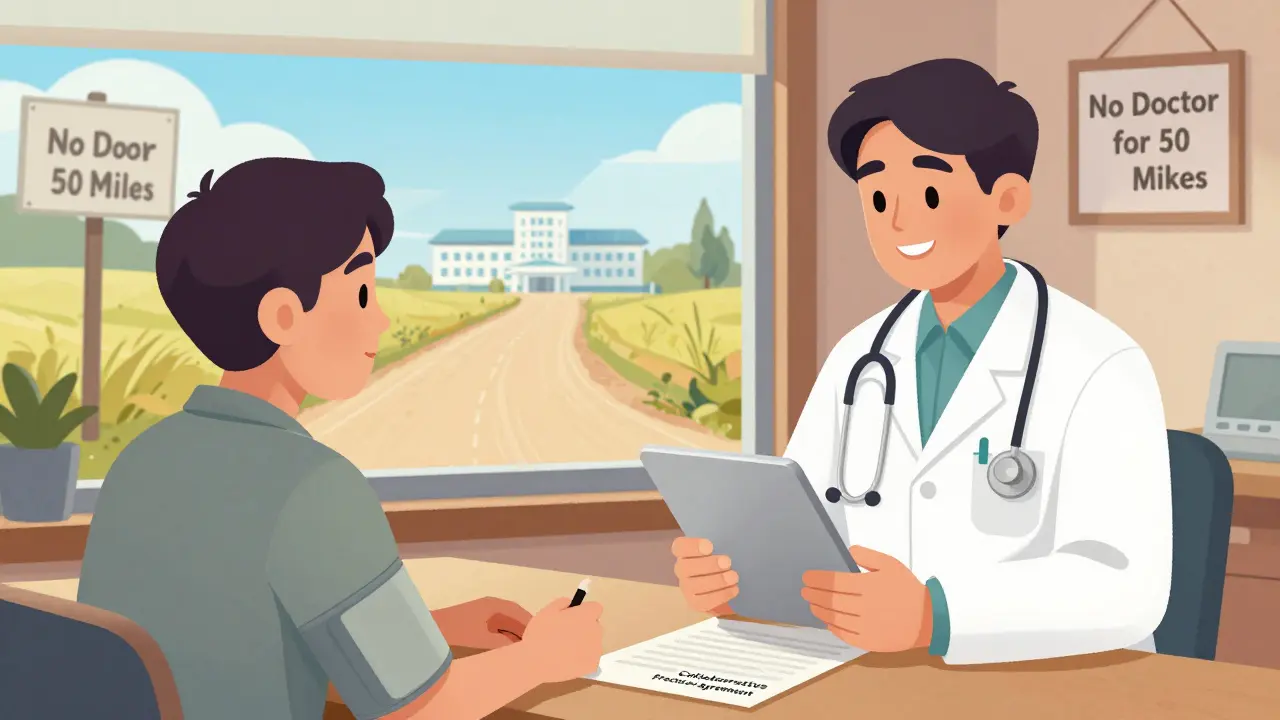
Sixty million Americans live in areas with too few doctors-places where the nearest primary care clinic is 50 miles away. For someone without a car, a job that doesn’t let them take time off, or insurance that won’t cover a copay, seeing a doctor for a simple refill can be impossible. That’s where pharmacists step in. In rural Kentucky, a pharmacist might adapt a diabetes medication to avoid a 90-minute drive. In Alaska, a pharmacist can hand out naloxone to reverse an overdose without waiting for a doctor’s approval. These aren’t theoretical benefits. They’re saving lives.It’s also about equity. Low-income communities and communities of color often have less access to specialists. Pharmacists, who are more evenly distributed across zip codes than doctors, can help close those gaps. When a pharmacist can prescribe birth control in a neighborhood with no gynecologist, that’s not just convenience-it’s reproductive justice.
The Pushback: Who’s Against It?
Not everyone agrees. The American Medical Association still has a policy to study whether pharmacists should be allowed to refuse filling prescriptions. Some doctors argue pharmacists don’t have the same training as physicians. They worry about misdiagnosis or dangerous drug interactions. There’s also concern that big pharmacy chains are pushing these changes to increase profits-not patient care.But the data tells a different story. Studies from the American College of Clinical Pharmacy show that pharmacist-led medication management leads to fewer hospitalizations, better control of chronic diseases like diabetes and hypertension, and higher patient satisfaction. Pharmacists are trained to spot drug interactions, check for allergies, and monitor side effects. They’re often the most accessible healthcare provider in a community.
What’s Holding It Back?
The biggest obstacle isn’t training or expertise-it’s money. Insurance companies don’t always recognize pharmacists as providers. Even in states where pharmacists can prescribe, they can’t always get paid for it. Medicare doesn’t reimburse for pharmacist services unless they’re part of a specific program. Medicaid coverage varies wildly. Without consistent reimbursement, many pharmacists can’t afford to offer these expanded services, even if the law allows it.That’s why the federal Ensuring Community Access to Pharmacist Services Act (ECAPS) is so important. If passed, it would require Medicare Part B to pay for services pharmacists provide-like testing, counseling, and prescribing. That single change could unlock similar coverage from private insurers and turn pharmacist-led care from a pilot program into a nationwide standard.
What You Need to Know as a Patient
If you’re on a long-term medication, ask your pharmacist: “Can you help me switch to a cheaper or better option?” If you need birth control, nicotine patches, or emergency opioid reversal, check if your local pharmacy offers it. In many places, you can walk in, talk to a pharmacist, and get what you need in minutes-not weeks.Don’t assume your doctor has to be involved in every change. Pharmacists are now part of your care team. They’re not replacing doctors-they’re filling in where doctors can’t reach. And if they make a change, they’re legally required to notify your doctor and update your records. You also have the right to say no to any substitution. Always ask why a change is being made, and what the alternatives are.
The Future Is Already Here
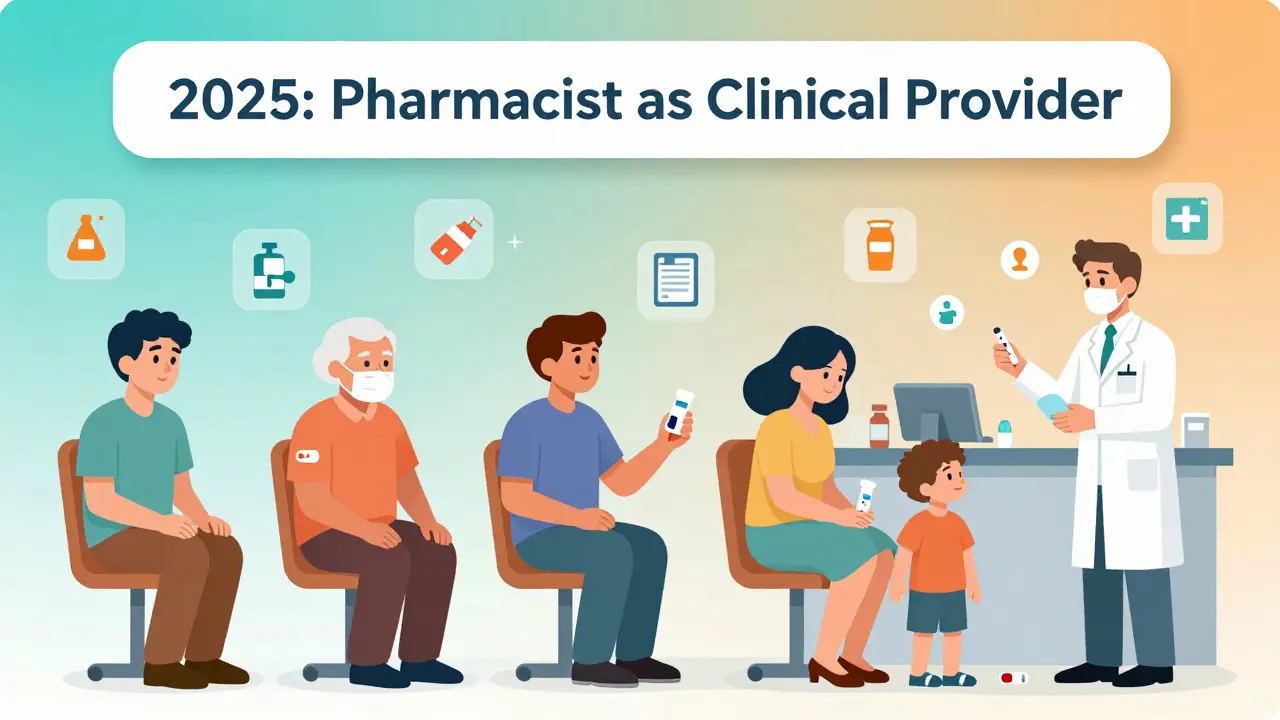
In 2025, 16 new laws expanded pharmacist authority in 12 states. Over 200 bills were introduced nationwide. That’s not a trend. It’s a transformation. Pharmacists are no longer just dispensers. They’re clinical providers. The model is shifting from “doctor writes, pharmacist fills” to “pharmacist assesses, recommends, and acts-within the law.”The next step? More states will allow independent prescribing for common conditions. More pharmacies will offer point-of-care testing for flu, strep, and cholesterol. More insurers will start paying for it. And more patients will realize they don’t always need to wait for a doctor to get the care they need.
Pharmacist substitution authority isn’t about taking power away from doctors. It’s about giving patients more access, faster care, and better outcomes-with the pharmacist right where they’ve always been: standing behind the counter, ready to help.
Can a pharmacist change my prescription without my doctor’s permission?
It depends on the state and the type of change. For generic substitutions, yes-pharmacists can swap your brand-name drug for a cheaper generic unless your doctor says “dispense as written.” For therapeutic interchange (switching to a different drug in the same class), the doctor must specifically allow it on the prescription. In states with collaborative practice agreements or statewide protocols, pharmacists may adjust doses or start new meds under pre-approved rules-but they must notify your doctor afterward. You always have the right to refuse any change.
Which states let pharmacists prescribe birth control?
As of 2025, Maryland, California, Oregon, Washington, New Mexico, Colorado, Nevada, and Illinois allow pharmacists to prescribe birth control to adults without a doctor’s script. Some states limit it to certain types, like pills or patches. Others allow all FDA-approved methods. Check with your local pharmacy-many offer this service over the counter with a quick health screening.
Do pharmacists need special training to have prescribing authority?
Yes. In states that allow prescribing or therapeutic interchange, pharmacists must complete additional training-often 15 to 40 hours of continuing education focused on clinical decision-making, differential diagnosis, and medication safety. Some states require certification in areas like immunization, diabetes management, or anticoagulation. Many also require pharmacists to complete a collaborative practice agreement with a physician, which includes clinical protocols and ongoing oversight.
Can a pharmacist refuse to fill a prescription?
Yes, but only under limited circumstances. Pharmacists can refuse if the prescription is illegible, expired, or appears to be forged. They can also refuse if they believe the medication is unsafe for the patient-like a dangerous interaction with another drug. However, they must refer you to another pharmacist or provider who can fill it. Refusing because of personal beliefs (like moral objections to birth control) is legally protected in some states but not others. In states with explicit provider status laws, pharmacists are required to fill valid prescriptions or ensure access through a backup plan.
Will my insurance cover services from a pharmacist?
It depends. Most insurance plans cover medications dispensed by pharmacists. But if the pharmacist is providing a service-like prescribing birth control, administering a test, or managing your diabetes-you may be charged out-of-pocket unless your state or insurer has specific reimbursement rules. Medicare currently only covers a few pharmacist services under specific programs. The pending ECAPS bill would change that by requiring Medicare to pay for these services, which would likely push private insurers to follow.
What’s the difference between therapeutic interchange and generic substitution?
Generic substitution means swapping a brand-name drug for its exact chemical equivalent-like switching from Lipitor to atorvastatin. Therapeutic interchange is different: it means switching to a different drug in the same class that works similarly but isn’t chemically identical-like going from lisinopril to losartan for high blood pressure. Generic substitution is allowed everywhere. Therapeutic interchange is only allowed in a few states and requires the doctor’s explicit permission on the prescription.
Nancy Kou
December 19, 2025Finally, someone’s catching on. Pharmacists have been doing clinical work for years-just without the title or the pay. I’ve had mine adjust my blood pressure meds, check my INR, and even give me a flu shot while I waited for my asthma inhaler. No doctor visit needed. It’s efficient, safe, and saves me hours.
Hussien SLeiman
December 20, 2025Let’s be real-this isn’t progress, it’s corporate cost-cutting disguised as healthcare innovation. Pharmacies are profit-driven machines. Letting pharmacists prescribe? Great. But only if they’re not pressured to push the most expensive generics or upsell supplements. The real issue isn’t scope-it’s who’s pulling the strings behind the counter. Big Pharma loves this shift because it bypasses the doctor’s gatekeeping, and suddenly, your $500 monthly drug becomes a $300 ‘pharmacist-recommended’ alternative with no oversight. Don’t be fooled by the feel-good stories. This is capitalism adapting to a broken system, not fixing it.
Edington Renwick
December 21, 2025Oh here we go again. Another ‘pharmacists are doctors now’ fantasy. They went to pharmacy school, not med school. They don’t do 12 years of training. They don’t do rounds, they don’t diagnose, they don’t handle emergencies. Let them fill scripts. Let them counsel. But don’t hand them the keys to the clinic. This is how we get people on anticoagulants without labs, or worse-diabetic patients getting insulin adjustments from someone who’s never seen a HbA1c in person. It’s dangerous. And it’s not ‘access,’ it’s negligence dressed up as convenience.
Sarah McQuillan
December 23, 2025Oh wow, so now pharmacists are gonna replace doctors in rural areas? Cute. Meanwhile, in Texas, they’re banning abortion pills and cutting Medicaid. Let’s not pretend this is about equity-it’s about letting pharmacies do the work the government refuses to fund. And don’t get me started on how these ‘protocols’ are written by insurance companies, not clinicians. If you think a pharmacist in a Walmart is making independent clinical decisions, you’re delusional. They’re following a flowchart approved by CVS’s legal team.
Aboobakar Muhammedali
December 25, 2025i live in a village where the nearest doctor is 70 miles away and the pharmacy is across the street my grandma gets her blood pressure meds adjusted by the pharmacist every 3 months and she’s been stable for 2 years now no hospital visits no waiting no stress i dont care what the doctors say if it works and its safe then its right
Laura Hamill
December 27, 2025THIS IS THE NEW WORLD ORDER. THEY’RE TRAINING PHARMACISTS TO BE DOCTORS BECAUSE THEY WANT TO REPLACE HUMAN DOCTORS WITH ROBOTS AND AI. THEY’RE USING ‘ACCESS’ AS AN EXCUSE TO CUT COSTS AND TAKE AWAY YOUR RIGHTS. NEXT THEY’LL LET THE PHARMACY CASHIER PRESCRIBE ANTIBIOTICS. I SAW A VIDEO WHERE A PHARMACIST GAVE SOMEONE A PRESCRIPTION FOR ZOLOFT WITHOUT EVEN ASKING ABOUT SUICIDAL THOUGHTS. THIS IS HOW PEOPLE DIE. THEY’RE ERASING MEDICAL TRAINING. DON’T BELIEVE THE LIES.
Alana Koerts
December 28, 2025Pharmacists can’t diagnose. End of story. The data cited is cherry-picked from studies funded by pharmacy associations. Real outcomes? Hospitalization rates haven’t dropped. Adverse events from therapeutic interchange have gone up in states with loose protocols. And the ‘patient satisfaction’ metric? People are happy because they didn’t have to wait. That doesn’t mean it’s safe. This is sloppy medicine with a PR campaign.
Frank Drewery
December 28, 2025I’ve seen this work firsthand. My uncle in rural Alabama had his insulin dose adjusted by his pharmacist after a routine check-up. He didn’t have to drive 90 minutes, miss work, or pay a $200 copay. The pharmacist called his doctor, updated the chart, and followed up in a week. That’s not replacing doctors-it’s supporting them. We need more of this, not less.
Danielle Stewart
December 29, 2025For anyone worried about safety: pharmacists are trained to recognize red flags. They run interaction checks in real time, review all your meds, and flag issues before they happen. I’ve had my pharmacist catch a dangerous combo I didn’t even know was risky. They’re not replacing physicians-they’re extending the care team. And if you’re still skeptical, ask your pharmacist to show you the clinical protocols they follow. Most are stricter than what you’d get in a 10-minute doctor’s visit.
mary lizardo
December 29, 2025The semantic gymnastics here are exhausting. ‘Furnishing’ is not ‘prescribing.’ ‘Therapeutic interchange’ is not ‘independent clinical decision-making.’ The legal and ethical boundaries are being deliberately blurred to justify expansion of scope without corresponding accountability. The American Medical Association’s concerns are not reactionary-they are foundational. If a clinician lacks diagnostic training, they lack the epistemic authority to alter therapeutic regimens, regardless of how convenient it may be. This is not innovation; it is regulatory erosion masked as progress.