

14 Jan 2026
- 9 Comments
When you hear about people losing 30, 40, even 50 pounds on a medication, it’s hard not to wonder: is this real? And if it is, how does it actually work? Semaglutide - sold as Ozempic for diabetes and Wegovy for weight loss - isn’t just another diet pill. It’s changing how we think about obesity treatment. But it’s not magic. And it’s not for everyone.
What Semaglutide Actually Does in Your Body
Semaglutide mimics a natural hormone your body already makes called GLP-1. This hormone talks to your brain, your stomach, and your pancreas. When you eat, GLP-1 tells your brain you’re full. It slows down how fast your stomach empties. And it helps your pancreas release insulin only when you need it - not when you don’t.
That’s the key. Most weight loss drugs just suppress appetite. Semaglutide does that, but it also changes how your body handles food. You don’t just eat less. You care less about food. People on Wegovy often say, ‘I used to crave chips, cookies, pizza. Now, I just don’t feel that pull anymore.’
Studies show this isn’t just in their heads. In the STEP 1 trial, people using Wegovy lost nearly 15% of their body weight on average over 68 weeks. That’s not a few pounds. That’s 30 to 50 pounds for most people. Compare that to placebo - they lost about 2.4%. The difference? More than 12 percentage points. That’s huge.
Ozempic vs. Wegovy: Same Drug, Different Doses
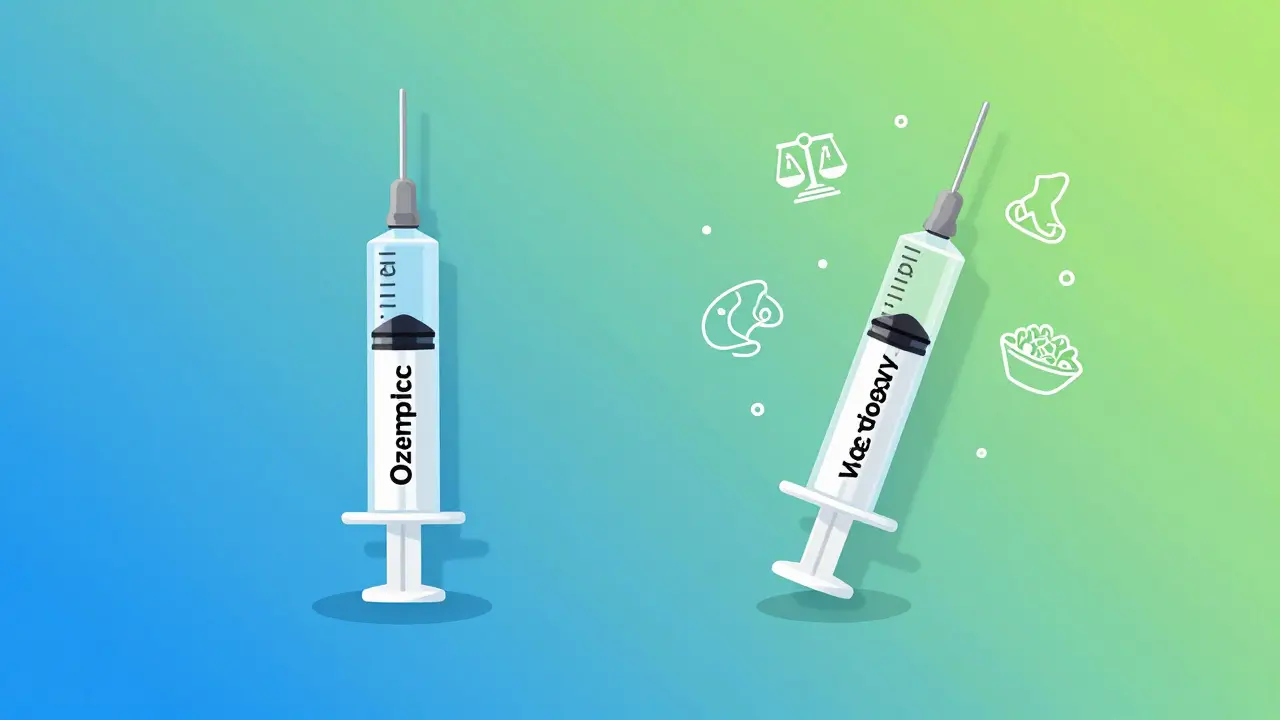
Yes, Ozempic and Wegovy are the same molecule: semaglutide. The difference is the dose and the purpose.
Ozempic is approved for type 2 diabetes. It’s given in doses up to 1 mg per week. Wegovy is approved for weight loss and is given at 2.4 mg per week - more than double the dose. That higher dose is what pushes the appetite suppression and weight loss further.
People often ask: ‘Can I just use Ozempic for weight loss?’ Technically, yes - some doctors prescribe it off-label. But Wegovy is formulated specifically for weight management. It comes with a dosing schedule designed to reduce side effects and maximize results. Using Ozempic at higher doses without medical supervision can be risky.
Also, insurance treats them differently. Ozempic is often covered for diabetes. Wegovy? Not always. Many insurers require proof of obesity-related health issues like high blood pressure or prediabetes before they’ll pay.
How Effective Is It Really?
The numbers speak for themselves. In the STEP 1 trial:
- 79% of people lost at least 10% of their body weight
- 69% lost 15% or more
- 50% lost 20% or more
That’s more effective than any other weight loss drug approved in the last 20 years. Liraglutide (Saxenda), the previous gold standard, only helped people lose about 8% on average. Semaglutide nearly doubles that.
And it’s not just about the scale. People report better sleep, less joint pain, improved blood pressure, and more energy. One woman in Melbourne told her doctor, ‘I haven’t walked to the mailbox in years. Now I do it every morning.’ That kind of change matters.
The Catch: Side Effects and Weight Regain
There’s no free lunch. About 77% of people on Wegovy experience nausea. Around 64% get diarrhea. About half vomit at least once during the first few months. These aren’t mild. They can be debilitating.
The good news? Most side effects fade as your body adjusts. That’s why the dosing starts low - 0.25 mg per week - and creeps up over 16 to 20 weeks. Rushing the dose increase makes side effects worse.
But the bigger problem? Weight regain. When people stop taking semaglutide, they typically regain two-thirds of the weight they lost within a year. That’s not failure. That’s biology. Your body fights to return to its old set point. Semaglutide doesn’t reset that. It just helps you manage it.
This is why experts say it’s not a cure. It’s a tool. Like insulin for diabetes, you may need it long-term. The STEP 4 trial showed that people who stayed on Wegovy kept 10.6% of their weight off after 68 weeks. Those switched to placebo gained back nearly 7%.
Who Should Use It - And Who Shouldn’t
Semaglutide is FDA-approved for adults with:
- Obesity (BMI ≥30)
- Overweight (BMI ≥27) with at least one weight-related condition - like high blood pressure, high cholesterol, or prediabetes
It’s also approved to reduce heart attack and stroke risk in people with existing heart disease and obesity - a major win.
But it’s not for everyone. You shouldn’t use it if you have:
- A personal or family history of medullary thyroid cancer
- Multiple Endocrine Neoplasia Syndrome Type 2
These are rare, but serious. The drug caused thyroid tumors in rats. No proven link in humans - but the risk isn’t zero. Doctors screen for this before prescribing.
Also, if you’re pregnant, breastfeeding, or planning to get pregnant, avoid it. There’s not enough safety data yet.
The Cost and Access Crisis
In the U.S., Wegovy costs about $1,350 a month. That’s not affordable for most people without insurance. Even with insurance, many plans require prior authorization, step therapy, or deny coverage entirely.
Supply shortages are another issue. In late 2023, 78% of U.S. providers reported patients couldn’t get their prescribed dose. Some wait months. Others switch to Ozempic - which is cheaper and more available - but that’s not always safe or legal.
Here in Australia, the situation is different. Wegovy isn’t yet listed on the Pharmaceutical Benefits Scheme (PBS). That means patients pay full price - around AUD $1,600 per month. Most can’t afford it. Some travel to the U.S. or use online pharmacies. Both carry risks.
Novo Nordisk offers a patient assistance program in the U.S. for uninsured people. In Australia, there’s no equivalent. That creates a huge equity gap. Weight loss isn’t a luxury. It’s a medical need.
What Works Best Alongside Semaglutide
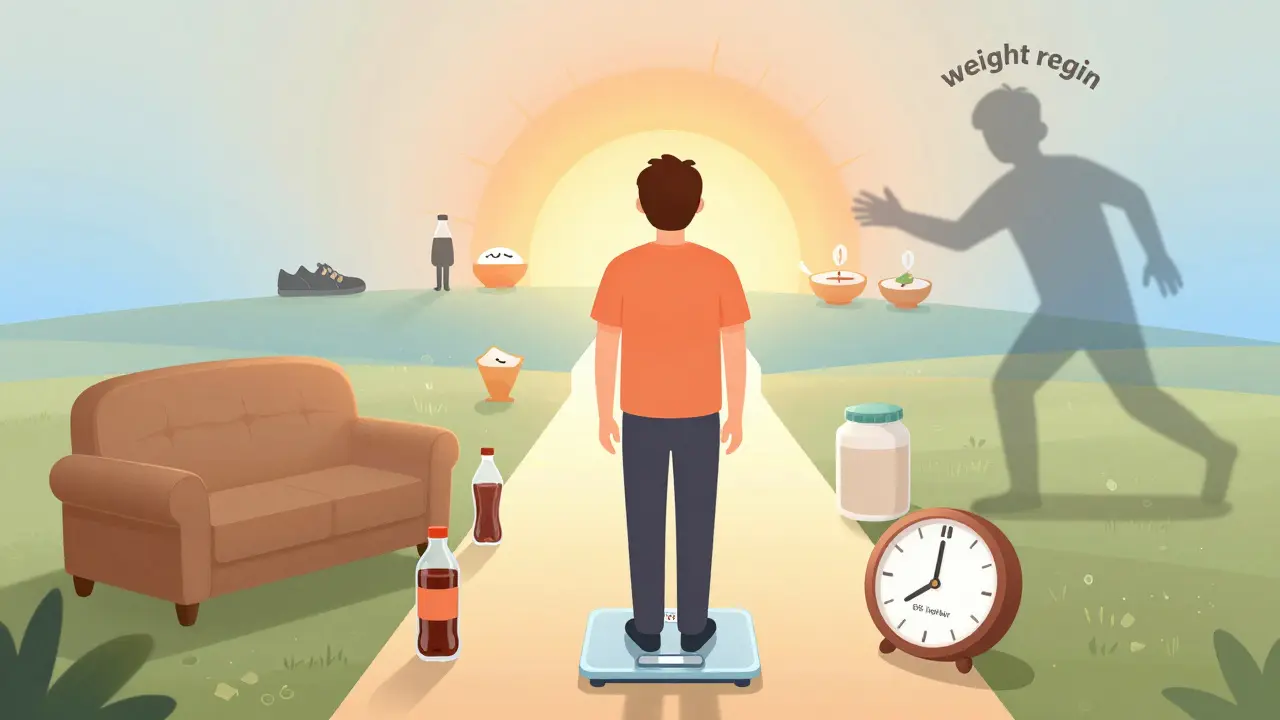
Studies show semaglutide works best when paired with lifestyle changes. In the STEP trials, everyone got weekly counseling on diet and exercise. They didn’t just get a shot - they got support.
Here’s what actually helps:
- Protein-rich meals - they keep you full longer
- Avoiding ultra-processed foods - sugar and refined carbs spike hunger
- Walking 30 minutes a day - even if it’s just around the block
- Sleeping 7+ hours - poor sleep increases ghrelin, the hunger hormone
One man in Melbourne lost 42 pounds on Wegovy. He says, ‘The medication made it possible. But I had to change how I ate. I stopped drinking soda. I started cooking. That’s what kept the weight off.’
It’s not about starving yourself. It’s about eating differently. Semaglutide helps you want less junk. You still have to choose the right food.
The Future: What’s Next?
Researchers are already looking beyond semaglutide. Tirzepatide (Zepbound) - a dual GLP-1 and GIP agonist - is showing even better results: up to 21% weight loss in trials. Oral semaglutide (Rybelsus) is approved for diabetes, and trials for weight loss are underway. If it works, it could be a game-changer - no needles needed.
But the big question remains: Can we afford this? The global market for GLP-1 drugs hit $18 billion in 2023. Experts warn that if millions need lifelong treatment, healthcare systems could be overwhelmed. By 2030, some estimate these drugs could cost the U.S. healthcare system 1-2% of its total budget.
That’s why access, affordability, and long-term support are just as important as the science. A pill that works is useless if no one can get it.
Final Thoughts
Semaglutide isn’t a miracle. But it’s the most powerful weight loss tool we’ve had in decades. It works. It’s backed by hard data. It changes lives.
But it’s not a quick fix. It’s a long-term commitment. It requires medical supervision. It comes with side effects. And if you stop, you’ll likely regain weight.
If you’re considering it, talk to a doctor who specializes in obesity medicine. Don’t rush. Don’t self-prescribe. Don’t believe the hype on social media. This is medicine. Treat it like it.
For many, it’s not about looking better. It’s about living longer. About walking without pain. About not being afraid to get on a scale. That’s worth more than any number on a label.
Is Ozempic the same as Wegovy for weight loss?
Ozempic and Wegovy contain the same active ingredient - semaglutide - but they’re approved for different uses and given at different doses. Ozempic is for type 2 diabetes at doses up to 1 mg weekly. Wegovy is for weight loss at 2.4 mg weekly. While some doctors prescribe Ozempic off-label for weight loss, Wegovy is specifically formulated and dosed for that purpose. Using higher doses of Ozempic without medical oversight can increase side effects and isn’t recommended.
How long does it take to see weight loss with Wegovy?
Most people start seeing weight loss within the first 4 to 8 weeks, but the full effect takes time. Dosing starts low and increases slowly over 16 to 20 weeks to reduce side effects. Maximum weight loss typically happens around 68 weeks (about 16 months). By week 44, most people have lost 89% of their total expected weight loss. Patience is key - this isn’t a rapid fix.
Do you have to stay on semaglutide forever?
For most people, yes. Stopping semaglutide usually leads to weight regain - about two-thirds of lost weight comes back within a year. This isn’t because you failed. It’s because obesity is a chronic condition, like high blood pressure or diabetes. The medication helps manage it. Once you stop, your body’s natural hunger signals return. Experts recommend continuing semaglutide long-term for sustained results, if tolerated and affordable.
What are the biggest side effects of Wegovy?
The most common side effects are gastrointestinal: nausea (77%), diarrhea (64%), vomiting (56%), constipation, and stomach pain. These usually improve over time as your body adjusts. Starting at a low dose and increasing slowly helps reduce severity. Rare but serious risks include gallbladder problems, pancreatitis, and potential thyroid tumors (seen in animal studies). Always report severe or persistent side effects to your doctor.
Can you use semaglutide if you don’t have diabetes?
Yes. Wegovy is specifically approved for weight loss in adults with obesity or overweight (BMI ≥27) with at least one weight-related health condition - even if they don’t have diabetes. In fact, most participants in the STEP 1 trial didn’t have diabetes, and they still lost significant weight. The drug works by targeting appetite and metabolism, not blood sugar alone.
Why is Wegovy so hard to get?
Demand has exploded since the drug gained popularity on social media, but supply hasn’t kept up. Novo Nordisk, the manufacturer, has struggled to produce enough to meet global demand. In the U.S., 78% of providers reported shortages in late 2023. Insurance restrictions, high cost, and lack of provider training also limit access. In Australia, it’s not subsidized, making it unaffordable for most. This creates major equity issues - the people who need it most often can’t get it.
Is semaglutide safe for long-term use?
Current data shows semaglutide is safe for long-term use in people without contraindications. Clinical trials have followed participants for up to 3 years with no new major safety signals. The FDA approved Wegovy for long-term weight management based on this data. However, long-term data beyond 5 years is still limited. Regular monitoring by a doctor is essential, especially for thyroid function, kidney health, and signs of gallbladder disease.
Can semaglutide help with belly fat?
Yes. Studies show semaglutide reduces visceral fat - the deep belly fat linked to heart disease and diabetes - more than other weight loss methods. In one analysis, participants lost up to 20% of their visceral fat after 68 weeks. This matters because belly fat is metabolically active and harmful. Reducing it improves insulin sensitivity and lowers inflammation, even before the scale moves dramatically.
Nat Young
January 15, 2026Semaglutide isn’t magic-it’s a pharmacological lever on a biological system that evolved to hoard fat during famines. We’re treating a chronic metabolic disorder like it’s a cosmetic fix, and the data shows it works-but only as long as you’re on it. The real scandal? We’re letting Big Pharma control access while millions suffer. This isn’t weight loss. It’s medical triage with a price tag.
Iona Jane
January 16, 2026They’re lying about the thyroid cancer risk-rats got tumors so humans are fine right? And why is Ozempic cheaper? Because they want you hooked on the expensive version. This is all about profit. The FDA is in bed with Novo Nordisk. I’ve seen the emails. People are dying from dehydration because they can’t afford the drip bags to counter the vomiting. This isn’t medicine. It’s exploitation.
Jaspreet Kaur Chana
January 16, 2026Bro I’m from India and let me tell you-this drug is a game changer but only if you’ve got the cash. Here, people try to buy Ozempic off WhatsApp sellers for $30 a vial and then end up in the ER with pancreatitis. The science is solid-GLP-1 is real, the hormone is real, the hunger fade is real-but the system? Broken. We need generic versions. We need public health programs. Not rich folks getting 20% weight loss while others eat rice and salt because they can’t afford chicken. This isn’t just medicine-it’s justice.
My uncle lost 38 kilos on Wegovy after his diabetes got worse. He walks 10k steps now. He’s alive. But his sister? She’s still obese because she can’t get the script. That’s not biology. That’s capitalism.
And yeah, side effects suck. Nausea for weeks? Yeah. But imagine being so heavy you can’t tie your own shoes. That’s worse. You adapt. You start slow. You drink water. You eat protein. The drug doesn’t fix you-it gives you space to fix yourself. That’s the real win.
Also, stop comparing it to diet pills. This isn’t phentermine. This is your body’s own satiety signal turned up to 11. It’s not suppressing appetite-it’s rewiring your relationship with food. That’s why people say they just don’t crave pizza anymore. Not willpower. Biology.
And don’t even get me started on the U.S. insurance mess. In India, we don’t have insurance but we have family. In the U.S., you need a PhD just to get a prescription. It’s insane.
Haley Graves
January 17, 2026If you’re considering this, talk to an obesity specialist-not your GP. This isn’t a quick fix. It’s a lifestyle overhaul with a medical tool. Track your protein intake. Sleep seven hours. Walk daily. Don’t blame the drug if you’re still eating chips. It’s not a magic wand-it’s a support beam. Use it right.
Nilesh Khedekar
January 18, 2026Let’s be real: if you’re not rich, you’re not getting this drug. And if you’re not rich, you’re probably also eating cheap, processed food because it’s all you can afford. So we’re giving a powerful tool to the wealthy, while the poor get diabetes, heart disease, and death. And then we act surprised when obesity rates rise? This isn’t a medical breakthrough-it’s a class war disguised as science. Also, ‘weight regain’? No, it’s biological inevitability. Your body isn’t broken. The system is.
Niki Van den Bossche
January 18, 2026It’s fascinating how we’ve reduced the profound, existential struggle of embodied suffering to a pharmacological Band-Aid. Semaglutide doesn’t cure obesity-it merely tempers the symptoms of a civilization that has weaponized food, commodified desire, and pathologized the body. We’ve outsourced agency to a molecule, mistaking biochemical modulation for liberation. The real tragedy? We’re not asking why we’re so hungry. We’re just asking for a higher dose.
Jan Hess
January 20, 2026I’ve been on Wegovy for 10 months. Lost 41 pounds. Nausea was brutal at first but faded after 6 weeks. I started walking every day. Cut out soda. Cooked more. The drug made it possible but didn’t do it alone. I’m not cured. But I’m alive in a way I haven’t been since I was 18. If you’re scared of the side effects? Start low. Go slow. Talk to your doctor. It’s worth it.
Gloria Montero Puertas
January 22, 2026Anyone who takes this without a nutritionist, a therapist, and a fitness coach is setting themselves up for failure-and a return to their old weight. This isn’t a drug. It’s a gateway to accountability. If you think popping a shot and eating fast food is acceptable, you’re not sick-you’re lazy. And you don’t deserve this medicine.
Frank Geurts
January 23, 2026It is of paramount importance to underscore that the pharmaceutical intervention known as semaglutide, marketed under the proprietary designations Ozempic and Wegovy, represents a paradigmatic advancement in the clinical management of metabolic dysfunction. The pharmacokinetic profile of the molecule, particularly its affinity for the GLP-1 receptor, facilitates a sustained anorexigenic signal, thereby modulating central appetite regulation with unprecedented efficacy. However, the socioeconomic disparities in access, compounded by insurance denials and supply-chain constraints, constitute a critical public health inequity. It is imperative that regulatory bodies, in concert with pharmaceutical manufacturers, institute equitable distribution protocols to ensure that therapeutic benefit is not contingent upon financial privilege. The moral imperative is clear: health is a right, not a commodity.