
27 Jan 2026
- 8 Comments
Why Medications Can Fail During Travel
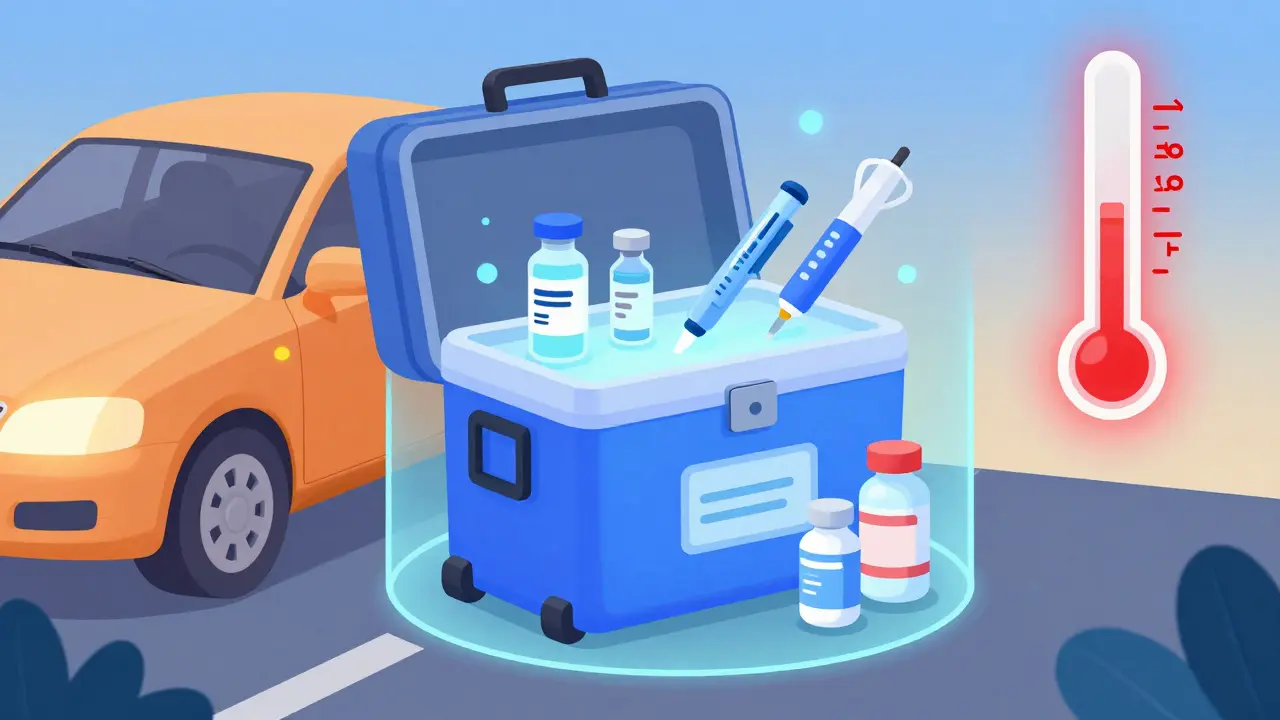
It’s not just about forgetting your pills. Medications can lose their power-sometimes completely-just from being left in a hot car or frozen in checked luggage. Insulin, thyroid meds, epinephrine auto-injectors, and even common antibiotics can degrade when exposed to extreme heat or cold. The FDA says most pills and liquids need to stay between 68°F and 77°F (20°C-25°C). But on a sunny day, a car glove box can hit 158°F (70°C). That’s not just uncomfortable-it’s dangerous.
One traveler in Arizona had her insulin go bad after leaving it in the trunk for three hours in 95°F heat. Her blood sugar spiked, and she ended up in the ER. That’s not rare. A CDC study found that 78.6% of medication emergencies during travel happened because of temperature exposure. And 63.8% of people who lost effectiveness of their meds had stored them in their cars. You don’t need to be a diabetic to be at risk. Antibiotics, heart meds, and even allergy pills can become less effective-or worse, unsafe.
What the TSA Actually Allows
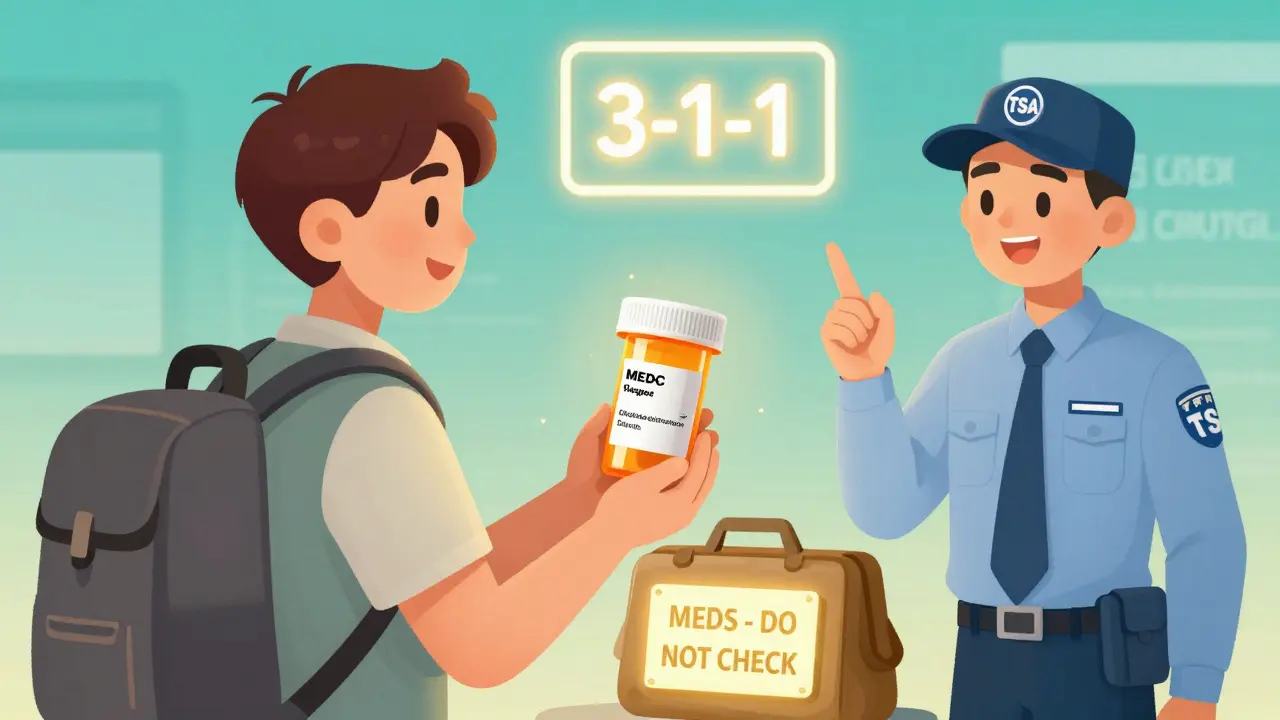
Many travelers think they can’t bring liquids past security. That’s not true. The TSA’s 3-1-1 rule applies to regular toiletries, not medications. You can bring more than 3.4 ounces of liquid meds if you declare them. But here’s the catch: they must be clearly labeled. If your insulin bottle doesn’t have the pharmacy label with your name and dosage, TSA might make you open it for inspection-and that means delays. In 2022, travelers without proper labels waited an average of 22.7 minutes longer at security.
Don’t transfer pills into pill organizers unless you have to. If you do, keep the original bottles with you. Pharmacists say 92.4% of medication mix-ups during travel happen when labels are gone. That’s why the American Pharmacists Association insists: keep medications in original containers. Even if it’s messy. Even if it takes up space. Your life could depend on it.
How to Store Insulin and Other Cold-Sensitive Drugs
If you’re traveling with insulin, biologics, or refrigerated meds, you need a cooler that actually works. Not a lunchbox. Not a regular ice pack. You need a medical-grade cooler tested to hold 36-46°F (2-8°C) for at least 48 hours. Two trusted options: the Frio Wallet and the TempAid MedCooler. Both are FDA-cleared. The Frio uses water-activated crystals and lasts up to 45 hours without ice. The TempAid uses phase-change material and holds temp for 72 hours.
Here’s how to prep: Freeze the cooling packs for at least 12 hours at 0°F (-18°C). Don’t just stick them in the freezer for a few minutes. That’s not enough. Place them around your meds-not directly touching them-to avoid freezing. Use a data logger if you can. One traveler on HealthUnlocked tracked her meds for 14 days across three countries and kept temps between 38-42°F. No issues.
Never check refrigerated meds in luggage. Cold temperatures in cargo holds can drop below freezing. The FDA received a report in December 2022 where an epinephrine pen froze in checked baggage and failed during an anaphylactic reaction. That’s not hypothetical. That’s a real case.
Planning Ahead: The 14-Day Rule
Don’t wait until the day before your trip. Start planning two weeks out. That’s the CDC’s official recommendation. Why? Insurance. Medicare Part D and most private plans let you refill prescriptions up to five days early if you’re traveling. But you need to call your pharmacy in advance. Some won’t do it unless you give them your travel dates and destination.
Also, get a doctor’s letter. It’s required in 92 countries. The letter should list your meds, dosages, and why you need them. No vague stuff like “for pain.” Say “insulin glargine 30 units nightly for type 1 diabetes.” Airlines and customs officers see hundreds of these letters. They know the difference between a real prescription and a fake one. And if you have a letter, you’re 78.3% more likely to breeze through customs, according to IATA’s 2023 survey.
Time Zones and Dosing Schedules
Jumping across time zones isn’t just jet lag. It’s a medication schedule disaster waiting to happen. If you take a pill every 12 hours, and you fly from London to Tokyo, your body doesn’t know it’s now 10 hours ahead. Taking your dose at the wrong time can cause side effects-or make the drug useless.
For most meds, adjust gradually. Move your dose by 15 minutes each day until you’re synced with local time. But for some, like corticosteroids or blood pressure meds, timing matters more. Talk to your pharmacist at least seven days before you leave. The American Academy of Sleep Medicine says circadian meds (like melatonin or certain antidepressants) need special timing adjustments. Don’t guess. Ask.
What Not to Do
- Don’t leave meds in the car-even in the shade. Heat builds up fast.
- Don’t use unlabeled pill organizers as your main storage. Keep originals with you.
- Don’t put meds in checked bags-especially if they’re temperature-sensitive.
- Don’t rely on hotel mini-fridges. They’re not calibrated for meds. They can freeze or get too warm.
- Don’t skip the doctor’s letter. It’s not paperwork-it’s your safety net.
What’s New in 2026
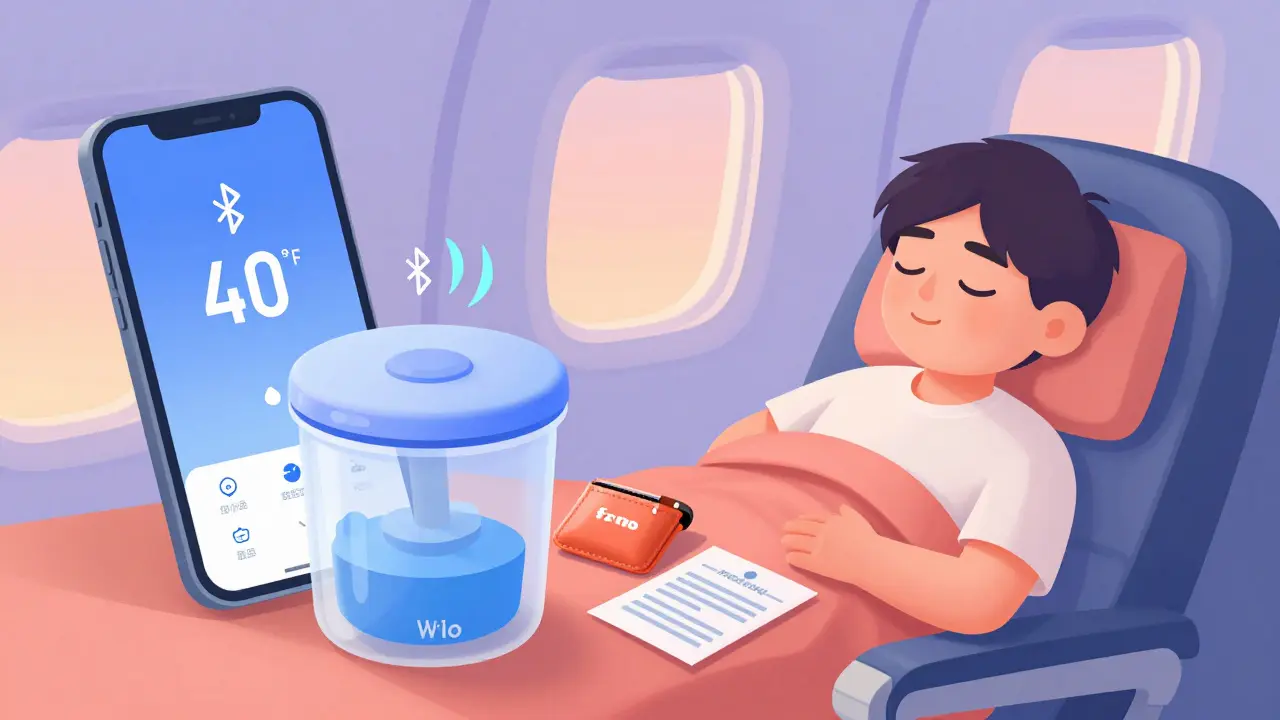
Technology is catching up. In 2023, the FDA approved temperature-indicating labels like 3M’s MonitorMark. These stickers change color if your meds hit 86°F (30°C). Now you don’t need a thermometer-you just look. In 2024, the FAA started requiring airlines to keep temperature-controlled zones in galleys for medical supplies. And by 2026, smart containers with Bluetooth sensors will hit the market. Proteus Digital Health is testing ones that send alerts to your phone if your insulin gets too hot.
But until then, the rules haven’t changed. Original containers. Temperature control. Documentation. These aren’t suggestions. They’re science-backed standards.
Real Stories, Real Risks
On Reddit, u/PharmaNurseJen shared how a diabetic traveler lost her insulin to heat and had to be airlifted. In the r/Diabetes subreddit, 217 cases since 2020 show the same pattern: meds left in sun, meds stored wrong, meds forgotten. One woman took her asthma inhaler on a beach trip, left it in her purse in the car, and it didn’t work during an attack. She survived-but barely.
On the flip side, u/TravelMedTech posted about a 14-day trip to Europe with refrigerated meds. Used a TempAid. Logged temps. No issues. No stress. Just smooth travel.
The difference? Preparation.
Final Checklist
- ☑️ Keep all meds in original containers with labels
- ☑️ Carry a doctor’s letter listing meds and medical need
- ☑️ Use a medical-grade cooler for refrigerated meds
- ☑️ Freeze cooling packs 12+ hours before travel
- ☑️ Never check meds in luggage
- ☑️ Declare liquids at TSA checkpoint
- ☑️ Adjust dosing schedule 7 days before travel
- ☑️ Bring 10% extra supply in case of delays
- ☑️ Pack a small thermometer or temp-indicating sticker
- ☑️ Know the emergency number for your destination country
Traveling with meds isn’t complicated. But it does require attention. One mistake can cost you your health. Don’t risk it. Be ready.
Amber Daugs
January 27, 2026Wow. Just... wow. I can't believe people still don't get this. Leaving meds in the car? Are you serious? That's not negligence, that's a death sentence waiting to happen. I've seen people put insulin in the glovebox because 'it's just for a few hours.' No. Just no. This isn't a suggestion-it's basic biology. If you can't be bothered to read a 10-minute article, maybe you shouldn't be traveling at all.
Ambrose Curtis
January 28, 2026lol i used to just throw all my pills in a ziplock and call it a day. until my buddy had a seizure cause his seizure meds got hot in the trunk. now i carry everything in original bottles, even the ibuprofen. TSA gave me side-eye but i just smiled and said 'it's not a drug, it's my life support.' they let me through. also, freeze those cooling packs for like 24 hours, not 10 mins. trust me, i learned the hard way.
Linda O'neil
January 29, 2026This is the kind of post that saves lives. Seriously. I’m a nurse and I’ve seen too many people panic because their meds ‘didn’t work’-turns out they were left in a hot rental car for 3 hours. I always tell my patients: if it’s not in the original bottle, it’s not safe. And if you’re traveling with insulin? Get a Frio. It’s not expensive, it’s not bulky, and it’s literally the difference between a vacation and a hospital stay. You owe it to yourself to do this right.
Robert Cardoso
January 29, 2026The CDC statistic of 78.6% is misleading. It conflates correlation with causation. The real issue isn’t temperature exposure-it’s poor patient compliance and lack of education. Also, the FDA’s 68-77°F range is arbitrary. Most pharmaceuticals have a much wider thermal tolerance based on stability studies. The real danger is the over-reliance on 'medical-grade' coolers, which are overpriced marketing gimmicks. A well-insulated thermos with a reusable gel pack works just fine. And no, you don’t need a data logger unless you’re running a clinical trial.
James Dwyer
January 31, 2026This made me feel so much better about my upcoming trip. I was nervous about carrying my thyroid meds, but now I know exactly what to do. Original bottles. Doctor’s letter. Cooler with frozen packs. I even bought one of those temp stickers. It’s crazy how something so small can make such a big difference. You’re not being paranoid-you’re being smart. Keep sharing this stuff. People need to hear it.
Timothy Davis
January 31, 2026The TSA 3-1-1 exemption for meds is a myth. They can still confiscate anything they deem 'suspicious,' regardless of labeling. I had my 6oz bottle of levothyroxine thrown out in Atlanta because the agent said 'it looked like a drug.' No letter, no label, no mercy. Also, 'medical-grade' coolers? Most are just insulated lunchboxes with a $50 markup. The TempAid is decent, but you can get the same performance from a Yeti lunchbox and a few frozen water bottles. Stop falling for the pharmaceutical-industrial complex.
Brittany Fiddes
February 1, 2026Honestly, Americans are so naive. You think the UK or Germany would let you waltz through customs with a plastic bag full of unlabeled pills? We have strict regulations for a reason. My cousin, a pharmacist in London, told me that in the EU, you need a European Health Insurance Card *and* a translated prescription in French or German. And don’t even think about bringing insulin without a refrigerated travel case-it’s practically illegal. You Americans treat medicine like a snack. It’s not. It’s a controlled substance. Learn to respect that.
doug b
February 2, 2026You got this. Seriously. I used to forget my meds on trips too. Then I started using the checklist. Original bottles. Doctor’s note. Extra supply. Cooler. Done. No stress. No panic. It’s not about being perfect-it’s about being prepared. One little habit change can save your whole trip. You’re not alone. We’ve all been there. Now go crush that vacation.