
5 Jan 2026
- 14 Comments
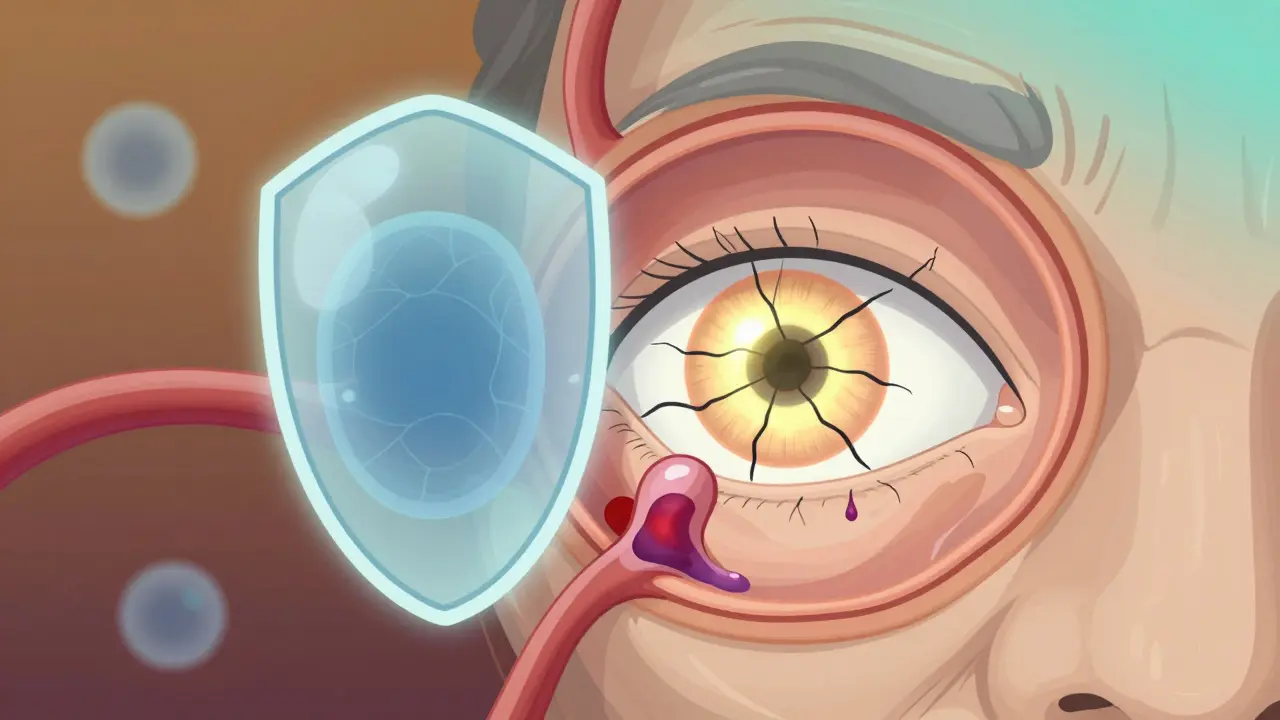
Imagine looking at a loved one’s face and not being able to make out their eyes. Or trying to read the clock on the wall, but the numbers blur into a smudge. This isn’t just aging-it’s age-related macular degeneration (AMD), the leading cause of central vision loss in people over 55 in the UK and the US. Unlike cataracts, where vision can be restored with surgery, AMD attacks the very center of what lets you see detail: the macula. And if it turns wet, it can steal your sight in months. But there’s a treatment that’s changed everything-anti-VEGF injections.
What Happens When Your Macula Deteriorates
The macula is a tiny spot in the center of your retina, packed with light-sensing cells called cones. It’s what lets you read, drive, recognize faces, and see color clearly. When AMD hits, it doesn’t blind you completely-you still see shapes and movement around the edges. But the center goes dark, fuzzy, or warped. It’s like looking through a smudged lens that only blurs what’s directly in front of you. There are two types: dry and wet. Dry AMD makes up about 90% of cases. It starts with yellow protein clumps called drusen building up under the retina. Over time, the retinal tissue thins out. This is slow-years, sometimes decades. Many people live with dry AMD for years without major vision loss. But it can turn into wet AMD at any point. Wet AMD is the scary one. It’s only 10-15% of cases, but it causes 90% of severe vision loss. Here, abnormal blood vessels grow under the retina, leaking fluid and blood. These vessels don’t belong there. They’re fragile, messy, and they destroy the photoreceptor cells that send visual signals to your brain. Without treatment, wet AMD can drop your vision from 20/40 to 20/200 in just a few months.Why Age Is the Biggest Risk Factor
You can’t stop aging-but you can understand how it plays into AMD. The risk of AMD jumps from less than 1% in your 40s to over 35% if you’re over 75. Why? Because your eyes have been under constant stress for decades. Sunlight, oxygen, and metabolic waste build up. The retinal pigment epithelium (RPE), which feeds and cleans up the light-sensing cells, starts to fail. Lipofuscin, a toxic waste product, piles up. The immune system gets confused and starts attacking healthy tissue. Smoking is the biggest thing you can change. If you smoke, your risk of AMD is nearly four times higher than someone who never smoked. High blood pressure and high cholesterol also raise your odds. Obesity? That bumps your risk by more than double. Genetics matter too-if a parent or sibling has AMD, your chance of getting it is 3 to 6 times higher. And while AMD affects all races, White people in the UK and US are 2.5 times more likely to develop it than African Americans.How Anti-VEGF Therapy Stops the Leak
Anti-VEGF isn’t a cure. But it’s the most effective tool we have to stop wet AMD from destroying vision. VEGF stands for vascular endothelial growth factor-a protein that tells blood vessels to grow. In wet AMD, your body makes too much of it, causing those dangerous vessels to sprout under the retina. Anti-VEGF drugs block that signal. They’re injected directly into the eye, right into the vitreous gel. Each injection takes less than five minutes and is done in a clinic. The needle is tiny, and numbing drops are used. Most patients feel only pressure, not pain. After the injection, you might see floaters or feel mild irritation, but that fades in a day. These injections don’t fix the damage already done. But they stop it from getting worse-and in about one-third of patients, vision actually improves. A patient in Bristol, diagnosed with wet AMD in 2023, went from reading only large print to reading street signs again after six months of monthly injections. That’s not rare. Studies show that 68% of patients stabilize or improve their vision with regular anti-VEGF treatment.
The Burden of Treatment
There’s a catch. You can’t just get one injection and call it done. The first few months usually mean monthly shots. After that, doctors monitor your eye with OCT scans-high-res images of the retina. If fluid comes back, you get another injection. Some people need one every 6 to 8 weeks for years. That’s 6 to 10 visits a year. For older adults, that’s a lot of travel, waiting, and anxiety. A 2023 survey by the Cleveland Clinic found that 82% of AMD patients found frequent injections to be their biggest challenge. Many worry about the procedure. Others struggle with transportation or balancing appointments with other health issues. Missing even a few injections can mean permanent vision loss. Studies show patients who skip more than 25% of their scheduled shots lose 30% more vision than those who stick to the plan.New Hope: Longer-Lasting Treatments
The good news? The field is moving fast. In 2021, the FDA approved Susvimo, a tiny implant placed in the eye that slowly releases ranibizumab for up to six months. No monthly shots-just one surgery and refill every six months. It’s not for everyone, but for those who can’t manage frequent visits, it’s life-changing. Then there’s Vabysmo, approved in early 2022. It’s the first drug that blocks two proteins at once-VEGF and angiopoietin-2. That means it may work longer and more effectively than older drugs. Early data shows some patients can go 12 weeks between injections. Researchers are also testing gene therapies that could permanently turn off the VEGF signal or fix the faulty immune response behind AMD. Phase I trials are promising. If they work, we might one day treat AMD with a single injection that lasts for years.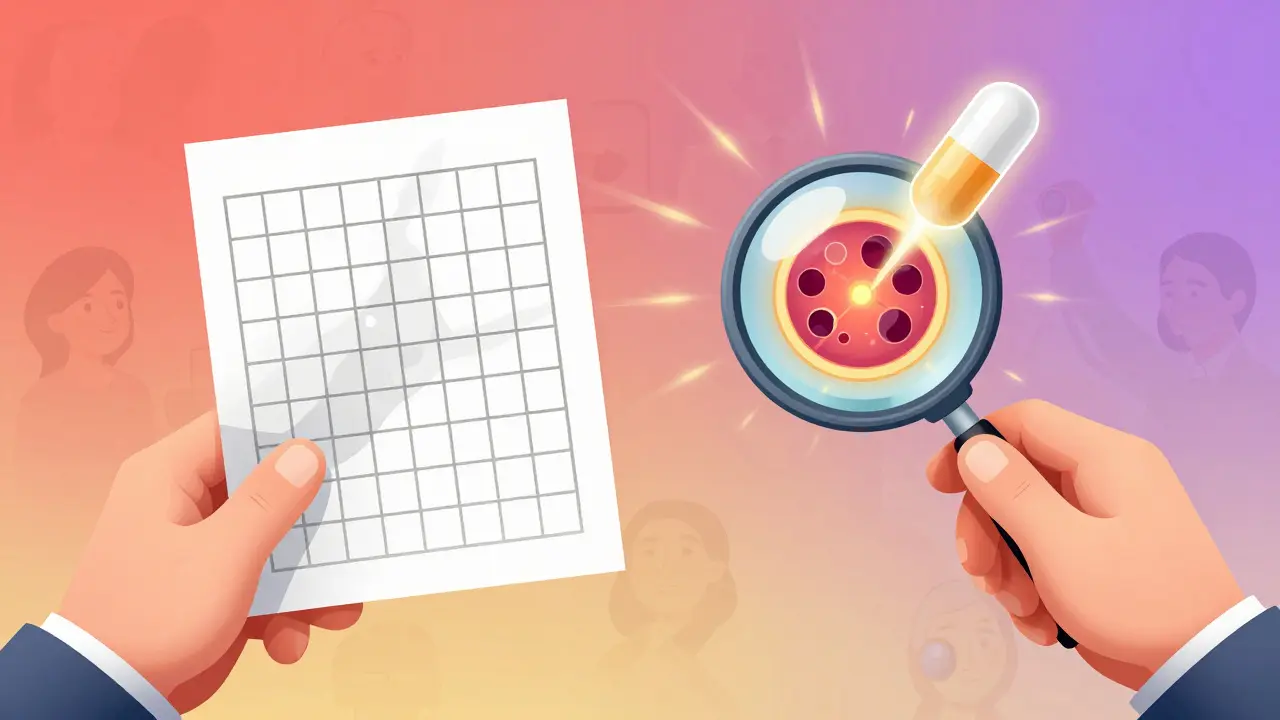
Harshit Kansal
January 6, 2026Man I never knew AMD could hit so fast. My grandma went from reading the paper to needing a magnifier in less than a year. No warning. No pain. Just gone.
Vinayak Naik
January 8, 2026Anti-VEGF shots are wild. I used to think they were just putting poison in your eye, but turns out it's like hitting pause on a sinking ship. My uncle got them and now he can see his dog's face again. That’s more than most drugs can do.
Tom Swinton
January 10, 2026I’ve been following this since my mother was diagnosed five years ago, and honestly, the biggest tragedy isn’t the disease-it’s the system. Monthly injections mean driving across town, sitting in waiting rooms for two hours, paying co-pays that eat into Social Security checks, and then being told, ‘Come back in four weeks.’ And if you miss one? The damage isn’t reversible. This isn’t treatment-it’s a full-time job for elderly people who can barely get out of bed. The fact that we’re celebrating ‘improvements’ while ignoring the human cost of compliance is morally bankrupt.
Gabrielle Panchev
January 10, 2026Wait-so you’re telling me that Big Pharma invented a drug that requires lifelong injections… and then they patented it? And now they’re pushing implants and gene therapy like it’s some miracle? No. This is just a longer leash. They’re not curing AMD-they’re monetizing dependency. Susvimo costs $30,000 a year. Who’s really winning here? The patients? Or the stockholders?
Melanie Clark
January 11, 2026I’ve read every study on this and I’ve seen the data and I’m sorry but you’re all being manipulated by the retina-industrial complex. Drusen aren’t just waste-they’re your body’s attempt to contain the damage. Anti-VEGF doesn’t stop disease progression-it suppresses the immune response and creates long-term vascular instability. And don’t get me started on the fluoroscein angiograms-they’re radiation bombs disguised as diagnostics. You think you’re saving your vision? You’re just trading one slow death for another.
Cam Jane
January 11, 2026AREDS2 is non-negotiable. I’m a nurse and I tell every patient over 60: take the real ones. Not the ‘eye health’ gummies from Walmart. The ones with lutein, zeaxanthin, zinc, copper, vitamin C and E-exactly as studied. And use the Amsler grid every morning. It takes 30 seconds. It could save your sight.
Katie Schoen
January 11, 2026So we’re supposed to be grateful that we can now see our grandchildren’s faces… but only if we’re rich enough to afford 10 doctor visits a year? How about we fix the system instead of just patching the symptoms? Just saying.
Kiran Plaha
January 12, 2026My dad has dry AMD. He takes his supplements every day. He uses the grid. He quit smoking after 40 years. He still drives to the grocery store. He doesn’t complain. He just adapts. Maybe that’s the real lesson here-not the science, but the stubbornness to keep living.
Kelly Beck
January 13, 2026You’re not alone. I’ve been through this with my mom. The injections are scary, but the fear of losing your independence is worse. I made her a little calendar with stickers for each visit. When she got three in a row, we celebrated with ice cream. Small wins matter. Keep going. You’re doing better than you think.
Matt Beck
January 13, 2026Imagine if we could just edit the VEGF gene like a typo in a Word doc… 🤔💡 Maybe one day we’ll upload our retinas to the cloud and just download a new pair. Until then, I’ll keep my monocle and my skepticism. 🧠👁️
Saylor Frye
January 13, 2026Interesting how we treat AMD like a medical emergency when it’s really just nature’s way of reminding us we’re mortal. The real tragedy isn’t the vision loss-it’s our refusal to accept that aging isn’t a bug to be patched.
Katelyn Slack
January 15, 2026my mom got the susvimo implant last year and it changed everything. no more monthly trips. no more anxiety. just… quiet. i wish more people knew about it. it’s not perfect but it’s a gift.
Tiffany Adjei - Opong
January 16, 2026Oh please. You think gene therapy is coming? Please. The last time they said that about Alzheimer’s, we got a drug that costs $26,000 and works on 1% of people. This is just another placebo with a fancy name. You’re not saving sight-you’re selling hope. And hope doesn’t pay the rent.
Lily Lilyy
January 17, 2026There is so much hope here. So much. Even if you’re fighting this alone, even if it’s hard, even if the system is broken-your vision matters. Your life matters. Keep going. You’re not just surviving-you’re rewriting what it means to live with loss. And that’s brave.