
8 Jan 2026
- 10 Comments
Missing a pill here and there might seem harmless. But if you’re managing high blood pressure, diabetes, or depression, even one missed dose can send your health off track-leading to hospital visits, worsening symptoms, or worse. The truth? About half of all people don’t take their meds as prescribed. And the biggest reason? They just forget. Or they get overwhelmed. Or they’re scared of side effects and stop cold. That’s where tracking comes in. Not fancy apps or smart pillboxes alone. Real, practical systems that actually fit into your life.
Why Paper Lists Alone Won’t Cut It
You’ve probably seen them: the sticky notes on the fridge, the notebook with scribbled times, the pill organizer with half-empty slots. These are common. And they’re broken.A 2012 study in the Annals of Internal Medicine found that when people write down what they took, they’re only accurate about 27% of the time. Why? Because humans lie-even to themselves. You think you took your pill at 8 a.m. But you didn’t. You were rushing. You forgot. Later, you just check the box because you meant to. That’s not tracking. That’s wishful thinking.
Even pill counts-where your doctor checks how many pills are left-are only 60% accurate. You could have taken all your pills and then thrown the rest away. Or you could have taken them all at once to look good for your appointment. Paper logs don’t catch that.
What Actually Works: The Real Tools Out There
The good news? Technology has caught up. Not to replace you, but to support you. Here’s what’s working right now, based on real data from clinics and patients.IoT Pillboxes (like Tenovi)
These aren’t just smart containers. They’re tiny guardians. A Tenovi Pillbox, for example, opens only when it’s time for your dose. It beeps. It flashes red if you’re late. Green when you’ve taken it. And here’s the key: it sends that data automatically to your doctor’s dashboard. No manual entry. No guesswork. In a 2023 study of heart failure patients, those using these devices had a 23% lower chance of being readmitted to the hospital.But it’s not perfect. Users in rural areas complain about poor cellular signal. If you live far from town or have spotty Wi-Fi, this can be a problem. Still, for most people in cities or suburbs, it’s the most reliable low-effort option.
Video Directly Observed Therapy (VDOT)
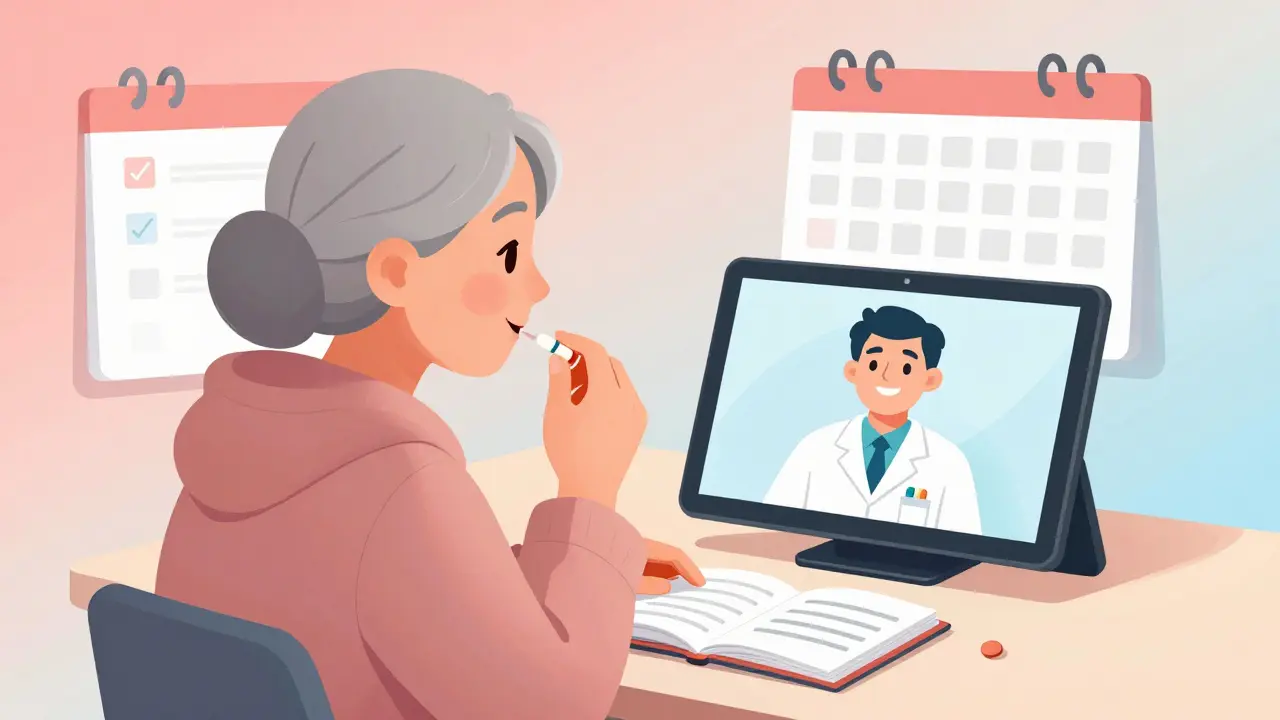
This sounds intense-and it is. You take your pill while on a video call with a nurse or pharmacist. They watch you swallow it. No tricks. 98.5% accuracy. Used mostly for tuberculosis, HIV, or severe mental health conditions where missing doses is dangerous.It’s not for everyone. It takes 17 minutes per dose. That’s a lot if you’re on five pills a day. But for people who’ve been non-adherent for years, it’s life-changing. One patient in Ohio told her care team, “I didn’t trust myself. Now I know I’m not lying to them-or to me.”
RFID and Smart Dispensers (like ReX)
These are the most advanced. A device stores your pills. At the right time, it opens a compartment and dispenses the exact dose into a cup-sometimes even into your mouth. Sensors confirm the pill was removed. Accuracy? 99.2%. Used mostly in nursing homes and clinical trials. Expensive. Not something you buy for home use… yet.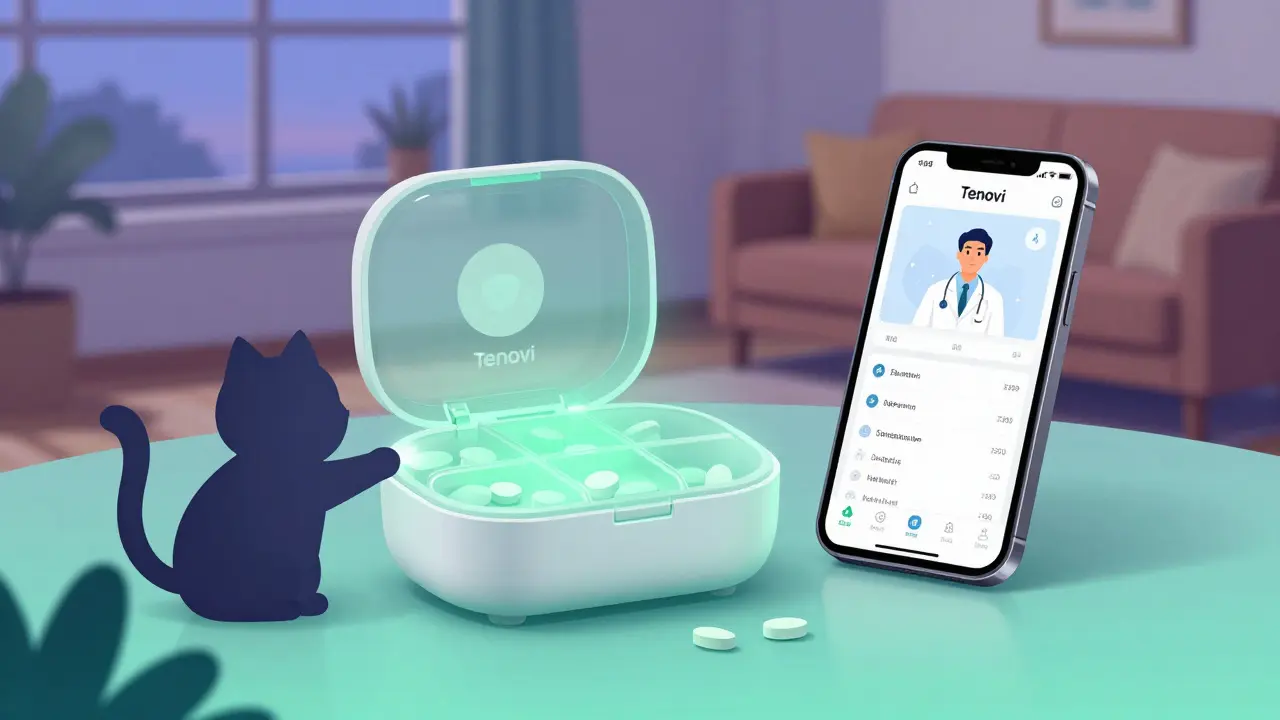
How to Choose the Right System for You
You don’t need the fanciest gadget. You need the one you’ll actually use.- If you’re tech-savvy and have good cell service → IoT pillbox (Tenovi, Medisafe)
- If you’re forgetful and need a physical reminder → simple alarm-based pill organizer with loud chimes
- If you’re on high-risk meds (like blood thinners or antipsychotics) → ask your doctor about VDOT or a home nurse program
- If you’re on Medicare and live in a rural area → stick with a paper log + weekly check-in with your pharmacist
Don’t let the tech overwhelm you. A basic pill organizer with alarms, used consistently, beats a smart box that sits unused on the counter.
Building a Real Medication Log (That People Actually Use)
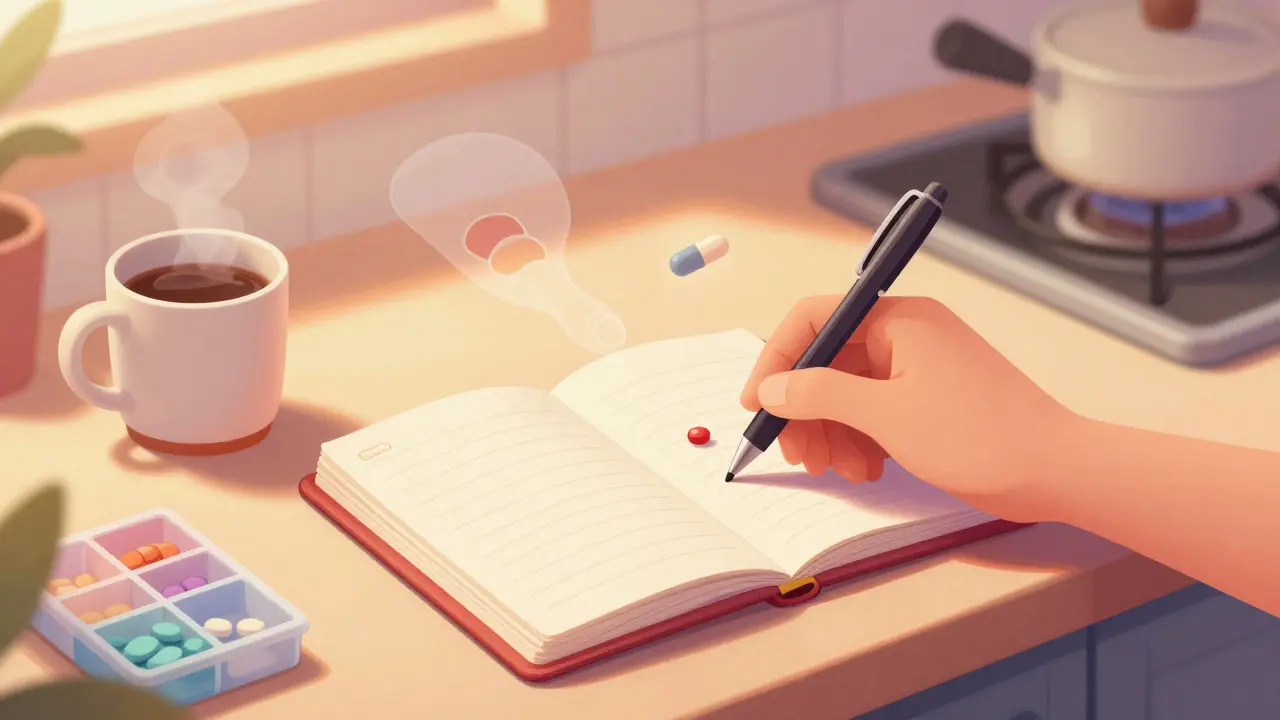
If you’re not ready for tech, here’s how to make a paper log that works:- Get a small notebook or print a simple table with columns: Date, Time, Medication, Taken? (Yes/No), Notes.
- Place it next to your toothbrush or coffee maker-somewhere you go daily.
- Write down your meds as you take them. Not later. Not the next day.
- Use a pen. Not a pencil. Once you write it, it’s real.
- Every Sunday, bring it to your pharmacist. They’ll spot patterns you miss.
One 72-year-old woman in Melbourne did this for her heart meds. She noticed she always skipped her evening pill after dinner. Turns out, she was too tired. Her pharmacist suggested moving it to breakfast. Her blood pressure dropped. No tech. Just awareness.
What No One Tells You About Adherence Tracking
Most systems only track when you open the bottle or when you press a button. They don’t know if you swallowed the pill. That’s a huge gap. A 2023 study in the Journal of Medical Systems found 12.3% of people fake adherence by opening the bottle and tossing the pill. That’s dangerous for psychiatric drugs or opioids.Also, tech doesn’t fix the root problem. If you’re skipping pills because you can’t afford them, or you’re scared of side effects, or you don’t believe they work-no app will fix that. You need a conversation with your doctor. Or a pharmacist. Or a counselor.
Adherence isn’t about compliance. It’s about trust. It’s about feeling heard. It’s about making the regimen fit your life-not the other way around.
The Big Picture: Why This Matters
In the U.S., non-adherence costs $300 billion a year in avoidable hospital stays and emergency visits. That’s not just a number. That’s someone’s mother. Their father. Their neighbor.And it’s getting worse. Medicare now requires providers to track adherence for chronic conditions to get paid. That means your doctor’s office is being pushed to use these tools. But they’re not all ready. Many still rely on paper logs. You can help change that.
Ask your doctor: “Do you use any system to track whether I’m taking my meds?” If they say no, ask if they can help you find one. If they say yes, ask how it works. Don’t let it be a black box.
The future is here. AI can now predict when you’re likely to miss a dose-72 hours in advance-by analyzing your phone usage, sleep patterns, and past behavior. Medisafe Predict+ does this. But it’s still new. And it’s not perfect.
For now, the best tool is the one you use every day. Whether it’s a notebook, a beeping box, or a video call with your pharmacist. Consistency beats complexity every time.
Micheal Murdoch
January 9, 2026It’s wild how we treat medication like a chore instead of a lifeline. I’ve seen grandparents forget pills because they’re scared of side effects, and kids skip theirs because they don’t feel ‘sick enough.’ But the real issue isn’t forgetfulness-it’s disconnection. We don’t talk about the shame of failing at something so basic. That’s why VDOT works for some: it’s not about surveillance, it’s about being seen. When someone says, ‘I’m here with you,’ it changes everything. Tech helps, but humanity fixes the root.
Heather Wilson
January 10, 2026Let’s be honest-most people who use pill organizers are just performing compliance. They don’t care about the data, they care about looking like they care. The 27% accuracy rate? That’s not a flaw in the system, it’s a mirror. People lie to their doctors because they’re terrified of being judged. And now we’re pushing IoT boxes like they’re magic? Please. If you’re skipping meds because you can’t afford them, no beeping box is gonna fix that. This whole article reads like a pharmaceutical marketing brochure.
Jacob Paterson
January 10, 2026Wow. So we’re giving people smart boxes because they’re too lazy to remember to take a pill? Next thing you know, we’ll have AI that pats them on the head when they swallow their antidepressants. This isn’t healthcare-it’s infantilization. People need accountability, not gadgets. My grandfather took insulin for 40 years without a single app. He just did it. Because he understood consequences. Maybe we should stop treating adults like toddlers.
Alicia Hasö
January 11, 2026I just want to say-this is the most important thing I’ve read all year. My mom had heart failure. She used a Tenovi box. The first week, it beeped at 3 a.m. because she was too tired to get up. She cried. Then she called her nurse. That’s when the real care started-not because the box sent a notification, but because someone answered. This isn’t about tech. It’s about connection. And if your doctor doesn’t get that, find a new one. You deserve better.
Kiruthiga Udayakumar
January 11, 2026As someone from India, I’ve seen families share one pillbox for five people because they can’t afford more. No one has Wi-Fi. No one has smartphones. We use chalk on the wall. One mark per pill. Simple. Real. Effective. Why are we obsessed with American tech when the solution is right in front of us? Paper. Pen. Community. Trust. Not gadgets. Not apps. Just people remembering each other.
Jeffrey Hu
January 13, 2026Actually, the 99.2% accuracy claim for ReX dispensers is misleading. That’s from a controlled clinical trial with trained staff and daily monitoring. In real-world home settings, sensor misreads happen constantly-especially with arthritis or shaky hands. And don’t get me started on the cost: $1,200 per unit. Medicare won’t cover it. So unless you’re rich or in a VA hospital, this is all theoretical. The article cherry-picks shiny examples and ignores the reality for 80% of Americans.
Elisha Muwanga
January 15, 2026Why are we even talking about this? In my day, you took your medicine because your parents told you to. No apps. No videos. No ‘trust.’ You didn’t question it. You did it. Now we’ve turned health into a performance art. Everyone’s got a checklist, a tracker, a notification. It’s exhausting. And it’s making people more anxious. Just take the damn pill. Stop overcomplicating it.
Matthew Maxwell
January 16, 2026Let’s not pretend any of this is new. The WHO published guidelines on adherence in 2003. The data hasn’t changed. The solution? Consistency. Routine. And education. Not gadgets. Not surveillance. You don’t need a smart box to remember to take a pill at breakfast. You need to link it to a habit you already have. Brush your teeth? Take your pill. Drink coffee? Take your pill. Simple. Human. Done.
tali murah
January 16, 2026Oh, so now we’re going to video-call our pills? That’s the future? I’m sure the NSA is thrilled. Next they’ll require a selfie with your medication to prove you’re not hoarding it. And let’s not forget the 12.3% who fake it by opening the bottle and tossing the pill-because apparently, we’re all liars now. This isn’t medicine. It’s a dystopian loyalty program. And the worst part? It’s all being pushed by companies who profit from your fear.
Pooja Kumari
January 18, 2026My sister took her meds religiously for years. Then she lost her job. Couldn’t afford them. Still took them-half-doses, skipping days, lying to her doctor. She cried every night. Then she got on Medicaid. And the first thing the nurse asked? ‘Do you have a pillbox?’ No one asked about the rent. No one asked if she was eating. No one asked if she felt hopeless. They asked about a box. This isn’t about adherence. It’s about avoiding responsibility. The system fails people first. Then it blames them for not using the right app.