
4 Feb 2026
- 10 Comments
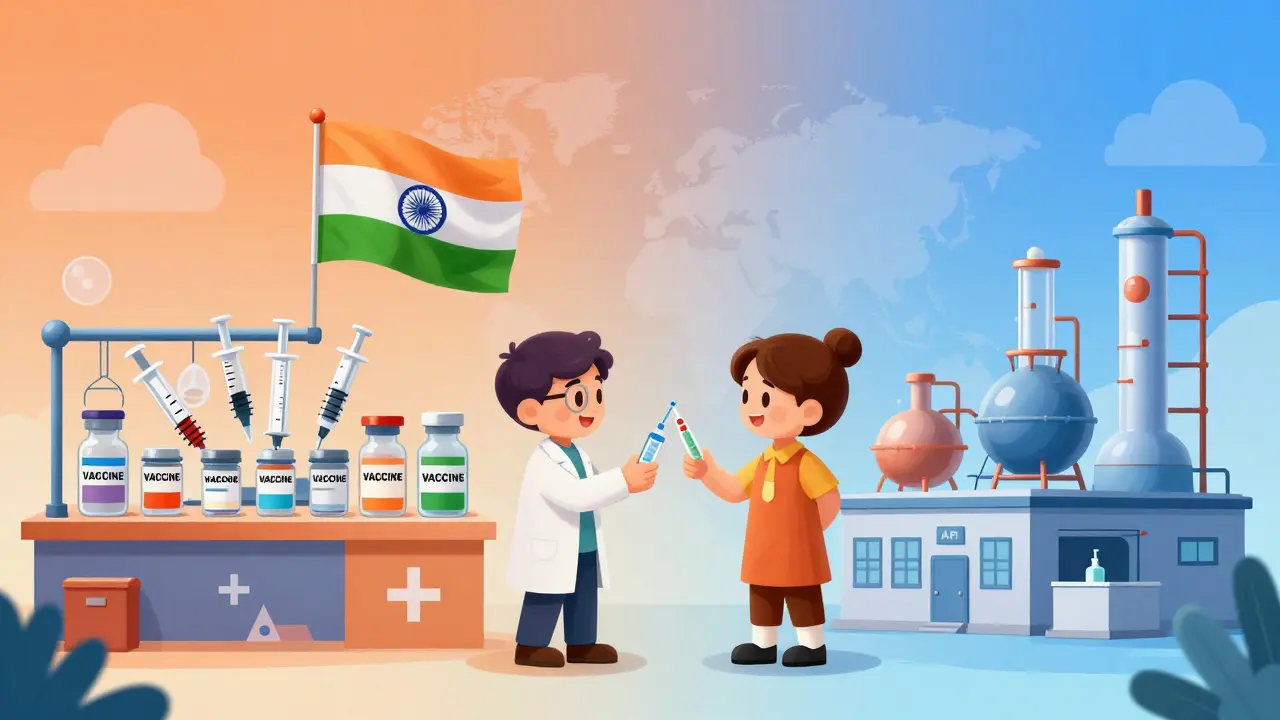
India supplies over 60% of the world's vaccines. China makes 70% of the active ingredients in drugs. These facts show how crucial Asian generic pharmaceuticals markets are to global healthcare. The generic pharmaceuticals industry in Asia is a complex mix of manufacturing powerhouses, regulatory challenges, and emerging opportunities. Let's explore what's really happening behind the scenes.
How India Became the 'Pharmacy of the World'
India has been a cornerstone of the global generic pharmaceutical industry since the 1970s. Its government amended the Patents Act to allow process patenting, which led to affordable drug production. Today, India's pharmaceutical market is worth $61.36 billion in 2024, supplying over 60% of global vaccine demand and 40% of U.S. generic drugs.
Manufacturing hubs like Gujarat (35% of production) and Maharashtra (25%) drive this output. India has over 3,000 FDA-approved facilities, though only 15% handle advanced biologics. This focus on low-cost generics has made India a go-to source for affordable medicines worldwide.
China's Evolution from Raw Materials to High-Value Production
China transformed its pharmaceutical industry after joining the World Trade Organization in 2001. While initially focused on raw materials, it now leads in API production and has shifted toward high-value biologics and innovative drugs.
China's pharmaceutical market hit $80.4 billion in 2024, with 60% conventional drugs, 25% traditional Chinese medicine (TCM), 10% biologics, and 5% innovative drugs. It controls about 70% of the global API market, making it a critical supplier for other countries. Between 2020 and 2024, 45% of new pharmaceutical facilities in China were dedicated to biologics production, according to CaixaBank Research.
India vs China: Market Comparison
| Metric | India | China |
|---|---|---|
| Market size (2024) | $61.36 billion | $80.4 billion |
| API production share | 18% domestic (68% imported) | 70% global |
| WHO-GMP certified facilities | 650 | 420 |
| U.S. FDA warning letters (2024) | 87 | 142 |
| Primary export composition | 87% generics | 63% generics |
| API approval timeline | N/A | 9 months (down from 24 months) |
The Role of Emerging Economies
Vietnam is rapidly growing its pharmaceutical exports. In 2024, its market grew 24.7% to $2.8 billion, mainly through antibiotic intermediates. This growth comes from specialized production niches and ASEAN trade preferences.
Cambodia focuses on medical device assembly, reaching $1.2 billion in 2024 with 32% annual growth. These smaller economies are carving out roles in the global supply chain by targeting specific, high-demand products.
Regulatory and Supply Chain Challenges
India's regulatory system is fragmented across 17 federal and state bodies, causing delays. A 2025 PharmaBoardroom survey found 47% of procurement officers cite "significant delays due to state-level regulatory discrepancies." Meanwhile, China's centralized system has faster approvals but quality issues. The U.S. FDA issued 142 warning letters to Chinese manufacturers in 2024 compared to 87 for India, showing stricter scrutiny on Chinese facilities.
Dependency on API supply chains is another challenge. India imports 68% of its API needs from China despite initiatives like Pharma Vision 2020. A procurement manager at a German healthcare company reported on G2 in April 2025: "Chinese API suppliers offer 20% lower prices than Indian alternatives, but the 2024 FDA warning letters forced us to implement costly dual-sourcing strategies that increased our supply chain costs by 18%."
Future Trends and Outlook
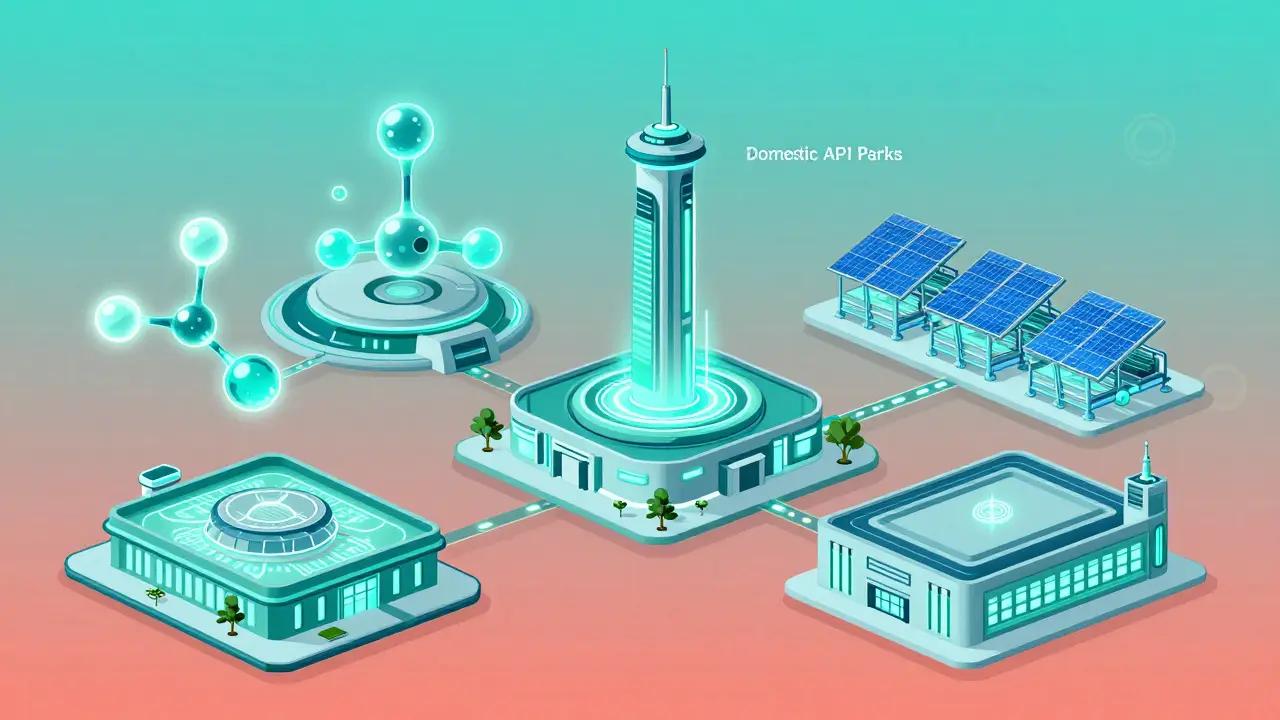
India's Pharma 2047 initiative allocates $13.4 billion to reduce API import dependence from 68% to 30% by 2030. Twelve new API parks are under construction to boost domestic production. Meanwhile, China's Healthy China 2030 plan redirects $22.8 billion toward biologics innovation, aiming for 25% of exports to be high-value biologics by 2030 (up from 8% in 2024).
S&P Global Ratings warns that "overcapacity in API production could trigger 15-20% price corrections in 2026-2027 as both nations pursue self-sufficiency." However, CaixaBank Research anticipates India's demographic advantage-65% of the population under 35-will drive innovation in digital health segments by 2035.
Frequently Asked Questions
Why does India rely on China for APIs?
India imports 68% of its Active Pharmaceutical Ingredients (API) from China due to historical reliance and cost efficiency. Despite initiatives like Pharma Vision 2020 aiming for self-sufficiency, domestic API production only meets 18% of India's needs. Building API manufacturing capacity requires significant investment and time, which India is addressing through its Pharma 2047 initiative targeting 30% self-sufficiency by 2030.
How do FDA warning letters affect drug supply?
FDA warning letters indicate serious quality or compliance issues. In 2024, China received 142 such letters compared to India's 87. Manufacturers must address these issues before products can be imported into the U.S., leading to delays and supply chain disruptions. Companies often implement dual-sourcing strategies-using both Indian and Chinese suppliers-to mitigate risks, though this increases costs by up to 18% according to industry reports.
What's the difference between biologics and traditional generics?
Traditional generics are chemically identical copies of off-patent drugs, while biologics are complex molecules produced from living organisms. Biologics require more sophisticated manufacturing and are harder to replicate. India focuses on small-molecule generics, while China is investing heavily in biologics and biosimilars. China's 2025 Healthy China plan allocates $22.8 billion to biologics R&D, targeting 25% of exports as high-value biologics by 2030.
Why is Vietnam's pharmaceutical market growing so fast?
Vietnam's pharmaceutical exports grew 24.7% in 2024 to $2.8 billion, primarily in antibiotic intermediates. This growth comes from specialized production in niche areas, strategic partnerships with global manufacturers, and ASEAN trade agreements. The country's lower labor costs and focus on specific high-demand products have helped it capture market share without directly competing with India and China's larger-scale operations.
What are the biggest risks in the Asian generic pharma supply chain?
Key risks include API supply shortages, regulatory inconsistencies, and quality control issues. S&P Global Ratings warns of 15-20% price volatility in APIs by 2027 due to overcapacity. Additionally, geopolitical tensions and trade policies could disrupt supply chains. For example, U.S. FDA Project BioSecure requires API traceability, increasing compliance costs by 18-22% for Asian manufacturers. Companies are adopting dual-sourcing strategies and investing in local production to reduce dependency on single suppliers.
Rene Krikhaar
February 5, 2026India's pharma sector is vital for global health. 60% of vaccines come from there but their regulatory system is fragmented across 17 bodies causing delays. The Pharma 2047 initiative is a step in the right direction. Hopefully it helps reduce API imports from China.
Lisa Scott
February 7, 2026China's API dominance is part of a geopolitical strategy. FDA warning letters are a smokescreen. They're using quality issues to justify tariffs. It's all about control. The US government is pushing dual-sourcing to weaken China. This is a calculated move by Western powers.
Katharine Meiler
February 9, 2026The current regulatory fragmentation in India is a major bottleneck that affects every aspect of pharmaceutical manufacturing. Streamlining processes across the 17 federal and state bodies could significantly reduce delays in drug approvals. Pharma Vision 2020's focus on domestic API production is a good start but needs more investment in infrastructure and training. Collaboration between India and China could improve supply chain resilience by leveraging each other's strengths. China's expertise in API manufacturing combined with India's vaccine production capabilities could create a more robust global supply chain. However, geopolitical tensions and trade policies complicate this collaboration. The FDA's warning letters highlight quality issues that need immediate attention. Both countries must work together to address these concerns. India's Pharma 2047 initiative aims to reduce API imports from 68% to 30% by 2030. This requires substantial investment in domestic production facilities. China's Healthy China 2030 plan is redirecting funds toward biologics innovation. Building mutual trust is essential for sustainable partnerships. Regulatory harmonization could streamline approvals and reduce costs. The global healthcare system depends on cooperation between these key players. Without collaboration, supply chain disruptions could become more frequent and severe.
Lana Younis
February 10, 2026Yeah the regulatory stuff is a mess. India needs to fix that. But China's API dominance is real. They control 70% of the market. Maybe they should work together. But the FDA warnings are worrying. Like 142 letters to China vs 87 to India. Thats a lot.
one hamzah
February 11, 2026India's pharma sector is amazing! 🌟
Andre Shaw
February 11, 2026You all are missing the point. India's 60% vaccine supply is not the real story. China's 70% API control is the real issue. They're not just suppliers; they're gatekeepers. The US FDA warnings? Total nonsense. It's about market control. The world needs to wake up.
Georgeana Chantie
February 12, 2026China's API dominance is a threat to national security. FDA warnings are justified. We need to stop relying on them. Dual-sourcing is not enough. We need to build our own capacity. :P
Jennifer Aronson
February 14, 2026The regulatory challenges in India are indeed significant. However, the collaboration between nations could lead to better outcomes. The FDA's role in ensuring quality is crucial. It's important to balance supply chain resilience with cost efficiency.
Johanna Pan
February 14, 2026Yes collaboration is key. Both India and China have strengths. India's vaccine production and China's API expertise. Together they can create a robust supply chain. The challenges are manageable with the right policies. Its all about working together.
Samantha Beye
February 14, 2026This is a great point. Collaboration between India and China could really strengthen global health. Their combined strengths in vaccines and APIs are a huge asset. Let's focus on solutions rather than problems.