

18 Jan 2026
- 12 Comments
Meclizine Safety Checker
How Safe Is Meclizine for You?
Answer a few questions to determine your risk level for side effects when taking meclizine.
Your Safety Assessment
When vertigo hits, it doesn’t just make you dizzy-it can knock you off your feet. One of the most common pills doctors reach for is meclizine. It’s been around since the 1970s, sold under names like Antivert and Dramamine Less Drowsy, and still widely prescribed today. But while it works for many, it’s not without risks. If you’ve been told to take meclizine for vertigo, you’re probably wondering: Is it safe? What side effects should I watch for? And is there a better option?
How Meclizine Actually Works for Vertigo
Meclizine isn’t just a generic dizziness pill. It’s a first-generation antihistamine that targets the inner ear and brainstem areas responsible for balance. Unlike newer antihistamines like cetirizine or loratadine-which barely make you sleepy-meclizine crosses the blood-brain barrier and acts directly on the vestibular system. It doesn’t shut down your inner ear or vision. Instead, it helps your brain ignore the confusing signals coming from your inner ear when you’re dizzy.
A landmark 1972 study published in the Archives of Neurology showed that patients taking meclizine had a clear drop in vertigo severity and frequency compared to those on placebo. It also reduced nausea, unsteady walking, and abnormal eye movements linked to vertigo. What’s surprising? It worked just as well whether the vertigo came from an inner ear problem (like BPPV or labyrinthitis) or something deeper in the brain. That’s why it’s still a go-to for sudden, intense episodes.
Common Side Effects: More Than Just Drowsiness
The biggest issue with meclizine? It makes you tired. Like, really tired. A lot of people say it feels like they’ve had a few drinks-even if they haven’t. That’s because meclizine has strong anticholinergic effects. That means it blocks acetylcholine, a brain chemical involved in alertness, memory, and muscle control.
Here’s what most users report:
- Drowsiness (reported in up to 70% of users in clinical settings)
- Dry mouth
- Blurred vision
- Headache
- Constipation
These aren’t just mild inconveniences. Drowsiness can turn a simple walk into a fall risk. Driving or operating machinery after taking meclizine is dangerous. The Mayo Clinic explicitly warns patients not to drive until they know how the drug affects them. And it’s not just you-it’s why doctors often recommend taking it at night if you’re using it for chronic vertigo.
Who Should Avoid Meclizine?
Meclizine isn’t safe for everyone. The biggest red flags:
- Elderly patients: Older adults are more sensitive to anticholinergic drugs. Side effects like confusion, memory lapses, or urinary retention can be mistaken for dementia or aging. Studies show increased fall risk in seniors taking these meds.
- People with glaucoma: Meclizine can raise eye pressure. If you have narrow-angle glaucoma, this could trigger an attack.
- Those with prostate problems: If you struggle to urinate due to an enlarged prostate, meclizine can make it worse.
- Pregnant women: While not strictly forbidden, it’s used cautiously. Always check with your OB-GYN.
- Anyone on other sedatives: Alcohol, benzodiazepines, sleep aids, or even some cold medicines can multiply meclizine’s drowsiness. The risk of passing out or breathing problems goes up.
One patient in Bristol, 72, told her pharmacist she’d been taking meclizine for years after a vertigo episode. She didn’t realize her memory lapses and frequent falls were linked to the pill. Once she stopped, her balance improved within days.
Dosing and How to Take It Right
Meclizine comes in 12.5 mg, 25 mg, and 50 mg tablets. Most people start with 25 mg once a day. For motion sickness, take it an hour before travel. For vertigo, it’s often taken daily for a few days to a week, then tapered.
Key tips:
- Take it with water, not on an empty stomach if it upsets your stomach.
- Don’t crush or chew unless it’s the chewable version.
- Take it at the same time every day to keep levels steady.
- Don’t double up if you miss a dose. Wait until your next scheduled time.
Over-the-counter versions (like Dramamine Less Drowsy) usually contain 12.5 mg. Prescription versions (like Antivert) are often 25 mg. Don’t assume OTC means safer-same drug, same risks.
How Long Can You Take It?
Meclizine is meant for short-term use. Most doctors prescribe it for 3-7 days during a vertigo flare-up. Long-term use (weeks or months) increases the risk of side effects, especially in older adults. It doesn’t fix the root cause of vertigo-it just masks the symptoms.
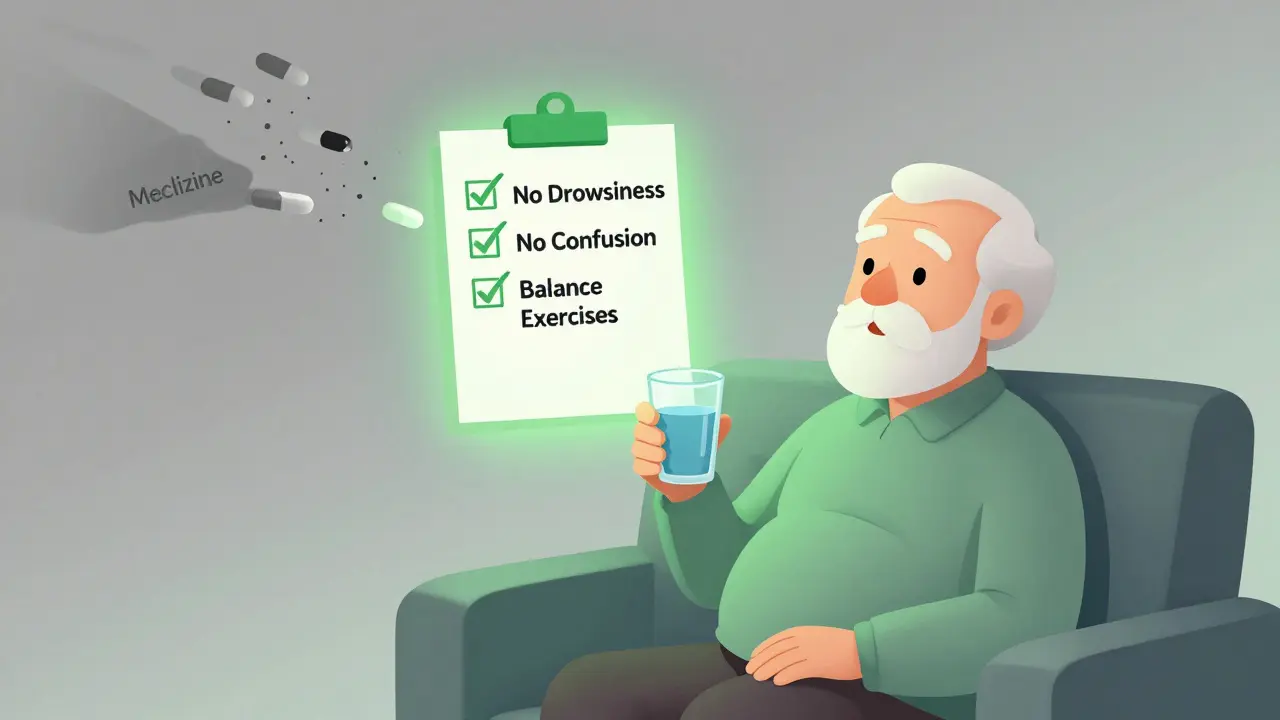
For chronic dizziness, alternatives like vestibular rehabilitation therapy (VRT) are more effective and safer long-term. VRT is a set of exercises that train your brain to compensate for inner ear problems. Studies show it works better than pills over time. Meclizine can help you get through the worst days, but it shouldn’t be your only tool.
What About Other Medications?
Meclizine isn’t the only option. Here’s how it stacks up:
| Medication | Primary Use | Drowsiness Risk | Anticholinergic Effects | Long-Term Use Safe? |
|---|---|---|---|---|
| Meclizine | Vertigo, motion sickness | High | Strong | No |
| Betahistine | Ménière’s disease | Low | Minimal | Yes |
| Dimenhydrinate (Dramamine) | Motion sickness | Very High | Strong | No |
| Benzodiazepines (e.g., diazepam) | Severe vertigo | High | None | Only short-term |
| Cetirizine | Allergies | Mild | Very Low | Yes |
Betahistine is often preferred for long-term cases like Ménière’s disease because it doesn’t cause sedation. Benzodiazepines work fast for acute, terrifying vertigo attacks but carry addiction risk. Cetirizine? It’s not used for vertigo-but if you’re allergic and dizzy, it’s a much safer choice than meclizine.
When to Call Your Doctor
Most side effects fade after a few days. But if you notice any of these, stop taking meclizine and call your doctor:
- Confusion or memory loss
- Difficulty urinating
- Fast or irregular heartbeat
- Severe dizziness or fainting
- Signs of an allergic reaction (rash, swelling, trouble breathing)
Also, if your vertigo doesn’t improve after a week, or gets worse, it could be a sign of something more serious-like a stroke or tumor. Never assume all dizziness is benign.

Real-World Advice: What Works for People
One woman in her 50s in Bristol had vertigo after a viral infection. Her doctor gave her meclizine. She took it for two days, felt better, but couldn’t work because she was too groggy. She switched to resting, hydration, and slow head movements. Within five days, her symptoms vanished. She never took another pill.
Another man, 68, took meclizine daily for months after a fall. He didn’t realize his memory lapses were from the drug. His pharmacist flagged it during a routine check-up. He stopped, started balance exercises, and now walks without a cane.
The pattern? Meclizine helps in the short term. But recovery often comes from rest, movement, and time-not just pills.
Final Thoughts: Is Meclizine Right for You?
Meclizine works. It’s been proven in studies for over 50 years. But it’s not a cure. It’s a bandage. And like any bandage, it can hide problems if used too long.
If you’re young, healthy, and dealing with a sudden vertigo attack after a cold or flight, meclizine can get you through. But if you’re older, taking other meds, or have ongoing dizziness, talk to your doctor about alternatives. Vestibular rehab, lifestyle changes, and even simple balance exercises can be just as effective-with none of the grogginess.
Don’t let the fact that it’s old and cheap fool you. Older doesn’t mean safer. Always weigh the benefit against the risk.
Can I take meclizine with alcohol?
No. Mixing meclizine and alcohol can cause extreme drowsiness, dizziness, or even loss of consciousness. The combination slows down your central nervous system too much. Even one drink can turn a normal dose into a dangerous one.
How long does meclizine stay in your system?
Meclizine has a half-life of about 5-6 hours, meaning it takes around 24-30 hours to fully clear your body. But the drowsiness can last longer, especially in older adults or people with liver issues. Don’t assume you’re fine just because the pill has been out of your system for a few hours.
Is meclizine addictive?
Meclizine itself isn’t addictive like opioids or benzodiazepines. But some people feel they need it to function because their body gets used to the symptom suppression. Stopping suddenly can cause rebound dizziness. Always taper off under medical supervision.
Can meclizine cause weight gain?
Not directly. But the drowsiness and dry mouth it causes can lead to reduced activity and increased snacking. Some people report weight gain over time, but it’s usually due to lifestyle changes, not the drug itself.
Are there natural alternatives to meclizine for vertigo?
Yes. Vestibular rehabilitation therapy (VRT) is the most effective long-term solution. Simple exercises like the Epley maneuver for BPPV, or even daily walking and balance drills, can retrain your brain. Ginger supplements and staying hydrated may help reduce nausea. But if vertigo is severe or sudden, see a doctor before trying alternatives.
Next Steps: What to Do Now
If you’re currently taking meclizine:
- Write down how you feel each day-drowsiness, balance, nausea.
- Review all your other meds with your pharmacist. Many over-the-counter cold and allergy pills contain antihistamines that add to meclizine’s effects.
- Ask your doctor if vestibular rehab is an option. It’s often covered by insurance and has no side effects.
- Don’t stop abruptly. If you’ve been on it for more than a week, taper slowly under guidance.
If you’re considering meclizine for the first time:
- Ask: Is this a short-term fix, or am I being set up for long-term use?
- Request alternatives like betahistine or VRT if you’re older or take other meds.
- Know your limits. If you drive, work with machines, or care for kids, meclizine might not be worth the risk.
Josh Kenna
January 20, 2026Meclizine made me feel like a zombie for three days straight-like my brain was wrapped in cotton and someone forgot to turn on the lights. I took it for a vertigo flare and couldn’t even make coffee without nearly knocking over the pot. My wife had to drive me to the store. Not worth it.
Erwin Kodiat
January 21, 2026I get it-meclizine’s a quick fix, but it’s like putting a bandaid on a broken leg. I had vertigo after a virus last year, took it for two days, then just started doing the Epley maneuver every morning. Within a week, I was fine. No grogginess. No dry mouth. Just me, my balance, and a cup of coffee.
sujit paul
January 21, 2026Let us not forget the pharmaceutical-industrial complex’s silent war against natural healing. Meclizine, a synthetic anticholinergic, is but one cog in the machine that profits from chronic symptom suppression rather than root-cause resolution. The vestibular system is a divine instrument of balance-why do we poison it with 1970s chemistry when ancestral movement practices have existed for millennia? The body does not need drugs. It needs alignment.
Aman Kumar
January 23, 2026Anticholinergic burden. That’s the real issue. Elderly patients on multiple meds? They’re not just dizzy-they’re neurotoxic. Meclizine’s a low-hanging fruit for lazy GPs who don’t have time for vestibular rehab. I’ve seen 80-year-olds on this stuff for years, confused, falling, urinating on themselves-prescribed because it’s cheap and the patient says ‘it helps.’ It helps them sleep, not heal. And that’s the tragedy.
Jake Rudin
January 25, 2026...and yet... we must ask: Is symptom suppression always bad? If the vestibular system is firing erratically, and the brain is drowning in noise-does it not deserve a temporary silence? Meclizine doesn’t cure-but it gives space. Space to breathe. Space to recover. To rest. To let the nervous system recalibrate. Perhaps it’s not the villain-it’s the pause button. And sometimes... a pause is the most radical act of healing.
Lydia H.
January 25, 2026My mom took this for years after her inner ear infection. She didn’t realize her memory lapses were from the pill. When she finally stopped, she started walking again-no cane, no dizziness. Just her. I wish her doctor had mentioned VRT earlier. It’s like physical therapy for your inner ear. Why isn’t this standard?
Tracy Howard
January 26, 2026Can we just admit that American medicine is lazy? We hand out pills like candy and call it care. Meanwhile, in Europe, they’re doing vestibular rehab on day one. In Japan, they’re using acupuncture and qigong. Here? You get meclizine, a pamphlet, and a pat on the head. It’s not medicine-it’s negligence wrapped in a white coat.
Phil Hillson
January 27, 2026So basically meclizine is just a fancy benadryl with a prescription label and a higher price tag? And we’re supposed to be shocked it makes you sleepy? Newsflash: antihistamines make you sleepy. Also, who even still uses Dramamine? My grandpa used to take that on road trips and passed out in the backseat. We called him Sleeping Beauty. Same drug. Different box.
Jacob Hill
January 28, 2026Just want to add: if you’re on any other meds-especially antidepressants, antipsychotics, or even OTC sleep aids-check for anticholinergic interactions. I was on sertraline and meclizine for a month. My brain felt like it was made of wet cardboard. My pharmacist flagged it. We switched to betahistine. Life changed. Don’t ignore the interaction checker.
Lewis Yeaple
January 30, 2026It is imperative to note that the half-life of meclizine, while approximately five to six hours, exhibits significant inter-individual variability due to hepatic metabolism, age-related pharmacokinetic alterations, and concomitant medication use. Consequently, the duration of sedative effects may persist beyond the pharmacokinetic elimination window, particularly in geriatric populations with diminished cytochrome P450 activity. Clinical guidelines therefore recommend cautious titration and avoidance of prolonged administration.
Jackson Doughart
January 30, 2026I’ve been a physical therapist for 18 years. I’ve seen patients on meclizine for years-some because they’re scared to move, others because their doctor never offered VRT. The truth? Most vertigo improves with movement, not medication. I get it-it’s scary to walk when you feel like the world’s spinning. But the brain heals through repetition, not sedation. I always tell my patients: ‘Move slowly. Trust the process. The dizziness will fade.’ And it does. Every time.
Malikah Rajap
January 31, 2026Wait-so if meclizine masks symptoms, and we’re supposed to avoid long-term use... why do doctors keep prescribing it like it’s a cure? I had vertigo for 6 months. Every time I asked for alternatives, they just refilled the script. I had to Google this stuff myself. Why isn’t anyone talking about vestibular rehab as the FIRST option? It’s not like it’s rare or experimental. It’s been proven for decades. This feels like a system failure.