
12 Jan 2026
- 13 Comments
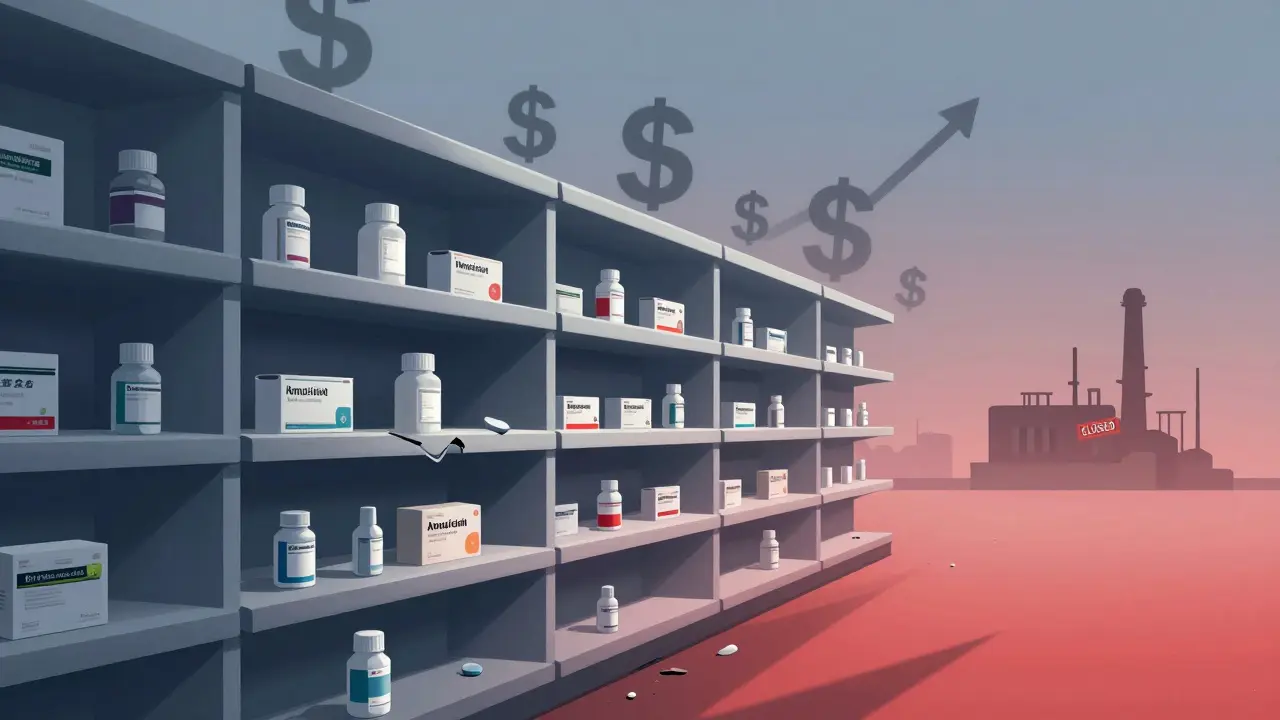
By early 2026, drug shortages aren’t just a hospital headache anymore-they’re a direct result of manufacturers going broke. It’s not about bad luck or bad planning. It’s about a brutal financial squeeze: pricing pressure and rising costs are pushing companies to stop making life-saving medicines because they simply can’t afford to produce them anymore.
Why Are Generic Drugs Disappearing?
Most drug shortages today aren’t for new, expensive brand-name pills. They’re for old, cheap generics-like antibiotics, insulin, or heart medications. These drugs sell for pennies. A single tablet of amoxicillin might cost $0.10 at the pharmacy. But the manufacturer? They might have paid $0.08 just to make it.
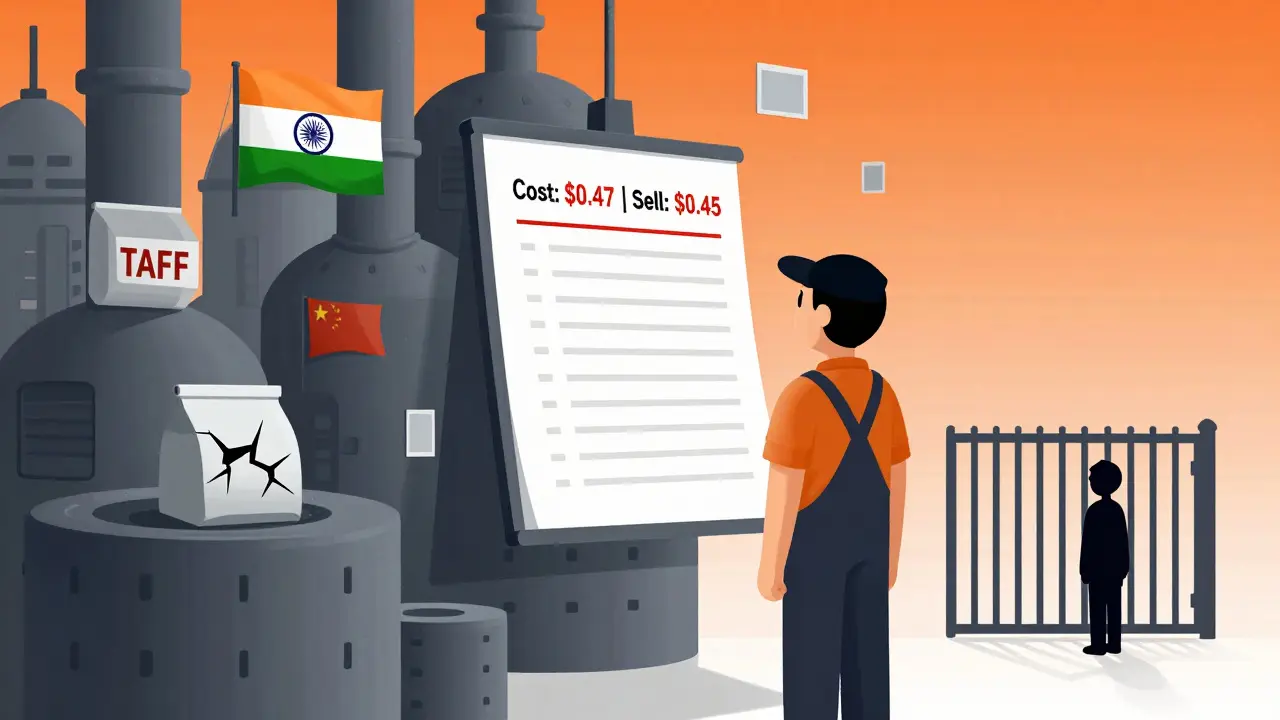
That leaves almost nothing for labor, shipping, quality control, or compliance. And when the cost of raw materials jumps-even by 10%-there’s no room to absorb it. In 2025, the price of active pharmaceutical ingredients (APIs) rose 14% on average, according to the International Federation of Pharmaceutical Manufacturers & Associations. Many of those ingredients come from just two countries: India and China. When tariffs hit, floods damaged factories, or political tensions slowed exports, prices spiked. But pharmacies and insurers won’t pay more for a generic that’s been priced at $0.10 for 15 years.
The Financial Trap: Can’t Raise Prices, Can’t Cut Costs
Manufacturers are stuck. If they raise prices, they lose contracts. Hospitals and big pharmacy chains demand the lowest bid. If they don’t, they lose money on every pill. A 2025 survey of 127 generic drug makers by the U.S. Generic Pharmaceutical Association found that 68% were operating at or below break-even on at least three of their top-selling products.
One company in Ohio that made IV saline solutions stopped production in late 2025. Their CFO told a trade journal: “We were selling 100 million bags a year at $0.45 each. Our cost was $0.47. We lost $1.2 million annually just on that one product. We couldn’t justify keeping the line open.”
That’s not an outlier. It’s the rule. Manufacturers can’t raise prices because buyers won’t pay. They can’t cut costs because the materials and labor are already at rock bottom. And when a factory shuts down-even temporarily-it takes months to restart. Regulatory approvals, equipment recalibration, quality audits. All of it takes time. By the time they’re ready to produce again, the shortage has already hurt patients.
Who’s Paying the Price?
It’s not the manufacturers. They’re already bleeding. It’s not the big pharmacy chains-they just switch to the next supplier. It’s the hospitals. It’s the nurses. It’s the patients.
Hospitals are forced to use more expensive alternatives. A patient who needs penicillin might get a different antibiotic that costs 12 times more. That pushes up hospital bills, which then pushes up insurance premiums. Patients delay care because the drug isn’t available. In rural clinics, nurses are calling other states to find a single vial of epinephrine. Emergency rooms are rationing doses.
The FDA reported 347 active drug shortages in December 2025-the highest number since 2012. Of those, 79% were for generic injectables or oral medications. The most common culprits: antibiotics, chemotherapy agents, anesthetics, and electrolyte solutions. These aren’t luxury drugs. These are the basics. The ones you assume will always be there.
Why Don’t More Companies Make These Drugs?
Because it’s not profitable. The generic drug market is a race to the bottom. The first company to get FDA approval for a generic version of a popular drug gets a short window of exclusivity-usually six months. Then 20 other companies jump in. Prices collapse. Profit margins vanish.
Meanwhile, the cost of making these drugs keeps climbing. Regulatory requirements are stricter. Environmental controls cost more. Packaging standards change. Quality testing is more rigorous. And labor? Wages for certified pharmaceutical technicians rose 11% between 2023 and 2025. But the selling price? Stuck.
Some companies tried to exit the market entirely. One major Indian supplier shut down its U.S.-focused generic division in 2024 after losing $45 million over two years. Another U.S.-based manufacturer sold its entire line of low-margin injectables to a private equity firm that immediately raised prices by 40%-then got slapped with a federal investigation. The cycle is broken.
What’s Being Done? Not Enough.
The FDA has a “Drug Shortages” list. It’s public. It’s updated weekly. But it doesn’t fix anything. It just tells you what’s missing.
The government has tried incentives. In 2024, Congress passed a law offering tax credits to manufacturers who produce drugs on the shortage list. But the credits are small-$5 million per product, capped at three products per company. Most manufacturers need $50 million just to upgrade one production line.
Some states are stepping in. California launched a state-backed generic drug manufacturing initiative in 2025, aiming to produce 12 critical drugs internally. It’s a start. But it’s not scalable. The state can’t make enough insulin to cover even 10% of its diabetic population.
Meanwhile, the global supply chain is still fragile. Over 80% of APIs for U.S. drugs come from overseas. When a factory in Hyderabad shuts down for a week due to power cuts, or a port in Shanghai closes because of a strike, the ripple effect hits U.S. hospitals within 30 days.
What Could Actually Help?
There are three real solutions-but none of them are easy.
- Guaranteed minimum pricing for essential generics. If a drug is on the WHO’s Essential Medicines List, the government should guarantee a minimum price that covers production costs plus a small, fair profit. No bidding wars. No race to the bottom.
- Invest in domestic API production. The U.S. used to make its own active ingredients. Now it doesn’t. Rebuilding that capacity would cost $10-15 billion. But it would prevent future shortages. It’s cheaper than treating patients who miss doses because their insulin ran out.
- Require manufacturers to report inventory levels. Right now, companies aren’t required to tell the FDA how much of a drug they have in stock. If they had to report monthly, shortages could be predicted and prevented before they happen.
One company in Pennsylvania tried something different. They stopped competing on price. Instead, they signed long-term contracts with hospitals to produce a set number of doses each month at a fixed price-no bidding, no surprises. They made less per pill, but they made more per year. And they never ran out. Their margins are thin, but they’re stable. And their patients never had to wait.
The Bottom Line
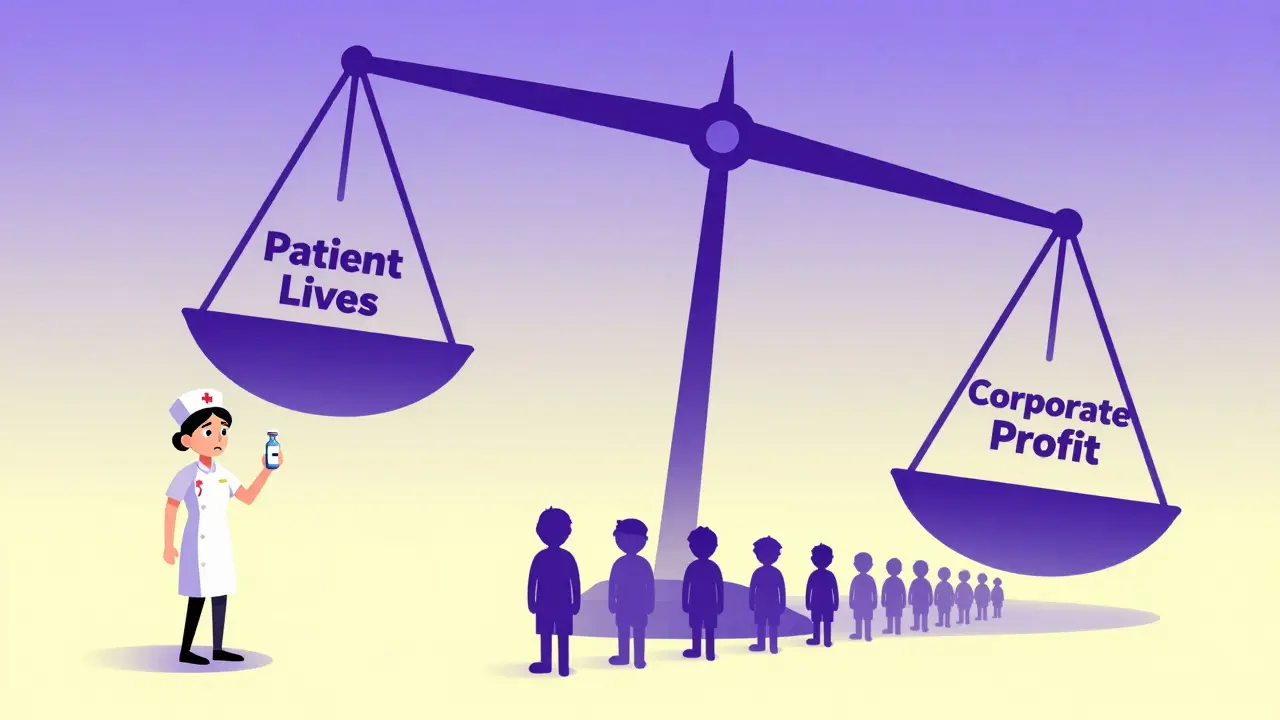
Drug shortages aren’t caused by a lack of demand. They’re caused by a lack of profit. When a company can’t make money making a drug, it stops making it. And when that drug is something like heparin or dobutamine or metformin-something a person needs to live-it’s not just a business problem. It’s a public health emergency.
The manufacturers aren’t greedy. They’re desperate. They’re caught between rising costs and frozen prices. And until someone fixes that math, the shortages will keep coming. Not because of pandemics. Not because of war. But because no one wants to pay enough for the pills that keep us alive.
Why are generic drugs more likely to be in short supply than brand-name drugs?
Generic drugs are cheaper to buy, so manufacturers sell them at razor-thin margins. Brand-name drugs have patent protection, which lets companies charge higher prices and cover production costs. Generics compete on price alone, so when raw materials or labor costs rise, manufacturers can’t raise prices without losing customers. That makes them the first to shut down production when profits disappear.
How do tariffs contribute to drug shortages?
Many active pharmaceutical ingredients (APIs) are imported from India and China. Tariffs on these materials increased by 10-12% in 2025, raising production costs. But because generic drug prices are locked in by government and insurance contracts, manufacturers can’t pass those costs on. That squeezes their margins until it’s no longer profitable to produce the drug.
Can the U.S. make its own generic drugs again?
Yes, but it would take a major investment. The U.S. used to produce over 40% of its APIs domestically in the 1990s. Now it’s under 5%. Rebuilding that capacity would cost $10-15 billion and take 5-7 years. It’s expensive, but cheaper than the cost of delayed care, emergency treatments, and lost productivity from drug shortages.
Why don’t pharmacies just stockpile drugs to prevent shortages?
Stockpiling costs money. Pharmacies and hospitals operate on tight budgets. They buy drugs as they need them to avoid waste and expired inventory. If a drug has a short shelf life-like insulin or certain antibiotics-stockpiling isn’t safe. Plus, manufacturers can’t guarantee supply, so pharmacies don’t risk buying in bulk.
Are drug shortages getting worse?
Yes. In 2025, there were 347 active drug shortages-the highest number since 2012. The FDA reports that over 70% of these shortages are linked to manufacturing issues, not demand spikes. The financial strain on manufacturers is worsening as input costs rise and prices stay flat. Without systemic changes, shortages will keep increasing.
What can patients do if their medication is unavailable?
Talk to your doctor immediately. They may have access to alternative medications or can help you get a temporary supply through a hospital pharmacy or specialty distributor. Don’t skip doses or substitute with over-the-counter options without medical advice. Some shortages are resolved quickly, but others take months. Your provider can help you navigate options safely.
Lethabo Phalafala
January 13, 2026My cousin in Cape Town just got denied her insulin because the local pharmacy ran out. She had to drive 90 miles to a clinic that had a single vial left. This isn't a policy debate-it’s someone’s life on the line. And the people who make these drugs? They’re not villains. They’re just trapped in a system that rewards greed over survival. We’re letting capitalism kill people because we’re too cheap to pay for the basics.
Avneet Singh
January 13, 2026It’s a classic case of structural commodification of essential pharmacological outputs within a neoliberal market paradigm. The commodification of life-sustaining molecules-reduced to fungible, price-elastic commodities-exposes the ontological failure of market logic when confronted with biopolitical necessities. The API supply chain isn’t broken-it’s *designed* to fail under margin constraints. Capital doesn’t care if you live. It only cares if the ROI clears 8%.
Adam Vella
January 14, 2026Let’s be clear: this isn’t about pricing. It’s about accountability. The FDA has known about this for a decade. They could’ve mandated buffer stockpiles, required multi-sourcing for critical APIs, or even created a public manufacturing arm. Instead, they issued a weekly list. That’s not oversight-that’s negligence dressed up as transparency. And now we’re surprised when people die because the math didn’t add up? Wake up. This was predictable. And preventable.
Lance Nickie
January 15, 2026Stop crying. Just buy the brand name.
Damario Brown
January 15, 2026lol so the solution is... more govt? again? 🤡 i mean, we all know what happens when the feds get involved in pharma. remember the vioxx scandal? or the opioid crisis? they’re not fixing this, they’re just making it more expensive and slower. also, who’s gonna pay for this? you? me? the insurance co? we’re all already drowning. this isn’t a fix. it’s a tax.
Clay .Haeber
January 16, 2026Oh wow. A 15-page essay on how capitalism is bad. Groundbreaking. Next up: ‘Water is Wet’ and ‘Air is Not Made of Cheese.’ Meanwhile, in the real world, someone in Ohio shut down a plant because they were losing money on saline. Shocking. What’s next? A study proving that breathing oxygen is expensive? 😴
Priyanka Kumari
January 16, 2026As someone who grew up in a small town in India where my mom had to wait weeks for her blood pressure meds, I’ve seen this firsthand. It’s not just about money-it’s about dignity. We need to stop treating medicine like a commodity and start treating it like a right. And yes, it’ll cost. But what’s the cost of a child missing school because their asthma inhaler is gone? Or an elderly person going blind because their glaucoma drops ran out? We can do better. We just need the will.
Angel Tiestos lopez
January 18, 2026bro this is wild 🤯 we spend billions on space telescopes but can’t afford to make a $0.10 pill? 🤦♂️ we’re literally choosing to let people die so we can have better iPhones. and the worst part? no one’s mad. just... shrugs. i’m not even mad. i’m just… sad. 😔
Trevor Whipple
January 20, 2026you know what’s funny? the same people screaming about ‘big pharma’ are the ones who want free insulin but won’t pay $5 more for a generic. you want it cheap? then stop complaining when it’s gone. it’s not magic. it’s chemistry. and chemistry costs money. duh.
sam abas
January 21, 2026Let’s not forget the deeper systemic rot here: the entire regulatory framework for generics was designed in the 1980s, under a completely different economic and technological landscape. We’re still operating under a 40-year-old model while the world has moved to AI-driven supply chains, climate-disrupted logistics, and geopolitical fragmentation of raw material sourcing. The FDA’s outdated risk-assessment protocols can’t even model for a single port closure in Shanghai, let alone the cascading effects of a 14% API price spike. And yet, we still expect them to ‘manage’ shortages with a spreadsheet and a prayer. This isn’t incompetence-it’s institutional arrogance dressed as bureaucracy.
John Pope
January 22, 2026Let’s be dramatic for a second: imagine if your heart stopped and the only drug that could save you… wasn’t there. Not because it didn’t exist. Not because it was too hard to make. But because some accountant in a corporate office decided the profit margin on a $0.45 IV bag wasn’t worth the risk. That’s not a shortage. That’s a homicide by spreadsheet. And we’re all complicit because we didn’t scream loud enough.
Nelly Oruko
January 24, 2026While the systemic implications of this crisis are profound, one must not overlook the moral imperative of equitable access to therapeutic agents. The current paradigm, predicated upon market-driven allocation, fundamentally violates the principles of distributive justice as articulated by Rawls and Sen. A reconfiguration toward a rights-based model of pharmaceutical provisioning is not merely prudent-it is ethically non-negotiable.
Milla Masliy
January 25, 2026I spent a year working in a rural clinic in New Mexico. We had to choose: give the diabetic patient insulin or the heart patient their beta-blocker. One day, we ran out of both. We gave the kid the insulin. The old man? We told him to come back next week. He never did. This isn’t policy. This is what happens when we stop seeing people and start seeing line items. We need to fix this-not with more reports, but with more heart.