

24 Dec 2025
- 14 Comments
St. John’s Wort isn’t just another herbal supplement. For many people, it’s a go-to for mild depression-cheaper than prescriptions, no pharmacy needed, and it’s been used for centuries. But here’s the problem: St. John’s Wort doesn’t just sit quietly in your system. It actively changes how your body handles prescription drugs. And that can be dangerous-sometimes life-threatening.
How St. John’s Wort Changes Your Medications
St. John’s Wort doesn’t work like a vitamin. It’s a powerful enzyme inducer. Its main active ingredient, hyperforin, turns on a switch in your liver called the pregnane-X-receptor (PXR). This switch tells your body to make more of certain enzymes-mainly CYP3A4, CYP2C9, and CYP1A2-that break down drugs. It also ramps up P-glycoprotein, a protein that pumps drugs out of your cells.
Think of it like this: your body is a factory. Prescription drugs are products being shipped through. St. John’s Wort turns on a conveyor belt that speeds up the breakdown and removal of those products. So even if you take your medication exactly as prescribed, your body gets rid of it too fast. The result? The drug doesn’t work.
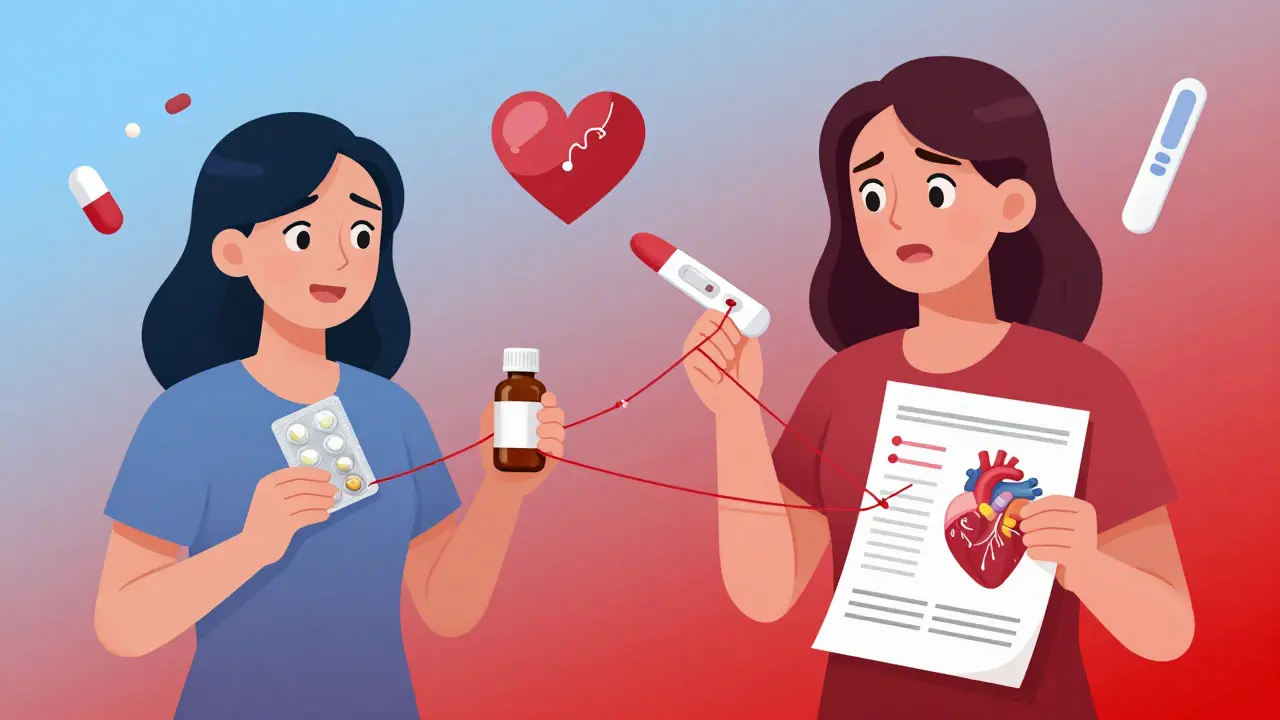
This isn’t theoretical. In 2000, two heart transplant patients on cyclosporine (a drug that keeps the body from rejecting the new organ) had their transplants fail within weeks of starting St. John’s Wort. Their cyclosporine levels dropped by over 50%. Same thing happened with tacrolimus in kidney transplant patients. One 34-year-old woman had acute organ rejection after eight weeks of taking St. John’s Wort-even though her tacrolimus dose hadn’t changed.
The 12 Medication Categories That Can Fail With St. John’s Wort
St. John’s Wort doesn’t just mess with one type of drug. It affects over 50, with 28 classified as major interactions. Here are the most critical ones:
- Immunosuppressants (cyclosporine, tacrolimus, sirolimus): These keep transplanted organs alive. St. John’s Wort can cause rejection. No exceptions.
- Antiretrovirals (ritonavir, efavirenz, indinavir): Used for HIV. Lower drug levels mean the virus can rebound and become resistant.
- Oral contraceptives: Birth control pills, patches, rings. At least 17 documented cases of unintended pregnancy linked to St. John’s Wort. The estrogen in birth control gets broken down too fast.
- Anticoagulants (warfarin): A 2000 case showed a patient’s INR (blood clotting measure) dropped from 2.5 to 1.4 in just 10 days. That’s a major spike in clotting risk.
- Antidepressants (SSRIs, SNRIs): Mixing St. John’s Wort with fluoxetine, sertraline, or venlafaxine can cause serotonin syndrome-agitation, high fever, rapid heart rate, seizures. It’s rare but deadly.
- Opioids (oxycodone, methadone, tramadol): St. John’s Wort reduces their pain-relieving effect. One patient needed triple the dose of oxycodone just to get the same pain control after starting the herb.
- Statins (atorvastatin, simvastatin): Lower cholesterol levels mean less protection against heart attacks.
- Beta-blockers (metoprolol, atenolol): Can reduce heart rate control, worsening arrhythmias.
- Antifungals (itraconazole, ketoconazole): Less effective, leading to persistent infections.
- Chemotherapy drugs (imatinib, irinotecan): Reduced effectiveness means cancer can progress faster.
- Anti-seizure drugs (carbamazepine, phenytoin): Can lead to breakthrough seizures.
- Benzodiazepines (alprazolam, diazepam): Less sedation, meaning anxiety returns sooner.
And here’s the kicker: these interactions don’t show up right away. It takes about 10 days for the enzymes to ramp up. Symptoms? You might feel your medication isn’t working anymore. Your depression returns. Your birth control fails. Your pain gets worse. You might not connect it to the herb you started a few weeks ago.
Why St. John’s Wort Is Riskier Than Other Herbs
Compared to other herbal antidepressants, St. John’s Wort is in a league of its own for interactions. SAM-e? Minimal interactions. 5-HTP? Rarely causes issues. But St. John’s Wort? It’s the most dangerous herbal supplement in terms of drug interactions, according to Dr. David A. Flockhart, a leading pharmacologist.
Why? Because it doesn’t just affect one pathway. It hits multiple enzyme systems at once. And unlike prescription drugs, it’s not regulated for consistency. A bottle labeled “900 mg St. John’s Wort” could have anywhere from 1% to 5% hyperforin-meaning some bottles are far more dangerous than others.
Even worse, many people don’t realize they’re taking it. It’s sold as a “natural mood booster,” not a drug. Labels often say “may interact with medications” in tiny print. But if you’re on warfarin, birth control, or a transplant drug, that tiny print could be the difference between life and death.
What Happens When You Stop Taking It?
People think if they stop St. John’s Wort, the problem goes away. But the enzymes don’t shut off instantly. It can take up to two weeks for your body to return to normal. That means if you stop the herb but keep taking your prescription, your drug levels can suddenly rise-leading to toxicity.
For example, someone on warfarin who stops St. John’s Wort might suddenly start bleeding because their INR spikes. Someone on an antidepressant might feel dizzy or nauseous as serotonin builds up. That’s why switching off St. John’s Wort isn’t just a matter of quitting-it’s a medical event.
Who’s Most at Risk?
It’s not just older adults. The highest usage is among women aged 35-54-exactly the group most likely to be on birth control, antidepressants, or statins. About 4.7% of U.S. adults take it. That’s over 11 million people.
And it’s not just the U.S. In Germany, St. John’s Wort accounts for 20% of all antidepressant prescriptions. But in Europe, the labels are clearer. The European Medicines Agency requires warnings for 12 medication classes. In the U.S.? The FDA only issued a public advisory in 2000-and that’s it. No mandatory labeling. No enforcement.
On Reddit, users report mixed results. One person says it “saved my life.” Another says it “made my birth control useless.” The data backs this up: Drugs.com lists 128 interactions, with 28 classified as major. One review says, “I got pregnant even though I was on the pill.” Another: “My transplant doctor found out I was taking it and told me to stop immediately.”
What Should You Do?
If you’re thinking about trying St. John’s Wort:
- Look at every prescription and OTC medication you take. Even aspirin or ibuprofen can have subtle interactions.
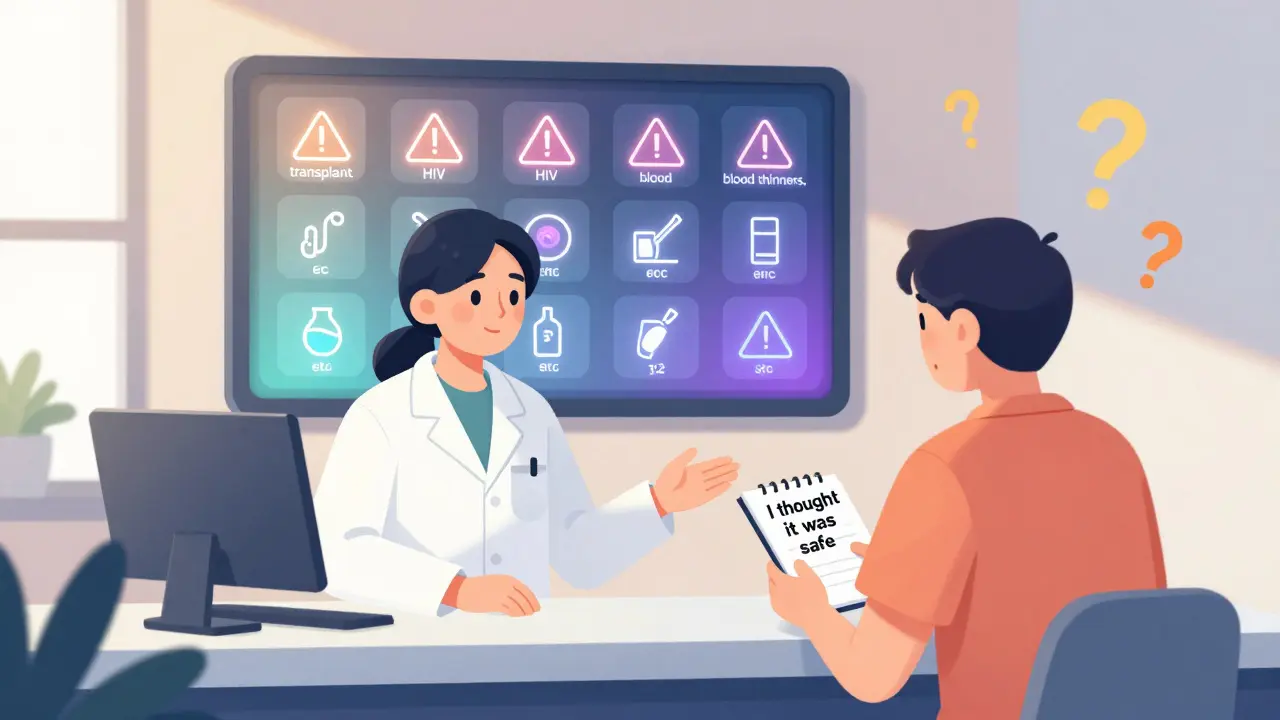
- Ask your pharmacist. Not your doctor. Pharmacists are trained to spot these interactions. They use databases that flag St. John’s Wort as a “high-risk” supplement.
- If you’re on a transplant drug, HIV meds, blood thinners, or birth control-don’t take it. Period.
- If you’re already taking it, don’t quit cold turkey. Talk to your doctor. You may need to adjust your prescription dosage over two weeks.
- Consider alternatives. SAM-e has fewer interactions. Exercise, therapy, and light therapy have proven results for mild depression-with zero interaction risk.
And if you’re a healthcare provider? Always ask. Don’t assume patients will volunteer this information. One study found that only 21% of patients told their doctor they were taking herbal supplements. Most think it’s “not medicine.” It is.
The Bottom Line
St. John’s Wort isn’t harmless. It’s a potent drug-just not one that’s regulated like one. It can save someone from depression. But it can also kill someone by making their transplant fail, their HIV treatment useless, or their birth control ineffective.
There’s no middle ground. If you’re on any prescription medication, especially ones that keep you alive or prevent pregnancy, St. John’s Wort isn’t worth the risk. The science is clear. The warnings are out there. The data doesn’t lie.
It’s not about being “natural” or “safe.” It’s about whether it works-and whether it’s safe for you, right now, with the medications you’re already taking.
Michael Dillon
December 25, 2025Look I get it, herbal stuff is ‘natural’ so people think it’s harmless. But this isn’t some chamomile tea. This is a liver enzyme grenade. I’ve seen patients on cyclosporine come in with rejection markers because they ‘just added a little mood booster.’ No. Just no.
Gary Hartung
December 25, 2025Let’s be clear: the FDA’s inaction here is a scandal. A substance that alters CYP3A4, CYP2C9, AND P-glycoprotein - simultaneously - is not a ‘supplement.’ It’s a pharmacological agent. And yet, it’s sold next to gummy vitamins with a footnote in 6-point font. This isn’t negligence. It’s corporate malfeasance.
Ben Harris
December 27, 2025My aunt took this for anxiety and stopped her blood pressure med cold turkey. She ended up in the ER. The doctor said if she’d kept taking the herb she’d have had a stroke. People don’t think herbs are drugs because they don’t come in a bottle with a barcode. But they are. They’re just unregulated drugs.
Jason Jasper
December 28, 2025I’ve used St. John’s Wort for mild seasonal depression and it helped. But I stopped after reading this. I’m on a statin and a low-dose beta-blocker. I didn’t realize the risk. I appreciate the clarity here. Sometimes ‘natural’ is just a marketing word that hides real danger.
Linda B.
December 29, 2025They don’t want you to know this but the pharmaceutical industry pays to keep this off labels. Big Pharma hates natural alternatives because they lose money. That’s why the FDA doesn’t regulate it. They’re in bed with the supplement companies. You think this is an accident? Think again.
Mussin Machhour
December 30, 2025Bro. I took this for 3 months. Felt great. Then my anxiety came back worse. Turns out my SSRI was getting flushed out. I didn’t know until my therapist asked if I was taking anything herbal. Dumb mistake. Don’t be me.
Christopher King
December 31, 2025St. John’s Wort is the modern Prometheus. It gives us light - relief from depression - but at the cost of our biological order. The liver enzymes it awakens are not mere tools. They are the sentinels of homeostasis. And when we command them to betray their posts, we invite chaos. This isn’t medicine. It’s alchemy with consequences.
Bailey Adkison
January 1, 2026Stop calling it a supplement. It’s a drug. Period. And if you’re on anything metabolized by CYP3A4 - which is most of your prescriptions - you’re playing Russian roulette. No one needs to die because someone thought ‘natural’ meant ‘safe.’
Oluwatosin Ayodele
January 1, 2026In Nigeria we don’t even have this product sold openly. But I’ve seen patients bring it from the US and mix it with antiretrovirals. The results are always bad. This isn’t just an American problem. It’s a global ignorance problem. People think if it’s from a plant it can’t hurt. That’s the real danger.
Lindsay Hensel
January 3, 2026This is why we need mandatory labeling. Not suggestions. Not footnotes. Bold, red, capitalized warnings. This isn’t about freedom. It’s about informed consent. If you’re going to sell something that can kill someone’s transplant - you owe them the truth.
Carlos Narvaez
January 4, 2026Everyone’s scared of the herb. But the real issue? Doctors don’t ask. Pharmacists don’t push. Patients don’t volunteer. It’s a systemic failure. Not a supplement problem. A communication one.
Harbans Singh
January 4, 2026I’ve seen this in India too. People take it with TB meds or epilepsy drugs and think it’s fine because ‘it’s just a plant.’ My uncle had a seizure after starting it. He didn’t even know it could interact. Education is the only real solution here.
Justin James
January 6, 2026Did you know the FDA doesn’t even require clinical trials for herbal supplements? That’s right. No proof of safety. No proof of dosage consistency. No proof of anything. St. John’s Wort is just one of thousands of products that can legally be sold with zero oversight. And you think this is an accident? No. It’s policy. It’s profit. It’s the system protecting corporations not consumers. The whole regulatory framework is rigged. They don’t want you to know how little they regulate these things. They want you to think it’s your fault when you get hurt.
Zabihullah Saleh
January 6, 2026There’s a deeper truth here: we’ve been taught to distrust pharmaceuticals but trust ‘natural’ things. That’s a cultural myth. Plants evolved to poison predators. Humans evolved to use them carefully. St. John’s Wort isn’t evil. It’s powerful. And power without understanding is always dangerous. We need humility, not hype.